Axios Latino

February 14, 2023
💕 Happy Valentine's Day 💕
- We hope you know how much we appreciate you reading our little newsletter!
👀 Axios is hosting our second annual What’s Next Summit on March 29 in Washington, D.C. spotlighting the innovations, trends and people that are breaking boundaries and shaping our world. Register to livestream here.
- Puede leer este boletín en español aquí.
This newsletter, edited by Astrid Galván, is 1,268 words, a 5-minute read.
1 big thing: Behind Peru's impasse
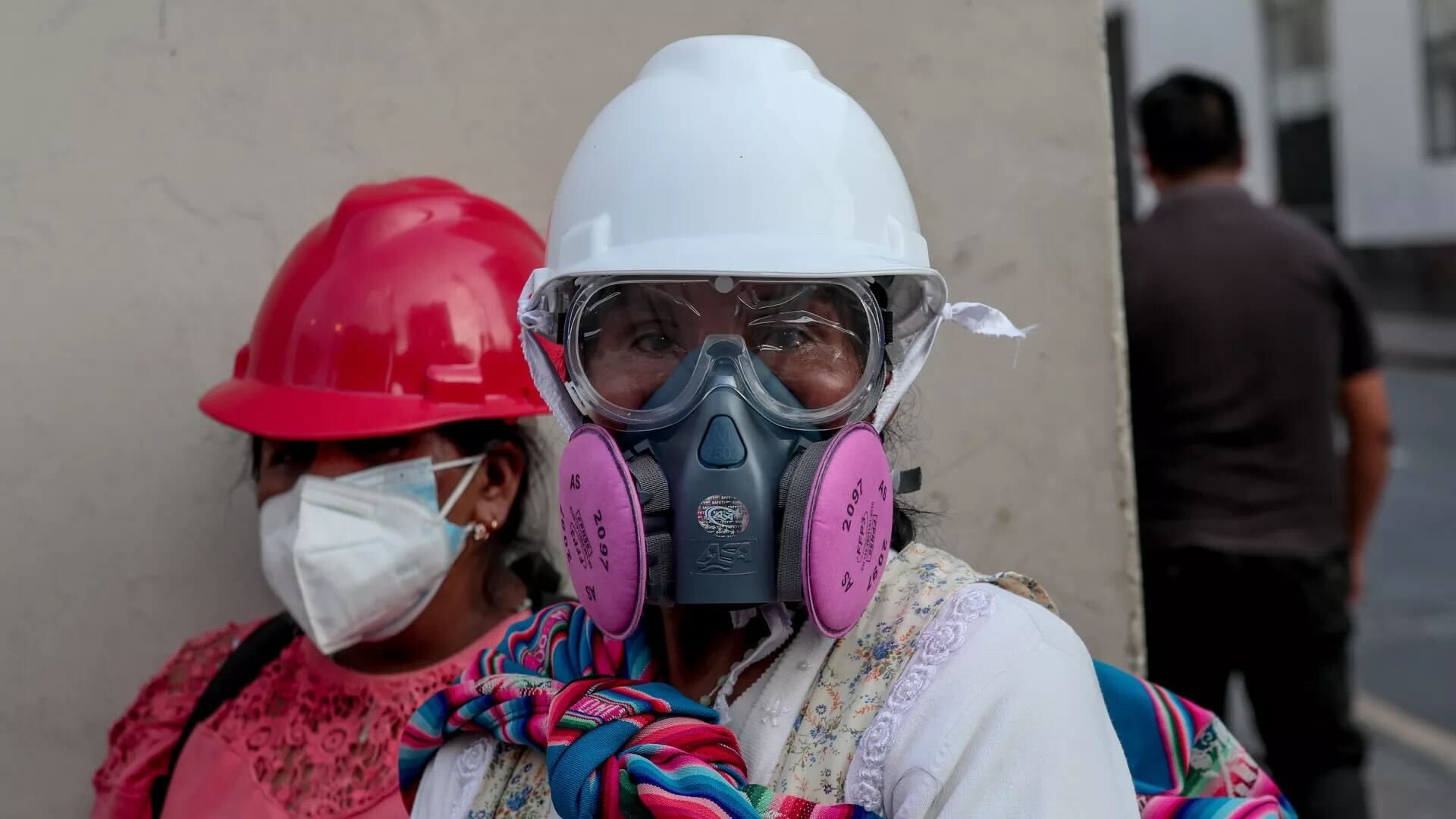
Protesters in Peru on Feb. 9. Photo: Klebher Vasquez/Anadolu Agency via Getty Images
The monthslong unrest rocking Peru reflects a larger discontent with how politicians have traditionally run the nation, Marina writes.
The big picture: The crisis has become so entrenched and widespread that there's no clear path out of the tumult.
- Now, the economy is hurting even more than it already was, according to an analysis by business platform BN Americas.
- That's putting even more strain on Peru's poorest residents and Indigenous communities, who have long felt abandoned by politicians and were at the heart of protests when they first began.
State of play: Nearly 60 people have died and more than 1,200 have been injured during protests that began after the December ouster of President Pedro Castillo, who had tried to disband Congress as lawmakers voted to impeach him.
- Protesters are demanding that national elections be moved up from 2026 to this year, but Congress has voted against doing so four times.
- Human rights activists and protesters allege the government has used excessive force to stem protests.
- New President Dina Boluarte, who was Castillo's vice president, has defended the government's response and said that she remains open to dialogue.
What to watch: Congress' term is set to end this Friday, and it's unclear if lawmakers will debate holding early elections by then. The new term is scheduled to start in March.
Between the lines: Many Peruvians have long held that politicians only care about the capital and are clinging to power to avoid being investigated for corruption because they have political immunity while in office.
- They say lawmakers gloss over pressing matters like improving health care or education and that they're elitists who don't understand Peruvians' everyday struggles.
- Castillo, who was the first president in Peru's modern history from a rural area, made Indigenous and rural Peruvians feel they would finally have a champion in government.
- Instead, Castillo's 17 months in office were marked by the same battling relationship that has existed between Peruvian presidents and Congress during the past decade. Peru has had six presidents in as many years.
2. Book about Roberto Clemente banned
Roberto Clemente of the Pittsburgh Pirates in 1971. Photo: Bettmann Archives via Getty Images
A school district in Florida has removed a children's book on Latino baseball Hall of Famer Roberto Clemente to see if it complies with a new state law limiting discussions about race, Russell writes.
Why it matters: The pulling of "Roberto Clemente: The Pride of the Pittsburgh Pirates" is part of a national purge of books amid laws forcing schools and libraries to remove literature about people of color.
Details: Duval County Public Schools, which includes Jacksonville, Florida, announced late last month that it's reviewing the 2005 illustrated children's book on Clemente.
The intrigue: The Clemente book refers to the racism the Black Puerto Rican player faced in the U.S. — something that's well-documented in his interviews and biographies.
- "Dreamers" by Yuyi Morales and "Islandborn" by Junot Díaz and Leo Espinosa were among other Latino books pulled by the district, according to an analysis by the writers' group PEN America.
Catch up fast: Florida is one of 19 states that have passed laws or used executive orders to limit the teaching of critical race theory since 2021, according to data from the National Conference of State Legislatures, the American Instructional Resources Survey and an Axios analysis.
Reality check: Critical race theory — which holds that racism is baked into the formation of the nation and ingrained in our legal, financial and education systems — was developed in law schools in the 1970s and 1980s and isn't really taught in grade school.
3. Nicaraguan bishop sentenced to 26 years
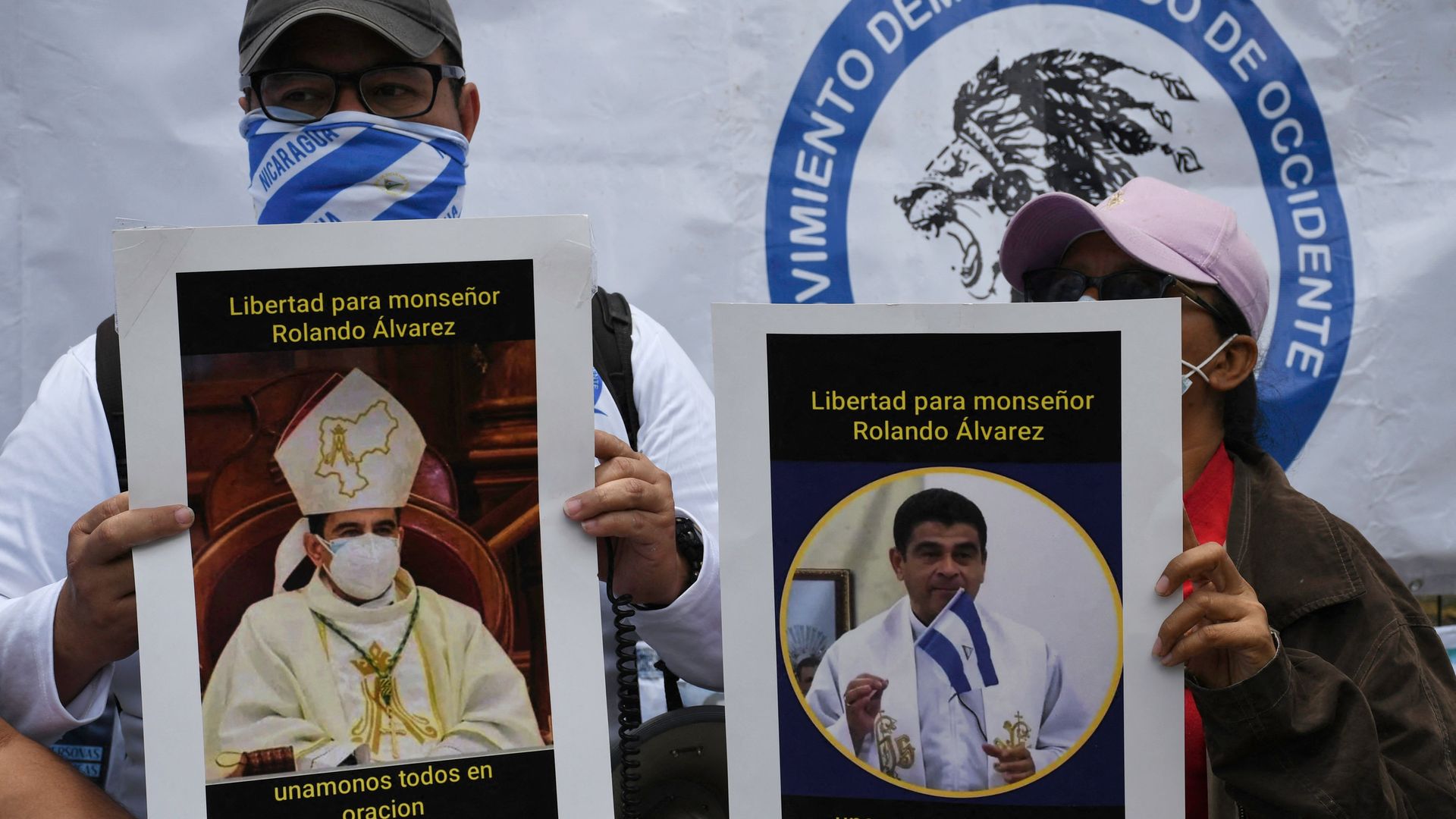
Nicaraguan exiles in Costa Rica protest against the detention of Rolando Álvarez last August. Photo: Óscar Navarrete/AFP via Getty Images
A Nicaraguan bishop who refused to get on a plane with hundreds of other political prisoners to go into exile in the U.S. has been sentenced to 26 years in prison, according to a Nicaraguan justice system statement.
The big picture: The prosecution of Rolando Álvarez, a political prisoner who was first arrested in August, comes as the government of President Daniel Ortega has increasingly cracked down on dissent, Marina writes.
- The sentencing, which was originally scheduled for tomorrow, was moved up to Friday after Ortega freed 222 political prisoners by sending them to Washington, D.C., on a flight.
Background: Álvarez, who has criticized Ortega's human rights record, was accused of being a traitor for allegedly helping anti-government protesters by attempting to mediate between them and the government.
- He was also convicted of spreading false information.
- Álvarez has denied all of the allegations.
Álvarez's prosecution has been decried worldwide.
- Pope Francis said during his Sunday homily he was praying for Álvarez and that he hopes political leaders can open their hearts.
- Bishops from the European Union and the Episcopal Council of Latin America also criticized the conviction.
4. Video evidence hasn't stemmed violence

Illustration: Maura Losch/Axios
Police violence has been long captured on video, yet not much seems to change, experts tell Axios' Keldy Ortiz.
The big picture: Latinos are disproportionately affected by police violence, according to an analysis by the Washington Post.
State of play: The 2014 shooting death of 18-year-old Michael Brown by a white police officer in Ferguson, Missouri, added pressure for more departments to use bodycams.
- In January, the nation was shocked by bodycam and neighborhood security camera footage of the beating of Tyre Nichols.
- He was a 29-year-old Black man who was kicked, punched, and struck with a baton by multiple Memphis Police Department officers as he screamed for help. He died days later.
What they're saying: The drumbeat of footage showing violence against citizens can create a new kind of negative impact, causing fear and trauma in communities of color, Snowden Becker, an audiovisual archivist, tells Axios.
- "Thirty years ago, we were horrified by the footage of police beating Rodney King. And yet, despite our decades of protest, we're still fighting the same battle," the Lawyers' Committee for Civil Rights Under Law said in a statement.
- "The only difference now is more of the horrific incidents are being captured on video, whether it be body cams or bystanders. Tinkering at the margins of a violent police state is not enough."
5. Stories we're watching
Illustration: Natalie Peeples/Axios
1. The Colombian government and the last guerrilla force in the country, the National Liberation Army (ELN), started a second round of peace negotiations yesterday in Mexico City.
- The first round of negotiations led to an agreement on a temporary ceasefire and humanitarian aid in two provinces affected by the fighting.
2. Chileans affected by massive forest fires received temporary housing and funds from the government yesterday.
- The fires, which were caused by unusually high heat in the southern hemisphere's summer, are still raging.
6. 🦾 Smile to go: One man's trash...

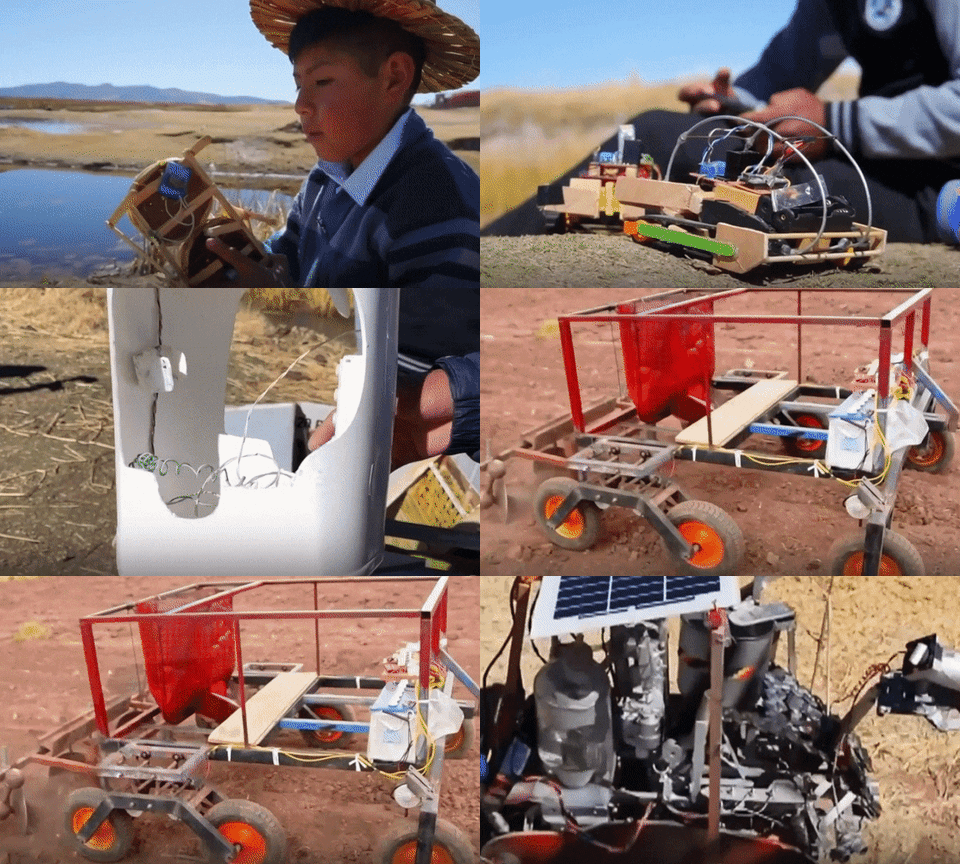
A robotics team in an impoverished area of Bolivia is repurposing electronic waste and other trash for innovative creations, Marina writes.
Details: The kids and teens of the Irohito Urus people use discarded toys, plastic drums, wires, tires and more to make prototypes, including a robot that facilitates planting potatoes.
- They've also made small drones and automatic hand sanitizer dispensers, as well as robotic Andean crafts with the traditional totora leaves of their community.
- Last year the students, led by physics teacher Tanio Uluri, won a medal at a robotics competition in Mexico.
Thank you for reading! And thanks to Carlos Cunha for the copy edits! Don't forget to sign up for this newsletter here.
Sign up for Axios Latino

Keep tabs on the stories that most affect the U.S. Latino community on both sides of the border, a collaboration with Noticias Telemundo.