Axios Generate

September 25, 2024


🧇 Good morning! We've got a newsy 1,214 words, 4.5 minutes
📻 Exactly 25 years ago, Eric Benét and Tamia were No. 1 on Billboard's R&B chart with today's beautiful intro tune...
1 big thing: Energy agency boss faults oil industry on climate

NEW YORK — Oil companies' investments in low-carbon energy sources are falling short of their rhetoric, International Energy Agency head Fatih Birol tells Axios.
Why it matters: The comments are a shot across the bow ahead of the next UN climate summit.
Driving the news: "There's a bit of a contradiction in the share of the climate change or sustainability in their speeches" relative to clean energy's share in their portfolios, he said yesterday on the sidelines of Climate Week NYC.
- Birol cited IEA's finding that last year, clean energy was around 4% of the industry capital investment.
The other side: Oil execs say their strategies balance climate needs with meeting rising global demand for their fossil products.
Friction point: "I don't want to put all of them in the same basket, some of them are doing better than others," Birol said.
- The industry totaled around $30 billion of clean investment last year, including M&A, per IEA.
- "But in general, the global oil and gas industry, I cannot yet say that they are an important part of the clean energy transition."
How it works: Oil majors like Exxon and Shell, and some state-owned giants and large private independent players, have boosted investments in recent years.
- Strategies vary. U.S.-based Exxon and Chevron focus on carbon capture, hydrogen and alternative transport fuels.
- European majors are into renewable power too, though BP and Shell have been getting more selective.
What we're watching: Birol sees a "huge opportunity" for the industry to invest profitably, noting its skill sets translate nicely to areas like offshore wind and geothermal.
🚨We'll have more tomorrow from Axios' sit-down with the IEA boss.
2. Bonus: OPEC vs. IEA on oil demand

Birol remains confident in IEA's view that oil demand will peak by 2030 and said many companies now agree. But OPEC keeps begging to differ — a lot.
Why it matters: The timing of a peak and the decline slope — very gentle, kinda gentle, or steep — will affect investment strategies and CO2 emissions.
Driving the news: OPEC's new long-term outlook released yesterday sees global demand rising to 120 million barrels per day in 2050, up from roughly 102 mbd last year.
- Non-OECD nations drive the growth, while oil thirst declines in wealthy developed nations. The WSJ has more.
The bottom line: The peak demand wars won't end until it's quite clear the much-discussed inflection point has arrived.
3. Helene size, rapid intensification make it unique threat
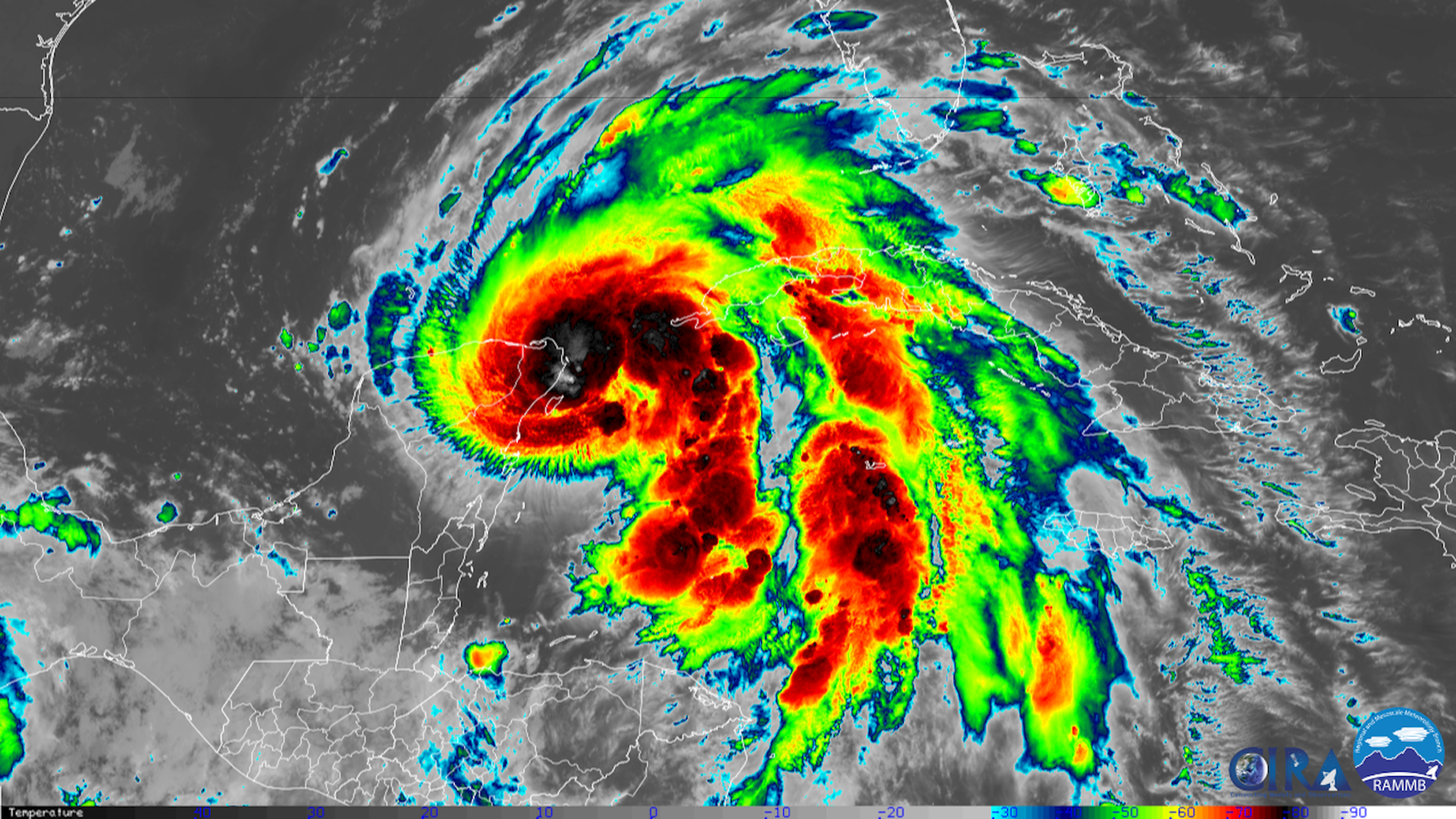
Tropical Storm Helene, which is expected to rapidly intensify into a "major" hurricane of Category 3 intensity or higher, will affect nearly the entire state of Florida through Friday.
Threat level: In a rare occurrence, almost all of Florida, with the exception of the western Panhandle, is under some type of tropical storm or hurricane warning.
- Helene will be an unusually large storm, making a focus on the track of the eye deceiving.
- The entire west coast of Florida is at risk for a damaging storm surge, including Tampa Bay, where a 5-to-8-foot surge is forecast above normally dry land if the storm hits at the time of high tide.
- Evacuations for low-lying areas along the west coast are underway.
Zoom in: The center of the storm is forecast to make landfall in Florida's Big Bend region tomorrow evening as a Category 3 or stronger storm.
- It will undergo a lengthy period of rapid intensification between now and the time of landfall.
- Power outages may stretch from Orlando to Atlanta and parts of South Carolina as strong winds move inland after landfall.
Context: Due to climate change, more storms now undergo rapid intensification, and there is an amplification of the intensification rates in the Atlantic.
- Climate change is also causing hurricanes to produce more rainfall than they used to a few decades ago.
Stunning stat: Up to 15 inches of rain are forecast across the southern Appalachians, triggering widespread flooding and landslides.
- Even Atlanta could see upwards of a foot of rain.
The bottom line: Helene threatens to be a landmark storm that causes multibillion dollars' worth of damage across the Southeast.
4. 👀 Exclusive: New Energy Dept. trade analysis

The Energy Department will today announce a pilot project to calculate the emissions linked to production of certain energy-intensive industrial products.
Why it matters: Complex tallies of CO2 in heavy manufacturing are getting more important as climate and trade policies overlap.
Driving the news: DOE says there's rising global demand for materials made with lower-emissions practices.
- It cites "new climate-focused trade policies" around the world, "green procurement" programs in the U.S. and elsewhere, and several other drivers.
- Biden officials are "using all tools in the policy toolbox" to meet climate goals while supporting U.S. manufacturing, White House climate adviser Ali Zaidi said in a statement.
Threat level: The project comes as U.S. and EU officials fear handing competitive advantage to countries — including China — with CO2-heavy production of goods like steel.
- That's one reason for the new White House task force announced in April that seeks more planet-friendly trade.
- The White House, via subsidies in the 2021 infrastructure law and 2022 IRA, is spending heavily to support domestic manufacturing.
What we're watching: The future of policies that create carbon tariffs on energy-intensive goods to protect domestic industries.
- The EU is in initial phases of implementing a "carbon border adjustment mechanism."
- Some U.S. lawmakers want to impose one as well.
The bottom line: As markets for "clean" manufacturing grow, the U.S., trading partners, companies and others need a "fair, coherent system" for measuring emissions intensity, DOE said.
5. Bio-energy player launches U.S. expansion
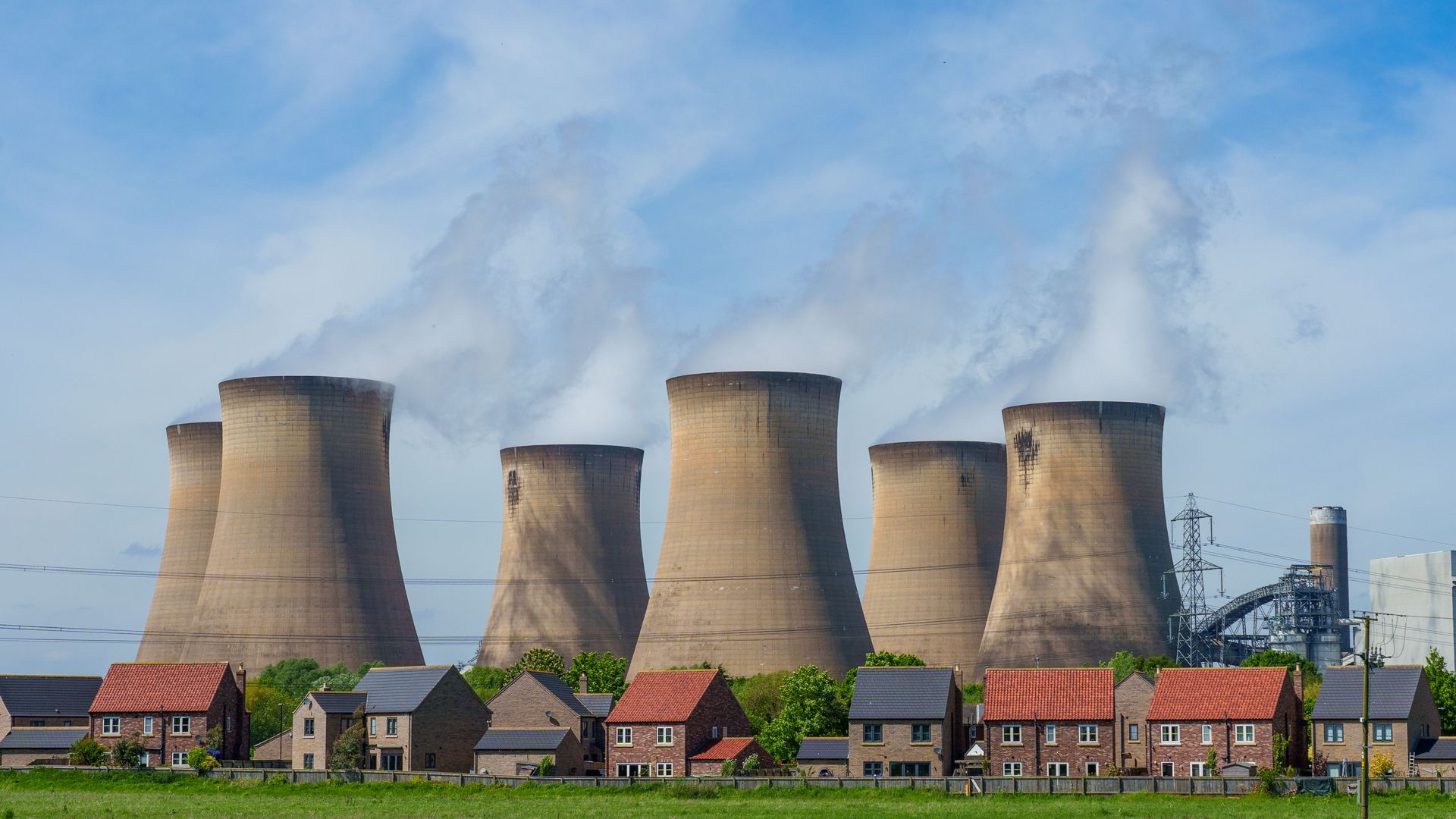
Drax, the operator of the largest power plant in the U.K., announced the creation of a new U.S. subsidiary called Elimini to seek carbon removal credits under the Biden climate law.
Why it matters: Drax burns biomass such as wood pellets at its UK power station to generate electricity and receives subsidies in return for providing such "sustainable" energy.
- Now it is seeking to add carbon capture and storage technology to the plant and sell credits for such carbon removal.
Zoom in: The company is thinking big and plans to invest $12.5 billion on new bioenergy plants in the U.S. and elsewhere in the next decade.
- It is already evaluating more than 20 sites for potential bioenergy plants with carbon capture and storage capability, also known as BECCS, the company said in a statement.
- Elimini would also seek to sell carbon removal credits from the Drax power plant in the UK, with the planned conversion of that facility to BECCS.
Yes, but: This technology hasn't yet been proven at scale but is one of the options the UN IPCC identified in 2018 as potentially helpful for meeting the Paris targets.
- It noted considerable hurdles the tech faces on multiple fronts.
Friction point: Environmental groups and many climate scientists argue that bioenergy, particularly when using wood pellets, emits more carbon than it absorbs.
- This is because young trees are less efficient at carbon sequestration compared to the older trees the company's suppliers cut down.
6. ☀️ Number of the day: $1 trillion per year
That's the global investment needed to triple renewable power capacity by 2030, a goal set at last year's UN climate talks, per new BloombergNEF estimates.
- The world is off pace to meet the target, but it's within reach, they find. $623 billion was invested in 2023.
- Meanwhile, IEA dropped a detailed look at how to meet that goal and the related aim of doubling energy efficiency gains by 2030.
📨 Did a friend, colleague or even a frenemy send you this newsletter? Welcome, please sign up.
🙏 Thanks to Chris Speckhard and Chuck McCutcheon for edits to today's edition, along with the brilliant Axios Visuals team.