Axios Generate

June 10, 2024


🌞 Good morning and hope you had a great weekend. We'll ease into the workweek with 1,132 words and 4.5 minutes
🎙️ Exactly 35 years ago, Fine Young Cannibals ruled the Billboard album chart with "The Raw & The Cooked," which has today's intro tune...
1 big thing: The increasingly costly "climate economy"

Flooding — which has gotten increasingly severe in an era of extreme weather — costs the U.S. economy an estimated $180 billion to $496 billion per year, according to new data from Democrats on the Senate Joint Economic Committee.
Why it matters: The estimates are the equivalent of over 1% of 2023's gross domestic product and shed light on a worsening problem for the insurance industry, as well as businesses and homeowners across the country.
The big picture: The report focuses on an issue that lawmakers in both parties are confronting, as a warming climate increases flood risks and severity.
- Governors in states such as Florida and Louisiana are currently grappling with insurers fleeing their states amid rising hurricane-related hazards and widespread flooding.
- The report finds that human-caused climate change is boosting flood risks, given that heavy precipitation is becoming more frequent and intense and coastal sea levels are rising.
- The committee's majority staffers undertook their own research and consulted outside experts to come up with the new estimates, a committee spokesperson told Axios.
By the numbers: Between about $70 billion and $345 billion in infrastructure upgrades are needed for flood protection.
- Up to $40 billion a year is needed for direct commercial impacts from flooding.
- Up to $15.1 billion is seen for expected annual damage to homes with federally-backed mortgages.
- Up to $10.8 billion a year is estimated to represent the total value of owned homes lost to sea level rise.
The fine print: The report acknowledges its estimates are likely too low, stating: "Expert opinion suggests that the 'true total cost' of flooding lies somewhere between 0.5 to 2x the range estimated by the JEC Democratic staff."
The bottom line: The effects of a warming climate are making a growing proportion of the economy more vulnerable — and costly— than in the past, which will only continue. That's a sobering thought headed into what could be a hyperactive Atlantic hurricane season.
2. The climate fallout of Europe's elections
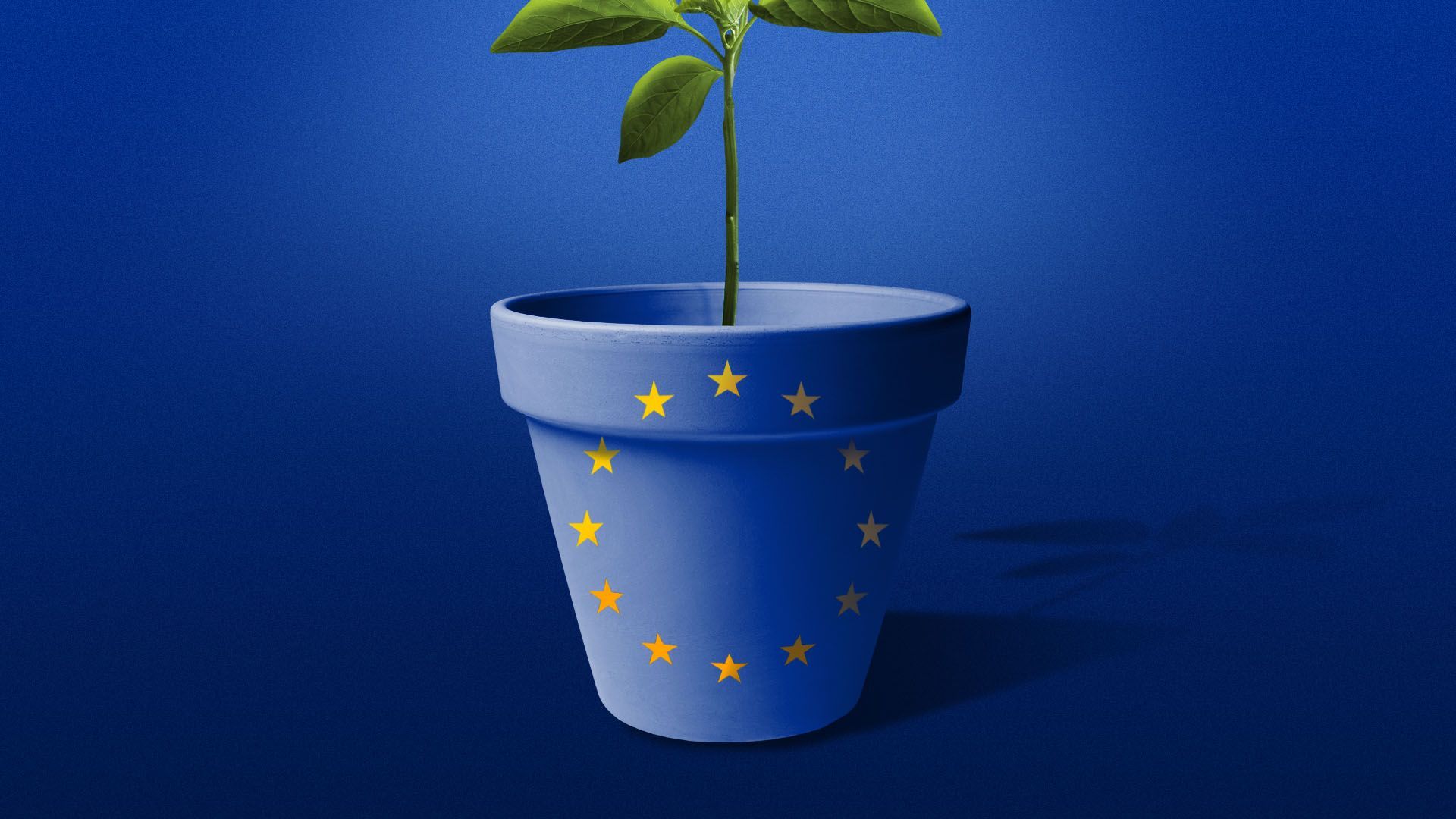
The success of right-wing parties in European Parliament elections could erect hurdles for the European Union's climate policy.
Why it matters: The bloc's emissions are the world's fourth-largest, behind China, the U.S. and India.
The big picture: Conservative and hard-right parties gained seats at the expense of liberal and Green parties.
- But a centrist, pro-EU majority remains in firm control of the European Parliament, Axios' Zachary Basu reports.
What they're saying: A Reuters analysis predicts that most current policies will likely remain.
- But new efforts — like approving an aggressive 2040 emissions target — may face a tougher climb.
The bottom line: Ingvild Sørhus of the carbon and renewables market analysis firm Veyt tells Bloomberg:
- "A strong and confident right will probably succeed in blocking new climate legislation that puts costs on households and industries."
3. Florida goes from extreme heat to flooding
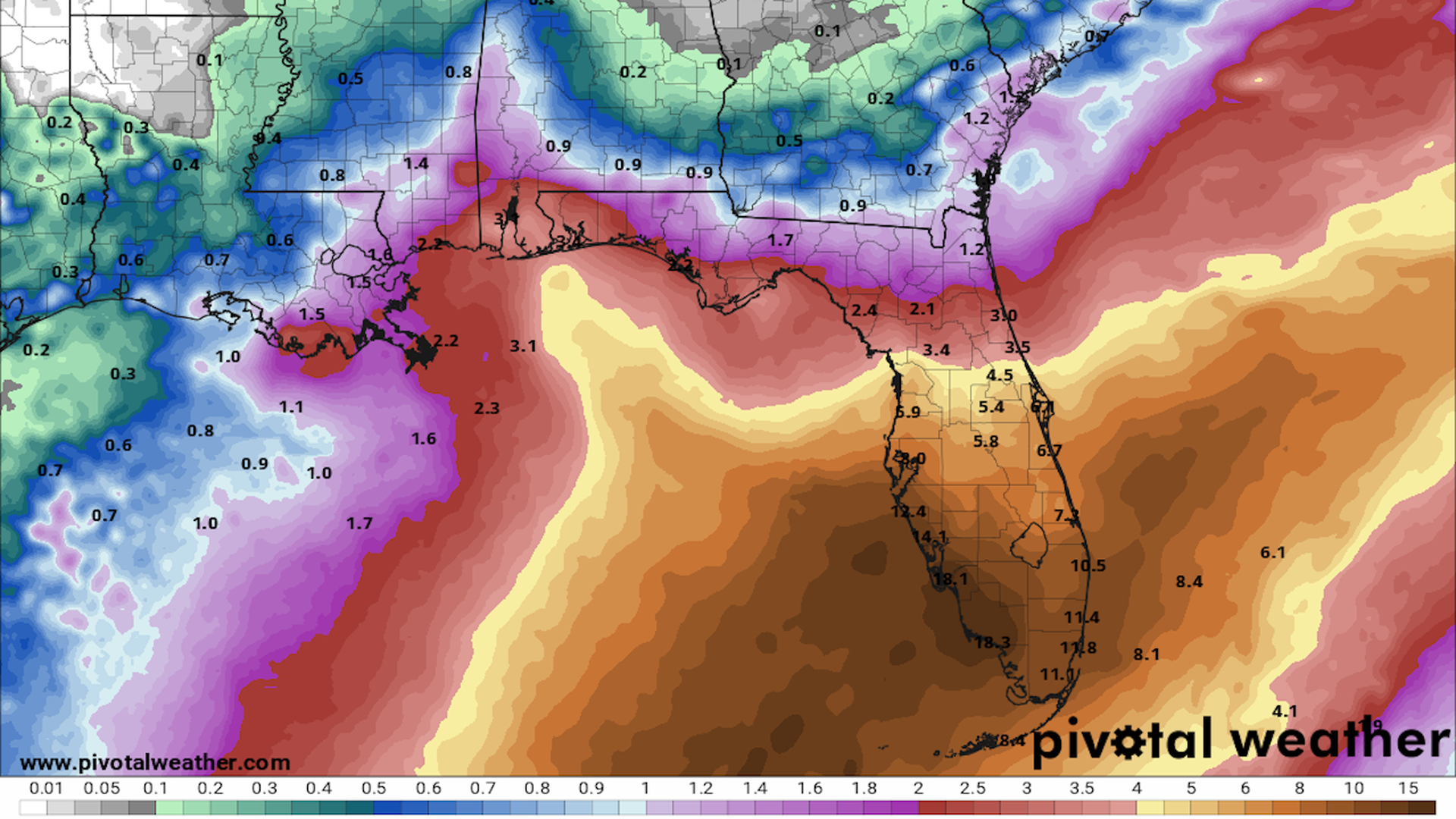
South Florida has been setting heat records, aided by record warm ocean temperatures. Now the hot seas surrounding the peninsula and farther away, in the Caribbean, are set to contribute to days of heavy rainfall.
The big picture: NOAA is forecasting more than a foot of rain will fall this week between Tampa and Miami, bringing a case of weather whiplash.
By the numbers: The Weather Prediction Center is calling for seven-day rainfall totals to climb as high as 15 inches or more in South Florida.
4. ICYMI: CAFE standards Friday news drop
The Biden administration's final fuel economy standards across the U.S. vehicle fleet got a mixed reaction when they were announced on a sleepy late spring Friday.
Why it matters: Corporate Average Fuel Economy standards (CAFE) are a "stick" in the White House's arsenal to restrict transportation emissions, the biggest source of CO2 emissions in the U.S.
Zoom in: On the other hand, the financial incentives for purchasing electric vehicles are a carrot-based approach.
- In its Friday rollout, the administration backed off an initial proposal to strictly curtail emissions from popular SUVs, but the standards would still yield more stringent targets for them through 2035.
- For example, all SUVs and pickups would need to meet an average fuel economy of 45 mpg in 2031. This raises the current standard of 39.1 mpg but is lower than the 52.2 mpg limit initially proposed.
What's next: The guidelines are likely to be challenged in court and could be suspended or altered if former President Donald Trump were to win back the White House in November.
5. Tornado Alley barrels east
A new study shows "Tornado Alley" is migrating east, underscoring the increasing vulnerability of twisters in the Midwest and Southeast and a decreasing trend across the Plains.
Why it matters: Tornadoes are deadly and destructive, and the thunderstorms that give rise to them are susceptible to climate change. This includes increasing temperatures, higher humidity and alterations in wind shear.
Zoom in: Modeling studies have shown that as the climate continues to warm, there would be more days with an unstable atmosphere prone to thunderstorm formation, resulting in more thunderstorm days, particularly in the East.
- However, wind shear, which refers to winds blowing at different speed and/or directions with height, may become less plentiful in a warmer world, research showed.
Between the lines: The new peer-reviewed research, building upon previous work, analyzes observational data between 1951-2020. It demonstrates that more heavily populated areas in the Midwest and Southeast are already seeing more tornadoes and that the Plains' status as the tornado capital of the country is false.
- In addition, the researchers found a transition away from warm-season tornadoes, particularly during the summer, and toward the cold season.
- "All of the increase in F/EF1+ tornadoes in the eastern U.S. is due to an increase in cold season tornadoes," the study states.
- Summer tornadoes declined by 37%, the study found.
- While the researchers did not conduct an attribution analysis into whether climate change is behind these shifts, they note that the findings are consistent with climate change projections.
The fine print: The largest increase in tornado frequency is in southern Mississippi, middle Tennessee and southwestern Kentucky, while the largest decreases took place in northern Texas and southern Oklahoma.
- Jackson, Miss., is located in the region that had the largest increase in tornadoes, while Cleburne, Texas, had the largest decrease, the study found.
6. Saudi Aramco sells $11.2 billion in shares
Saudi Aramco reportedly sold a total of $11.2 billion shares in an offering Friday, completing a sale announced at the end of May.
Why it matters: The majority of the purchases were from Aramco investors outside of Saudi Arabia, the FT reported.
- That will help the state-run oil, quasi-public oil giant broaden its shareholders while bringing in much-needed revenue for the Saudi government.
- The government has had limited success in funding its ambitious Vision 2030 Agenda.
Between the lines: Aramco sold about 0.62% of shares in the company, and did so at a lower price than some had expected. That partly reflects oil market uncertainties, global efforts to rein in fossil fuel use and other factors.
📨 Did a friend, colleague or even a frenemy send you this newsletter? Welcome, please sign up.
🙏 Thanks to Chris Speckhard and Javier E. David for edits to today's edition, along with the brilliant Axios Visuals team.