Axios Generate

December 09, 2022
🍺 Friday, whew. And woo! Today's newsletter has a Smart Brevity count of 981 words, 4 minutes.
🇨🇭Axios will be at the 2023 World Economic Forum in Davos, Switzerland. Want to attend one of our events? Request an invite.
🎶 This week marks 40 years since Peter Gabriel released today's intro tune...
1 big thing: The new face of renewables advocacy
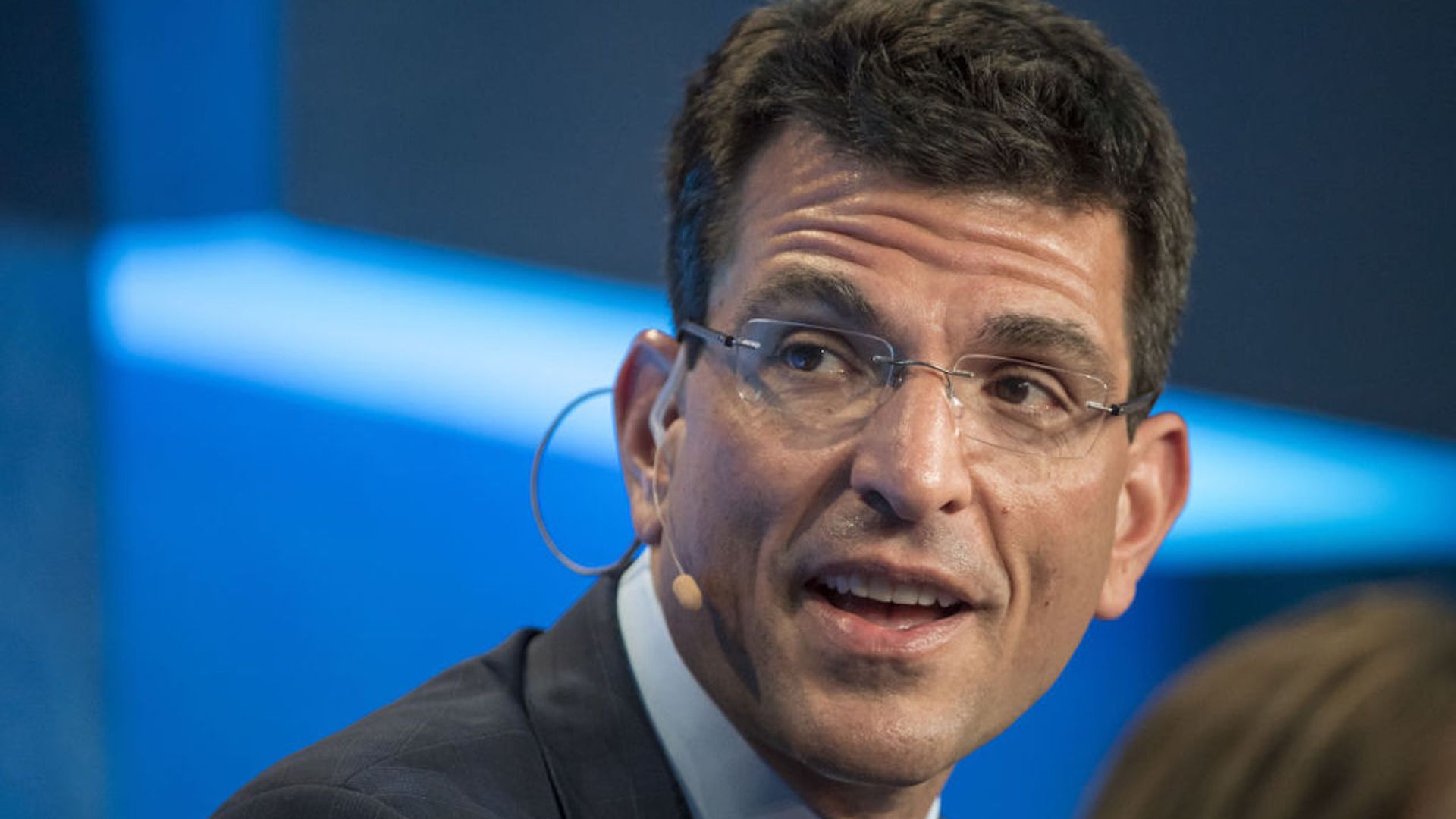
Jason Grumet. Photo: David Paul Morris/Bloomberg via Getty Images
The American Clean Power Association — the big trade group for wind, solar, storage and more — has tapped veteran policy insider Jason Grumet as its next CEO, Ben writes.
- Grumet arrives via the Washington, D.C.-based Bipartisan Policy Center (BPC) he founded in 2007 and has led since.
Why it matters: The selection comes at a pivotal moment.
- With unprecedented incentives and investments in the climate law and 2021 infrastructure law, the sector is moving into a new phase focused on using those tools and protecting them politically.
Quick take: What's now a large and mainstream industry faces an evolving landscape.
- Passing the climate law was about holding Democrats together when the party narrowly controlled Washington. Now, implementing and defending the law will occur in a divided Congress.
- It's also a sector facing scrutiny over topics like human rights problems with solar supply chains, and challenges like pushing for transmission needed to move renewable power to population centers.
What they're saying: "Jason takes the helm of ACP at a crucial moment when clean power needs to prove its economic value to both average American consumers and less progressive audiences," said Paul Bledsoe, a former Clinton White House climate aide who long worked with Grumet at the BPC and elsewhere.
Catch up fast: Grumet replaces Heather Zichal, the former Obama-era climate aide who was the first CEO of ACP.
- The group formed over two years ago via the expansion of the American Wind Energy Association, and last year also absorbed an energy storage trade group.
The big picture: "My life’s work has been about two things: Developing real climate solutions and building durable bipartisan policy," Grumet said in a statement.
2. The (potential) stakes of Sinema's big switch
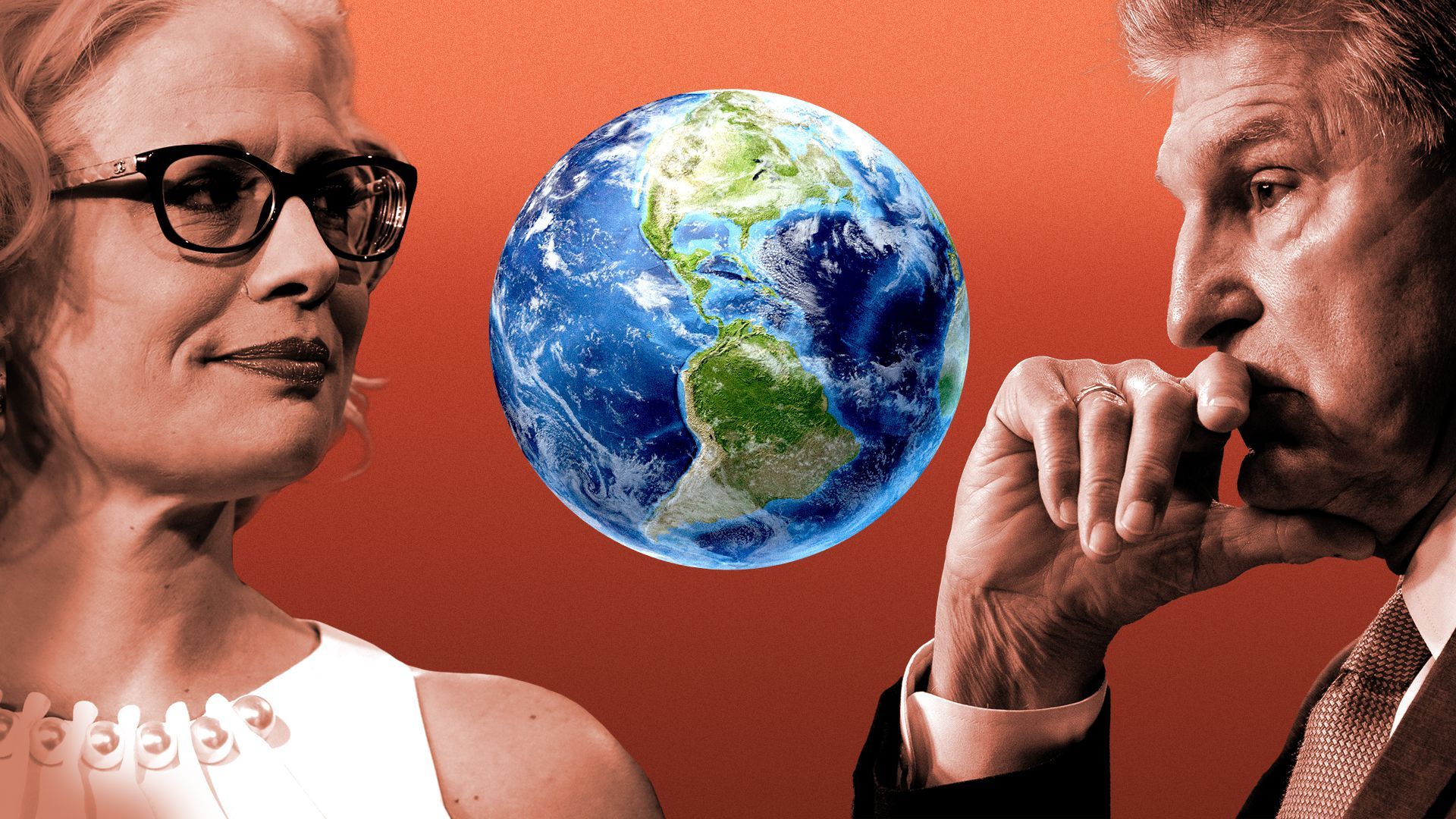
Photo illustration: Sarah Grillo/Axios. Photos: Stefani Reynolds-Pool, Alex Edelman/AFP via Getty Images
The big Beltway news this morning is that Sen. Kyrsten Sinema of Arizona is bailing on the Democrats to become an independent, Ben writes.
What we're watching: Whether this changes the politics of any energy and climate votes in the Senate that Democrats control by a razor-thin margin.
- It could revive some of Joe Manchin's leverage as the pivotal Democratic swing vote.
- But Sinema tells Politico she's not caucusing with Republicans or changing her outlook.
3. 🏃🏽♀️Catch up fast on tech finance
💰$4 billion. That's how much low-carbon energy player AES and Air Products, an industrial gases giant, are investing in a Texas project to produce "green" hydrogen using renewable power, Ben writes.
- Why it matters: The plant, slated to begin operations in 2027, will be "the largest green hydrogen facility in the United States," they said.
- Zoom in: It will be powered by 1.4 gigawatts (GW) of wind and solar generation and have capacity to produce over 200 metric tons per day of hydrogen, they said.
- The intrigue: Discussions over the project began several years ago, according to AES. But it's also poised to benefit from hydrogen incentives in the new climate law, the WSJ notes.
🔋 "To help electric planes take off, German battery company Customcells says it landed about $63 million (€60 million) in Series A funding from Porsche and several climate-tech investors." (TechCrunch)
🥬 The Canadian vertical farming company GoodLeaf Farms, which says it has the country's largest such operations, has raised $150 million in new capital, it announced.
- The big picture: Companies devoted to vertical farming, which can boost food system sustainability, have been raising significant amounts of cash in recent years.
4. Charting the renewables-hydrogen link
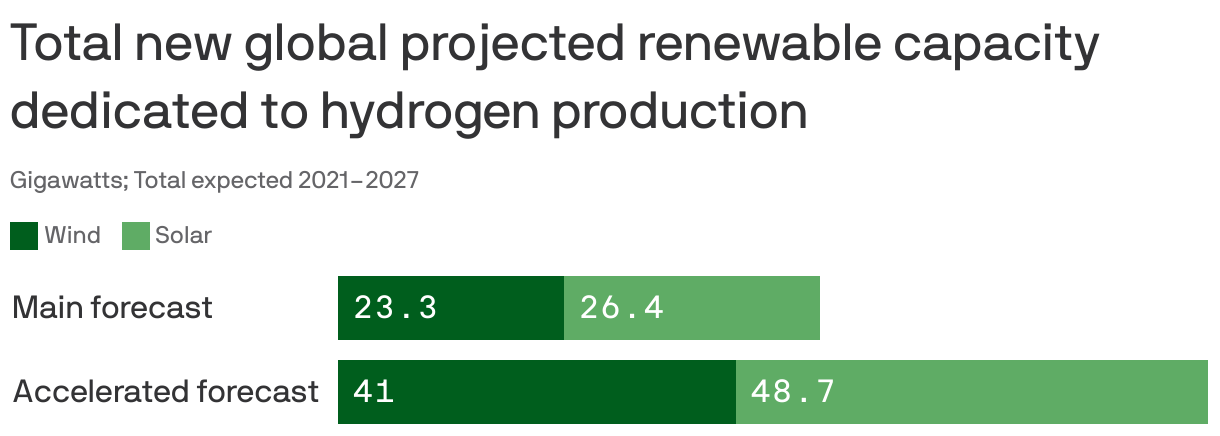
Speaking of hydrogen, the International Energy Agency posted a helpful look at increasing amounts of renewable generation capacity that will be devoted to "green" production, Ben writes.
The big picture: Right now, under 1% of global hydrogen production is powered by renewables.
- But "project pipelines for using electrolyzers to produce hydrogen from renewable electricity have swelled in recent years," notes IEA's post, an excerpt of their wider renewables outlook published this week.
Why it matters: Hydrogen's potential to be a major weapon against global warming rests on whether production is powered by zero-emissions sources or fossil fuels (and, if the latter, how much CO2 can be captured).
Zoom in: IEA's main 2022-2027 forecast sees around 50 gigawatts of renewables capacity dedicated to hydrogen production, "accounting for 2% of total renewable capacity growth."
5. Study maps Indigenous risks from "transition minerals"

Illustration: Aïda Amer/Axios
Over half of current or potential worldwide mining projects for materials used in low-carbon energy are located on or near Indigenous peoples' lands, new peer-reviewed research finds, Ben writes.
Why it matters: A lot more raw materials like lithium and copper are needed for low-carbon power and batteries and other tech, but wider extraction creates risks to vulnerable ecosystems and people.
Zoom in: The paper in Nature Sustainability identifies 5,097 projects and finds that 54% are on or adjacent to Indigenous lands.
- It notes "competing sustainability objectives found at the intersection between mining for the energy transition and territories less impacted by the historic forces of industrialization."
What's next: Indigenous people "must have a genuine say in where and how" minerals are extracted, the authors write in The Conversation.
- "Proper consultation and legal protections" are needed.
🎩 A hat-tip to Gizmodo's deeper look at the research and the wider topic.
6. Exxon raises climate spend and share buybacks
Illustration: Rebecca Zisser/Axios
Exxon is boosting investment plans for its "low carbon solutions" initiatives, Ben writes.
Driving the news: The oil giant is now planning $17 billion from 2022 to 2027, a 15% rise from its prior plan for that period, it said Wednesday.
- That captures investments in Exxon's carbon capture, biofuels, and hydrogen businesses, as well as emissions cutting from operations.
- Exxon, which earned record profits the last two quarters, also expanded its share buyback program to $50 billion through 2024.
Why it matters: The industry — and especially U.S.-based majors — face pressure to do more on climate change.
Yes, but: It's a small share of Exxon's overall 5-year capital spending guidance, which envisions $100 billion to $125 billion through 2027.
What we're watching: How subsidies in the new climate law for CO2 capture and hydrogen affect Exxon's future plans.
- An investor deck yesterday notes the law "expands third-party market opportunities."
📬 Did a friend send you this newsletter? Welcome, please sign up.
🙏 Thanks to Nick Aspinwall and David Nather for edits to today's newsletter. Have a great weekend.
Sign up for Axios Generate

Untangle the energy industry’s biggest news stories


