Axios Generate

January 02, 2025

π Welcome back and welcome to 2025! We're opening the year with a quick 1,129 words, 4.5 minutes
π¨ Situational awareness: The end of Russian gas flows to Europe through a key Ukrainian pipeline means EU LNG import needs may rise β and it could bring a "tightening of global gas markets in 2025," International Energy Agency head Fatih Birol said.
- Yes, but: His statement on X says there's "no imminent gas supply security risk for the EU."
πΉ This week marks 25 years since R&B great D'Angelo released a killer single that's today's intro tune...
1 big thing: π₯Ά Long-duration Arctic blast begins
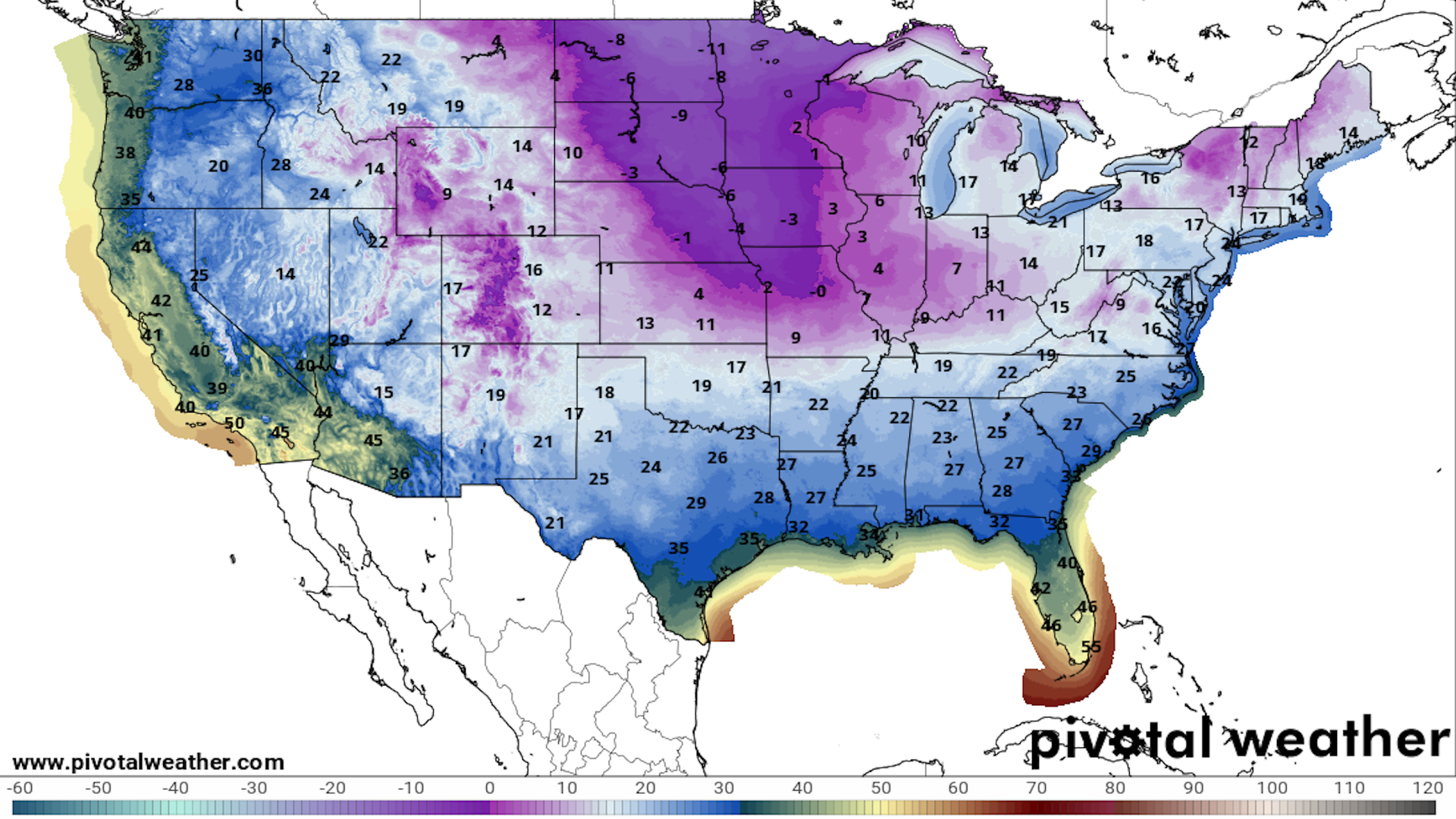
An Arctic outbreak featuring punishing cold weather is beginning across much of the U.S. at the same time that Europe prepares for plunging temperatures.
Why it matters: About three weeks of cold east of the Rocky Mountains β potentially accompanied by major winter storms β will boost natural gas prices, pose a risk of power outages and disrupt travel.
Threat level: The cold will hit the U.S. in waves, with the first moving in this week, a second early next week on the heels of a significant Plains to Mid-Atlantic winter storm, and additional ones after that.
- Each push is likely to be colder than the one preceding it.
- By early next week, daily high temperatures may be stuck in the single digits across parts of the Midwest, with the possibility of temperatures dropping to 32Β°F all the way to the Gulf Coast.
- Highs in Washington, D.C., may not get much above freezing for several days in a row during the Jan. 4-10 period, with the possibility of even colder weather arriving after that.
- This cold snap may affect at least 200 million people before it ends. Millions of these Americans may see increased heating bills as natural gas prices spike, and some could be affected by power outages.
Zoom in: The polar vortex is an area of low pressure that exists over the Arctic at the upper levels of the atmosphere, in the stratosphere, during winter.
- Strong winds circulate counterclockwise around this low pressure area, and build up and trap some of the coldest air in the Northern Hemisphere across the Arctic.
- When these strong winds slacken, parts of the polar vortex can detach and meander southward, bringing ultra-cold air to southern Canada, the U.S. and Europe.
- This occurred in the winter of 2013-14. But this new event is distinct.
- Instead, the stratospheric polar vortex is becoming "stretched" from north to south across the North Pole.
Between the lines: The stretched vortex may be setting in motion a complicated board of atmospheric chess pieces that include a strong area of high pressure over Greenland.
- That stops storms from heading out to sea and directs cold weather in the eastern United States.
- This Greenland Block, along with other, broader patterns of air pressure over the Arctic and North Atlantic, also tends to favor unusually cold conditions in northern Europe.
- The Greenland Block is combining with a high pressure area stretching from California to Alaska to promote air to flow from Siberia, across the pole, and southward toward the continental U.S.
What they're saying: "It is the stretching of the polar vortex that allows colder temperatures normally confined to the Arctic to spread much further south of normal," said Judah Cohen, a meteorologist at AER, via email.
- Some scientists have published studies linking rapid Arctic climate change with shifts in the polar vortex, though this is part of an active debate.
2. πCatch up quick: Data centers, climate "Superfund," IEA, Wall Street

π Data centers could reach up to 12% of U.S. power demand in 2028, which would nearly triple last year's share, an Energy Department report finds.
- Why it matters: The AI-driven growth is making grid decarbonization tougher in the near term but also boosting plans for small nuclear reactors.
βοΈ Sen. John Barrasso (R-Wyo.) issued a report alleging the International Energy Agency has strayed from its energy security mission and morphing into a climate NGO (claims the agency disputes).
- Why it matters: He's the incoming majority whip (the No. 2 leadership spot). Barrasso said in a statement that in the next Congress, the Senate "must work to restore IEA's credibility and revive its core mission."
- What we're watching: What that means β including whether GOP lawmakers will look to restrict U.S. funding for the multilateral agency.
π΅ Via Reuters, "U.S. banks Citigroup and Bank of America...are exiting the Net-Zero Banking Alliance (NZBA), a group of global banks that have pledged to curb greenhouse gas emissions."
- Why it matters: It's just the latest sign of Wall Street giants bailing on climate coalitions amid GOP claims they enable improper collaboration against fossil fuels.
- Driving the news: Morgan Stanley is out too, Bloomberg reports this morning.
π New York Gov. Kathy Hochul (D) signed a bill into law imposing fees on fossil fuel companies to help finance projects that boost state climate resilience.
- Why it matters: It's the second state after Vermont to create a "climate Superfund" law. The New York measure aims to collect $3 billion annually.
- What's next: Legal challenges are expected, the NYT reports.
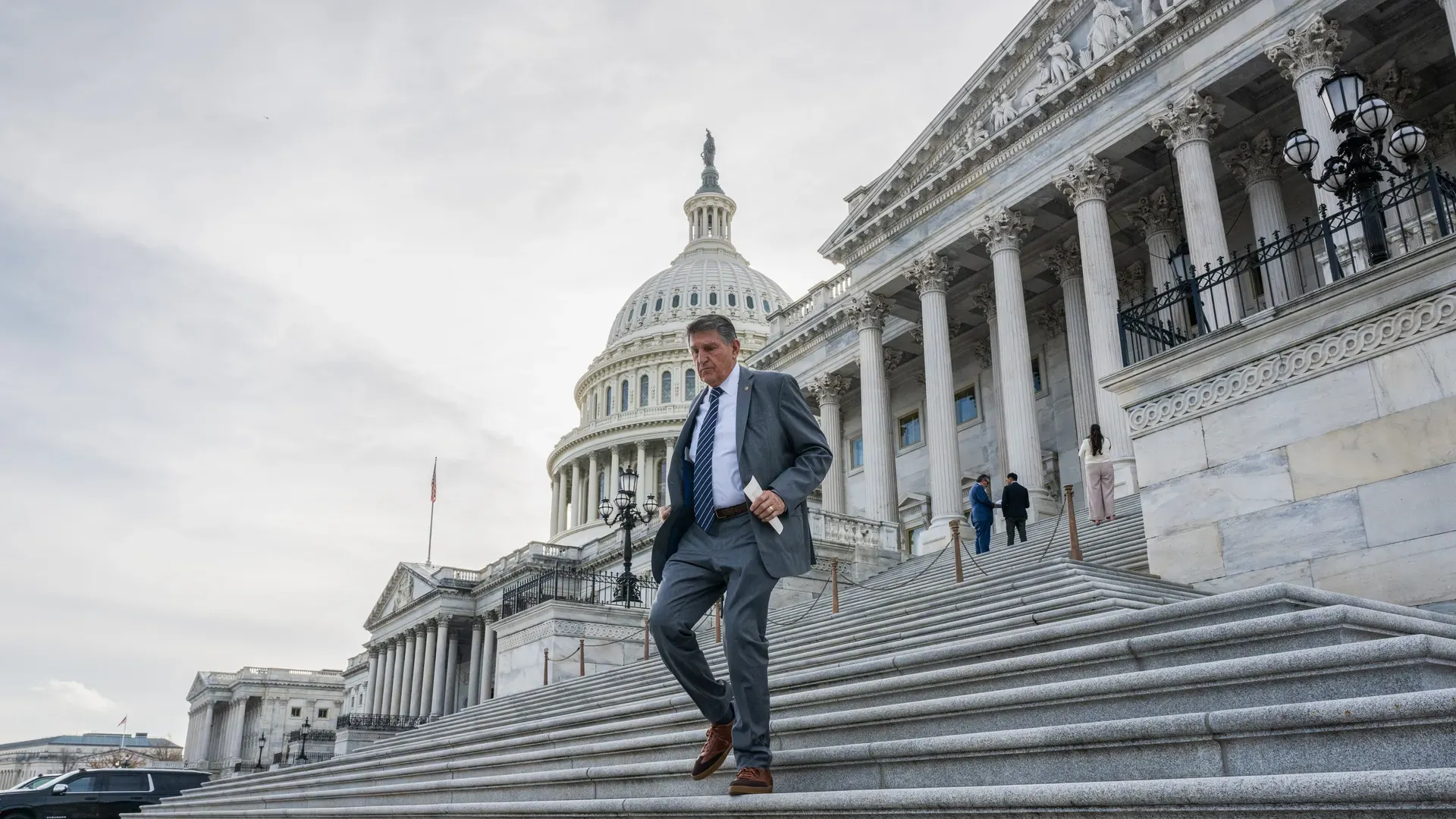
3. π§³ Joe Manchin's closing thoughts
Sen. Joe Manchin says President-elect Trump should fix what's wrong with the IRA and its implementation.
Why it matters: The IRA's primary architect makes no secret of his displeasure with the Biden team's implementation of EV and hydrogen tax credits.Β
Driving the news: The departing Energy and Natural Resources chair offered Axios closing thoughts on his way out the door.
- "President Trump has a golden opportunity to come in and create the Energy Security Act of 2025," Manchin said in a wide-ranging interview.
Between the lines: Manchin still considers the IRA a good law that "has done exactly what it was supposed to do."Β
- But he's also urged people to sue over the Biden administration's implementing guidance if they can show damages: "My staff will do an amicus brief for you. You'll win every one of them."
Yes, but: Manchin doesn't think Republicans will succeed at enacting permitting legislation via reconciliation in the new Congress after the lame duck implosion of talks.
Unlock the whole story, and if you need smart, quick intel on energy and climate policy for your job, get Axios Pro Policy.
4. βοΈ Number of the day: $2.96 billion
That's the valuation of KoBold Metals β a mining company that uses AI to find critical minerals β after a newly closed $527 million Series C equity round.
Why it matters: The world needs a lot more copper and other minerals for the energy transition.
Catch up quick: Durable Capital Partners LP and T. Rowe Price funds led the new financing.
5. π¬ Quoted: Jimmy Carter's energy speech
"Our decision about energy will test the character of the American people and the ability of the president and the Congress to govern this nation. This difficult effort will be the 'moral equivalent of war,' except that we will be uniting our efforts to build and not to destroy."β President Jimmy Carter in a nationally televised speech on energy on April 18, 1977
Carter, who died on Sunday at the age of 100, was one of the most consequential presidents on energy policy.
The big picture: Carter grappled with energy crises, including oil price spikes and long lines for gasoline.
- He oversaw creation of the Department of Energy, sought to expand domestic oil, coal, solar and nuclear power, and was a major proponent of energy conservation.
Go deeper: White House solar panels still power Carter's environmental legacy
π¨ Did a friend, colleague or even a frenemy send you this newsletter? Welcome, please sign up.
π Thanks to Chris Speckhard and Chuck McCutcheon for edits to today's edition, along with the brilliant Axios Visuals team.
Sign up for Axios Generate