Axios Generate

September 09, 2024

🧇 Welcome back! We're starting the week with 1,216 words, 4.5 minutes.
🌀 Situational awareness: Tropical Storm Francine is forecast to form today in the Gulf of Mexico and strike Louisiana Wednesday as a Category 1 hurricane.
🎸 This week marks 35 years since Boston rock legends Aerosmith released the album "Pump," which provides today's intro tune...
1 big thing: Biden races clock on climate, environment
Announcements from the Biden administration have been coming fast and furious, from $7.3 billion for rural electric cooperatives to boost renewable power to nearing finalization of a new marine sanctuary in the last week alone.
Why it matters: The administration is in a race against the clock to get billions in "clean" energy funding out the door before the end of his term.
- Republican nominee Donald Trump has vowed to claw back unspent funding from President Biden's signature climate law.
The big picture: Last week's announcements included $100 million from the bipartisan infrastructure and climate laws to hone extreme weather and climate forecasting at NOAA and $300 million from the EPA for greenhouse gas emissions reductions in tribal communities.
- In addition, the White House touted more wind energy investments, bringing total offshore wind power approvals to about 15 gigawatts, and the EPA touted new spending on cleaning up brownfield sites.
Context: "The flurry of activity that is happening around regulations and implementation of policy — this happens every term," Sasha Mackler, executive director of the Bipartisan Policy Center's energy program, told Axios.
- "In this particular moment, as a result of the enormous legislative productivity of the last four years, there's just a lot to do."
The intrigue: The White House views these steps and other forthcoming actions as part of the rapid pace of climate and environmental actions that have taken place since Biden assumed office.
Between the lines: One of the more vulnerable programs, according to experts outside the government, is the EPA's multibillion-dollar greenhouse gas reduction fund, which seeks to catalyze spending from the private sector.
- The EPA has now obligated much of this program, White House climate adviser Ali Zaidi told Axios, and is aiming for the finish line with this and other programs.
Yes, but: Not all of the money Congress has appropriated for agencies, particularly at the Energy Department, will have been spent by the time Biden leaves office.
- "A commitment of resources is not the same as a grant obligation or as something that's actually gone out the door," Mackler said.
- Some of the money that needs to get out the door, lest it be halted by a potential second Trump term, is still in the request-for-proposal stage, Zaidi acknowledged.
Mackler noted that the tax incentives for electric vehicles and other low emissions technologies under the IRA would take an act of Congress to fully rescind, although new leadership in the White House and at Treasury could unilaterally alter them.
- Mackler identified DOE's hydrogen hubs, direct air capture hubs and Loan Program Office as being vulnerable to potentially leaving money on the table in January.
2. Curbside EV chargers powered by the sun

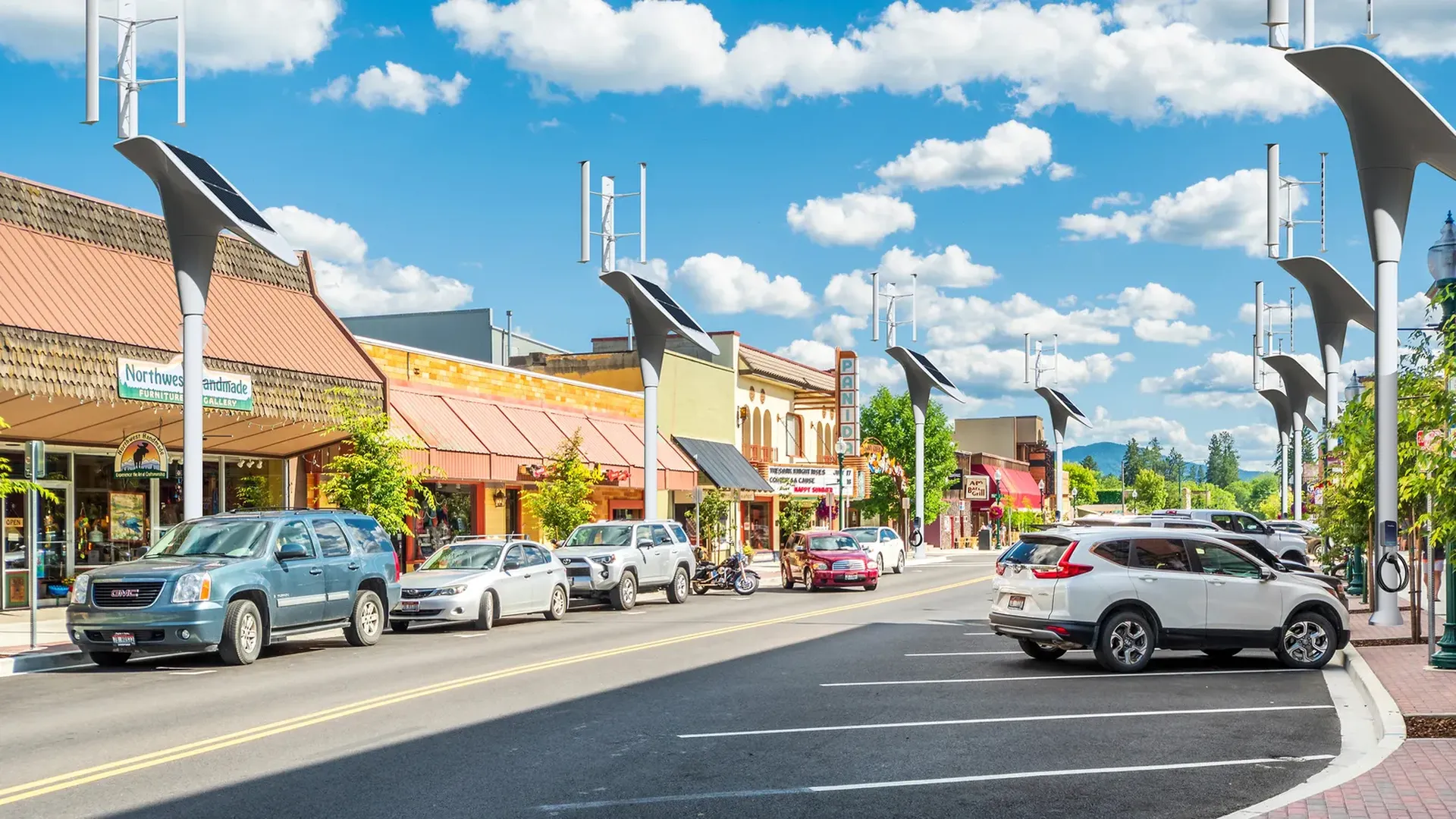
Electric vehicle charging company Beam Global is introducing a patented streetlight-based system powered by wind and solar energy.
Why it matters: The company says the chargers minimize the need for disruptive construction and electrical work while providing handy access to charging in public places like apartments, shopping centers, airports and stadiums.
Yes, but: Some communities might not favor the way the 40-foot-tall towers alter the landscape.
How it works: The BeamSpot system doesn't require new or upgraded utility grid circuits, which is often the biggest — and costliest — challenge associated with installing EV charging infrastructure.
- Instead, the BeamSpot poles replace traditional streetlights, using existing foundations and grid connections.
- A 1 kw solar array and 1 kw wind turbine extending above it supplement the existing grid power by generating electricity that is stored in a 15 kwh battery inside the pole.
- The stored energy, coupled with existing grid power, are enough to illuminate the area with a high-lumens, low-energy LED light while also providing "meaningful" EV charging, Beam Global says.
Reality check: Charging speeds are very slow.
- Total charging power is listed at 5.76 kW, which the company says can deliver up to 220 miles of range in a day.
- That trickle speed could make sense for overnight parking at an apartment complex, but wouldn't add much energy to an EV during an hour-long shopping trip.
What they're saying: That's OK, argues Beam Global CEO Desmond Wheatley, who says it's more than enough to replenish an EV's daily range of about 30 miles.
3. U.S. and China climate talks stay the course
U.S. climate diplomats met with their Chinese counterparts in Beijing late last week, making some headway in discussing reducing emissions of methane and other non-CO2 emissions.
Why it matters: The U.S. and China are the world's two largest emitters, and pacts between the two, despite trade and national security tensions, have proven key to global climate agreements.
Zoom in: Top U.S. climate diplomat John Podesta and his team discussed new climate emissions reduction targets out to 2035, due to the UN next February.
- The two countries will hold the second summit on methane and other non-CO2 planet-warming gases on the sidelines of the COP29 climate meeting in Baku, Azerbaijan, in November.
Between the lines: The two countries also exchanged views on the central issue to be ironed out at COP29, which is a new climate finance goal.
- The U.S. is looking for China to commit to contributing climate aid to the developing world along with major industrialized countries, while China resists such a move.
Yes, but: There were no major breakthroughs. "Neither side is interested in disclosing or committing to too much ahead of the U.S. election," Li Shuo, director of the China climate hub at the Asia Society, told Axios.
What we're watching: There have been multiple reports that China's CO2 emissions may have peaked, in advance of its 2030 commitment.
- The talks may have helped U.S. diplomats assess these estimates and how Chinese officials view them.
4. On our radar: Oil market signals, Harris vs. Trump
🛢️ This week will bring fresh oil market forecasts in the wake of OPEC+ delaying plans to start increasing production.
- Why it matters: Prices recently touched their lowest levels since November 2021 amid soft demand in China and other bearish metrics.
- What's next: DOE's independent stats arm and OPEC drop new supply and demand outlooks tomorrow. The International Energy Agency's closely watched report follows Thursday.
🗳️ We'll be watching for more info on Kamala Harris' plans at tomorrow night's debate with Donald Trump.
- Why it matters: It's the election's highest-profile moment since the Democratic convention.
- State of play: Harris' campaign hasn't offered specifics beyond signaling she'd implement the IRA and 2021 infrastructure laws. She has also backed off aggressive positions from her 2019 run, including a fracking ban.
- The latest: A new section of Harris' website offers 30,000-foot-level policy goals but lacks detail.
- What's next: At least one climate question is now standard at debates. But any exchange could be consumed litigating Harris' retreat from positions rather than drawing out future plans.
5. Earth just had its most humid summer on record


Earth not only had its hottest summer on record but also its most humid, new data shows.
Why it matters: The absolute humidity, as measured by the surface dew point, helps determine how dangerous heat waves are for people.
- The higher the dew point, the more sultry and uncomfortable the air feels, and the harder it becomes for the human body to cool itself down.
Zoom in: The U.S., Europe, large swaths of Asia, parts of the Arctic and the Sahara Desert stood out as the most unusually humid during the season, according to data from Brian Brettschneider, a NOAA climate scientist.
- Such data goes back to at least 1940.
📨 Did a friend, colleague or even a frenemy send you this newsletter? Welcome, please sign up.
🙏 Thanks to Chris Speckhard and Chuck McCutcheon for edits to today's edition, along with the brilliant Axios Visuals team.