Axios Generate

July 07, 2025

🥞 Welcome back! I'm no Beatrice Chebet (nobody is), but today's Generate is still a pretty quick 1,276 words, 5 minutes
🎸 This week in 1981, Stevie Nicks and special guests dropped a stellar single that's today's intro tune...
1 big thing: Clean energy's next political test
The 2026 midterms will test clean energy's uncertain political salience as advocates attempt to tether it to economic matters that voters prioritize.
Why it matters: Both chambers of Congress are narrowly divided and up for grabs next year.
The big picture: Democratic and green group campaigns will argue the GOP's "big beautiful bill" that President Trump signed Friday will raise costs and cut jobs.
- It will be an effort to flip the script on the inflation emphasis and promises of lower costs that were a foundation of the GOP's 2024 message.
State of play: The Democratic Congressional Campaign Committee's early list of targeted districts overlaps heavily with 13 House Republicans who voted for their chamber's plan but urged the Senate to soften it.
- They include competitive seats held by Republicans like Jen Kiggans (Va.), Gabe Evans (Colo.) and Juan Ciscomani (Ariz.).
- "Despite falsely proclaiming their concerns, House Republicans — including some of their most vulnerable members — knowingly voted to cut jobs, slash investments, and raise energy costs in their districts when they voted for the Big, Ugly Bill," DCCC spokeswoman Courtney Rice tells Axios.
The other side: While several polls show the bill is unpopular, Republicans will look to play political offense — especially emphasizing tax cuts and border security measures.
- Republicans plan to message their legislative victory by branding Democrats' opposition as voting to raise taxes on small businesses and American families, according to an internal memo from the GOP's House campaign's arm shared with Axios' Kate Santaliz.
Friction point: Look for Dems and allied groups to cite recent analyses on two topics — IRA and infrastructure law investments and jobs flowing heavily to red states and districts, and potential for higher utility bills when incentives go away.
Reality check: The political relevance of low-carbon energy is unclear at best. Democrats lost the House in 2022, shortly after the IRA's passage.
- Nor did emphasizing clean energy investments stop them from losing the Senate or White House last year, despite messaging on jobs and costs.
- I'm not saying the IRA is why they lost, but there are plenty of reasons to question its political potency, and more broadly whether voters will prioritize clean tech.
Yes, but: This time around, candidates can point more easily to the risk of investments in specific states and districts.
- Some projects are already getting canceled as Trump officials pull back funding under the IRA and 2021 infrastructure law.
What's next: League of Conservation Voters President Pete Maysmith tells Axios that votes on the bill will play a "very significant role" in their midterm election work — and gave a taste of messages to come.
- "The Republican Congress just broke their promise to the American people and to voters, and that was to cut costs, and instead, what they've done is jack up costs, starting with people's utility bills, but not stopping there, including health care, groceries and a myriad of other things," he said in an interview.
- LCV is an important player — the group spent $44 million combined on House and Senate races in the 2024 cycle.
2. What they're saying: climate and the Texas tragedy

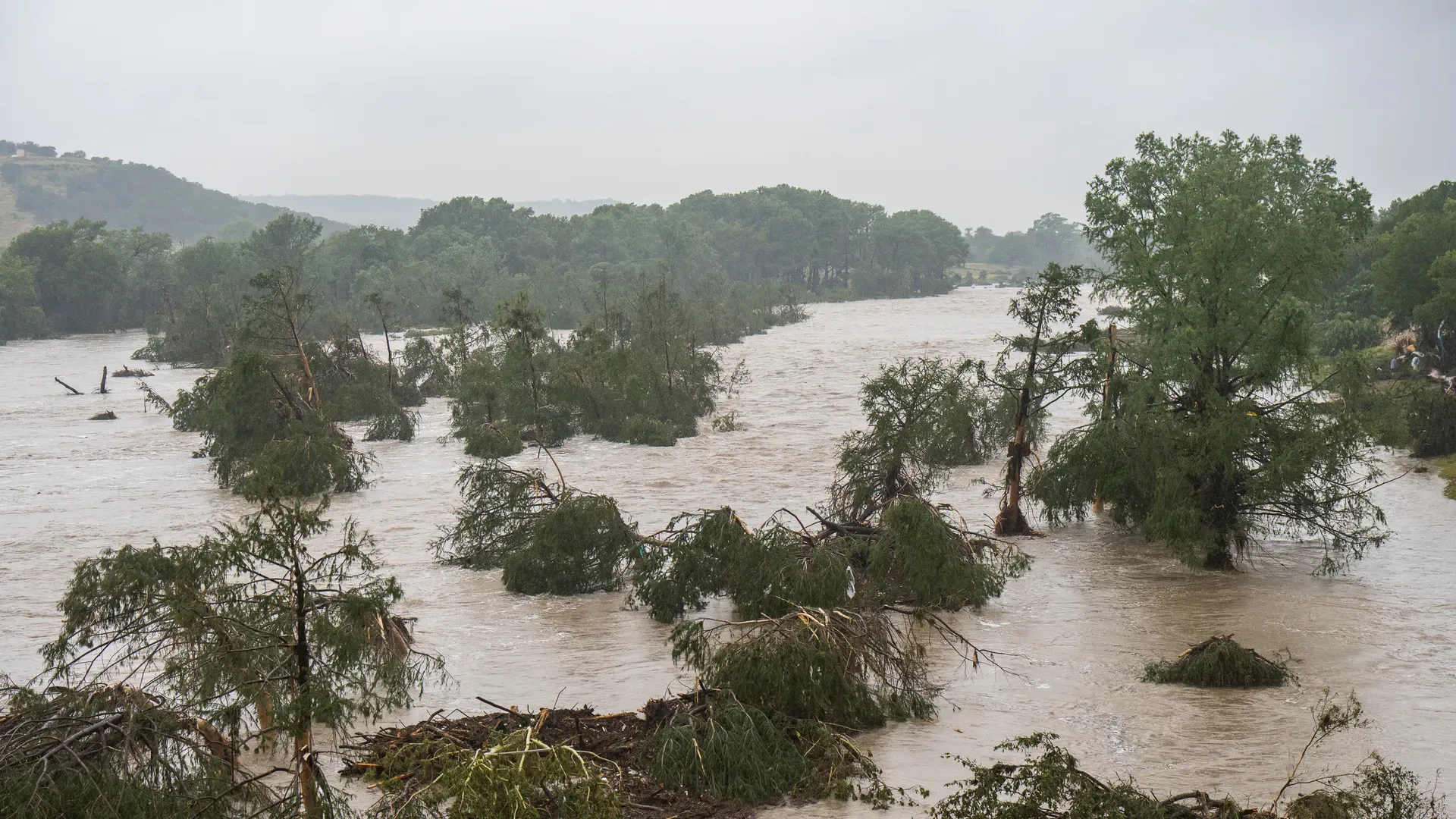
While the story of the Texas flooding tragedy and what went wrong is still unspooling, scientists said it provides another reminder that climate change can make extreme rainfall events even worse.
What they're saying: "[T]his kind of record-shattering rain (caused by slow-moving torrential thunderstorms) event is *precisely* that which is increasing the fastest in warming climate," UCLA climate scientist Daniel Swain said in a longer social media thread.
Threat level: Andrew Dessler, director of the Texas Center for Extreme Weather at Texas A&M, says the floods are "exactly what the future is going to hold."
- Dessler added that Kerr County was unprepared and local governments should be ready for "more, bigger, extreme events."
- And UC-Davis earth and planetary sciences professor Nicholas Pinter said that in general, climate change "can and is shifting those probabilities — sometimes bringing us floods that are more severe and more frequent than in the past."
Friction point: The fatal flooding is prompting questions about whether vacant positions at the National Weather Service "made it harder for the forecasting agency to coordinate with local emergency managers as floodwaters rose," the NYT reports.
What we're watching: Whether the tragedy will alter Trump administration efforts to downsize NOAA — and Congress' willingness to go along.
- CNN reports the proposed cuts would hinder R&D into new forecasting technologies — including flash flood forecasting.
- "The NOAA research cuts would come just as human-caused climate change is resulting in more frequent and intense downpours like the ones that led to this tragedy in Texas," it reports.
Go deeper: Trump says NWS staffing levels didn't affect Texas storm preparedness
3. 🛢️ Why geopolitical risk premiums withered

A major recent trend is the absence of oil market freakouts when conflict — including the recent Israel-Iran war — threatens crude flows.
How it works: S&P Global Commodity Insights' Karim Fawaz joined the Oil Ground Up podcast to discuss why the "geopolitical risk premium" — the market's willingness to preemptively price in risk — has been rather low.
- Ample spare capacity in OPEC+ countries.
- The lived experience of shocks over the years — think sanctions, 2019 attacks on Saudi infrastructure, Russia's invasion of Ukraine rearranging global flows, to name three — have demonstrated market resilience.
- Lower U.S. import reliance and, even more recently, slowing demand growth in China and the inventory buildup there.
- Decelerating global demand growth.
The bottom line: Major interruptions would indeed send prices soaring. But these days, traders need to actually see real and sustained disruption first.
- "You've created this set of precedents which really feed into this perception that 'I'll believe it when I see it and I'll price it when it manifests,' and it has become pretty well anchored," Fawaz tells oil analyst Rory Johnston, the show's host.

4. 🏃 Catch up quick: Oil markets, Tesla, EPA
🛢️ Oil markets are taking the larger-than-expected OPEC+ output hike in stride, but bigger tests loom.
- Catch up quick: Over the weekend, the group said it would boost supply by 548,000 barrels per day in August, a larger boost than expected. But prices regained the ground they lost when markets initially opened last night.
- Why it matters: The movements are a signal of how the market is perceiving the supply-demand balance. "We have...repeatedly heard officials indicate that their internal analysis shows stronger demand than the market consensus," RBC Capital Markets' Helima Croft wrote in a short analysis.
- What we're watching: Seasonal trends. Analysts note the latest boost comes amid high summer oil thirst. "In the autumn, the potential for supply outpacing demand increases materially if OPEC+ continues on this path of reclaiming lost market share," Third Bridge's Peter McNally said in a note.
📉 Tesla shares fell sharply again today as Elon Musk's split with the Trump administration deepened over his threats to launch a new political party.
- What they're saying: "Musk diving deeper into politics and now trying to take on the Beltway establishment is exactly the opposite direction that Tesla investors/shareholders want him to take during this crucial period for the Tesla story," Wedbush Securities analyst Dan Ives said in a note. Go deeper.
⏸️ ICYMI: The EPA said Thursday it has placed 139 employees on leave after they signed a "declaration of dissent" accusing the agency of "unraveling" health and environmental protections for political reasons. Full story.
5. 💬 Quote of the day: mining edition
"Every time someone gets close to mining lithium, the Chinese come running with a cheque book."— John Meyer, analyst with advisory firm SP Angel, via the Financial Times
He's quoted in a wider FT feature on the money and geopolitics behind China's global mining investments, which have been accelerating of late.
- Meyer said China had been making deals "to actively keep the west out of certain critical materials which they dominate."
📧 Did a friend, colleague or an AI chatbot send you this newsletter? Welcome, please sign up.
🙏 Thanks to Chuck McCutcheon and Chris Speckhard for edits to today's edition, along with the brilliant Axios Visuals team.
Sign up for Axios Generate