Trump says NWS staffing levels didn't affect Texas storm preparedness

Add Axios as your preferred source to
see more of our stories on Google.
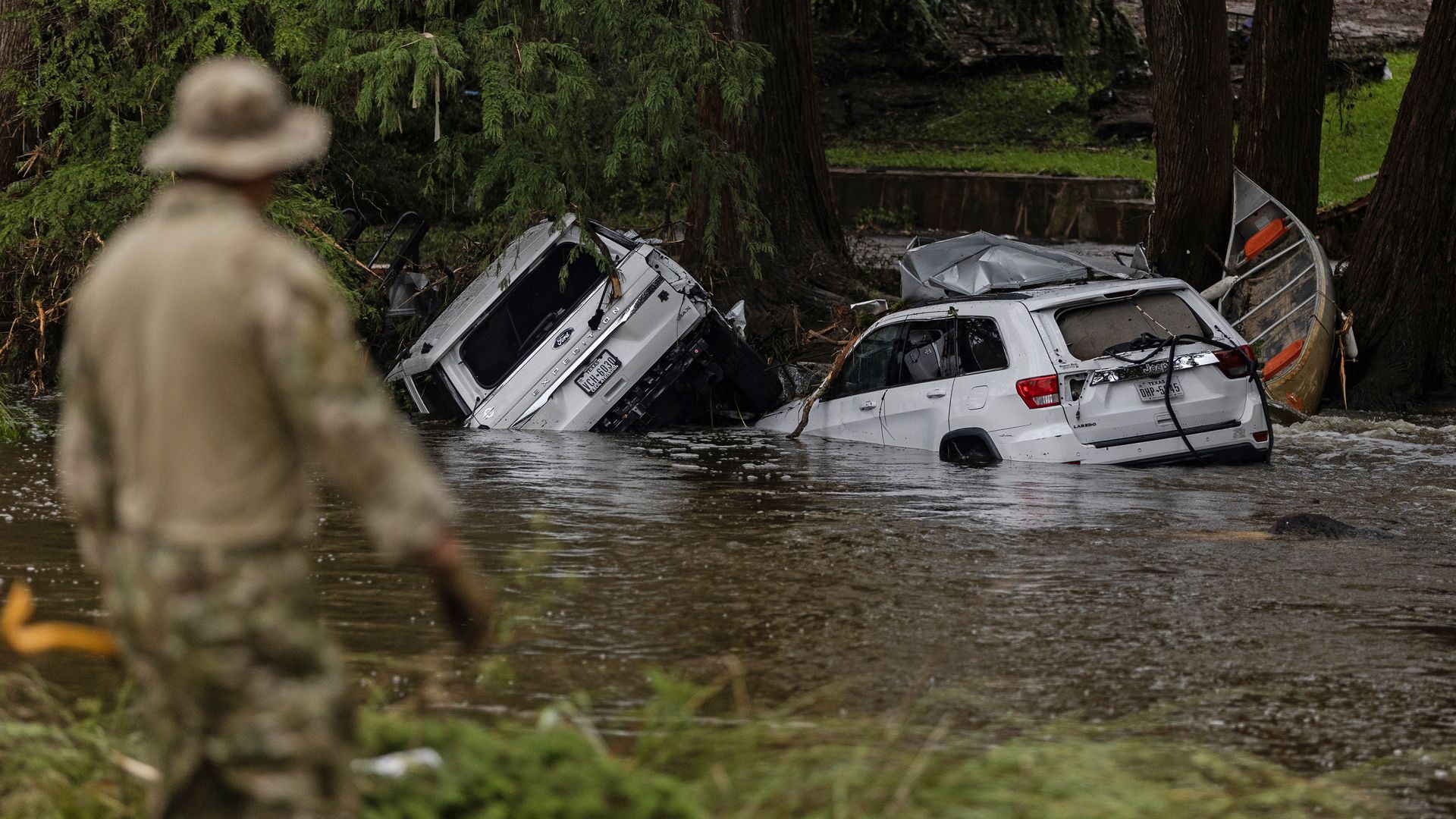
Vehicles sit submerged as a search and rescue worker looks through debris for any survivors or remains of people swept up in the flash flooding in Hunt, Texas, on Sunday. Photo: Jim Vondruska/Getty Images
The Trump administration pushed back Sunday on criticism of the National Weather Service's initial forecasting and its staffing levels ahead of Central Texas' catastrophic flooding.
The big picture: The storm that's killed at least 80 people has brought renewed scrutiny to federal cuts at NOAA's NWS after it emerged that two Texas NWS offices were missing key staff at the time — including San Antonio, where a veteran warning coordination meteorologist has taken an early retirement buyout in April.
Driving the news: Some in the weather community have raised concern about the staffing issues, which Rep. Joaquin Castro (D-Texas) said Sunday should be investigated. "I don't think it's helpful to have missing key personnel from the National Weather Service not in place to help prevent these tragedies," he told CNN.
- Experts told Axios that forecasting models that failed to predict the severity of rainfall, a lack of an adequate warning system and bad timing in part led to the disaster.
- Texas Division of Emergency Management chief Nim Kidd noted at a Friday briefing the original forecast "did not predict the amount of rain we saw" and Dalton Rice, the city manager for Kerrville, said the storm system "dumped more rain than what was forecast."
What they're saying: When a reporter asked President Trump whether his administration would investigate if some of the cuts to the federal government left key vacancies at the NWS, he responded: "They did not."
- Trump described the situation as "a 100-year catastrophe" that's "so horrible to watch."
- Asked later if he thought meteorologists should be rehired, Trump said: "I would think not. This was the thing that happened in seconds. Nobody expected it. Nobody saw it. Very talented people in there and they didn't see it."
Zoom in: White House spokesperson Abigail Jackson in a statement to outlets including Axios called criticism of the NWS' action and funding cuts accusations "shameful and disgusting" and accused critics of seeking to politicize a disaster.
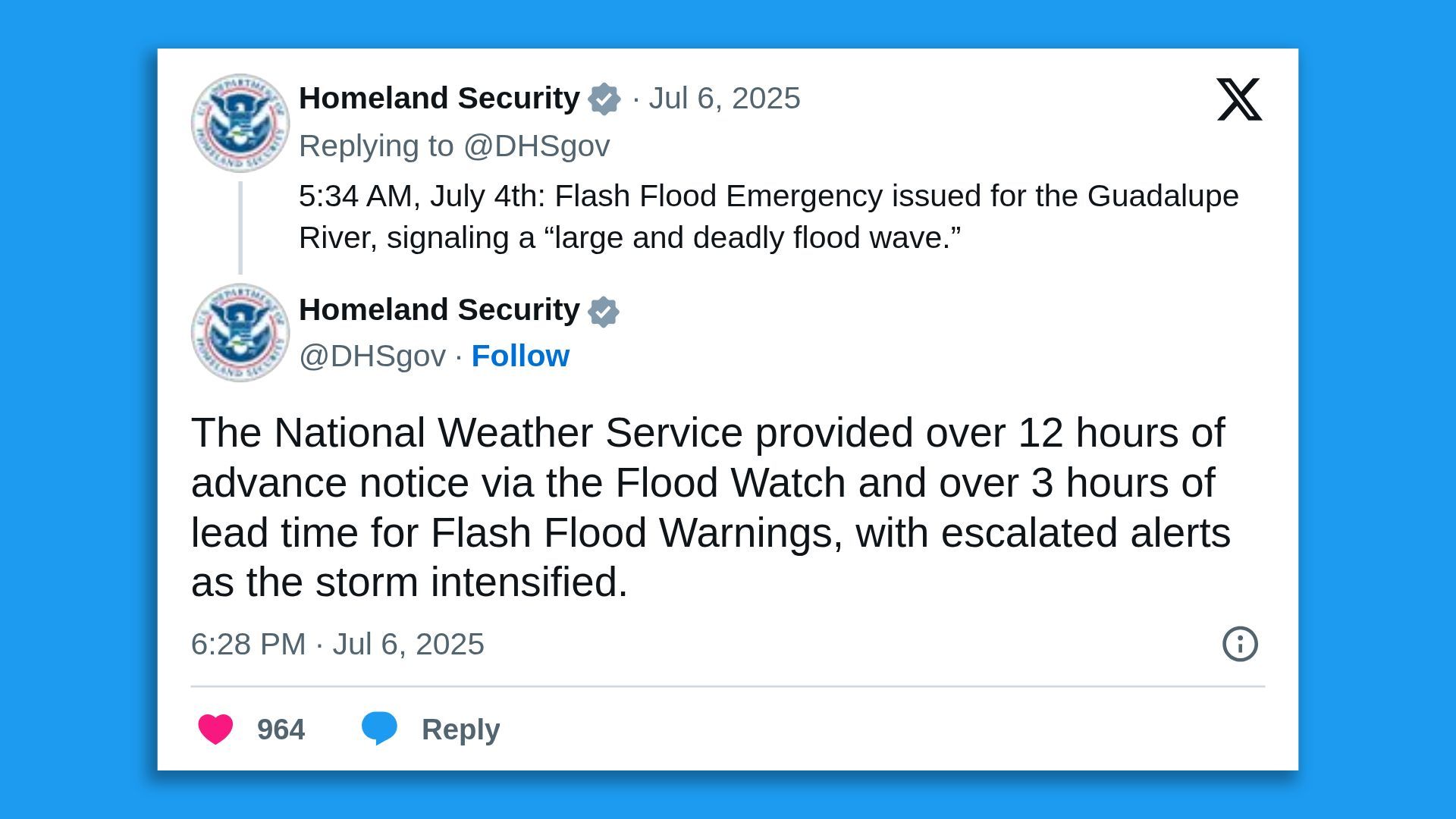
- "False claims about the NWS have been repeatedly debunked by meteorologists, experts, and other public reporting," she said. "The NWS did their job, even issuing a flood watch more than 12 hours in advance."
- The Department of Homeland Security posted to X a timeline of the NWS' response that the weather agency had earlier shared with Axios:
Between the lines: Miami-based meteorologist John Morales said on X the vacancies did not impact the warning process, but may have impacted coordination.
- Having five instead of two staffers on as rainfall ramped up is a "pretty common step and well planned" by the local NWS, according to Morales.
- "My concern is about the breakdown of what is supposed to be the well oiled warning ➡️ comms ➡️ coordination ➡️ evacuation process," he added.
- Houston-based meteorologist Matt Lanza told Axios the warnings were "meteorologically sound and adequate," but they weren't received by people due to the timing of the storm and because that area didn't have an alert system.
What we're watching: The Trump administration last week proposed cuts and changes to NOAA, including eliminating its Office of Oceanic and Atmospheric Research, which performs and coordinates climate research.
- Trump signed an executive order in January aimed at revamping the Federal Emergency Management Agency and has spoken about "getting rid of" FEMA altogether.
- When asked Sunday if he still planned to phase out FEMA, Trump told reporters that this matter was "something we can talk about later, but right now, they're busy working, so we'll leave it at that."
Go deeper: Texas tragedy foretells future for warming climate, scientists say
