Axios Generate

August 11, 2023

🍺 Oh yeah! Almost time. Today's newsletter has a Smart Brevity count of 1,132 words, 4.5 minutes.
🌀 Situational awareness: The ongoing 2023 Atlantic hurricane season may be more active than initially thought, federal forecasters said. Axios' Jacob Knutson has more.
🛢️ World oil demand hit a record 103 million barrels per day in June, the International Energy Agency said in its latest monthly report, which also projects slower consumption growth next year.
🎶 45 years ago, A Taste of Honey were No. 1 on Billboard's R&B charts (and would soon top the Hot 100) with this week's final intro tune...
1 big thing: Team Biden moves on carbon removal
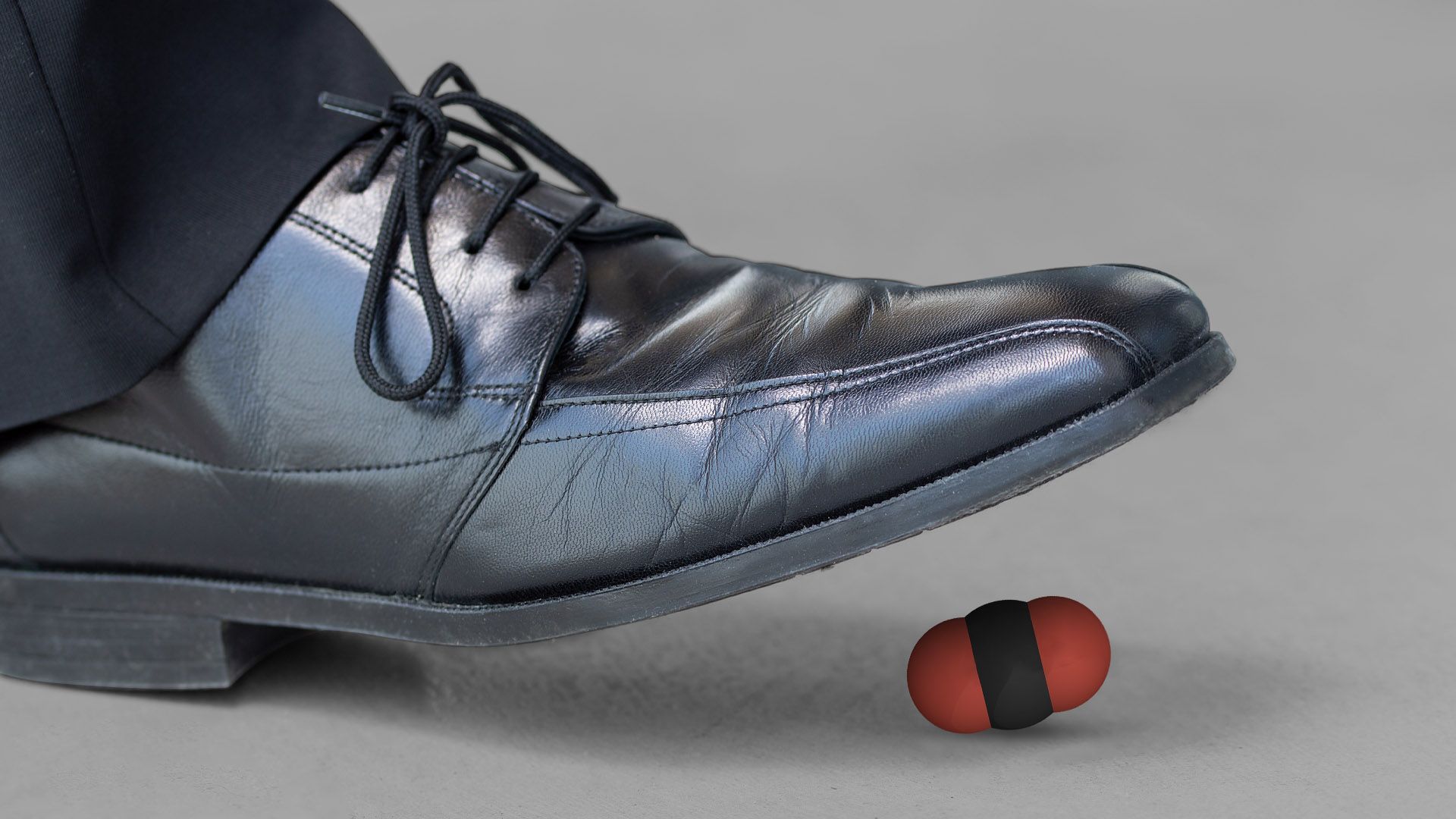
Illustration: Natalie Peeples/Axios
The Energy Department just unveiled its biggest moves to help build the nascent market for removing carbon dioxide already in the atmosphere, Ben writes.
Driving the news: The agency is awarding up to $1.2 billion for two consortiums to build commercial-scale direct air capture (DAC) "hubs."
- It's the "world's largest investment in engineered carbon removal in history," per the department, which said the projects will create nearly 5,000 jobs.
- Project Cypress in Louisiana, involves the big nonprofit science and tech group Battelle, and DAC firms Climeworks and Heirloom.
- The other, in Texas, is led by 1PointFive. It's a subsidiary of oil giant Occidental Petroleum, working with DAC company Carbon Engineering and Worley, a firm that provides engineering and other services.
The big picture: According to DoE, the two hubs would eventually remove more than 250 times of CO2 than the largest DAC facility currently operating.
- The 2021 infrastructure law has $3.5 billion for DAC hubs, so there's likely more to come as the agency vets other proposals.
State of play: Hubs are meant to remove and sequester real amounts of CO2 — and put the industry on the path toward vastly larger, nationwide scale and lower costs.
- Energy Secretary Jennifer Granholm told reporters the two hubs are expected to remove over 2 million metric tons of CO2 annually, "which is like taking nearly half a million gas powered cars off the road."
- And they'll "help us prove out the potential of this game changing technology so that others can follow in their footsteps."
Why it matters: Carbon dioxide removal (CDR) is increasingly viewed as a necessary complement to zero-emitting energy and efficiency — but not a substitute for them — in the fight against climate change.
What they're saying: "The hubs can bring together multiple DAC companies within the same facility to access shared infrastructure so they can scale their technology faster and do it at a lower cost," Jack Andreasen, of the Bill Gates-led Breakthrough Energy, said in a blog post.
In addition, DoE announced its preliminary intent to fund various initiatives involving multiple CDR methods, as it looks to help drive down costs below $100 per metric ton.
- The planned pilots and competitions cover speeding CO2 uptake in oceans and rock formations, biomass-based removal methods, and lots more.
- Advocates are especially psyched about plans for $35 million in federal purchasing of removal services.
- "Government procurement can and must play a strong role in establishing a trustworthy carbon removal market and will provide much-needed proof of revenue for companies trying to finance projects," Giana Amador, executive director of the Carbon Removal Alliance, tells Axios.
Reality check: There's absolutely no guarantee DAC or other methods will ever reach the scale needed to become powerful weapons against global warming.
The bottom line: CDR is getting unprecedented federal support.
2. 🏃🏽♀️ Catch up fast on tech finance

Illustration: Aïda Amer/Axios
😮 Private equity giant Blackstone closed its Green Private Credit Fund III at $7.1 billion, calling it "the largest energy transition private credit fund ever raised," Ben writes.
- The big picture: Bloomberg notes it's the firm's "biggest stockpile for a bet that the economy will rely less on oil and gas — and that companies behind the shift to lower-carbon sources will need financing."
🧮 Carbon accounting firm Persefoni has raised $50 million in the first close of a Series C round led by TPG, Axios Pro: Climate Deals' Alan Neuhauser scooped early this morning.
- Why it matters: The raise makes Persefoni one of the most well-funded carbon accounting providers as it looks to expand the use of AI in its software.
- Go deeper: Subscribe to Pro for the whole story and vital coverage every week
🛩️ Archer, one of the companies racing to commercialize electric vertical takeoff and landing (eVTOL) aircraft, raised another $215 million in equity finance.
- Driving the news: The firm's backers include heavyweights Stellantis, Boeing, and United Airlines — another sign that eVTOLs becoming a thing is more of a "when," not an "if."
- The big picture: Archer has raised $1.1B to date and hopes to begin commercial operations in 2025.
3. COP28 boss ramps up finance push

Illustration: Gabriella Turrisi/Axios
The United Arab Emirates official heading the next U.N. climate summit said he'll convene a "high level dialogue" next week to "drive progress" on a new finance framework, Ben writes.
Why it matters: Sultan al-Jaber's announcement is a recognition that global finance for stemming emissions and building resilience is far short of what's needed.
- Bolstering funds from wealthy nations, the private sector and multilateral development banks (MDBs) is a key theme going into the late 2023 U.N. summit.
Driving the news: Al-Jaber disclosed the planned event in Dubai next week during remarks Thursday to Caribbean nation leaders in Barbados.
- He's hosting next week's two-day talks with prominent economists Vera Songwe and Nicholas Stern, who lead a group called the Independent High-Level Expert Group on Climate Finance.
The big picture: Al-Jaber stressed adaptation finance in his remarks to nations highly vulnerable to climate change.
- "This region knows only too well the human and economic costs of too little finance for climate adaptation and resilience," he said Thursday.
- Al-Jaber called for a doubling of adaptation finance by 2025.
Catch up fast: Barbados Prime Minister Mia Mottley is leading a major push for greater MDB finance, and on more favorable terms — an effort al-Jaber name-checked in his remarks.
4. The unusual politics of carbon tariffs

Illustration: Sarah Grillo/Axios
Carbon tariffs could be good long-term politics for both parties in the new age of protectionist trade policy, Axios Pro: Energy Policy's Nick Sobczyk reports.
Why it matters: Taxing carbon-intensive imports appears to fit the "Bidenomics" messaging of the president's 2024 campaign, because it has potential to help heavily unionized domestic industries — and ding China.
The intrigue: For Republicans, the policy is an opportunity to go after Chinese imports and continue aggressive tariff-based trade policies pursued by the Trump administration.
- Sen. Bill Cassidy (R-La.) calls it "a national security play, as well as an environmental play," and other Republicans have sought to frame carbon trade regimes as "America First."
Quick take: Technocratic trade policy won't be a pillar of Biden's campaign, but carbon tariffs could appeal to both climate advocates and organized labor.
Reality check: Policy consensus in Congress is elusive, and tariffs can also carry political risk.
- The idea already faces pushback from conservatives and free-marketers who view it as a consumer tax.
A more in-depth version of this story was published first on Axios Pro. Unlock more news like this by talking to our sales team.
5. ☀️ Number of the day: $1 billion-plus
Maxeon Solar Technologies plans to invest over $1 billion in a major cell and module factory in New Mexico, the company announced yesterday.
Why it matters: It would be a very large facility at 3 gigawatts, Ben writes.
- And it's the latest example of new projects following enactment of the climate law that has major subsidies for low-carbon energy manufacturing and generation. AP has more.
📬 Did a friend send you this newsletter? Welcome, please sign up.
🙏 Thanks to Chris Speckhard and Javier E. David for edits to today's edition, along with the talented Axios Visuals team.