Axios Generate

October 03, 2024

✅ Thursday. We've got 1,230 words, 4.5 minutes.
🎸 Happy 75th birthday to guitar great Lindsey Buckingham, who's ending solo caps off today's stellar intro tune...
1 big thing: Biden's transmission money flows
The Energy Department plans to invest $1.5 billion to help finance four transmission projects that support nearly 1,000 miles of lines.
Why it matters: It's among the biggest Biden-era efforts to get power delivery projects across the finish line — a notoriously tough thing!
Driving the news: DOE just unveiled new selections through a recently created revolving fund that lets it directly contract for power capacity.
- The agency, under the 2021 infrastructure law, can resell it to replenish the fund.
- Deputy energy secretary David Turk told reporters it boosts projects "that would otherwise not get built."
State of play: The preliminary new contract selections through the Transmission Facilitation Program:
- Southern Spirit, a 320-mile project to connect the rather isolated Texas grid (ERCOT for you wonks) to southeastern power markets.
- Phase 2 of Southline, which will build 108 miles of new lines in New Mexico.
- Cimarron Link, a 400-mile project in Oklahoma to connect wind and solar to areas of growing power thirst there and other southwestern areas.
- The Aroostook Renewable Project, a 111-mile line and substation project to help get power from northern Maine to other New England regions.
The big picture: U.S. power demand is rising after staying largely flat for 15 years, and new transmission helps bring renewables to population centers.
- The newly selected projects will help enable over 7 gigawatts of new power-generating capacity in Louisiana, Maine, Mississippi, New Mexico, Oklahoma, and Texas, DOE said.
- They will also create over 9,000 jobs, the agency said.
Threat level: Extreme weather like wildfires and Hurricane Helene's devastation show the need for more resilient grids — including more transmission, officials told reporters.
- For instance, Southern Spirit will help bolster Texas' system against crises like outages during 2021's Winter Storm Uri, DOE said.
How it works: The federal contracts are meant to give investors confidence by having the government as an anchor customer.
- It's part of a constellation of power sector subsidies and incentives in the 2021 law and the IRA.
- They're aimed at cutting emissions and making aging grids more durable.
Overall, the Biden era has brought "permitting approvals or announced financing support" for over 5,000 miles of lines, White House climate aide Ali Zaidi told reporters.
Catch up quick: The first selections under the revolving fund arrived nearly a year ago.
Yes, but: The federal and state permitting maze remains tricky, despite efforts at several agencies, like FERC's recent transmission planning rule.
- DOE's push for more transmission includes a federal study out today.
- It finds a major nationwide buildout could bring hundreds of billions of dollars in power system cost savings through 2040.
What we're watching: Bipartisan permitting bills are rattling around Capitol Hill, but deal prospects this year — as our colleagues at Pro Energy have reported — are dicey.
Daniel Moore contributed
2. The long tail of hurricane fatalities
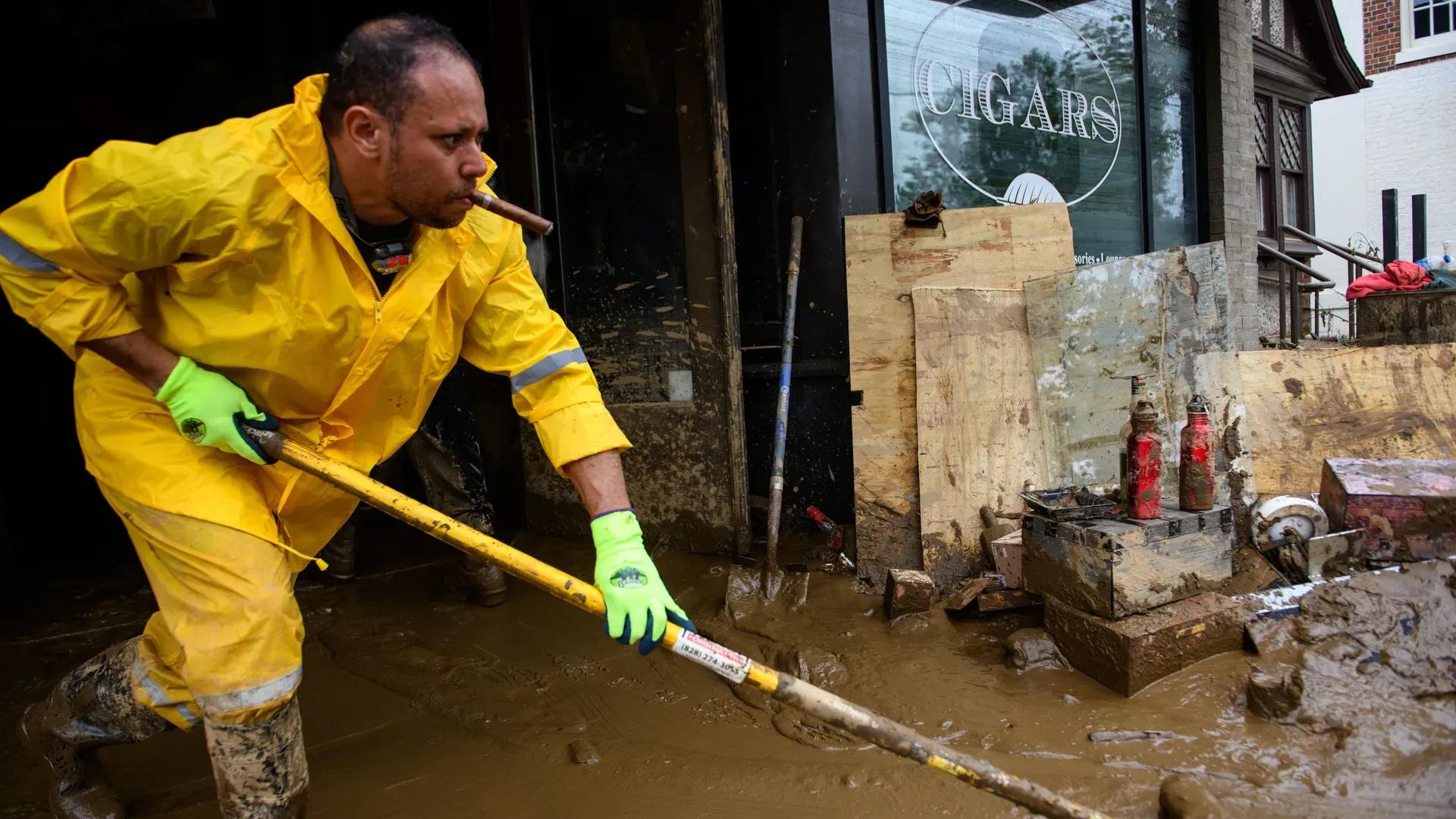
Hurricanes and tropical storms have long-term health consequences, generating 7,000 to 11,000 excess deaths over the 15 years following the event, a new study finds.
Why it matters: Until recently, most attention has focused on direct causes of death, such as drownings from floodwaters, rather than the complex cascade of events that can elevate mortality long after a storm fizzles.
Zoom in: The new findings in Nature show much higher excess deaths from the social and economic upheaval left in the wake of tropical cyclones than expected, coauthor Solomon Hsiang of Stanford University told Axios.
- In fact, tropical cyclones account for roughly 3.2% to 5.1% of all deaths annually in the Lower 48 states, or about 55,280 to 88,080 excess deaths.
The intrigue: Indirect deaths from stress that worsens cancer, heart disease and other chronic conditions is often missing in assessments of the health burden of these storms.
- Costly home repairs also can force people to dip into their savings, thus reducing their ability to spend on health care.
- And public budgets can diminish as tax revenue declines after a storm, reducing health care resources.
The study shows "no evidence" that storms several decades ago caused more or less of an impact on mortality than storms do today, which casts doubt on the effectiveness of better preparedness or improved building codes.
3. 🔍 What to watch at Tesla's high-stakes show
Tesla CEO Elon Musk has been promising self-driving taxis for years. Skeptics and true believers will find out soon whether he can deliver.
Why it matters: With new competitors eating into Tesla's market share, Musk is betting the company on artificial intelligence, including robotaxis.
What's next: The billionaire CEO will host an event on Oct. 10 in Los Angeles, where he's expected to reveal a Cybercab prototype and share the latest advancements in Tesla's full self-driving (FSD) technology.
There's a lot of unanswered questions. Here are three big things to watch:
🕵️♀️ The mystery car. Images of a heavily camouflaged vehicle surfaced online recently, but until the actual Cybercab is revealed, the big question is: Does it have a steering wheel and pedals?
- The answer matters. Without such human controls, Tesla would need an exemption from federal motor vehicle safety standards to deploy them on U.S. roads.
💾 The tech claims. Musk has said Tesla will be ready to launch its robotaxi service next year. But he's famous for saying "I'd be shocked if (such-and-such) didn't happen next year" — only to move the goalposts again and again.
💼 The robotaxi business. The Cybercab — if cleared by regulators — would be the basis for a future Tesla robotaxi service. And don't be surprised if Musk unveils an Uber-like ride-hailing app.
4. 🎉 Bonus: Tesla deliveries and the wider EV market


Tesla's worldwide deliveries rose again in Q3 but missed some analysts' estimates, and the stock fell 3.5% yesterday.
Why it matters: Deliveries are a rolling metric of how the world's top EV seller is faring amid rising global competition and slower demand growth in some areas.
State of play: GM, Ford and Kia this week reported sharply rising U.S. EV sales, but from a much smaller base than market leader Tesla.
What we're watching: An NYT piece surveys the wider sales landscape, arguing Tesla's growth compared to Q3 2023 could signal "demand for electric cars may be recovering as interest rates fall."

5. ⚛️ Following up: AI's nuclear dreams
Wood Mackenzie's Ed Crooks has a nice look at what's all the rage lately: the potential for nuclear energy to power data center needs.
The intrigue: One reason to be bullish...
- "The biggest drawback of nuclear — that on a levelised cost of energy basis it is much more expensive than wind, solar or gas generation — is less of a concern for deep-pocketed tech companies that are typically not competing mainly on price."
- Columbia University's Matt Bowen similarly noted Big Tech's willingness to pay a premium when we chatted for this piece.
Yes, but: Crooks hits another important point: nuclear timelines are long, stretching over a decade, but data center growth is a now thing.
What's next: Overall, Woodmac's base case sees limited U.S. nuclear growth — 111 gigawatts of capacity online in 2050, up from roughly 100 GW now.
- But data centers and AI could change things, they find.
6. 💬 Quote of the day: charging evolution edition
"Over time, charging is expected to become like the gas station model where you make little margin on the fuel, but profit on the other services provided. Ultimately, it'll have to be paired with a convenience store to help improve the economics."— TD Cowen analyst Gabriel Daoud in Bloomberg's smart look at an EV charging future that's "somewhere between a truck stop and an airport lounge."
📨 Did a friend, colleague or even a frenemy send you this newsletter? Welcome, please sign up.
🙏 Thanks to Chris Speckhard and Chuck McCutcheon for edits to today's edition, along with the brilliant Axios Visuals team.