Axios Generate

October 09, 2024


1 big thing: A renewable milestone is around the corner
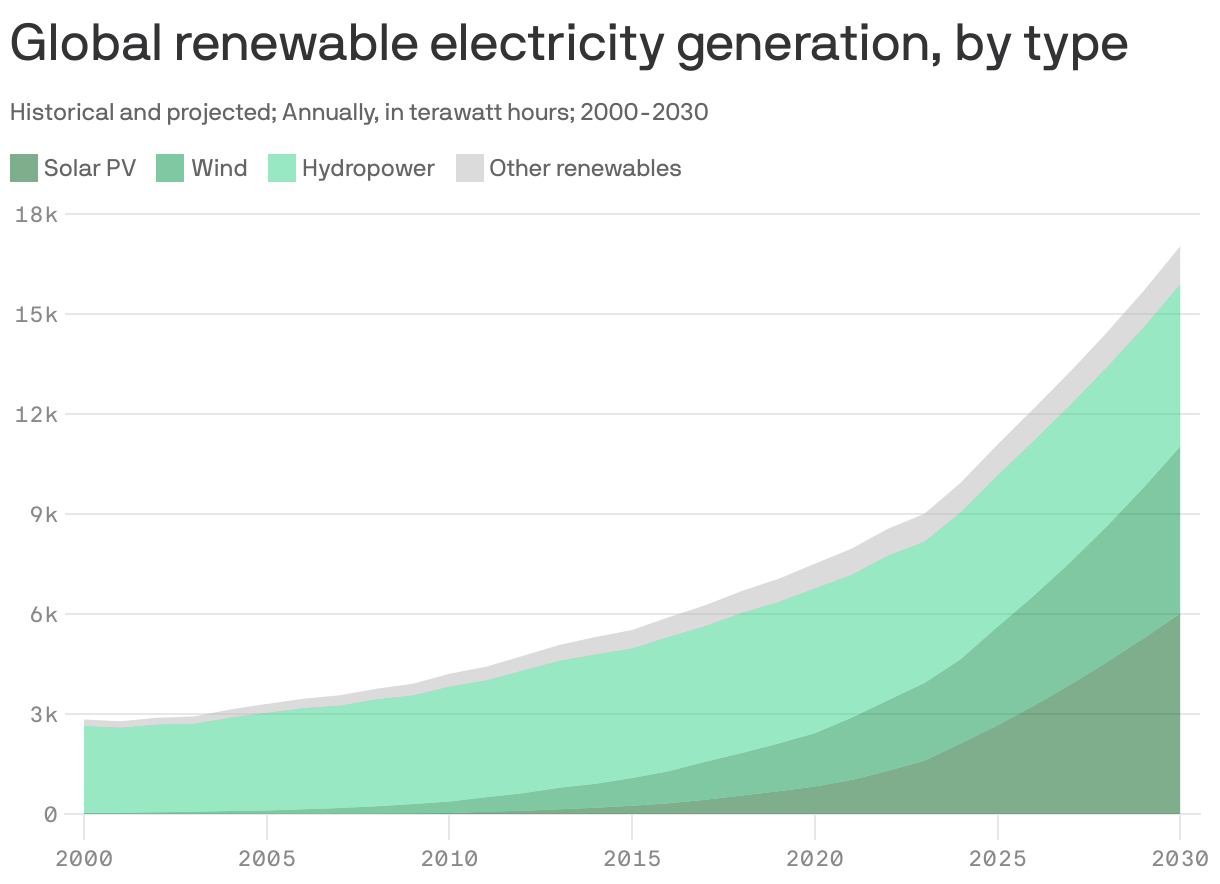
Global renewable power generation — real output, not just capacity! — should pass coal in 2025, the International Energy Agency's new outlook finds.
Why it matters: It's testament to the rapid rise (see above), led by solar, that could see renewables provide nearly half of global power generation by 2030.
- IEA sees the world getting rather close to tripling capacity by 2030, a goal set at last year's UN climate summit, but falling short without stronger policies.
🖼️ The big picture: The agency projects another 5,500 gigawatts of capacity arriving by 2030, with annual growth by then that's 70% faster than last year's record pace.
- Nearly all that rise comes from solar and wind, the agency said, citing their economic attractiveness.
Reality check: Growth is uneven and largely centered in China, which IEA sees accounting for 60% of global capacity expansion by decade's end.
- The COP28 tripling goal is "within reach" but demands knocking down barriers — like inadequate transmission — to grid integration.
- The report cites risks of increased "curtailment," or wasted generation.
🧮 Stunning stats: The outlook is glum on "green" hydrogen, calling it a "negligible" driver of renewables growth through 2030.
- They see hydrogen driving just 1% of renewable capacity expansion.
- Hydrogen produced with renewables is forecast to reach only 4% of the world's total in 2030.
What's next: IEA wants "bold" new renewables provisions in nations' next emissions pledges under the Paris Agreement, which are due in early 2025.
- Its statement alongside the data also urges more international cooperation to cut financing costs in developing nations, which are holding back growth.
2. Hurricane Milton's dual periods of intensification
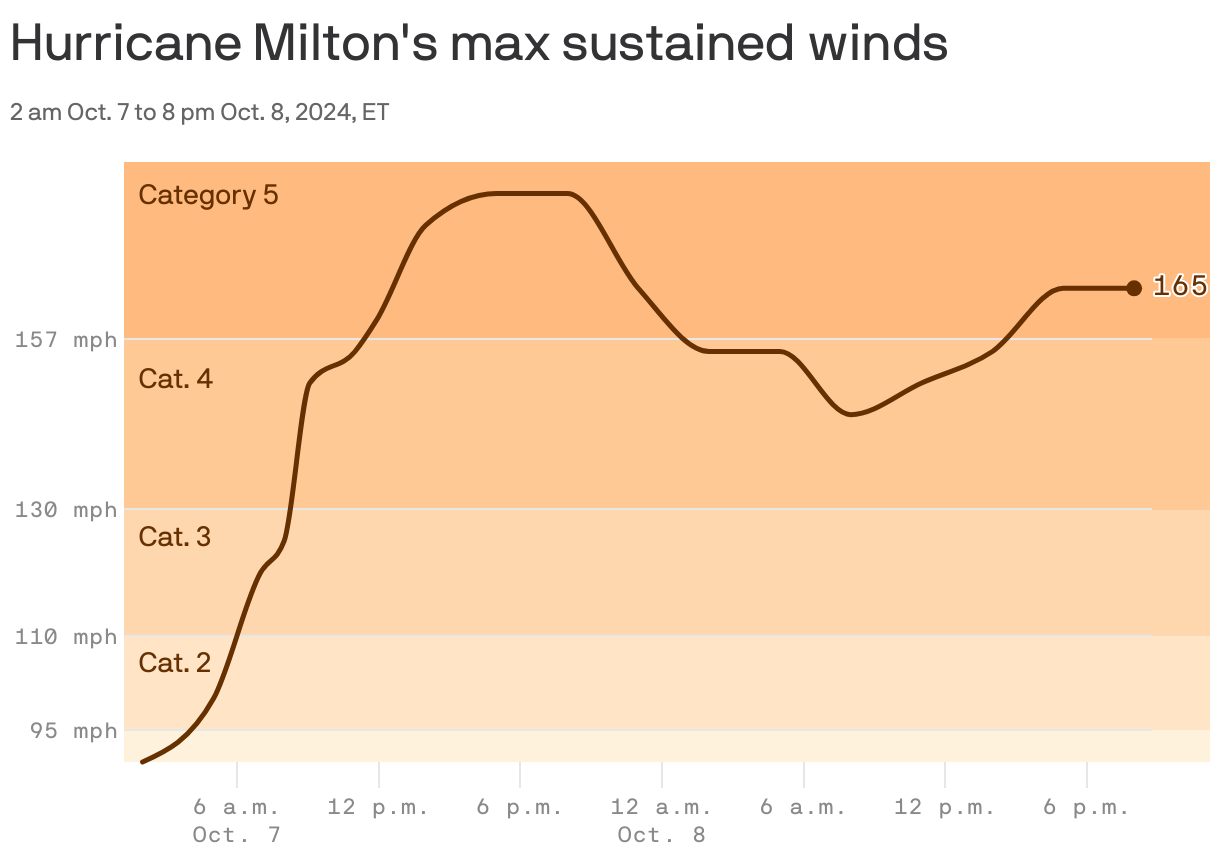
Menacing Hurricane Milton underwent not one but two periods of rapid intensification on its way toward a potentially devastating landfall in Florida.
Why it matters: It is extremely rare that a storm twice makes the top 5 list of most intense Atlantic hurricanes on record, as measured by surface air pressure, with winds also reaching the high end of the intensity spectrum.
- This has increased its destructive potential, particularly when it comes to storm surge flooding and damaging winds.
Zoom in: Both periods of intensification can be tied to record-warm ocean temperatures associated with a marine heat wave and climate change, along with favorable conditions in the atmosphere.
What's next: Hurricane Milton will make its approach to western Florida through tonight, with forecasters and residents watching every wobble of the eye for signs of where the worst of the storm will come ashore.
3. 🔋 New battery cash and more biz notes
4. 🇨🇳 Demand worries regain upper hand as oil sinks


The latest oil price spike from Mideast risks went into reverse yesterday thanks partly to a familiar culprit: China's economy.
Why it matters: The world's largest oil importer is often the straw that stirs the barrel.
- Weak Chinese economic signals and oil demand growth have been a check on crude prices for months.
🗞️ Driving the news: That resurfaced yesterday as analysts pointed to Beijing's decision not to unveil major new stimulus.
- "The disappointment — for traders expecting to see new fiscal spending — is what has tamped down on most commodity prices today, such as crude oil, iron ore, and copper," Macquarie strategist Vikas Dwivedi said in a note yesterday.
- The global benchmark Brent crude slid over 4%, or roughly $3.50, to the mid-$77 per barrel range yesterday. But a geopolitical risk premium remains in the price.
Yes, but: Never a dull moment! Beijing today said it will make fresh fiscal policy announcements on Saturday.
Catch up quick: Prices started rising late last week on speculation that Israel might strike Iranian oil infrastructure in response to Iran's Oct. 1 missile attack.
- Brent climbed over $81 Monday, the highest since mid-August.
The big picture: Lots of forces — economic, weather-related, and geopolitical — move oil prices day to day.
- One analyst said the lack of an Israeli strike thus far on Iranian oil sites, which President Biden has discouraged, helped cool the market.
- "Oil can keep ascending only for so long, purely based on perceptions and not actual supply disruption," PVM analyst Tamas Varga said in a note, per CNBC.