Axios Future of Mobility

January 14, 2026

Greetings from the floor of Detroit's slimmed-down auto show, which is happening this week.
- While I'm not expecting any splashy vehicle introductions, there's plenty to discuss among industry leaders.
🚘 Let's dive in ... 1,537 words, a 6-minute read.
1 big thing: Mary Barra's unfinished business

As General Motors CEO Mary Barra grows closer to retirement, some of her biggest ambitions remain unfulfilled.
Why it matters: Barra is turning 65 this year, and while the dynamic leader has left a clear imprint on the automaker during her 12-year tenure, her vision for an electric, autonomous, technology-driven future has yet to materialize.
- With the transformation on a slower-than-expected trajectory, it's becoming increasingly likely that GM's first female CEO won't be the one to see through the changes she set in motion.
Reality check: While speculation about CEO succession has been building for months, Barra — GM's second-longest-serving CEO behind Alfred Sloan — doesn't sound like someone whose departure is imminent.
- "There's so much change happening right now," she told reporters at an Automotive Press Association event this week. "I'm an electrical engineer by degree, so spending time on everything we're doing, from a software perspective, it's a lot of fun."
As CEO, Barra has deftly steered GM through a myriad of crises, including the 2014 ignition switch recall crisis, COVID-19 and disrupted supply chains.
- Under her leadership, GM has generated strong financial results even in the face of those challenges, and GM stock is up 62% over the past 12 months.
- Barra says it's because investors finally recognize GM's agility in a changing world.
Barra's legacy, however, will likely hinge on her ability to deliver on GM's transformation.
- Back in 2021, she said GM would double its annual revenue by 2030, driven by huge growth in EVs and software-enabled services.
Here's where things stand on her biggest bets:
Electric vehicles: GM said it would phase out gasoline vehicles in the U.S. by 2035, but last year, EVs accounted for less than 6% of its mix.
- Now, after the Trump administration relaxed tailpipe regulations, Barra acknowledges, "We are on a different path."
- "I still think, fundamentally, it is our destination — because we feel when there's a robust charging infrastructure and they're affordable, and we've gotten battery costs down, people will choose [an EV], because it's a better vehicle."
Autonomous vehicles: GM was seen as a leader in autonomous driving technology until October 2023, when one of its Cruise robotaxis seriously injured a pedestrian in San Francisco.
- GM shut down the robotaxi business in late 2024 and shifted its AV focus to personal vehicles.
- Now GM says an "eyes-off" autonomous driving system will debut on the Cadillac Escalade IQ electric SUV in 2028. Barra, however, said she's out of the prediction game and isn't saying when the technology will be everywhere.
Connected vehicles: GM forecast $20 billion to $25 billion a year in revenue from software and subscription services like OnStar and Super Cruise by the end of the decade.
- As of the third quarter of 2025, it booked $6 billion.
The bottom line: Progress isn't linear, Barra often says.
- Asked what she still wants to accomplish at GM, she replied: "I think we're just getting started ..."
- "I want to make sure this company is great 50 years, 100 years from now, and [to] set the foundation for that."
2. Trump shrugs off critical trade deal

Automakers hoping for some clarity about the future of the U.S.-Mexico-Canada free trade agreement got nothing but a shrug Tuesday from President Trump during a visit to Detroit.
Why it matters: The USMCA is critical to the auto industry, whose supply chains are deeply intertwined across all three countries.
- The pact is up for renegotiation this year, and talks are expected to be contentious against the backdrop of higher tariffs imposed on non-USMCA goods.
Driving the news: During a tour of a Ford plant Tuesday, Trump said the USMCA is "irrelevant" to him and Americans don't need Canadian products.
- "It expires very shortly and we could have it or not," Trump told reporters. "It wouldn't matter to me. I think they want it. I don't really care about it," he said, flanked by Ford chairman Bill Ford and CEO Jim Farley.
- "You know, we don't need cars made in Canada," Trump added. "We don't need cars made in Mexico. We want to make them here."
Yes, but: Automakers have urged Trump to extend the free trade agreement, saying they need parts sourced from Mexico and Canada to manufacture vehicles in the United States.
- "This is a critical point for the President. It's got to be solved, because it has an impact," urged Roger Penske, founder of Penske Corp., a transportation empire that includes car dealerships and trucking companies, at a Detroit Free Press event Tuesday.
What to watch: A mandatory joint review is set to begin in July. If the three countries do not agree to extend the pact, it will then end in 2036.
3. Honda's affordability solution: 10-year-old used cars
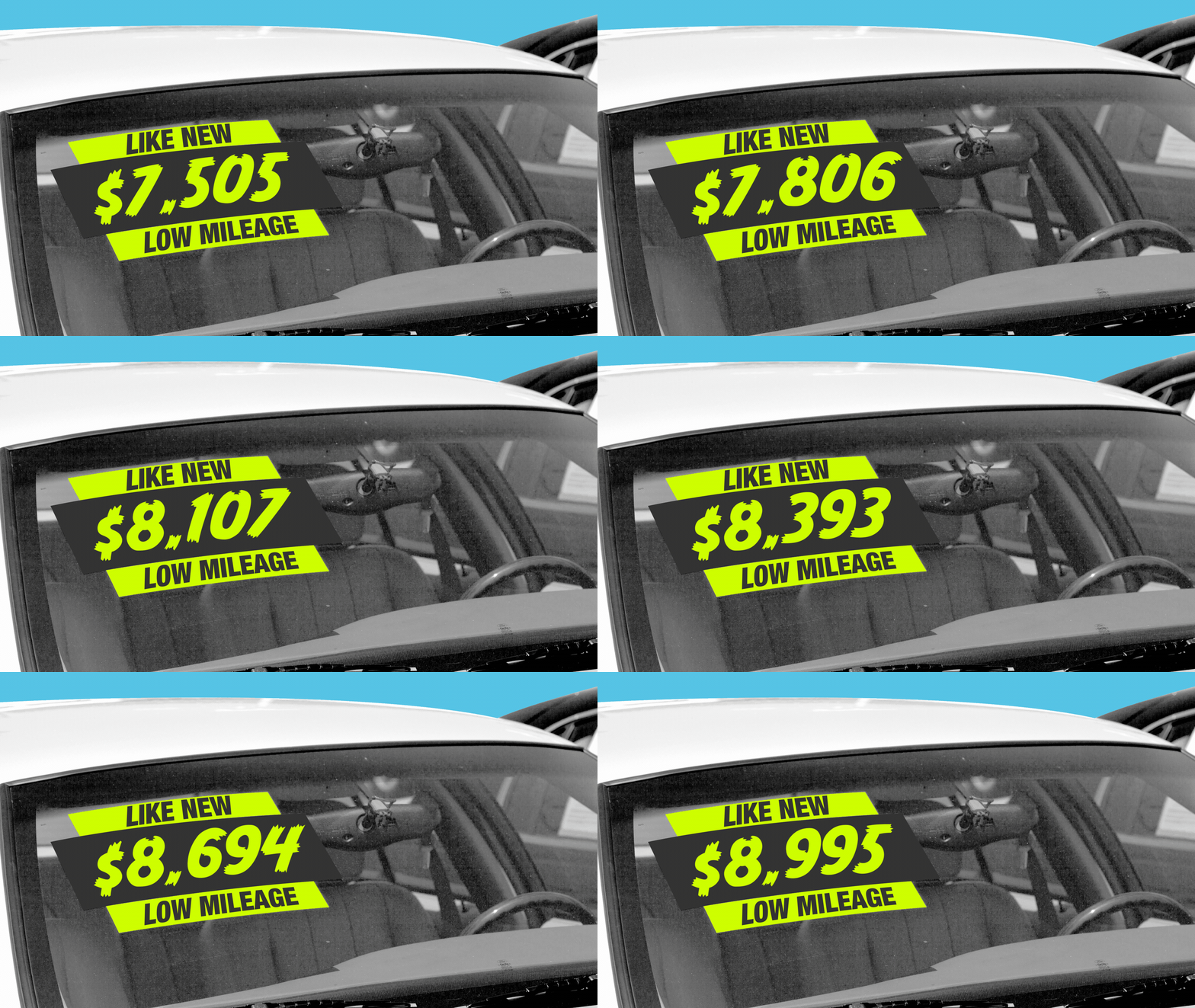
Honda's effort to market affordable vehicles includes selling certified pre-owned cars that are up to a decade old.
Why it matters: Vehicle affordability is a growing concern, with the average price in December hitting a record $50,326, driven mostly by SUVs and pickups, according to Kelley Blue Book estimates.
- For some buyers, the only car they can afford is a used car.
Driving the news: Automakers are warning that new car prices will increase in 2026, as they are forced to pass along higher tariffs they mostly absorbed last year.
- "Prices can't stay the same with a 15 percent tariff. It's just impossible for any brand to absorb that. There's not enough margin in the car," David Christ, head of the Toyota division in the U.S., told reporters recently.
Yes, but: Honda says it's employing a variety of strategies to try to avoid price hikes.
- It's boosting production of lower-trim versions of its cars, which have fewer gizmos, and building more gasoline models, which cost less than hybrids.
- And it's stepping up its used-car sales efforts, including a program that certifies the quality of much older-than-usual cars.
- "Our goal is to make sure we limit the impact on the consumer," said Lance Woelfer, vice president of automobile sales for American Honda.
The bottom line: An 8-year-old Honda is probably not a bad option for the budget-conscious.
4. Drive-thru
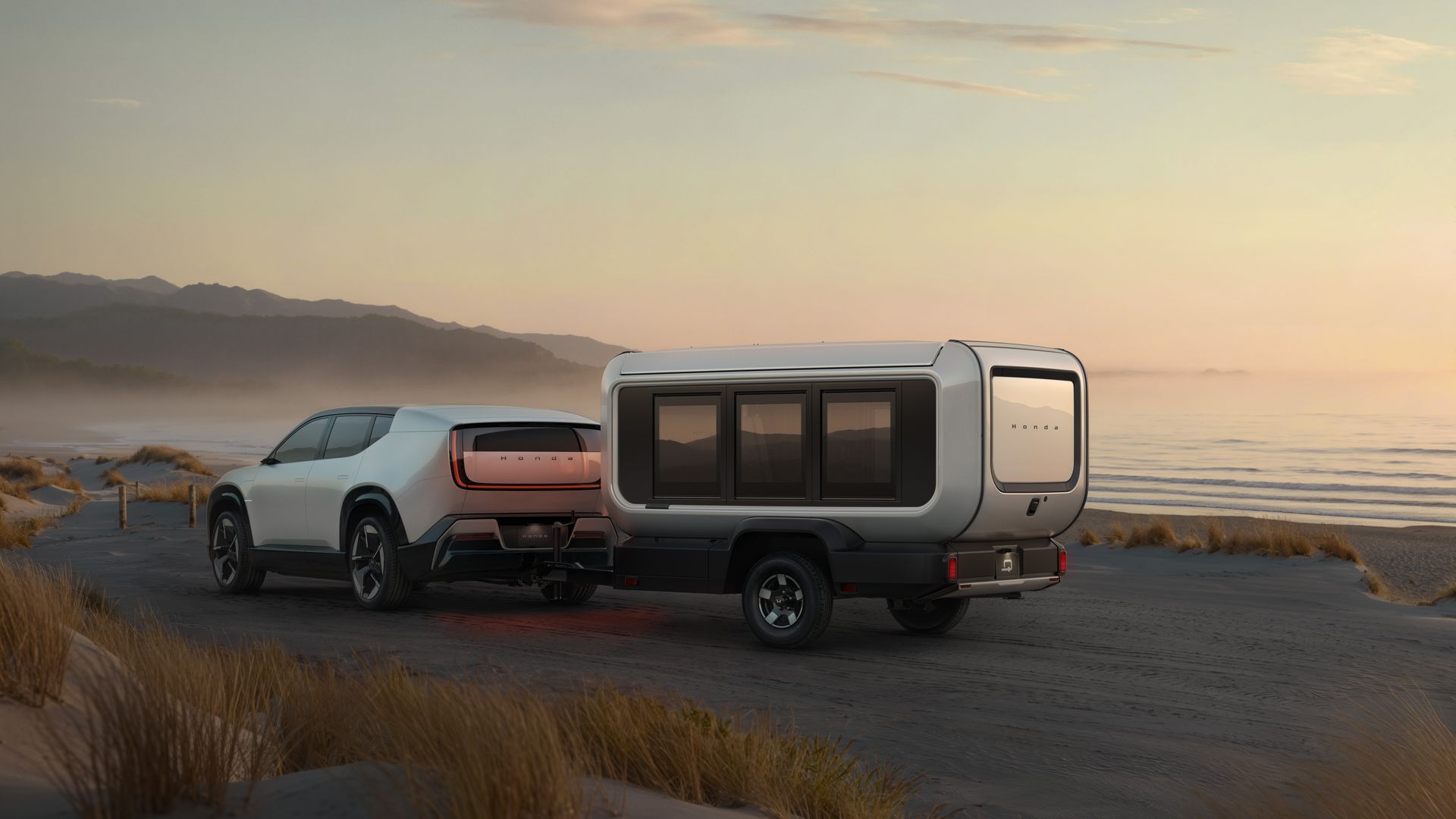
🚙 Honda is getting into the RV business with this enticing prototype called Base Station.
- It's a lightweight camper designed for towing behind compact SUVs like the Honda CR-V or even a Toyota RAV4.
- It's meant to attract younger, outdoorsy types, and can sleep a family of four.
- 💭 No word yet on whether they'll actually sell it, but my advice is YES, YES, YES!
🚁 Alphabet-owned Wing is expanding its drone delivery service to an additional 150 Walmart stores across the U.S., stretching from Los Angeles to Miami.
- By the end of the year, 40 million Americans, or about 12 percent of the U.S. population, will have access to drone delivery. (Axios)
⚡️ Stellantis has killed its entire lineup of plug-in hybrid vehicles to focus on conventional hybrids, range-extended EVs and a few battery-powered EVs. (Automotive News)
🚖 New York's governor wants to legalize robotaxis in the state, with one notable exception: New York City. Waymo is in favor, saying it's a step in the right direction. (TechCrunch)
5. 🏆 NACTOY's 2026 awards
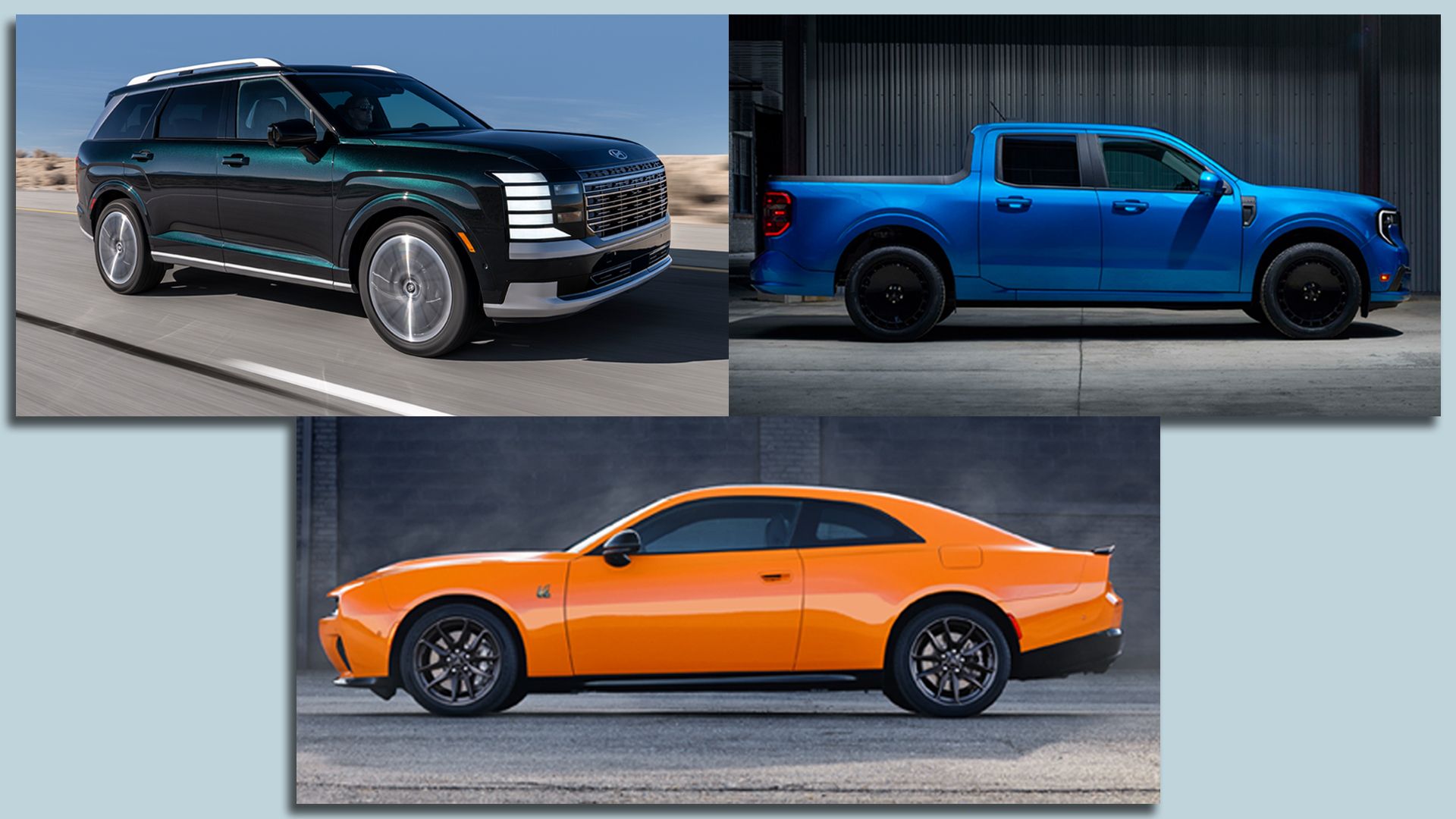
The winners of the 2026 North American Car, Truck and Utility of the Year (NACTOY) awards were announced this morning at the Detroit auto show.
- The Dodge Charger — including the first all-electric Charger Daytona — won best car; Ford Maverick Lobo won best truck, and Hyundai Palisade won best SUV.
I'm on the NACTOY jury and voted for two of the three winners.
- While all three are outstanding and deserve recognition, my choices were driven by one overwhelming criterion: value for the money, which is more important than ever this year.
- My personal picks were the Nissan Sentra (starting at $22,600), along with the winning Ford Maverick Lobo ($35,930) and Hyundai Palisade ($39,435).
Worth noting: One of my favorite cars, the Cadillac Optiq — an electric luxury SUV starting at $50,900 — wasn't even a finalist, which seemed like a big oversight.
- Choosing between the Optiq and the Palisade for best SUV would have been tough.
Inside the room: The independent NACTOY jury is a democracy, and the majority wins.
- Our diverse group of 50 print, broadcast and digital automotive journalists evaluates vehicles based on our own assessments during test drives throughout the year.
- Vehicles are not judged against one another (unless they compete in the same market segment). Rather, we look for vehicles that set a new benchmark in their individual segment.
- Voting criteria include outstanding innovation, design, safety, handling, driver satisfaction, user experience and value.
💭 My thought bubble: I usually put innovation at the top of my list when choosing the year's best cars, but this year, I gave extra weight to affordability.
- With the average new-car price topping $50,000, too many buyers are priced out of the market.
- Companies that develop well-equipped models that don't break your wallet should be rewarded.
Finalists by category:
Best car: Dodge Charger/Daytona, Nissan Sentra, Honda Prelude
Best truck: Ford Maverick Lobo, Ram 1500, Ram Heavy Duty
Best utility: Hyundai Palisade, Nissan Leaf, Lucid Gravity
Thanks to Pete Gannon and Bill Kole for editing. Tell your friends to subscribe here!
Sign up for Axios Future of Mobility