U.S. starts review of U.S.-Mexico-Canada Agreement ahead of 2026 deadline

Add Axios as your preferred source to
see more of our stories on Google.
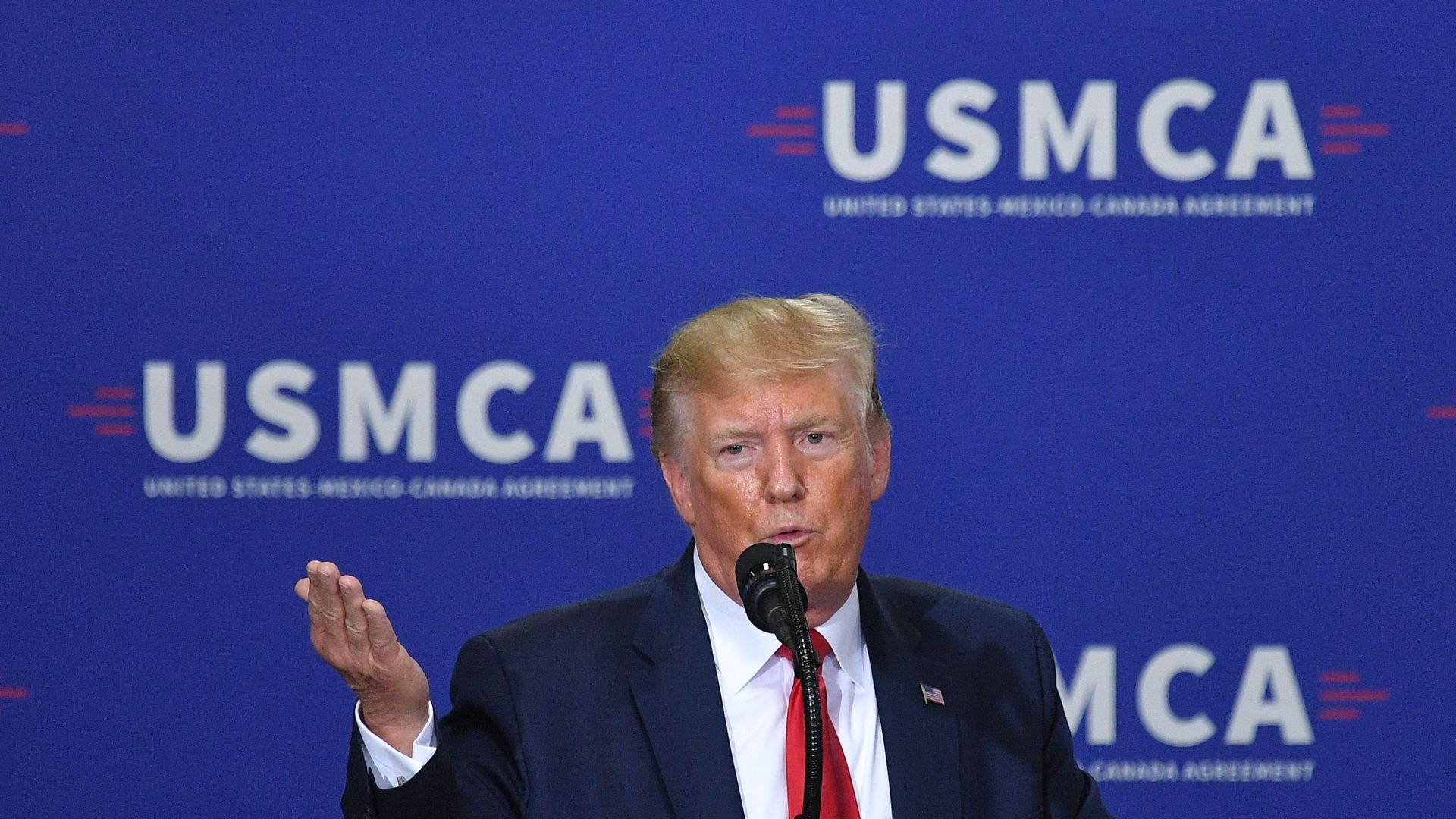
President Trump speaks about the USMCA in 2019. Photo: Mandel NganAFP via Getty Images)
U.S. trade officials on Tuesday started the formal review process for the U.S.-Mexico-Canada Agreement (USMCA), inviting public comment ahead of next year's renegotiation of the pact.
Why it matters: This starts what is likely to be a highly contentious process, particularly against the backdrop of the tariffs President Trump imposed this year on both countries.
Catch up quick: USMCA went into effect in 2020, replacing NAFTA as the high-level free-trade deal between the North American neighbors.
- The terms of the agreement call for a mandatory joint review in July 2026. If the three countries do not agree to extend the pact, it will then end in 2036.
Driving the news: The Office of the U.S. Trade Representative opened the process Tuesday, inviting public comments for 45 days on all aspects of the deal.
- The USTR will eventually be required to provide reports to Congress on its assessment of how the deal has worked, whether the U.S. wants to extend it, and any changes intended.
What they're saying: The United States' partners are girding for a tough negotiation.
- "Canadian businesses have been plagued for months with uncertainty due to this U.S. administration's approach to trade policy," Canadian Chamber of Commerce CEO Candace Laing said in a statement.
- "That corrosive lack of predictability undermines investment, planning, and long-term growth. The only way to restore confidence is to fix the very framework that is now being tested: our continental trade agreement."
The intrigue: Both Canada and Mexico face significant tariffs on goods not covered by the USMCA, though the two countries have also had very different approaches to negotiating with the U.S.
- Canada has had a more combative stance, though that has been softened in recent weeks. Mexico has notably taken the quiet, behind-the-scenes approach, and gotten more slack from Trump as a result.
What to watch: What sort of comments U.S. business interests offer in coming weeks, particularly in light of the tariff uncertainty.
