Axios Future of Mobility
March 25, 2026

Hi again! 👋
🤔 Pop quiz: Ever taken a ride in a Waymo? What kind of car was it? (Auto industry folks can't answer.)
- Today, we're taking a closer look at the risk of white-label robotaxis.
📺 ICYMI: Watch Axios' great conversations on AV policy last week.
1,371 words, a 5-minute read.
1 big thing: The white-label risk facing robotaxi makers
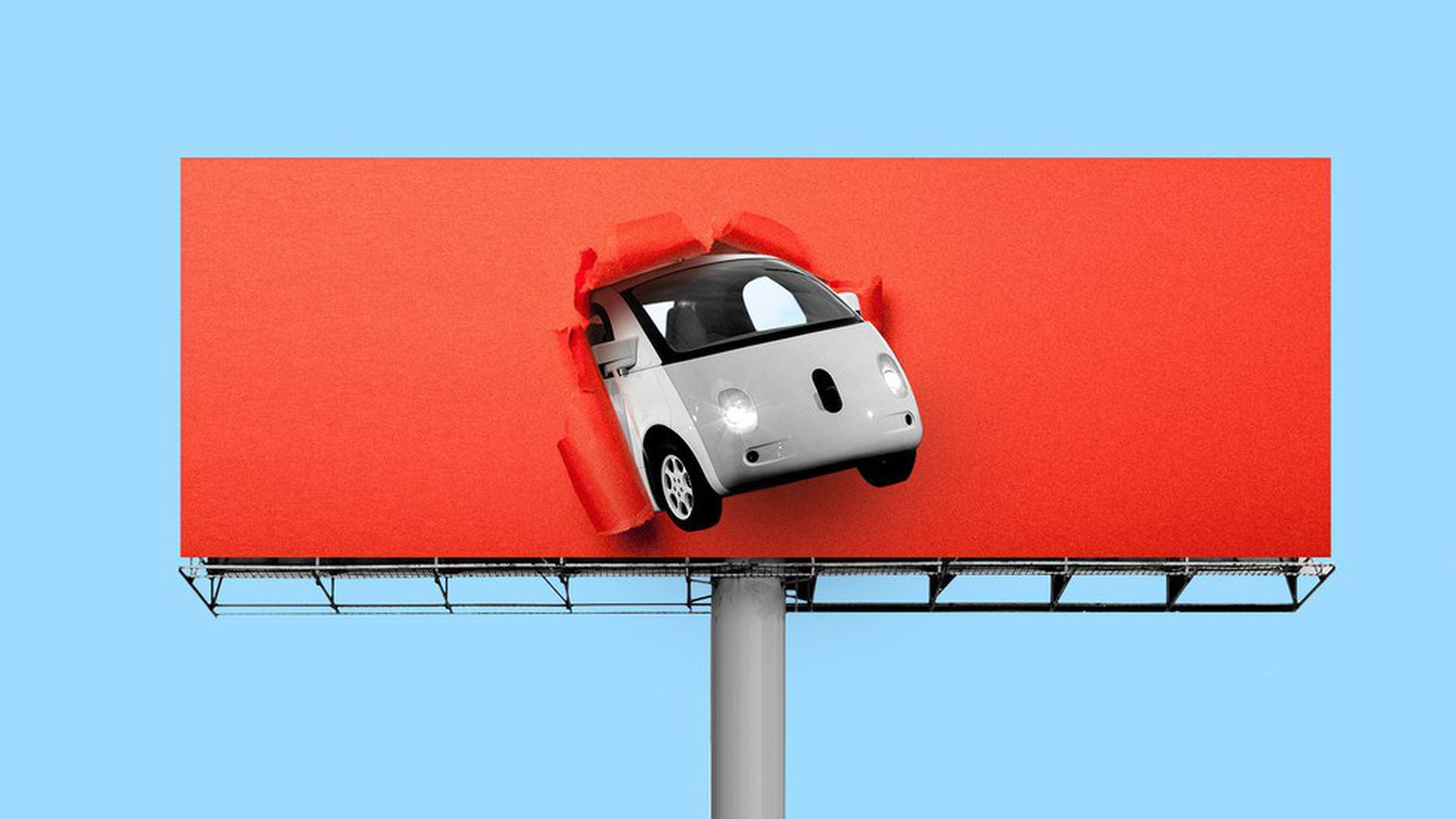
Electric vehicle makers are cutting deals to put robotaxis on Uber — a quick fix for soft sales today that could quietly erode their brands in the future.
Why it matters: If these tie-ups come to fruition, Uber would control everything from the ride experience and customer relationships to data and pricing.
- The cars, meanwhile, risk becoming white-label commodities.
Between the lines: New manufacturers like Rivian and Lucid see an opportunity with Uber, given today's muted demand for EVs and the lack of policy support in Washington.
- Deploying tens of thousands of robotaxis on Uber's network assures there will be buyers for their vehicles.
- That means revenue — and in the near term, investment from Uber will help keep factories running while funding continued R&D.
- The real money, they hope, will come from licensing their self-driving technology — but first, they have to perfect it.
Zoom in: A recent deal calls for Uber (or its fleet partners) to buy 10,000 fully autonomous Rivian R2 robotaxis, with an option to purchase up to 40,000 more by 2030.
- As part of the deal, Rivian is getting a $300 million investment, and potentially up to $1.25 billion through 2031, if it can hit certain AV goals.
Rivian has a lot at stake with the R2. As its first affordable, high-volume EV, it's a make-or-break model for the brand — key to the company achieving profitability.
- And a successful launch this year could ease investor concerns about the company's financial viability.
Threat level: A cautionary tale comes from British luxury carmaker Jaguar, whose electric i-Pace has powered Waymo's robotaxi fleet since 2020.
- "Almost everybody's first ride in an autonomous vehicle was in a Jaguar i-Pace," says Reilly Brennan, co-founder and partner at Trucks Venture Capital, an investor in mobility startups.
- "Nobody got out of a Waymo ride and said, 'I'm going to buy a Jaguar today.'"
- What everyone remembers is what it was like to take a Waymo.
Now Waymo is moving on — and taking the robotaxi customers.
- It has received its last delivery of Jaguars and is shifting its fleet to Zeekr minivans (a Chinese model with no U.S. presence) and Hyundai Ioniq5 EVs.
- Meanwhile, the i-Pace has been discontinued in a Jaguar product reboot.
Lucid's luxury brand faces a similar challenge in its three-way deal with Uber and Nuro, a self-driving tech company.
What they're saying: Neither Rivian nor Lucid seems concerned about brand degradation.
- "Uber carries out millions of trips every day. By integrating the Rivian robotaxi into its fleet, it will help introduce Rivian, and its vehicles, to millions of people," a Rivian spokesperson says.
- Lucid interim CEO Marc Winterhoff told Axios that the company is confident in the customer experience it's building with Uber and Nuro.
- But he added that Lucid plans to explore distinct branding to separate its consumer vehicles from robotaxi offerings.
What we're watching: Will Uber — which has more than 25 AV partners globally across mobility, delivery and freight — eventually create robotaxi tiers on its app as it does with conventional rides such as Uber X, Uber Comfort and Uber Black?
- That could help distinguish the experience for different vehicle brands.
The bottom line: For young EV brands, robotaxis present a trade-off between immediate sales volume vs. long-term brand control.
2. Tesla FSD faces heightened scrutiny
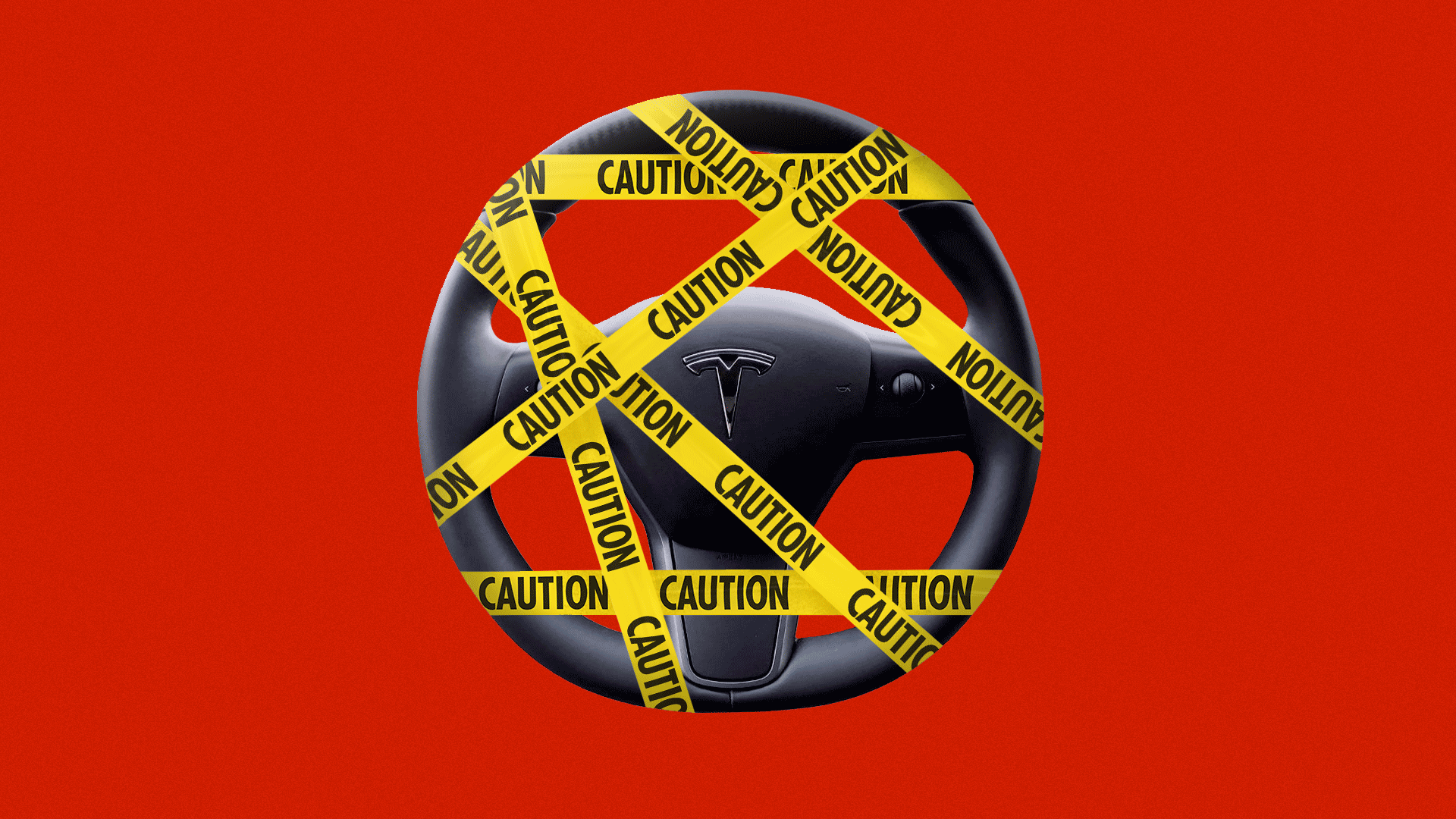
The National Highway Traffic Safety Administration is escalating its safety probe into Tesla's Full Self-Driving software, which could lead to a mandatory recall of 3.2 million vehicles.
- The agency is concerned that Tesla's camera-based system doesn't work well in low-visibility conditions like sun glare, fog or dust, and that it fails to adequately alert drivers to take over when it's blinded in such situations.
The big picture: A recall would be a setback for Tesla, whose enormous valuation is tied to CEO Elon Musk's ambitious AI strategy around robots and autonomy.
Catch up quick: NHTSA opened a preliminary investigation into Tesla's FSD driver-assistance software in October 2024.
- Now it's expanding that probe to a full engineering analysis, the final step before a recall.
- NHTSA said it had reports of nine incidents that may be tied to the issue, including one fatal crash.
- It's also investigating whether six other crashes may be related.
Between the lines: Tesla's FSD system is different from just about every other AV technology, as it relies only on cameras and an AI neural network to drive.
- Other AV companies have redundant sensors like lidar and radar to see what cameras might miss.
- Tesla stopped using radar on its cars in 2021, and Musk called lidar a "fool's errand" because it is so expensive.
Reality check: Lidar costs have fallen dramatically, and many automakers incorporate the laser technology into their advanced driver-assistance systems.
- Meanwhile, more advanced 4D imaging radar systems are coming that offer even clearer visibility.
What to watch: If NHTSA does order a recall, don't expect Tesla to retrofit all its vehicles with lidar or radar.
- Instead, it'll likely issue a software update to improve the system's performance and give drivers earlier warnings.
3. A peppermint spritz to help drivers stay alert

The right in-cabin scents can help people become better drivers, a new study finds.
Why it matters: It takes all your senses to drive — even your sense of smell, which can help you pay attention if you start to zone out or relax if you're feeling stressed.
The big picture: Partially automated driver assistance technologies — like Tesla's FSD — require drivers to pay attention, but there's ample evidence that they don't.
- That could leave motorists vulnerable if they're suddenly required to take back control of the vehicle, which can lead to deadly consequences.
Chinese researchers wanted to find out whether olfactory stimulation — i.e., certain smells — could help zoned-out drivers wake up if they become overly reliant on these technologies.
What they did: Thirty-four licensed drivers completed simulated driving under urban or highway conditions "across three odor conditions" — a baseline in-car smell along with "intervention odors" of peppermint and bergamot.
What they found: Peppermint produced the largest reduction in reaction time and made drivers more alert, the study shows.
- Bergamot — commonly used in Earl Grey tea — was best at calming stressed-out drivers in complex urban traffic.
The bottom line: Just bring an insulated cup of tea and a pocket full of peppermints and you'll be fine.
4. Drive-thru
🤖 Zoox is bringing its purpose-built robotaxis to Austin and Miami for testing, and is expanding its free ride-hailing service in San Francisco and Las Vegas. (The Verge)
- The Amazon-owned AV company is seeking a federal exemption for its unique vehicle, which has no steering wheel or other human controls.
🙈 GM has begun testing its new "hands-free, eyes-off" driving system on public highways as it prepares to launch the technology on the Cadillac Escalade IQ electric SUV in 2028. (Automotive News)
🇺🇸 Toyota is investing $1 billion to increase U.S. production at factories in Kentucky and Indiana. (CNBC)
- It's part of a previously announced plan to invest $10 billion in U.S. manufacturing over the next five years.
5. 🚘 What I'm driving
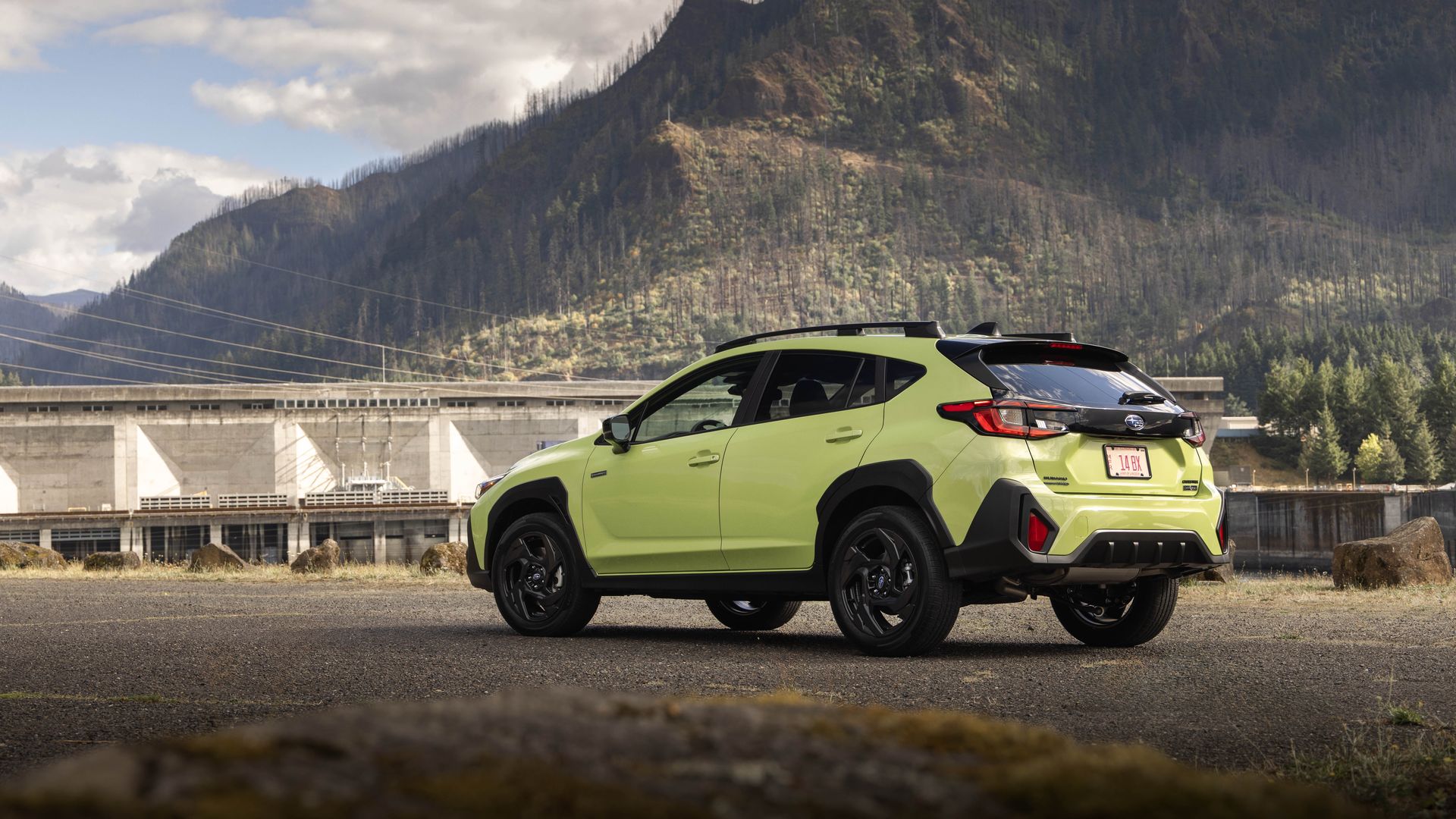
2026 Subaru Crosstrek
- MSRP: $26,995 to $34,995 (plus delivery charge). As tested: $38,410, for Limited Hybrid trim, with options including moonroof and surround view camera system.
- Under the hood: 194-hp hybrid powertrain; 36 mpg.
What's new: Subaru ditched Crosstrek's underpowered base engine but kept the 2.5-liter gas engine and added an optional hybrid.
- Also new: an available 12.3-inch digital instrument cluster.
What I loved: The hybrid is quiet and peppy, with a full array of safety and driver-assist technologies.
What drove me crazy: The nanny cam — Subaru's "distraction mitigation system" — is supposed to help drivers stay alert to the road, but it kept dinging me for looking at the touchscreen to change the climate or radio.
- Maybe a spritz of peppermint would have been enough. 🤷♀️
I test-drive vehicles in my role as a juror for the North American Car and Truck of the Year awards. Opinions are my own.
Thanks to editors Pete Gannon and Bill Kole. If you're a fan of this newsletter, please ask your friends to sign up, too.
Sign up for Axios Future of Mobility