The branding risk facing new robotaxi makers

Add Axios as your preferred source to
see more of our stories on Google.
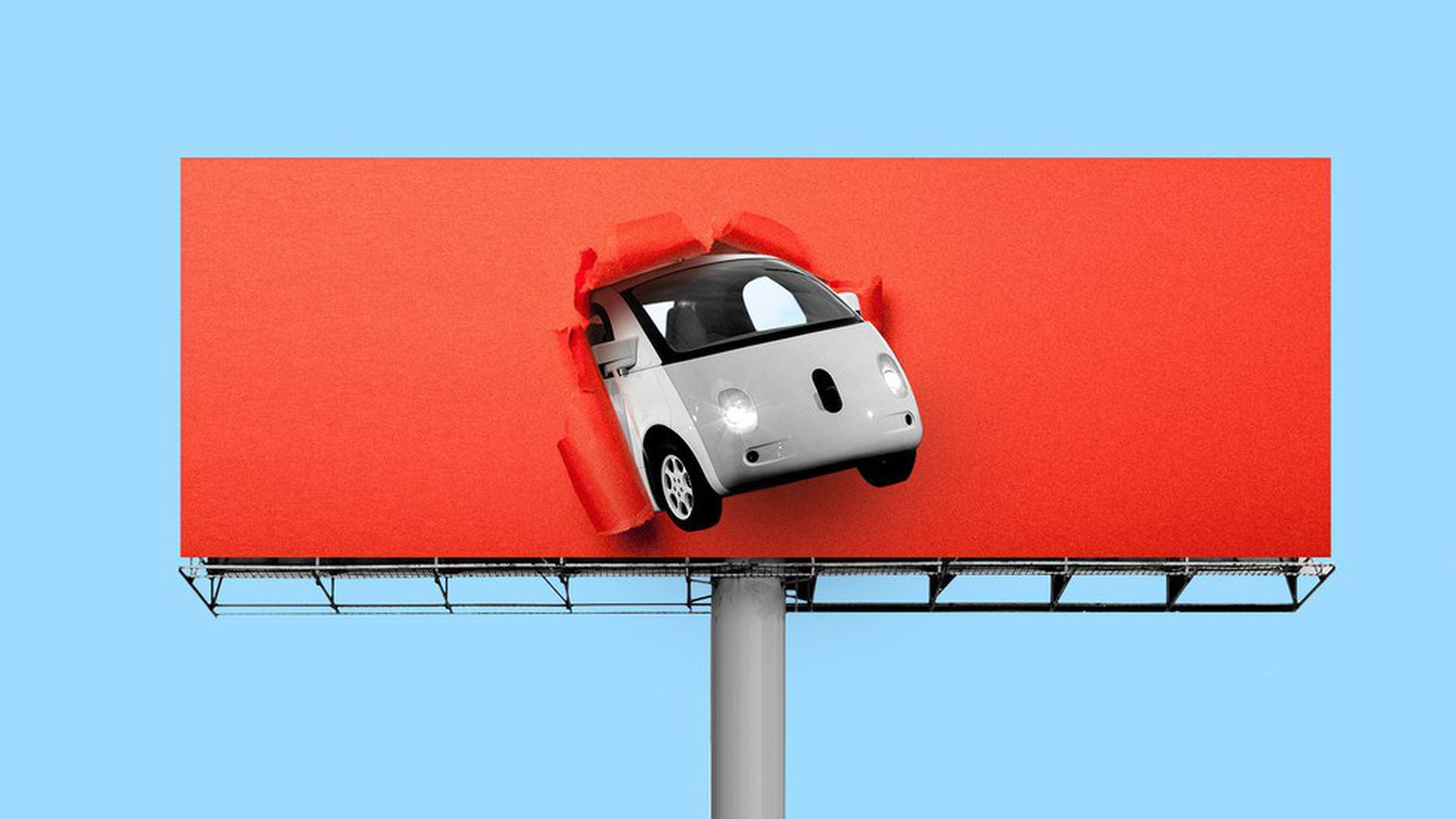
Illustration: Rebecca Zisser/Axios
Electric vehicle makers are cutting deals to put robotaxis on Uber — a quick fix for soft sales today that could quietly erode their brands in the future.
Why it matters: If these tie-ups come to fruition, Uber would control almost everything from the ride experience and customer relationships to data and pricing — while the cars risk becoming white-label commodities.
Between the lines: New manufacturers like Rivian and Lucid see an opportunity with Uber, given today's muted demand for EVs and the lack of policy support in Washington.
- Deploying tens of thousands of robotaxis on Uber's network assures there will be buyers for their vehicles.
- That means revenue — and in the near term, investment from Uber will help keep factories running while funding continued R&D.
- The real money, they hope, will come from licensing their self-driving technology — but first, they have to perfect it.
Zoom in: A recent deal calls for Uber (or its fleet partners) to buy 10,000 fully autonomous Rivian R2 robotaxis, with an option to purchase up to 40,000 more by 2030.
- As part of the deal, Rivian is getting a $300 million investment, and potentially up to $1.25 billion through 2031, if it can hit certain AV goals.
Rivian has a lot at stake with the R2. As its first affordable, high-volume EV, it's a make-or-break model for the brand.
- Going on sale this spring for $57,990, with lower-priced models to follow, the R2 is key to Rivian achieving profitability.
- And a successful launch this year could ease investor concerns about the company's financial viability.
Threat level: A cautionary tale comes from British luxury carmaker Jaguar, whose electric i-Pace has powered Waymo's robotaxi fleet since 2020.
- "Almost everybody's first ride in an autonomous vehicle was in a Jaguar i-Pace," says Reilly Brennan, co-founder and partner at Trucks Venture Capital, an investor in mobility startups.
- "Nobody got out of a Waymo ride and said, 'I'm going to buy a Jaguar today.'"
- What everyone remembers is what it was like to take a Waymo.
Now Waymo is moving on — and taking the robotaxi customers.
- It has received its last delivery of Jaguars and is shifting its fleet to Zeekr minivans (a Chinese model with no U.S. presence) and Hyundai Ioniq5 EVs.
- Meanwhile, the i-Pace has been discontinued in a Jaguar product reboot.
Lucid's luxury brand faces a similar challenge in its three-way deal with Uber and Nuro, a self-driving tech company.
- Mercedes-Benz has managed to retain its luxury image even though its vehicles are ubiquitous across Europe's taxi fleets — but Mercedes benefits from decades of established pedigree.
- "With Rivian and Lucid, I have shoes older than both companies," Brennan said.
What they're saying: Neither Rivian nor Lucid seems concerned about brand degradation.
- "Uber carries out millions of trips every day. By integrating the Rivian robotaxi into its fleet, it will help introduce Rivian, and its vehicles, to millions of people," a Rivian spokesperson says.
- Lucid interim CEO Marc Winterhoff told Axios that the company is confident in the customer experience it's building with Uber and Nuro. He added that Lucid plans to explore distinct branding to separate its consumer vehicles from robotaxi offerings.
What we're watching: Will Uber — which has more than 25 AV partners globally across mobility, delivery and freight — eventually create robotaxi tiers on its app as it does with conventional rides such as Uber X, Uber Comfort and Uber Black?
- That could help distinguish the experience for different vehicle brands.
The bottom line: For young EV brands, robotaxis present a trade-off between immediate sales volume vs. long-term brand control.
