Axios Future of Defense
October 10, 2026

Hello, and happy Saturday. Back in your inbox with another bonus edition of the newsletter.
- This time, we're headed underground.
Smart Brevity™ count: 670 words, 2.5 min.
1 big thing: Under where?

Underground warfare is having a moment. And it arrives on the eve of the most prominent land-power conference in the U.S.
The big picture: Subterra, as some shorthand it, has been thrust into everyday conversation by industry messaging, Pentagon planning and contemporary conflict.
- Project Meridian, a future-of-war study announced recently, will focus on "new ways of fighting." One of the project's leaders, Anduril Industries founder Palmer Luckey, previously told me "the next warfighting domain ... is the subterranean domain."
- The Israel Defense Forces has repeatedly discovered, entered, mapped and blown up Hamas and Hezbollah tunnels, among other buried infrastructure.
- Houthi rebels in Yemen have relied on hard-to-reach subterranean sites for weapons storage. North Korea, meanwhile, operates several underground, militarized facilities.
- And earth-breaking weapons, GBU-57 Massive Ordnance Penetrators, were key to Operation Midnight Hammer in Iran. The Air Force last year tapped Applied Research Associates and partner Boeing to develop a successor.
What they're saying: "Every modern fight, you have underground front and center," Yadin Soffer, co-founder of Traysar, told me.
- "It's the most ancient form of warfare — but the least technologically developed one," he said. "There's a lack of options in the broader industry."
- The startup last month revealed its development of Terminus, a truck-mounted boring machine, and a partnership with Armada, known for mobile data centers. (You do the math.)
Flashback: A report published by the Army in 2025 concluded U.S. forces "may not be able to avoid a subterranean fight in the future." It added: "Units must be prepared to fight underground."
Go deeper: Anduril's Palmer Luckey talks AI, nukes and Iran on "The Axios Show"
2. Grounded Apaches

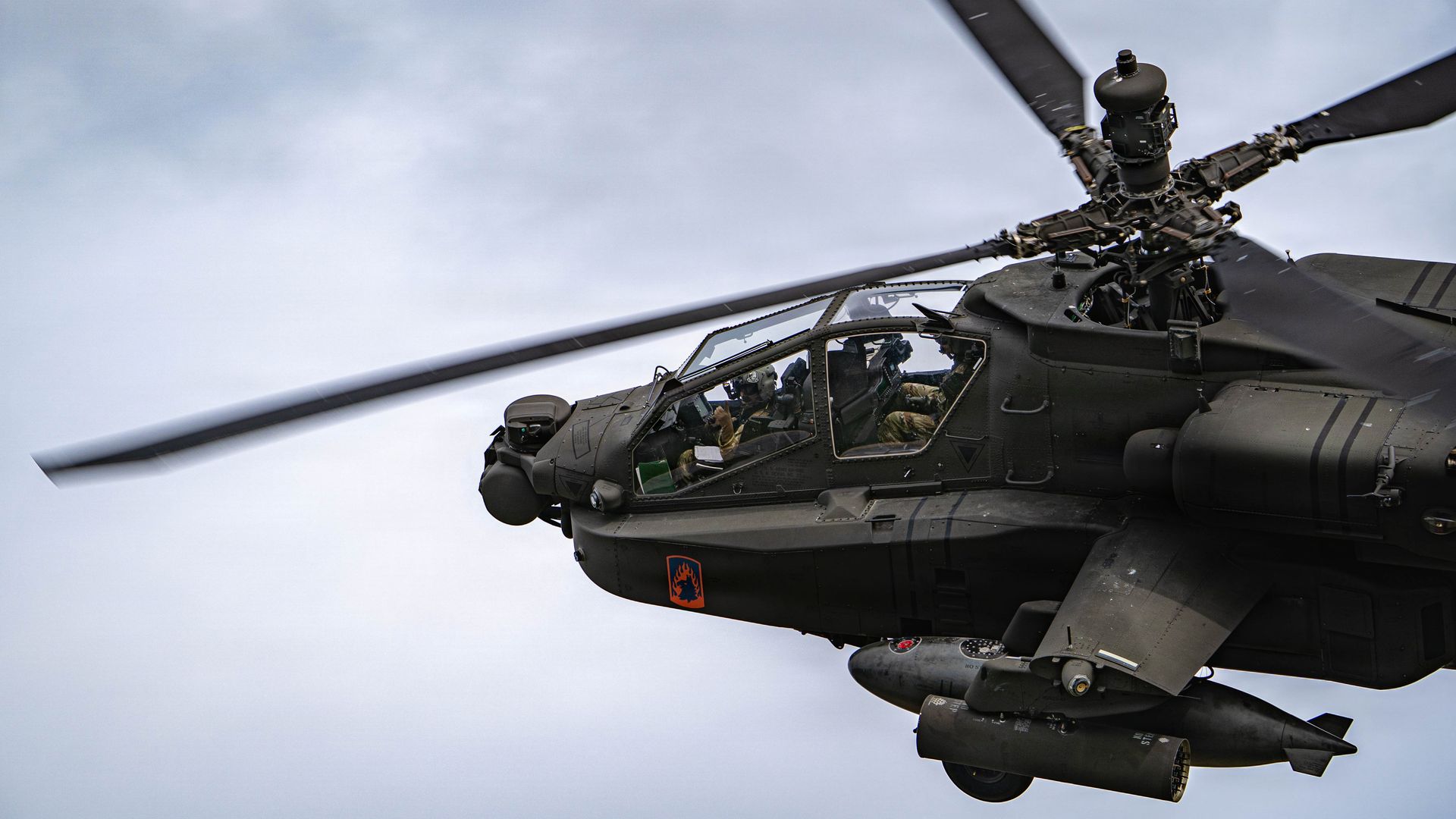
Hundreds of Army Apache attack helicopters are being grounded and inspected for a persistent transmission problem, and a U.S. official told me they could be out of the skies until mid-2027.
Why it matters: The service's workhorse chopper has faced a spate of safety incidents and stand-downs this year, mostly tied to the improved drive system transmission on its AH-64E models.
What they're saying: "Safety remains the foremost priority. The Army will share further details when appropriate," the service said in a brief statement last week.
Between the lines: A U.S. official filled in the gaps and told me it affects around 400 active-duty and National Guard helicopters.
- The official said the grounding will likely be "longer than people think" and estimated it could be anywhere from "six to nine months."
My thought bubble: I've covered these transmission woes extensively, and it seems the story's not going away anytime soon.
3. Quick hits
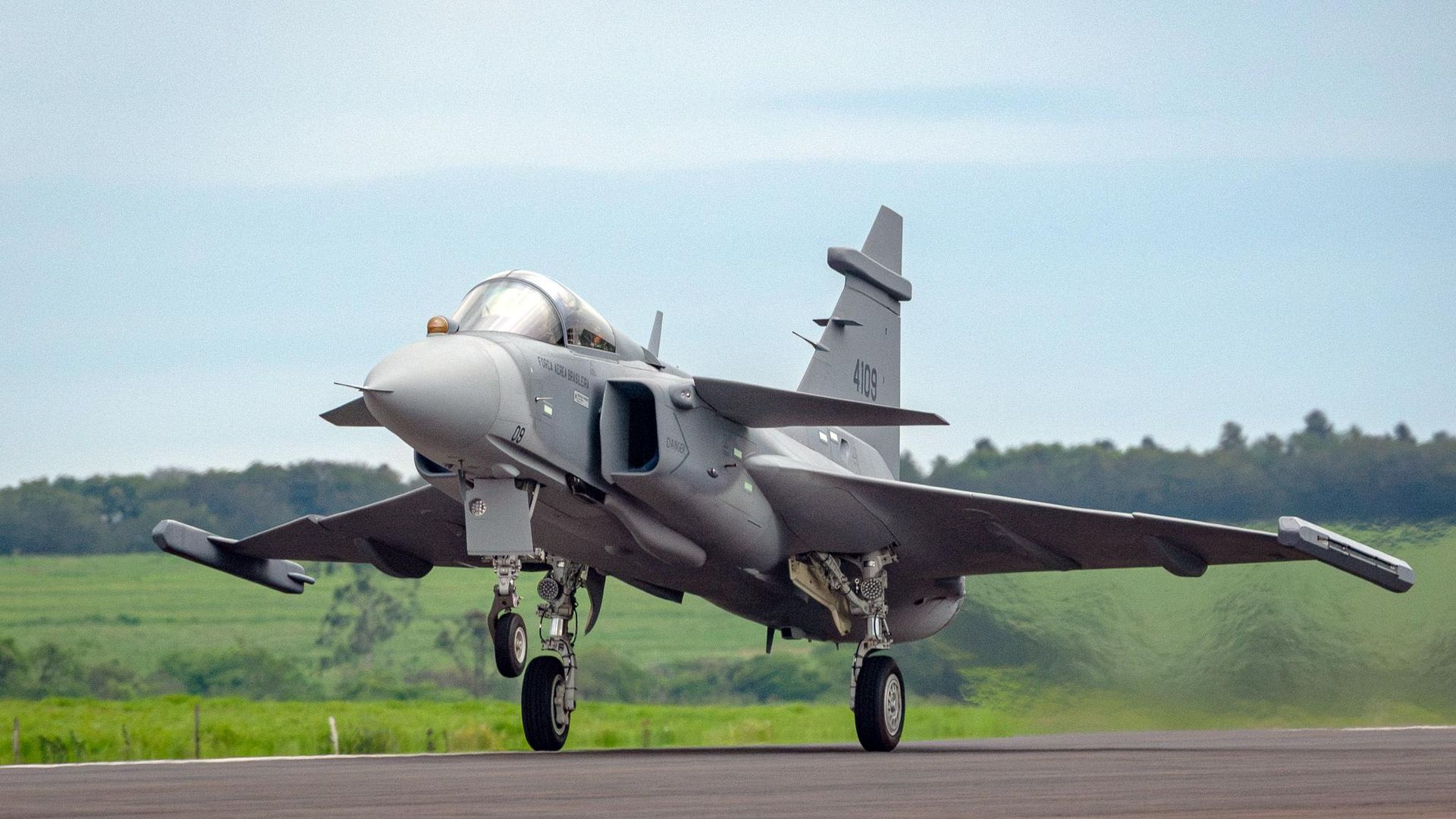
🇧🇷 The first Gripen E fighter produced by Embraer in Brazil has taken flight. The aircraft departed the company's facilities in Gavião Peixoto.
- Why it matters: A contract signed with Brazil in 2014 covered the development and production of 36 Gripens, including 28 single-seater E variants.
- 💭 My thought bubble: I've followed Embraer closely. More on the aerospace company here and here and here.
📑 Striveworks announced a five-year, $200 million contract for further work on the Army's Next-Generation Command and Control effort. The company is building the baseline AI layer.
- Why it matters: A lot rides on NGC2 and its success (i.e., you can't win if you can't communicate).
- 💭 My thought bubble: The Army in its recent budget request sought some $4 billion for NGC2 development and delivery.
💵 Fortastra raised $30 million. The Series A was led by First In. Other backers include ATX Ventures, Side Door Ventures and Space Capital.
- Why it matters: At a time when the Pentagon is openly talking about space weapons, this startup is billing itself as a "developer of maneuverable, resilient spacecraft for on-orbit security and national defense."
- 💭 My thought bubble: My colleague Natalie Breymeyer has a great rundown on defense-tech deals. Give it a read!
Shoutout to Mike Zapler for editing and Matt Piper for copy editing.
👋🏼 Thanks, as always, for reading and sharing. Tell your friends to subscribe here.
Sign up for Axios Future of Defense