Axios Future of Defense
October 23, 2024

Yo, yo. We're talking drones this week: weapons to blast them, the information-warfare implications and an "X-Files"-style conundrum.
- After that, we hit the water in Texas.
🇰🇵 Situational awareness: If North Korea dispatches troops to Ukraine to bolster Russia's invasion, it would "mark a significant escalation" in the conflict, NATO boss Mark Rutte said Tuesday.
- My thought bubble: Agreed. Pyongyang could also use the frontline experience against South Korea, should war break out on the peninsula.
Today's newsletter is 1,269 words, a 5-minute read.
1 big thing: Counter-drone commotion
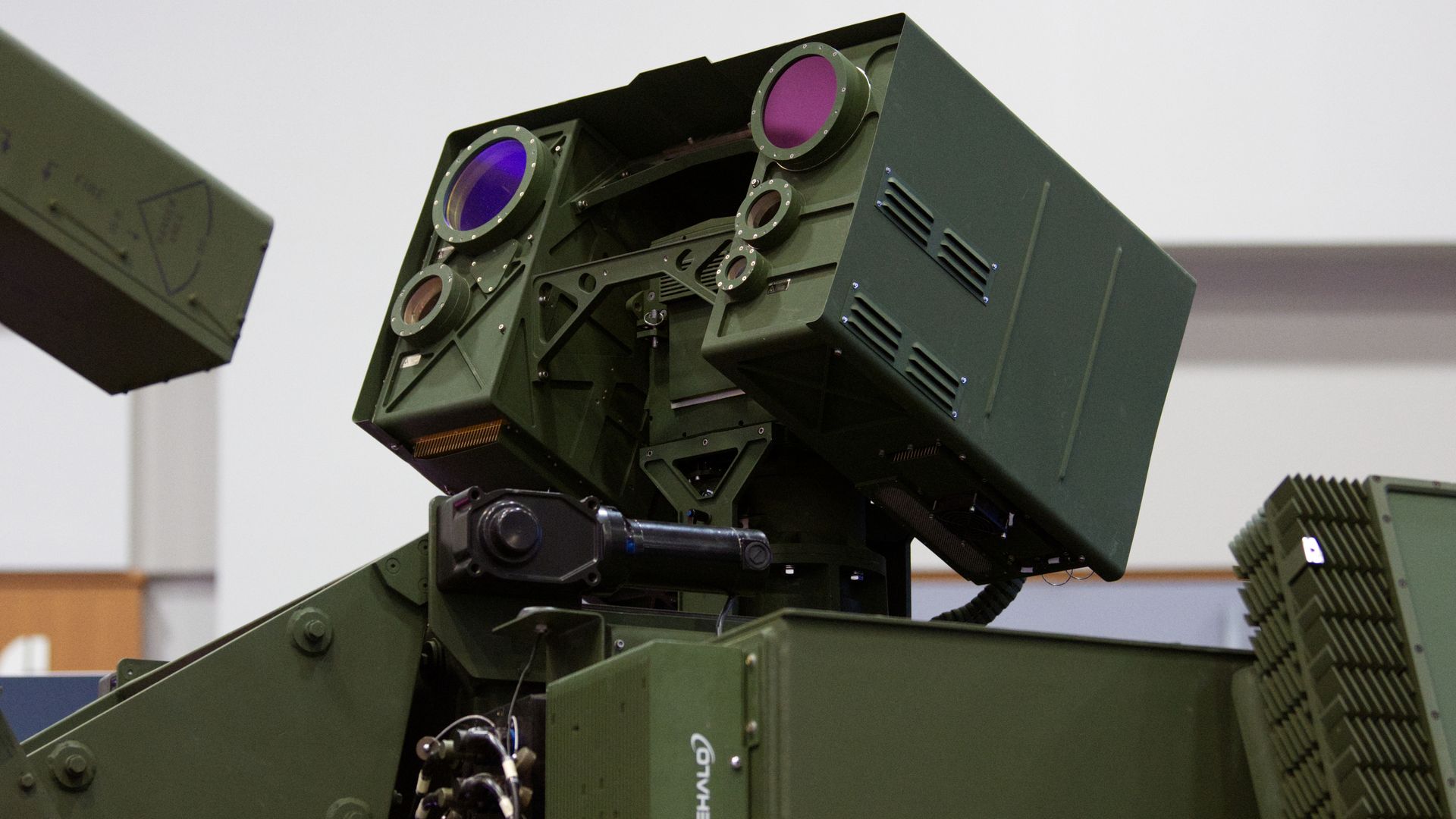
You can't escape the drone conversation in defense-tech circles. How to make them. How to price them. How to operate alongside them — and how to kill them.
- This was on my mind last week, wandering the halls of the Association of the U.S. Army conference, where counter-drone armaments choked booths left and right.
Why it matters: Y'all know how this machinery is wreaking havoc across the world, from Ukraine to the Red Sea to Sudan. It's time to pay attention to fighting back.
- Don't forget about the Pentagon's second iteration of Replicator, which seeks what's needed to knock out unmanned vehicles.
Here's what caught my eye at AUSA, from jammers to directed energy to explosive interceptors:
- Northrop Grumman unveiled its latest Bushmaster chain gun, which can handle two ammo feeds at the same time. (Northrop recommends XM1211 proximity-fuzed rounds for obliterating drones.) Live-fire tests are expected early next year.
- Leidos introduced AirShield, meant to defend convoys and bases. One interceptor used, the Co-axial Unmanned Guided Autonomous Rotorcraft, releases streamers, disabling an incoming drone without risking collateral damage.
- Teledyne FLIR Defense showed off its Cerberus XL C-UAS, describing it as "battle tested and proven in Ukraine." The mobile setup combines sensors with third-party countermeasures.
- Axon bolted a DedroneSecure to the top of an Infantry Squad Vehicle. A spokesperson said it will be ready for Defense Department testing and evaluation in 2025.
- BlueHalo flexed its Locust laser weapon atop a prototype dubbed C-UAS DE Stryker. It underwent testing in New Mexico just weeks ago. Footage shared by the company shows a quadcopter crossing its path, catching fire and plummeting to the ground.
- Epirus hauled a full-sized Leonidas to the show floor. The contractor teased an extended-range version of its high-powered microwave weapon as well as naval applications.
- Anduril Industries displayed Roadrunner, a recoverable interceptor. The company recently secured a $250 million deal to furnish hundreds of them, plus Pulsar electronic warfare tools.
What they're saying: "Systems designed to detect or intercept inbound threats are absolutely critical to addressing the drone threat," Pat Morris, Anduril's vice president and general manager for air defense, told me.
- But equal attention, he added, "must be paid to the integration of all those disparate systems and the workflow underpinning the entire C-UAS kill chain."
Zoom in: The Army is prioritizing drones and drone protections through a months-old initiative known as "transforming in contact."
- "Countering them is the harder one — it's a bigger challenge," Chief of Staff Gen. Randy George said in a pre-AUSA interview.
- "We're working with Central Command, and we're shipping everything that we have that is even close to ready."
The bottom line: Overhead defense is only getting more complicated.
2. Waging an info war
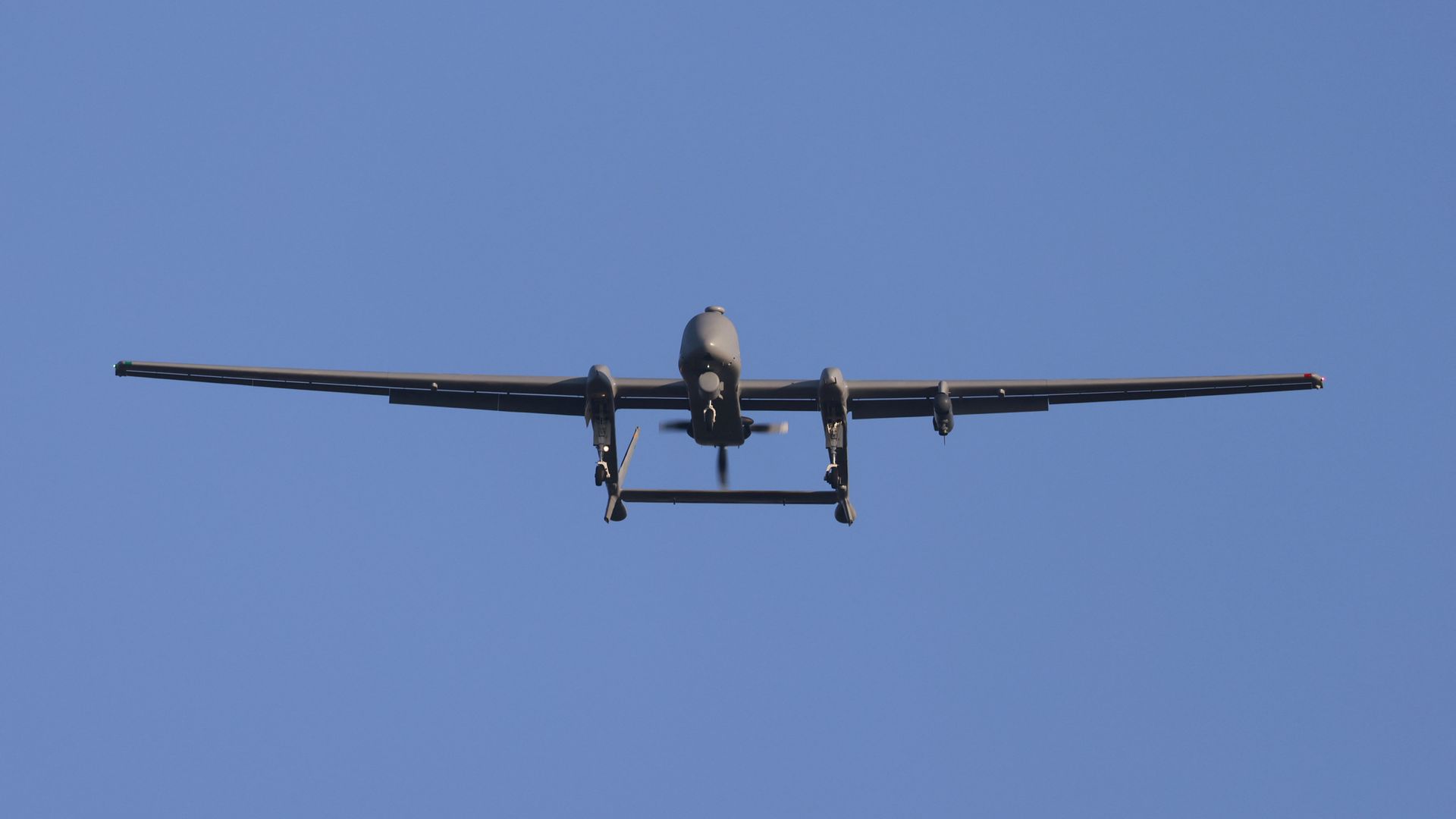
The Russia-Ukraine and Israel-Hamas wars are among the most publicly visible conflicts in history. Drone feeds and body-worn cameras are much to blame.
The big picture: From Hamas chief Yahya Sinwar's last moments, caked in dust and limply wielding a stick, to troops in Eastern European trenches being blown apart, grisly videos are just a click away.
- Instagram, Telegram and X, among other outlets, are littered with combat clips. All it takes is the correct pattern of online engagement to slip into that stream.
Between the lines: It's not without purpose, of course. Such footage is powerfully persuasive.
- Successful Ukrainian strikes warn Russian invaders: If you come here, you will die. Captions and comments double down on the message.
- Think of these videos as the wartime posters of yore. There's a reason thermite-spewing "dragon drones" broke cover and flicks of the Israel Defense Forces circulate online.
- Influencing the narrative pays dividends for militaries and governments.
Flashback: U.S. Air Force Lt. Gen. Kevin Kennedy in 2022 said unmanned systems are critical to waging information warfare.
- "An unmanned system, I can put into a place that I'm not going to put a manned system, with a different risk profile," he said at the time. "Also, it decreases the possibility of miscalculation."
What's next: Don't expect the crush of media to subside, even with stricter moderation policies.
Go deeper: SAIC's Knausenberger: Mind the "rise of asymmetrical, AI-augmented warfare"
3. Close encounters

Mysterious aircraft stalking Langley Air Force Base and other guarded sites are raising the hackles of the national-security intelligentsia and producing more questions than answers.
Why it matters: As the Wall Street Journal reported earlier this month, "U.S. officials don't know who is behind the drones that have flown unhindered over sensitive national-security sites — or how to stop them."
- The incidents underscore the vulnerabilities of military bases and other critical infrastructure.
By the numbers: Enigma Labs in December logged 23 reports of aerial objects within 150 miles of Langley.
- "Our crowdsourced reports corroborate what the military sources" told the Wall Street Journal, the company said in an email to Axios. "These were not just students operating hobbyist rotor drones."
The intrigue: The War Zone reported the overhead incursions were so vexing that NASA brought in a WB-57F research plane, which carries specialty imagers.
What do you think is going on? Have you seen these purported "Close Encounters of the Third Kind"? Should they be shot down, Chinese spy balloon style?
📧 Reply to this email and let me know!
4. Quick hits
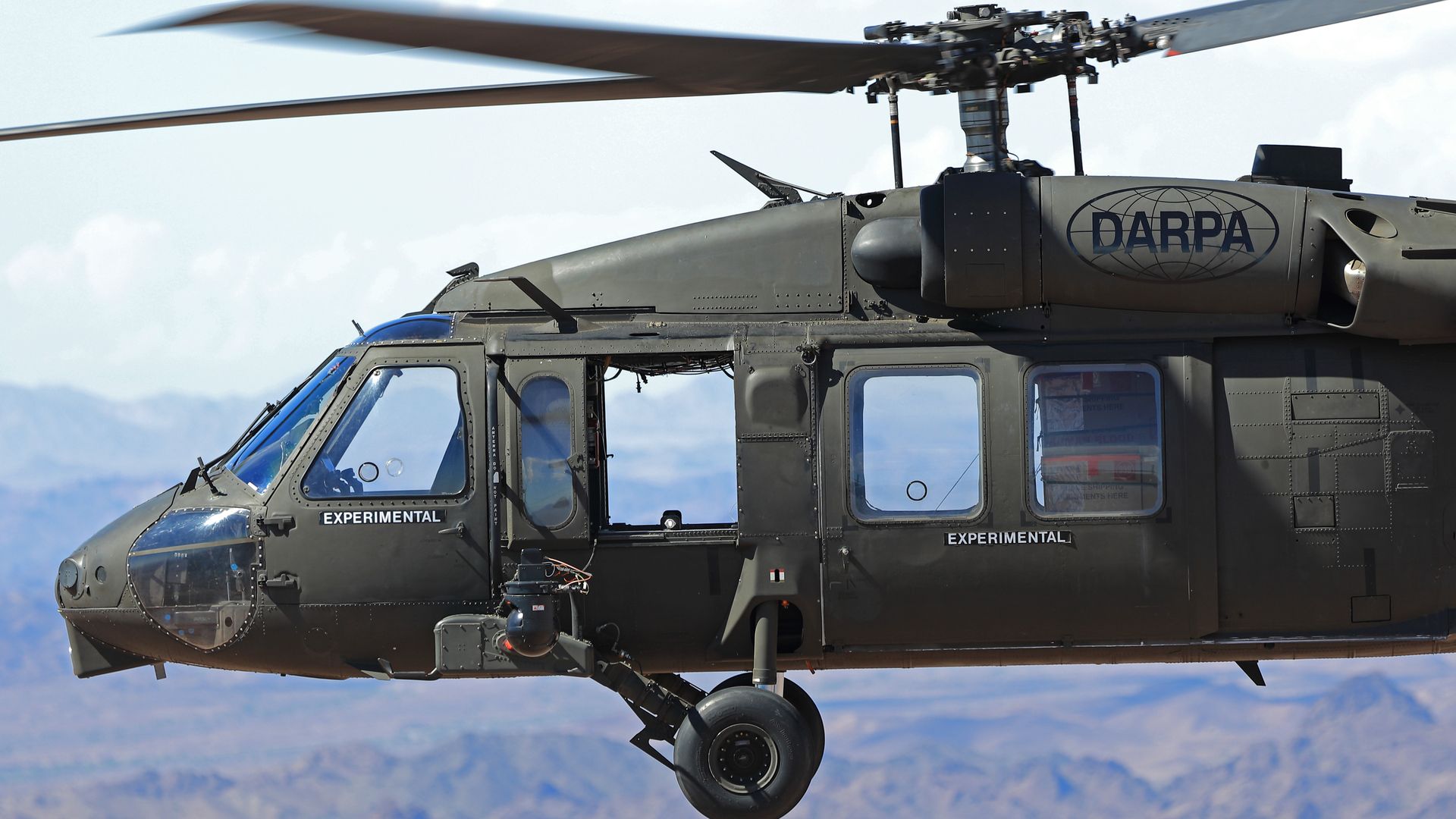
🚁 Sikorsky, part of Lockheed Martin, will install its flight autonomy package on the U.S. Army's experimental UH-60M Black Hawk. The work is valued at $6 million.
- Why it matters: The Army has long sought to improve logistics and get its soldiers out of harm's way. Autonomous machinery promises to do both.
- 💭 My thought bubble: Test footage, showing an uninhabited cockpit, is pretty wild. Watch it.
📚 National security experts, tech wonks and futurists wrestle with the ramifications of artificial intelligence in a new compendium shared by the Aspen Strategy Group.
- Why it matters: AI can be "used as an instrument of power, and it can be used as a weapon, or something to design weapons," Yoshua Bengio, one of the authors, told me. "Already, people are worried about cyberattacks and [chemical, biological, radiological and nuclear threats], but I think that's just the tip of the iceberg."
- 💭 My thought bubble: The more this thorny topic is debated, the better. Public ignorance here is a costly mistake.
🕶️ Sierra Nevada Corporation is working with Microsoft on the Army's Integrated Visual Augmentation System.
- Why it matters: Microsoft is assembling a team to make IVAS tailorable and responsive to troop needs. Different plugins and programs can offer different battlefield insights.
- 💭 My thought bubble: I tried on IVAS during the Association of the U.S. Army conference. It was heavy, but certainly felt futuristic. (Anyone else play Tom Clancy's Ghost Recon: Future Soldier?)
🛫 The Navy's new Take Charge and Move Out aircraft was officially designated the E-130J.
- Why it matters: E-130J will succeed the older E-6B Mercury fleet, which connects the president and the defense secretary and helps coordinate use of the U.S. nuclear arsenal.
- 💭 My thought bubble: Interested in nuclear command, control and communications? Check out the Congressional Budget Office's analysis of potential 2023-2032 spending.
5. Check this (exclusive) out
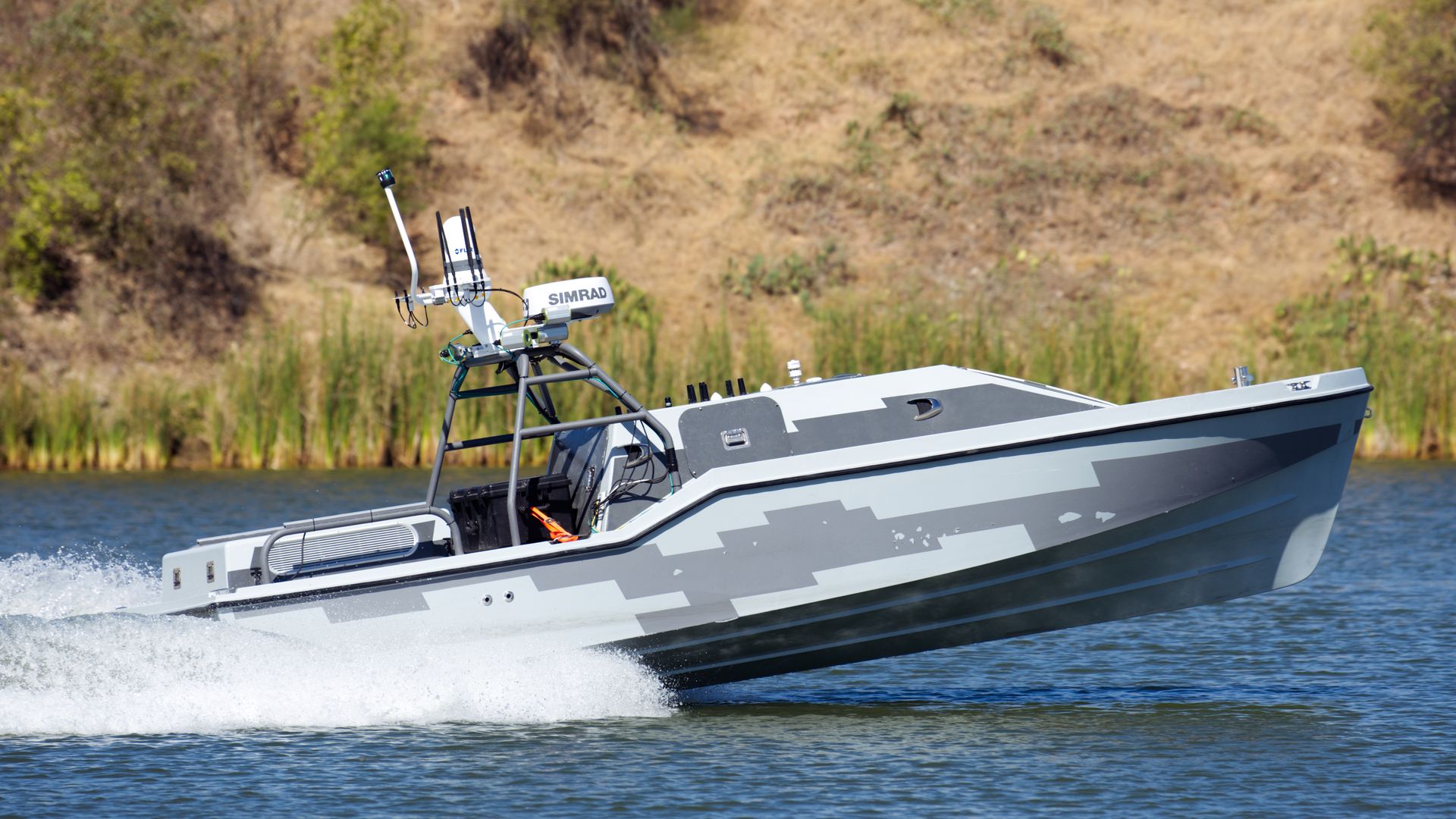
Saronic, a maker of autonomous surface vessels, unveiled its 24-foot Corsair this morning.
- I was given an exclusive look at it on the water, as it underwent testing in the shadow of the Austin, Texas, skyline.
Zoom in: The boat can carry 1,000 pounds, travel 1,000 nautical miles and hit speeds greater than 35 knots.
Inside the room: Former Chief of Naval Operations Adm. Michael Gilday is advising the young company, which employs more than 200 people.
What's next: A full rundown on my 20-hour roundtrip, plus an interview with Gilday, coming next week. See y'all then.
Shoutout to Nicholas Johnston for editing and Matt Piper for copy editing.
👋🏼 Thanks, as always, for reading and sharing. Tell your friends to subscribe, here.
Sign up for Axios Future of Defense