Axios Finish Line

April 22, 2026



1 big thing: Doulas reshape birth care
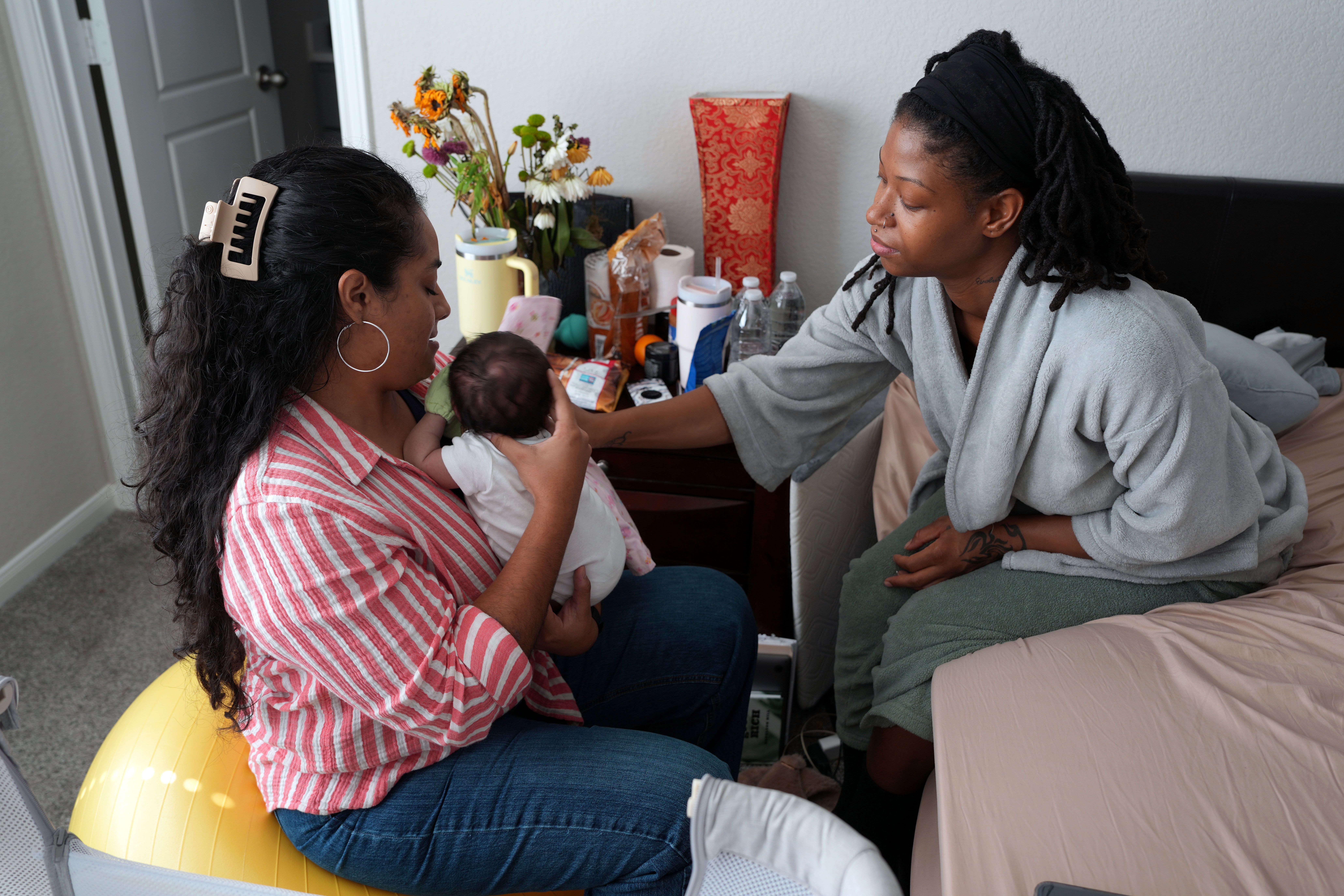
Doula care is becoming more mainstream — fast.
- Why it matters: More than half of the states now cover doula services through Medicaid, a major shift for a once-niche birth option that's tied to better outcomes for moms and babies.
Zoom in: Doula support is linked to lower C-section rates and fewer preterm births — while potentially lowering overall health system costs.
- 🩺 A new review of clinical trials published today in JAMA Network Open found doula support was most consistently associated with less maternal anxiety, greater breastfeeding initiation and better postpartum follow-up care.
How it works: Doulas provide continuous, nonmedical support — emotional coaching, advocacy and physical comfort — distinct from midwives, who perform clinical tasks.
- That can include offering encouragement and helping with position changes during labor and delivery, and advocating for the patient's wishes in the hospital, says Nicole Sessions, an experienced doula and maternal mental health researcher.
- Doulas also provide emotional and informational support during pregnancy and postpartum.
💰 By the numbers: 26 states and D.C. are actively reimbursing for Medicaid coverage of doula care, according to the National Health Law Program.
- Before 2020, only Oregon and Minnesota offered Medicaid coverage for doula services. That's "a lot of progress" in a few years, says Amy Chen, senior attorney at the National Health Law Program.
- The latest: UnitedHealthCare recently announced it would allow for coverage of doula care in employer-sponsored programs nationwide.
- Only a few states require or will soon mandate doula coverage as part of private insurance plans.
👶 Zoom in: During her first birth, Chen says her doula helped her and her partner advocate to avoid an unwanted incision.
- Chen's positive doula experience led to her later work on Medicaid coverage for doula care. She had a doula for her next two births.
Reality check: Even as doula care spreads, Sessions worries it's becoming "a band-aid" — absorbing pressure that should be driving deeper reform of the overall obstetric system.
🌱 The bottom line: Doula care is expanding quickly. But without adequate reimbursement, hospital integration and systemic reform, the benefit may exist on paper more than in practice.
2. 🏥 Mapped: Doula care coverage
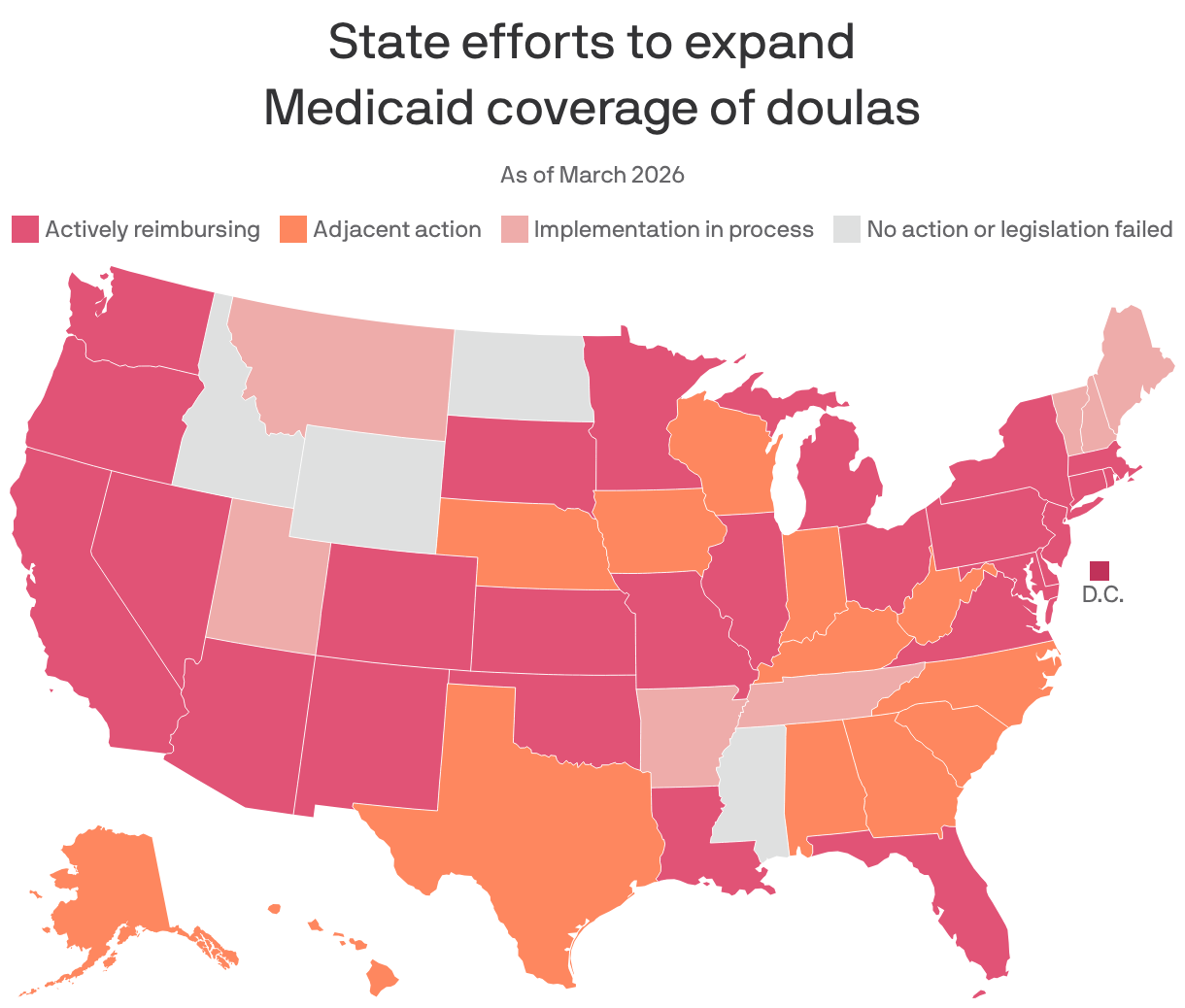
In the map above, "in process" states have a defined path toward Medicaid doula coverage but aren't reimbursing yet.
- "Adjacent action" states have taken steps to support doula care, Chen says. For example, they may have set up a statewide doula certification process but don't offer Medicaid reimbursement.
Axios Finish Line