Axios Finish Line

July 24, 2025



Welcome back! Axios' Carly Mallenbaum is your host this evening, digging into the rising popularity of full-body scans.
- Smart Brevity™ count: 512 words … 2 mins. Copy edited by Amy Stern.
1 big thing: Debate over full-body scans
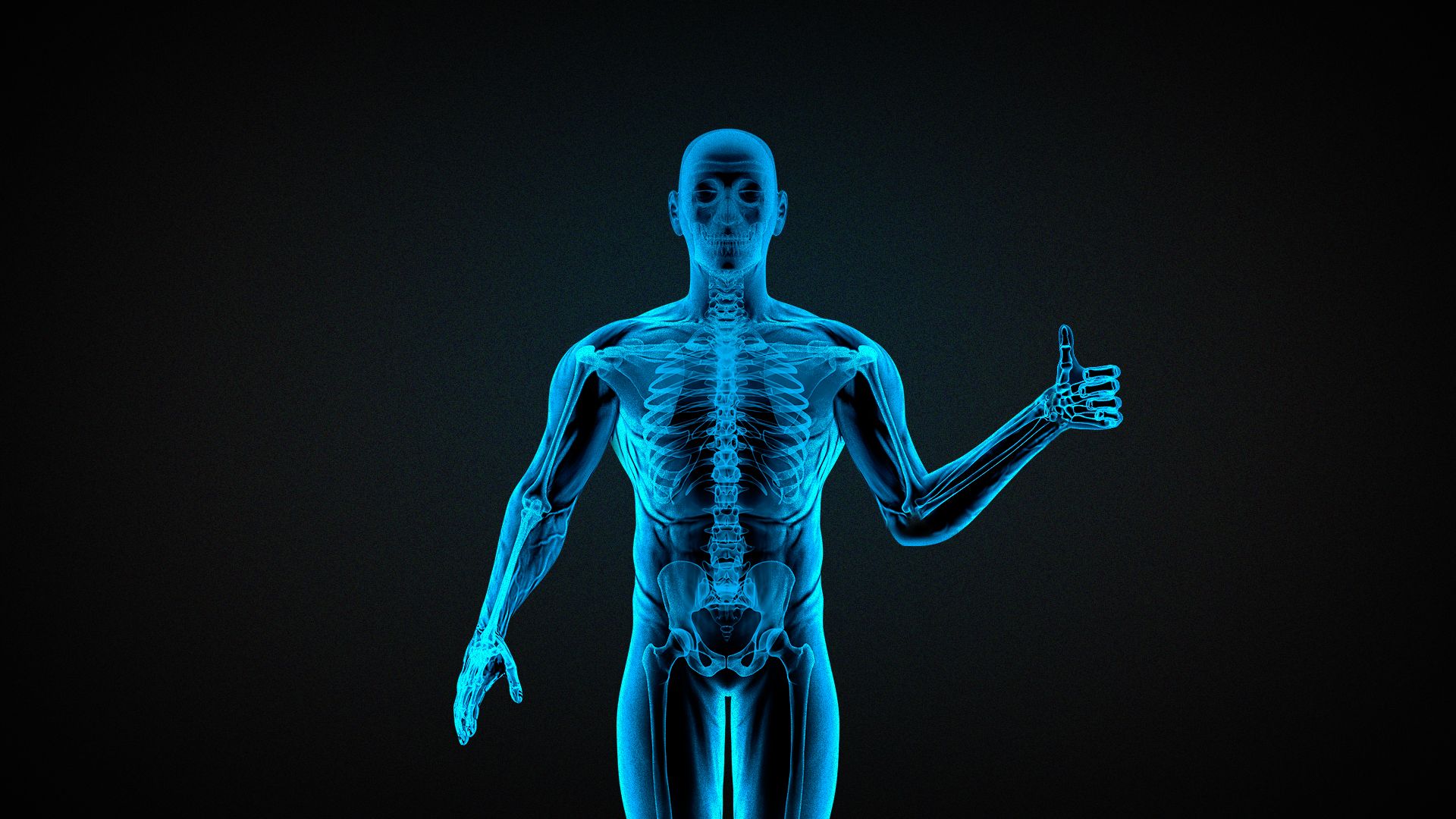
A full-body MRI is either an early-detection breakthrough ... or an unnecessary procedure that harms more than it helps.
- Scans from companies like Prenuvo and Ezra have become a popular health splurge for adults focused on longevity. That's largely thanks to wellness influencers, celebrity endorsements and a distrust of the conventional medical system, Axios' Carly Mallenbaum reports.
📈 By the numbers: Prenuvo has completed 50,000 scans since December — and 150,000 total since 2018, CEO Andrew Lacy tells Axios.
- The scans spotted cancer in 2.2% of mostly asymptomatic patients, according to an ongoing study conducted by the MRI company and presented at an American Association for Cancer Research conference in April.
- In the study, which included 1,011 patients in Canada, roughly half the biopsies prompted by scan findings uncovered cancer.
Between the lines: Just because a scan detected cancer doesn't mean the cancer was aggressive or that the detection extended someone's lifespan.
- In the study, two breast cancer cases were not detected by a whole-body MRI.
🩺 Full-body scans are "the bane of my existence," says oncologist Marleen Meyers, director of NYU Langone's survivorship program at the Perlmutter Cancer Center.
- She says most findings from full-body MRIs are false positives or benign, but "the knowledge, the stress ... upends your life."
- Follow-up tests can be costly, invasive and introduce significant radiation exposure, she tells Axios: "Studies with these scans so far have not shown any improved survival."
But collecting enough data to provide evidence that the tests improve survival would probably take decades, says Lacy, the Prenuvo CEO. The scans can also spot aneurysms and metabolic disorders.
- Lacy cites research from NORC that only 14% of cancers are detected through standard screenings. The rest are found when symptoms occur or during unrelated medical visits.
- Full-body scans could help find more cancers early, "when treatment is most effective," he says.
🧠 Case in point: Andrea Schaffer of Mesa, Ariz., was inspired by wellness podcaster Dave Asprey to get a scan.
- Schaffer tells Axios she shelled out $2,199 for a "baseline" scan as a 44th birthday gift for herself in 2023.
The scan found a brain tumor. Follow-up tests confirmed it was cancerous. Schaffer realized that her loss of smell, which she'd assumed was caused by COVID, was likely connected to the mass in her brain.
- A couple of months later, she had surgery to successfully remove the tumor.
- It hasn't returned. Schaffer says she's still classified as "no evidence of disease." And she can smell again.
💰 Reality check: A full-body MRI — which can range from $1,000 to $4,500 — isn't feasible for most.
- Oncologist Meyers recommends that instead of full-body scans, patients with a cancer history or specific symptoms get directed screenings.
📸 Parting shot!

Swirling clouds meet the sunrise in this stunning photo captured by reader Stewart Verdery in Northwest D.C. last week.
🏁 Please invite your friends to join Finish Line.
Sign up for Axios Finish Line