Axios Detroit

February 16, 2024



1 big thing: The nine-digit gap controversy
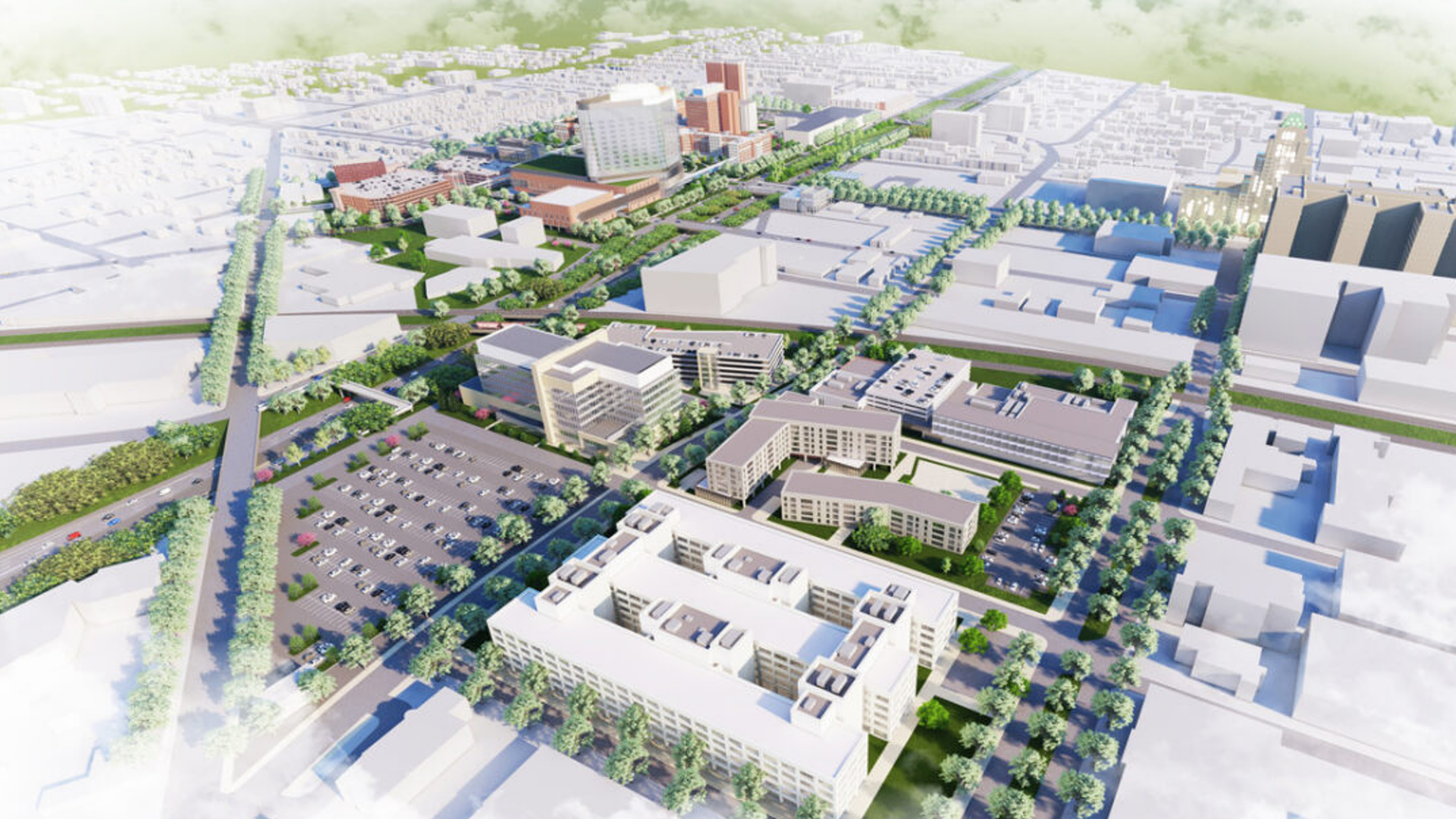
A $595 million gap exemplifies the tension at the heart of a crucial public financing deal for a mega-development proposed by Henry Ford Health (HFH), the Pistons and Michigan State.
Why it matters: Monthslong negotiations over the "Future of Health" project's community benefits — a list of commitments from the developers in exchange for substantial tax breaks — have been fraught with confusion and disagreement over the true value of the project's promises.
State of play: The $3 billion project proposes $2.2 billion in new hospital development from HFH, plus housing and retail from the Pistons and research space partnered with Michigan State, all around HFH's New Center campus. Construction is slated to run from the middle of this year through 2029.
Driving the news: City Council may vote as soon as Tuesday on the Community Benefits Agreement, $297 million in tax incentives and other public financing for the housing, parking and research facility as well as rezoning the project needs to move forward.
- HFH isn't seeking tax breaks, but its expansion is part of the overall process. It also owns the land in question.
- Seven of the nine-member Neighborhood Advisory Council of nearby residents signed a letter recommending the list of benefits to City Council last month.
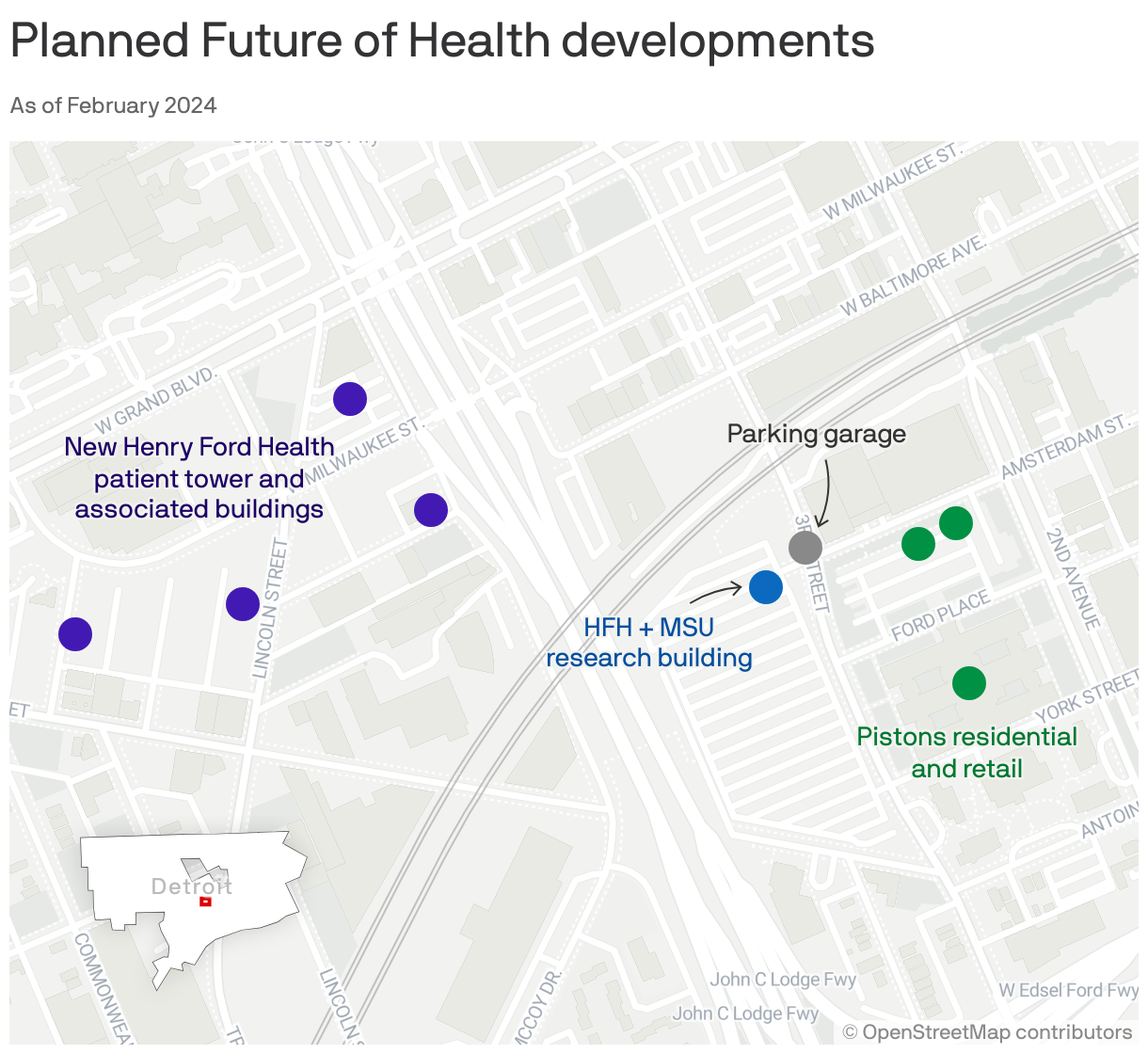
What's happening: Developers have said in public meetings that they're providing $604 million worth of benefits for nearby residents.
Yes, but: Tonya Myers Phillips, community partnerships and development director with Sugar Law Center, which helped advocate for the Community Benefits Ordinance in 2016, analyzes the total as just $9 million.
The big picture: The sides disagree on what constitutes a new benefit that helps improve the average taxpayer's quality of life.
What they're saying: "There are a lot of nice-sounding words and paragraphs, but looking at the tangible things that touch people's lives that an average Detroiter can access, we don't see it. … The project itself is not a community benefit," Myers Phillips says. She also argues the list includes "preexisting programs" and nonbinding language.
- NAC co-vice-chair Joanne Adams tells Axios she declined to support the benefits list, partly because the developers failed to provide the community adequate funding or power over its own future.
Yes, but: NAC chair Lynda Jeffries, who signed in favor, told City Council last week that members were diligent in analyzing the deal and the majority felt it was fair and equitable.
- Plus, City Council's legislative policy division concluded in its analysis that the project is a net-positive tax benefit to the city, bringing in $118 million over 35 years.
Plus: "This process is just one facet of our community engagement around our reimagined Detroit campus," HFH said in a statement to Axios. "Over the past two years it's been our pleasure to engage with the community."
2. Drilling down on dollars

3. Pistons shoot for valuable tax breaks

The Pistons' first foray into residential housing seeks various tax breaks worth up to $230 million, the team confirmed to Axios.
Why it matters: Team owner Tom Gores views the development as an extension of a community-building legacy highlighted by the team's 2017 move downtown to LCA.
- Gores even cited the project in response to frustrated fans' "sell the team" chants during the Pistons' historic losing streak.
- "They don't understand what we're doing in the community," Gores told the media after the Pistons' 25th straight loss. "We're doing multibillion-dollar things outside of [basketball]."
Driving the news: Plans for two new apartment buildings and retrofitting a Henry Ford office building into a third in New Center are expected to cost $322 million.
- The tax incentives are needed for profitability and to offer lower rents in 133 of the buildings' 662 units, according to city documents detailing the project.
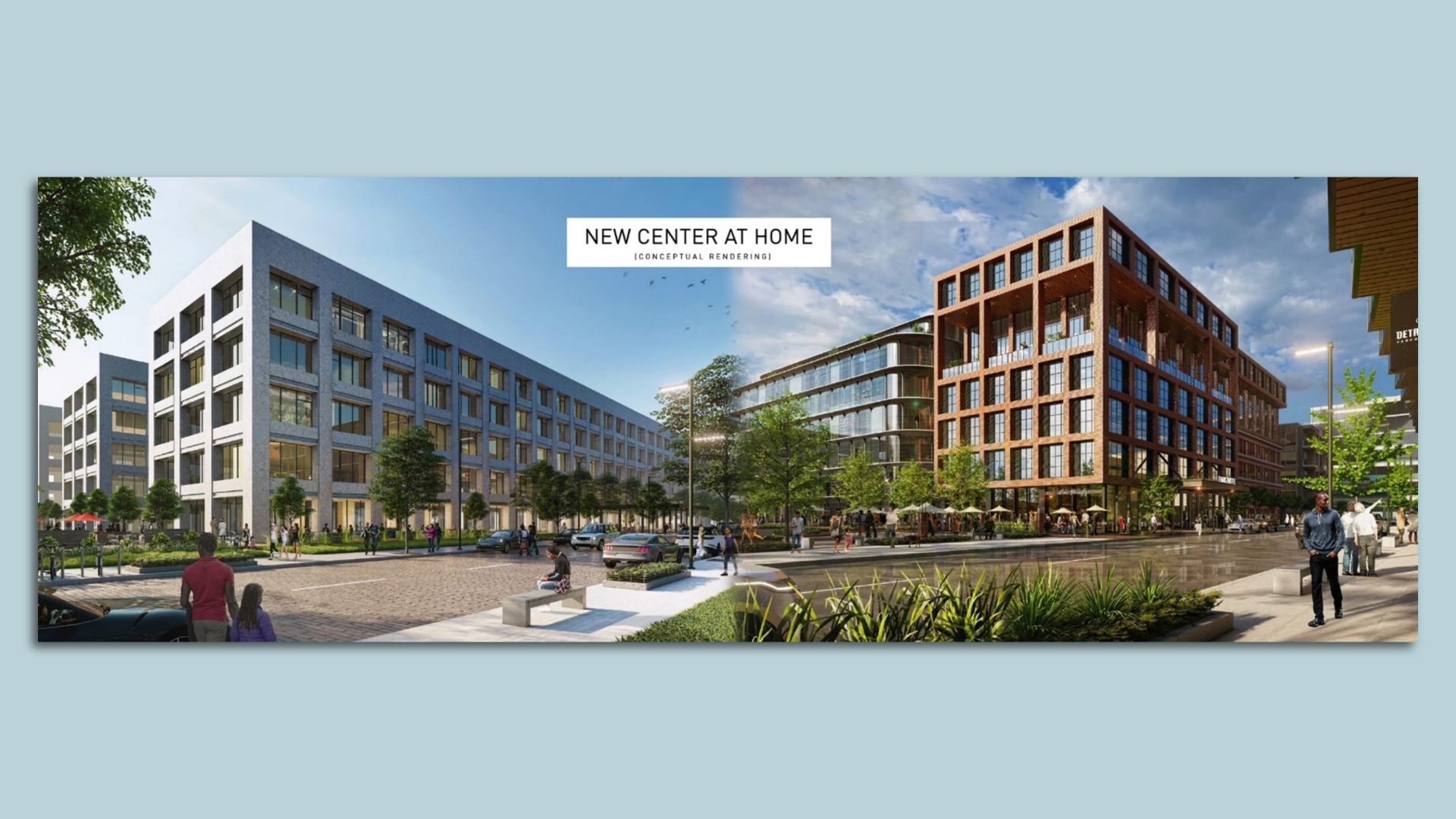
State of play: Of the $297 million in tax subsidies sought for the entire Future of Health project, $230 million would go toward the Pistons' housing plans, including:
- $55 million in property tax abatements.
- Tax reimbursements over 30 years worth up to $175.4 million through the state's Transformational Brownfield Plan.
Between the lines: Of the Pistons' 133 "affordable" housing units, 10% will be for households earning about $19,000, or 30% of the local Area Median Income as defined by the federal government.
- 80% will be for those earning up to 50% of the AMI ($32,000).
- 10% will be for those earning up to 70% of the AMI ($44,000).
- The other 529 units will be market rate.
The bottom line: The Pistons' project would have a return on investment of -6% without the incentives, but a 4.5% return with them, city documents show.
4. The Grapevine: Learn more about the Community Benefits Ordinance
Axios Detroit
