Axios Denver

February 21, 2024

It's Wednesday, and we're excited to have you here.
- Today's weather: Partly sunny with a high of 66.
🏛️ Situational awareness: Colorado Democrats unveiled a bill yesterday that would withhold state highway funding from cities that don't take steps to build denser housing near transit.
Today's newsletter is 918 words — a 3.5-minute read.
1 big thing: Denver considers tweaking new sidewalk fees

Illustration: Brendan Lynch/Axios
Property owners in Denver are closer to knowing how much they will pay to build and maintain city sidewalks.
Catch up fast: Voters approved Ordinance 307, or Denver Deserves Sidewalks, in November 2022 and shifted the responsibility to pay for upkeep from property owners to the city, while enabling the city to charge a fee.
The latest: A stakeholder committee has been meeting since August to determine the measure's fee structure before billing is scheduled to begin.
- The committee, established by Denver's transportation and infrastructure department, included local residents, municipal staff, and members of Denver Streets Partnership, an advocacy group that backed the measure.
By the numbers: Single-family homeowners would pay $148.64 annually under the committee's new proposal, while multifamily homes — places with two or more units, like an apartment complex — would pay $27.83 for each unit every year.
- The original measure would've cost $2.15 per foot.
Why it matters: The proposal is a significant change to the original ballot measure intended to manage sidewalks.
The big picture: Jill Locantore of Denver Streets Partnership says Ordinance 307 is intended to provide a larger sidewalk network for residents by creating dedicated funding sources for its maintenance.
Between the lines: She says the measure passed by voters used the linear footage of properties to determine a fee, which could have led to residents with larger homes footing larger bills.
- Locantore said some residents felt the fee structure was unfair to those with larger properties and suggested it should be more evenly distributed.
What they're saying: "I don't think it takes into account seniors who may be on fixed incomes and allowing them to opt out," Councilwoman Amanda Sandoval told the Denver Post last year.
2. 🏔️ Clearing access to 14ers on private land
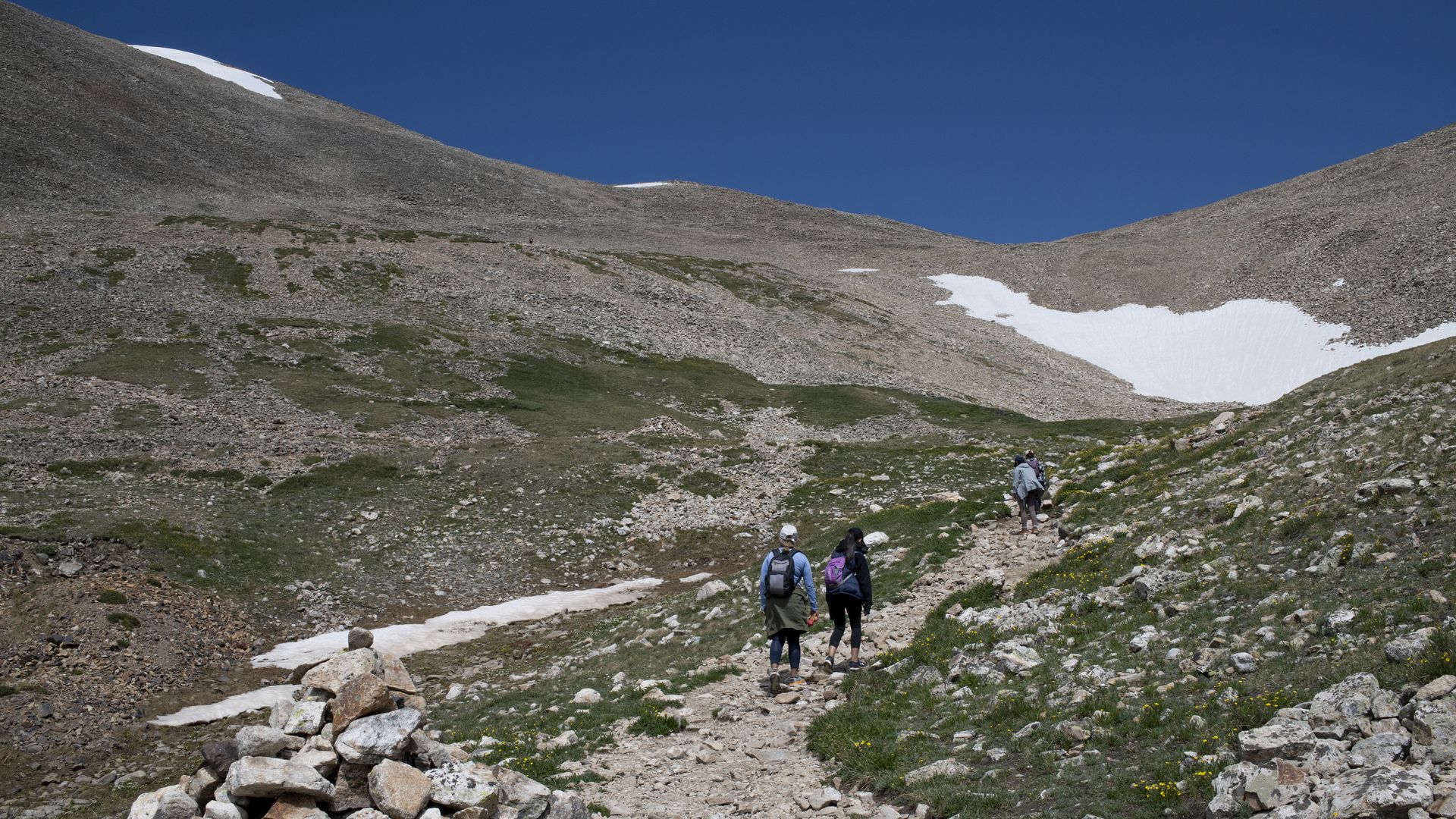
Hikers walk on the trail toward Mount Democrat in 2023. Photo: Rachel Woolf for The Washington Post via Getty Images
A landmark deal to allow recreational access to 14ers on private land is nearing approval at the state Capitol, with backers calling it "crucial to the Colorado way of life."
Why it matters: Liability concerns and fear of litigation are endangering the state's $13.9 billion outdoor recreation industry by threatening to limit access to a handful of 14,000-foot peaks, the popular Leadville 100 trail run and the Ouray Ice Park.
What's happening: The new legislation advancing at the Capitol with bipartisan support gives landowners protections from liability if they post specified warning signs about existing hazards at access points and trailheads.
The back story: The Colorado Recreational Use Statute gives private property owners extra protections if they allow the public to access their land, except in cases involving a "willful or malicious failure" to guard against a known dangerous condition.
- A 2019 federal court judgment awarding $7 million in damages to a cyclist for injuries on a trail at the Air Force Academy prompted landowners across the state to limit access.
- Two previous legislative efforts to soften that standard failed at the state Capitol with opposition from trial lawyers.
What they're saying: John Reiber, who previously closed his land accessing Mount Democrat before selling it in September, told lawmakers yesterday that the bill addresses his concerns and said it would have "a positive effect on recreation in Colorado."
Yes, but: Landowners can still prohibit access to the property or limit when it's open for recreational purposes.
What's next: The House will take a final vote in the coming days.
3. 🐶 Quote du jour: First gentleman's role

Gov. Jared Polis, left, and first gentleman Marlon Reis at a pet adoption event hosted at the governor's mansion in 2019. Photo: Hyoung Chang/The Denver Post via Getty Images
"Marlon has been a very activist first gentleman."— Gov. Jared Polis, commenting on the role of his husband, Marlon Reis.
Why it matters: In a candid interview with the LGBTQ publication the Advocate, the governor shed light on his husband's role in the administration.
What to know: Polis said Reis is behind efforts supporting animals and protecting the state's wildlife, the latter being a contentious issue after the reintroduction of wolves into the wild.
- "Some spouses have their own careers and have a low profile. Others participate in their spouses' careers," Polis said.
4. Mile Highlights: The latest on the UCCS shooting
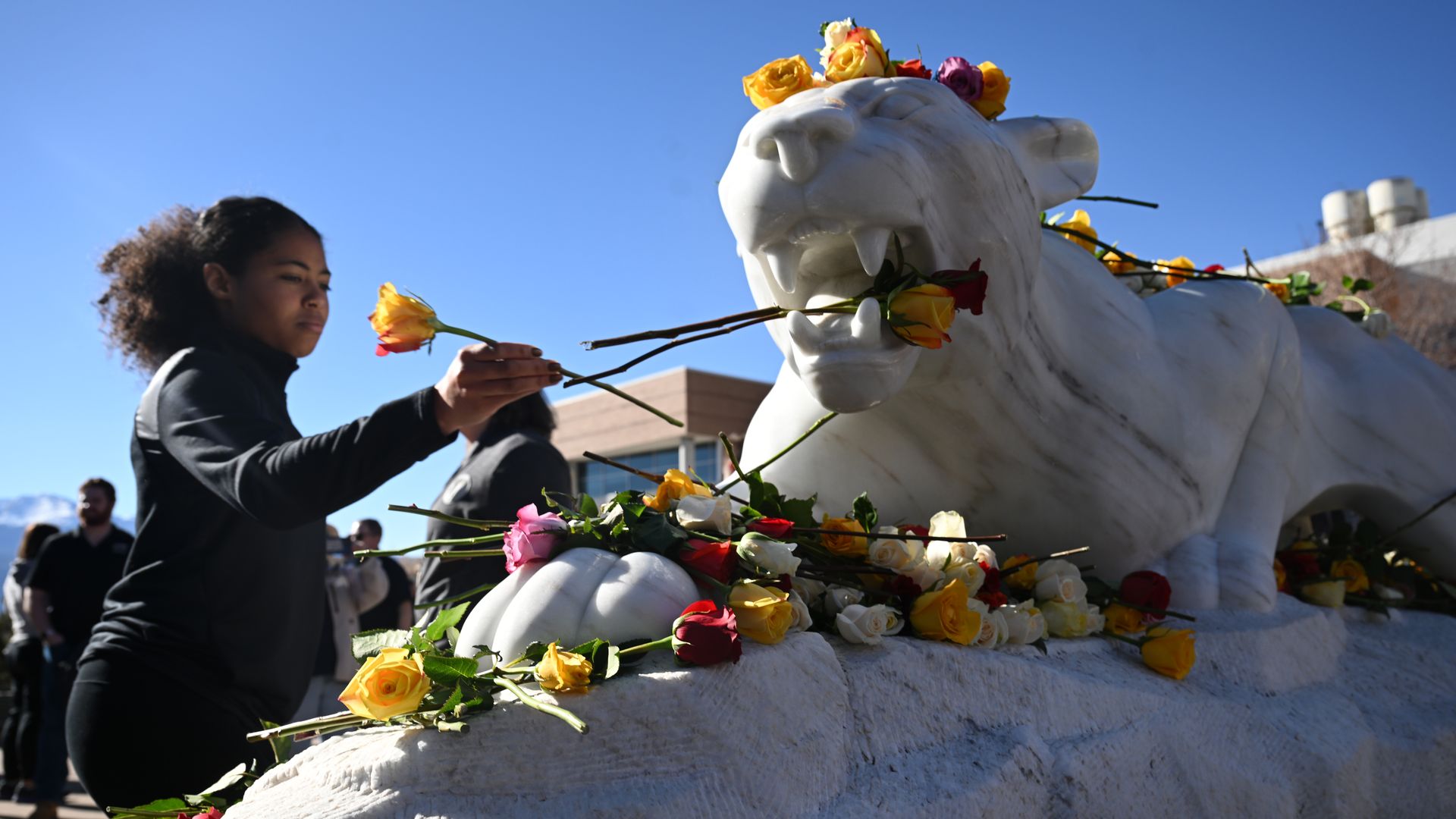
A University of Colorado Colorado Springs student places a rose on a mountain lion sculpture after a memorial march Monday. Photo: Helen H. Richardson/The Denver Post via Getty Images
🚨 The 25-year-old student arrested in a double homicide at UCCS was roommates with one of the victims. His bail was raised to $5 million. (Gazette)
👮 The Golden Police Department's four-day workweek experiment will be extended after improving emergency response times and saving the city money. (Denver Post 🔒)
🥦 Boulder's plant-based meat startup, Meati Foods, replaced its CEO and laid off 13% of its workers, the second layoff round in five months. (DBJ🔒)
🚩 An antisemitic group coordinating call-ins to city council meetings nationwide, including in Lakewood, is testing the limits of free speech. (Denver Post 🔒)
😱 A Lakewood man died after being bit by his pet Gila monster, a venomous lizard species, the first such fatality since 1930. (CBS4)
Stay booked and busy
📅 Upcoming events around the city.
Winter Wellness Workshops at Artifact Events on Feb. 24: They have done fitness, meditation, and networking. You have asked for more workshops and intentional space to reflect and move, so now they are doing it. $40-$80.
Hosting an event? Email [email protected].
5. 🥕 This app takes a bite out of food waste

"Surprise Bags" offered through Too Good To Go. Photo: Artur Widak/NurPhoto via Getty Images
Too Good To Go, an app going mainstream today in Denver and Boulder, aims to save food, money and the planet.
Details: Operating in dozens of cities like Chicago, Miami and Minneapolis, the Denmark-based company lets consumers purchase surplus food from local restaurants at a discounted price.
By the numbers: So far, it's partnered with nearly 100 Denver-area businesses including Local Jones, Rosenberg's Bagels, Smōk Barbecue, Istanbul Cafe & Bakery and Pho King Rapidos, spokesperson Sarah Soteroff tells us.
- Since its soft rollout in Denver roughly a year ago, the company has saved an estimated 24,000 meals, Soteroff says.
How it works: People can download the free app to search for places selling a "Surprise Bag" that's filled with leftovers at the end of the day.
- Surprise bags are reserved through the app and picked up at the store. Prices tend to range from $3.99-$9.99, with deals as high as two-thirds off.
Our picks:
🐦 John is excited to see snow geese and other migrating birds at Barr Lake State Park.
🎶 Alayna is looking over Levitt Pavilion's lineup of the first shows announced for its free summer concert series.
✊🏿 Esteban is watching his friend Tori Mason's Black History Month special, "Elevating Black Voices," on CBS.
Thanks to our editor Ross Terrell and copy editor Bill Kole.
Sign up for Axios Denver

Get smarter, faster on what matters in Denver with Alayna Alvarez, John Frank, and Esteban L. Hernandez.