Axios Crypto

February 06, 2025

Salutations! It's been a busy week in crypto policy. David Sacks and congressional leaders announced a bicameral working group on legislation. Plus, two debanking hearings (see below).
📆 Save the date: Axios' What's Next Summit in D.C. is March 25. More info here.
Today's newsletter is 1,098 words, a 4-minute read.
1 big thing: The 40 banks of Anchorage

Anchorage Digital aired the crypto industry's frustrations over holding onto financial services in a hearing yesterday of the full Senate Banking Committee.
Why it matters: As witnesses and senators pointed out, without access to banks, it's nearly impossible to function as a person in this society. And it is impossible to function as a business.
Friction point: "Under the Biden administration, we've seen the rise of what many are calling Operation Chokepoint 2.0, where federal regulators exploited their power, pressuring banks to cut off services to individuals and businesses," Chair Tim Scott (R-SC) said in his opening remarks for the hearing, titled "Investigating the Real Impacts of Debanking in America."
- Perceived widespread debanking — when a bank denies or closes customer accounts for often unexplained risks — has spurred accusations from the crypto world of a targeted government crackdown since early 2023.
Zoom in: Nathan McCauley, the CEO of Anchorage Digital, a crypto-bank chartered with the OCC since 2021, testified to the committee yesterday on his company's experience with debanking.
- For 2½ years, he said, they enjoyed a positive relationship with their bank. "We were a highly regulated, well-capitalized, well-run business — in many ways the ideal bank client," he said in his testimony.
- Then, in June 2023, they were told their account would be closed in 30 days because the bank was "not comfortable with our crypto clients' transactions."
- "They refused to engage in further discussions, provide any additional explanation, or offer any chance to appeal the decision," McCauley told the committee.
Subsequently, Anchorage sought services from roughly 40 other banks and was refused by all of them, McCauley said. Some told Anchorage they had a no-crypto client policy.
The big picture: McCauley pinned this mood shift on regulators. "In my view, the nail in the coffin was the joint statement from the Fed, FDIC and the OCC in January 2023," he said.
- Flashback: That statement, made publicly by the three major regulators, detailed "key risks" tied to digital assets that banks should be aware of.
- And though it said banking organizations "are neither prohibited nor discouraged from providing banking services to customers of any specific class or type," it made clear that it would "closely monitor" and carefully review any banks with "crypto-asset-related exposures."
The latest: The FDIC released hundreds of pages of documents yesterday in advance of the hearing relating to an order it sent in 2022, telling supervised banks to send information on any plans to offer crypto-related services.
- Across hundreds of pages, it's hard to find a consistent message from the FDIC staff to banks, other than continually needing to see more information and to consider issues for longer.
- What we're watching: A D.C. federal judge, in a hearing transcript released today, called the FDIC's "narrow" interpretation of the court order to release the documents "almost laughable."
McCauley doesn't believe the source of the pushback Anchorage received was coming from banks.
- "Many of the big banks were actually in active conversation with Anchorage," he testified. "Which makes it so clear that this was not something that they wanted to do."
Surprise: During Q&A, ranking member Elizabeth Warren, (D-Mass.), normally a crypto critic, told McCauley that she didn't believe he should have been denied banking services.
- Warren focused her remarks on how debanking is an issue for financial inclusion, rather than critiquing the crypto industry's complaint.
- Other Democrats focused on individuals losing bank access over things like overdrafts, but mainly they wanted to talk about DOGE looking into the Treasury.
What's next: House Financial Services will take on this same topic later today.
2. Reputational risk

One topic that kept coming up at the Senate committee hearing yesterday: the idea of "reputational risk."
Why it matters: No one seemed to disagree that it's a poorly defined concept in banking regulation, and one that gives agencies a lot of latitude to pressure supervisees over their business relationships.
- And it seemed to shed some light on what might be going on with the crypto industry.
Catch up quick: Reputational risk is a concept that emerged in banking supervision nearly 30 years ago, testified Stephen Gannon, an attorney at Davis Wright Tremaine who has served at several major banks.
- It was added to the system used to gauge the soundness (health and stability) of banks in 1996.
"The concept of reputational risk is not consistently clear or based on objective indicia," Gannon said in his testimony. "In short, regulators can find reputational risk almost wherever they choose to look. It was ripe for use in a program of debanking."
- Later, during questions from the senators, he said that regulatory crackdowns had put multiple legal companies out of business.
Aaron Klein, a senior fellow from the Brookings Institution, testified that banks are trust-based businesses, so negative sentiment can be important to monitor.
- "The need to consider reputational risk is real and it is important. It is possible that it is abused, and you need to have guardrails on it," he said during the hearing.
The big picture: Sen. Andy Kim (D-NJ) connected the issues of reputational risk, copious and expensive suspicious activity reports and the ChexSystems that are often used to deny banking to consumers under a blanket interest in more transparency.
- "That sense of transparency is missing as well as that lack of ability to appeal. It just seems like something systematically I think this committee can hopefully dive in deeper on," he said, before yielding his time.
The bottom line: "If you can't make payments and you can't bank, then you can't exist in America," Mike Ring, CEO of Old Glory Bank, said during the hearing. "
- "You can't exist without banking."
3. Quoted: Goodbye, "Mama Government"
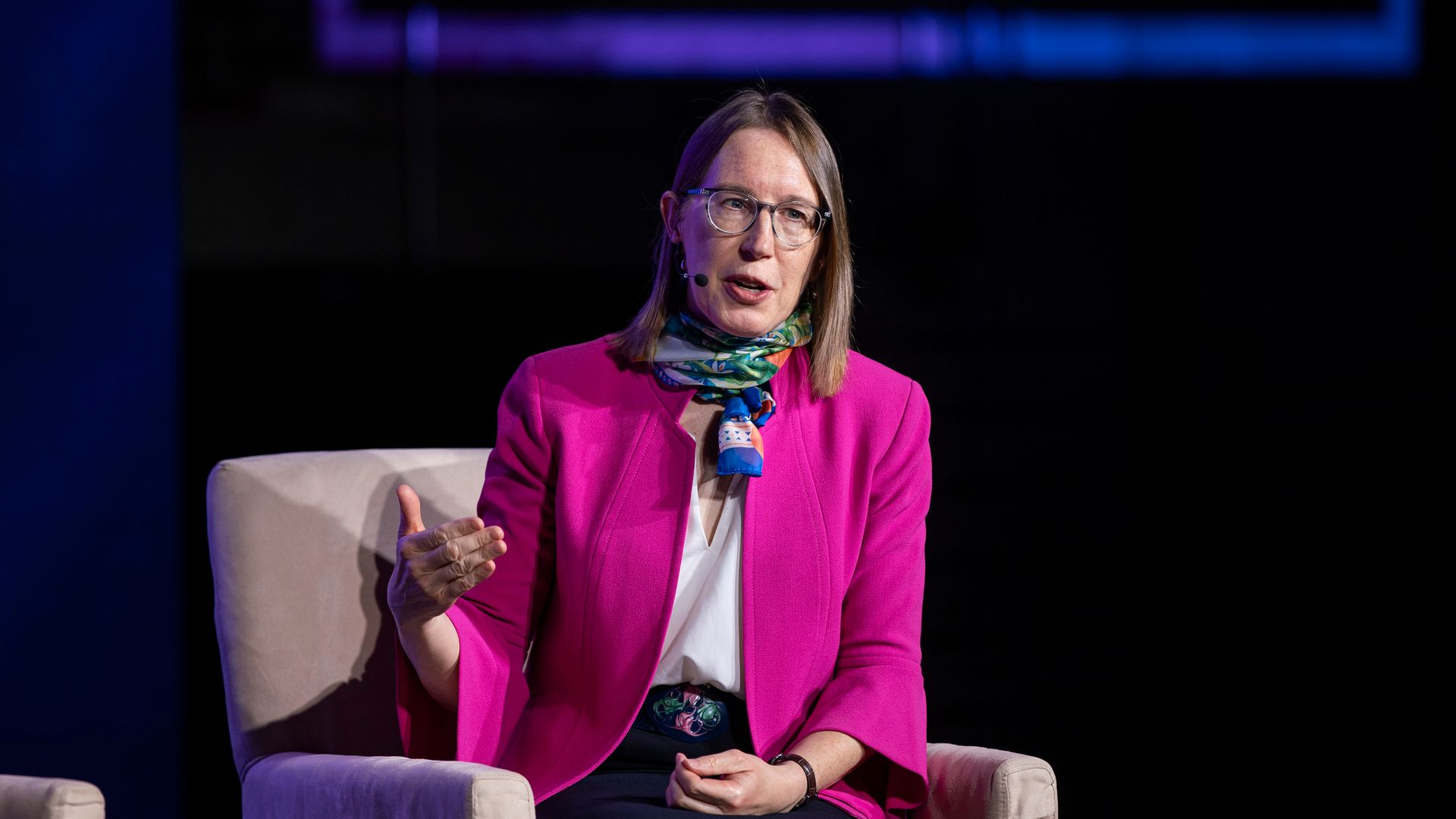
"In this country, people generally have a right to make decisions for themselves, but the counterpart to that wonderful American liberty is the equally wonderful American expectation that people must decide for themselves, not look to Mama Government to tell them what to do or not to do, nor to bail them out when they do something that turns out badly."— Hester Peirce, "The Journey Begins," SEC.gov, Feb. 4, 2025, in which she lays out issues that the newly formed Crypto Task Force will take on and invites community input.
4. Catch up quick
🧐 MicroStrategy — the giant buyer of bitcoins — has rebranded to Strategy. (Strategy)
🎙️ Public Citizen has complained to the Justice Department and the Office of Government Ethics about the Trump Organization's meme coin. (Decrypt)
🏛️ A "source familiar" says the FDIC may soon greenlight crypto-powered activities for banks. (Barron's)
📱 Trump Media and Technology Group is pushing into crypto and energy investing. (Axios)
This newsletter was edited by Pete Gannon and copy edited by Carolyn DiPaolo.
🌧️ It's 2025 and you can still find lousy Wi-Fi at some coffee shops. —Brady
Sign up for Axios Crypto