Axios Communicators

May 16, 2024

Welcome back! This week we are taking a look at how union communicators navigate labor battles, after we previously looked at comms from the corporate side.
- 📣 But first: Axios Communicators Pro member moments are taking place next month. Ensure a FOMO-free summer by signing up to become a member.
Today's newsletter is 1,423 words, a 5.5-minute read.
1 big thing: Labor's comms playbook
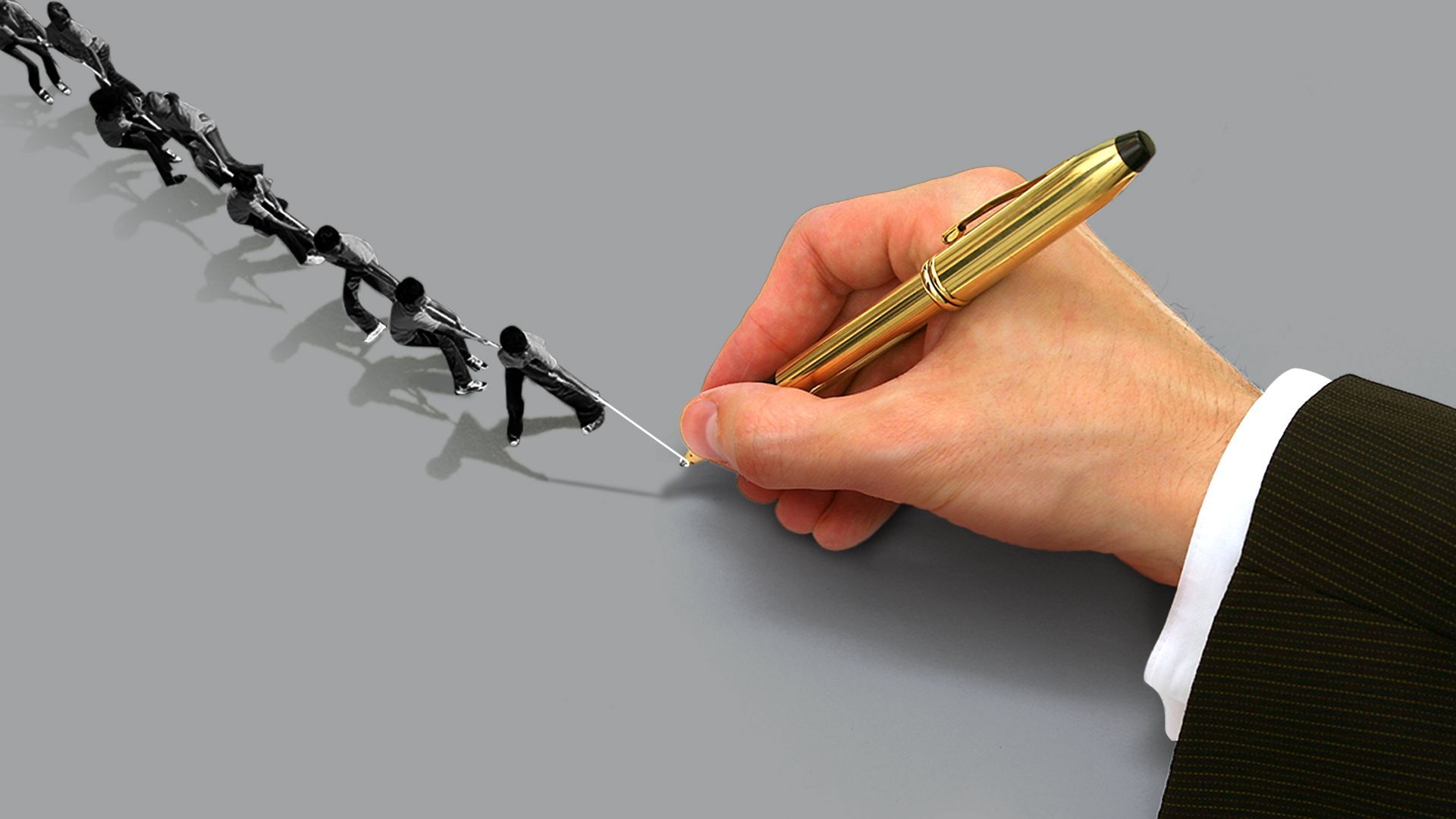
Support for labor unions grew in 2023, with workers voting to unionize 83% of the time, according to the National Labor Relations Board.
- Why it matters: The success is due in part to an intentional overhaul of their communication strategies, union organizers told Axios.
Driving the news: Union wins have swept the southeast in 2024, with the United Auto Workers (UAW) recent win at Volkswagen's Chattanooga, Tennessee, plant and the Association of Flight Attendants' Breeze Airways win in Charleston, South Carolina.
- Mercedes workers in Alabama are voting this week on whether to join UAW, with results expected tomorrow afternoon.
State of play: Labor groups across industries have pivoted to nimble, blunt and personalized communication campaigns which are being deployed through social media, local and national press, and direct outreach to workers.
- "We utilize multiple tools [like] social media, text messaging, print and broadcast media, podcasts, digital, radio and TV ads, and more to spread our message far and wide," said American Federation of Teachers president Randi Weingarten.
- Peer-to-peer texting, direct email and sharing members' stories across social media help to create a sense of unity, she added.
Zoom in: Labor comms strategists will deploy many spokespeople who can take shots in a way that corporate communicators can't.
- It's a messaging battle, says Andrew Feldman, founder and principal of progressive communications firm Feldman Strategies — union communicators can pull at the heartstrings with personalized stories, while corporate leaders focus more on the purse strings.
- UAW relied heavily on the stories of local Volkswagen workers during April's union vote, while SAG-AFTRA deployed actors and spokespeople like its president Fran Drescher during its strike last summer.
Yes, but: Deploying national labor leaders, like Weingarten, Drescher or UAW president Shawn Fain can backfire.
- "Opponents love to say that unions are just flying into [the workers'] state and don't represent [their] values," said Feldman. "So it's really critically important that when we do have a principal talk, their messaging is rooted in the values of that community — not as an outsider perspective."
Another major shift has been union leaders' ability to communicate quickly.
- "We now really stress a strong rapid response game — and that hasn't always been the case," said one union press secretary. "If we're playing defense, we're losing, and so the speed has allowed us to play offense and keep corporations or other opponents guessing on our next move."
Meanwhile, the corporations and advocacy groups keep using the same playbook, says Feldman.
- "Two weeks out from the Volkswagen election, we saw billboards go up with messaging about shipping jobs out of Chattanooga," he said. "And now, days out from the Mercedes election in Alabama, we are seeing the same billboards."
- Mercedes went a step further and enlisted famed University of Alabama football coach Nick Saban — who owns multiple Mercedes dealerships and reportedly does not endorse the UAW's campaign — to give a motivational speech its workers shortly after the union campaign launched.
Reality check: "In a big, high-profile organizing campaign like this on both sides there's always some jockeying or theatrics," Sharon Block, executive director of the Center for Labor and a Just Economy at Harvard Law School, told Axios' Nathan Bomey.
What to watch: Labor communicators are focused on mobilizing autoworkers across the South, like Mercedes and Hyundai in Alabama, Toyota in Kentucky and BMW in South Carolina.
- But the clock could be ticking, notes Feldman. "While it's important to separate organizing and joining unions from politics, a change in the administration is a real threat to the momentum that workers are having right now."
Case in point ... 👇
2. Winning record, charted
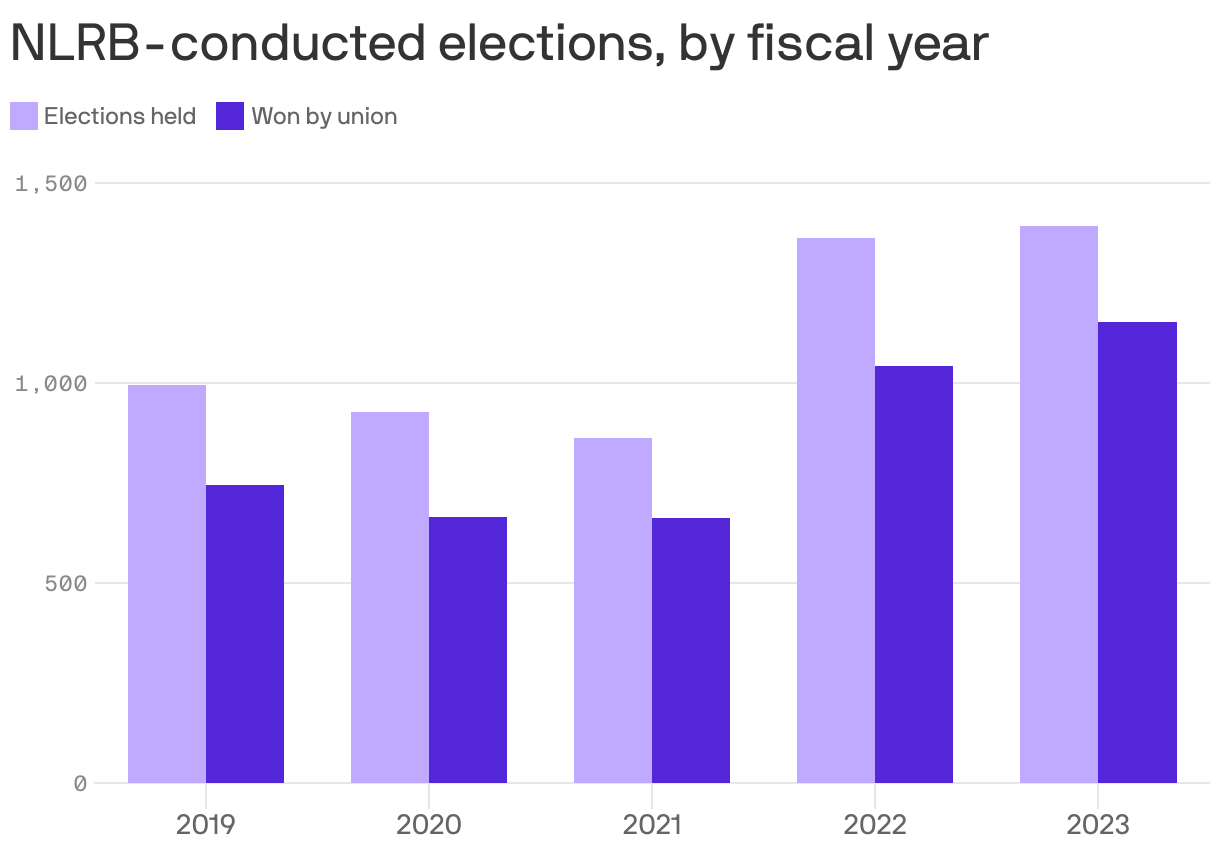
10% of workers were part of a union in 2023, down from 10.1% in 2022.
Yes, but: Big Labor's influence continues to grow.
- The number of union election petitions filed during the first half of fiscal 2024 increased by 35% since the year prior, according to the National Labor Relations Board.
3. Apple, Bumble apologize for marketing missteps
Marketing campaigns continue to make headlines, but for all the wrong reasons.
Why it matters: Costly ad campaigns that don't land can quickly damage corporate reputation and highlight the disconnect between a brand and its key consumers.
- And oftentimes it's the communications team that has to issue the apology and navigate the fallout.
Driving the news: Apple's recent iPad spot — which played off the popular and culturally relevant ASMR videos — showed creative tools like paint, cameras and musical instruments being crushed by a hydraulic press and prompted immediate online backlash.
- As Axios' Scott Rosenberg points out, "Creative professionals and artists — one of Apple's key constituencies — already fear AI's impact on their jobs and our culture. The ad, many felt, made the company look both callous and brutal."
- Apple issued a rare apology for missing the mark.
Meanwhile, Bumble came under fire for its billboards that positioned celibacy as a bad alternative to online dating.
- Bumble quickly apologized, removed the ad and promised the ad space to the National Domestic Violence Hotline and other organizations that "support women, marginalized communities and those impacted by abuse."
The billboards were part of a larger brand refresh campaign that sought to give women more choices to online dating — which many view as exhausting and overly time-consuming.
- However, when on their own, the billboards didn't convey the full message, which led to criticism and concern from Bumble users.
What they're saying: "The billboards were written and positioned in a way that suggested that [Bumble] was not listening and did not understand the nuanced conversations happening around celibacy right now," Sara Wilson, digital brand, content and community strategist, told Axios.
- "In the case of both Apple and Bumble, there was not enough listening happening across their targeted audiences," Wilson added.
Of note, Bumble's apology did hit the right tone, according to crisis communications expert Molly McPherson.
- "They owned it, explained it and promised to do something about it," McPherson said in a recent Instagram post.
The big picture: Following the Bud Light backlash, many brands are on guard for marketing campaigns and partnerships that might land them in hot water.
- Yes, but: Any brand that wants to position itself as culturally relevant will have to insert itself into a cultural conversation, which is always risky, says Wilson.
What to watch: 71% of CEOs view their company brand and their reputation as the same thing, per a recent BoatHouse report.
- This perspective has created a turf war for marketing and communications professionals who operate in silos.
Keep reading. ... 🇫🇷 Plus, we will cover this and more in Cannes. Register your interest here to stay in the know about Axios events.
4. Disability group prioritizes storytelling in the job search
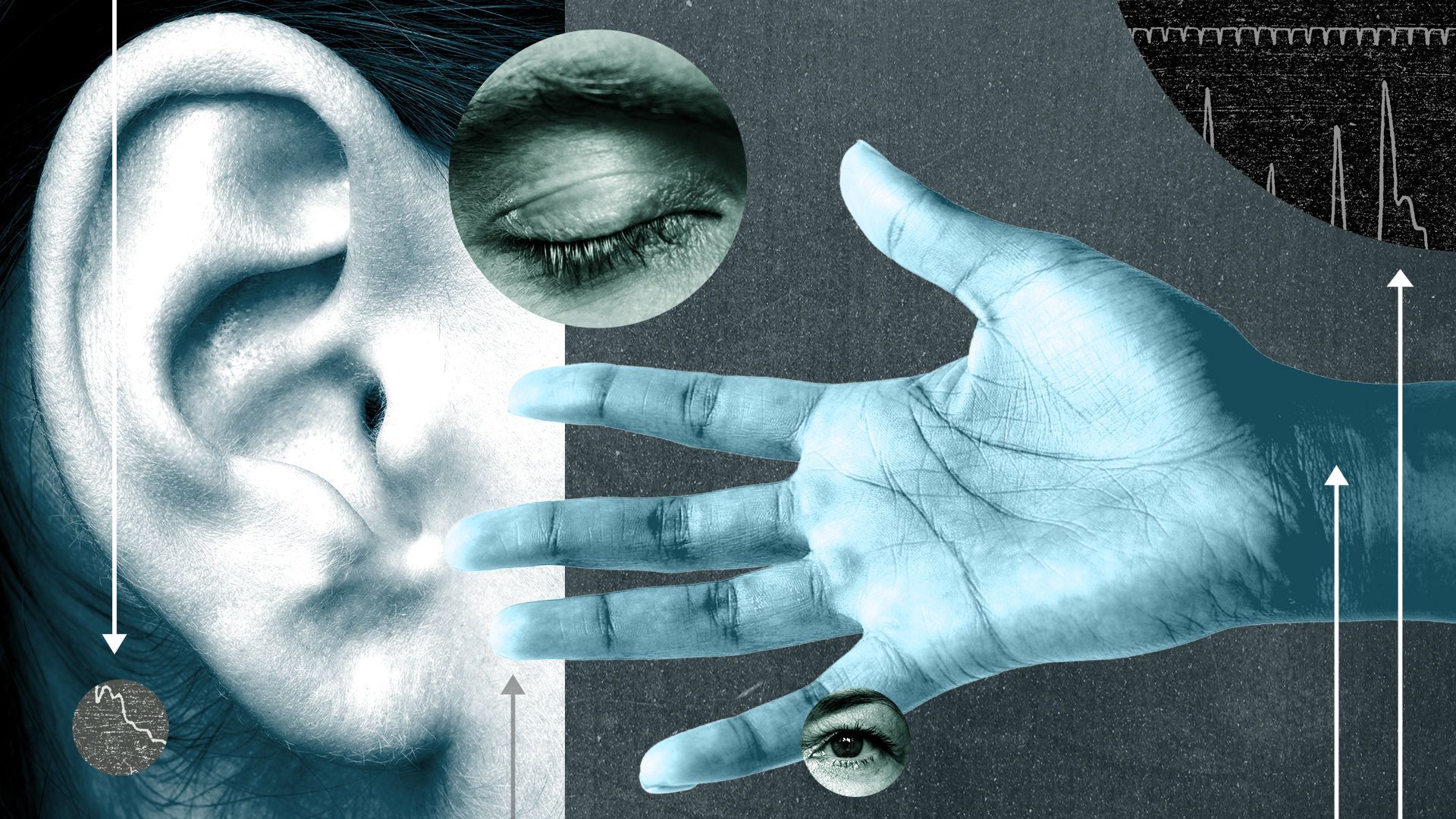
Disability:IN, a nonprofit organization that encourages inclusion in the workplace, has launched trainings to help people with disabilities better tell their personal stories during the job-seeking process.
Why it matters: Even as companies continue to prioritize inclusion, only 4% of businesses incorporate people with disabilities into their workplace initiatives, according to the most recent report by Return on Disability.
The big picture: As the legalities of race- or gender-based hiring and promotion practices come into question, companies are reframing diversity, equity and inclusion initiatives (DEI).
- Instead of DEI, terminology like "inclusion" and "culture of belonging" is being used. This includes employing people with disabilities.
State of play: The employment rate for Americans with disabilities reached a record high in 2023, according to a report from the Bureau of Labor Statistics.
- In response, employers across industries are incorporating more accessible communications.
Yes, but: First, they need to land the job.
- Disability:IN's offerings includes a session on personal branding, social media presence and sharing your disability story in formal and informal settings.
- Other communication-specific courses focus on in-person and virtual presentation and a guide to professional networking.
What they're saying: Honing communications skills as a person with a disability — from navigating networking as a person who is blind, to preparing presentations as someone on the autism spectrum — can be quite different, especially because of biases, said Jill Houghton, President & CEO of Disability:IN.
- Disability:IN hopes that this training will "empower individuals to embrace their identity while mastering essential skills [that allow for] personal growth and career advancement," Houghton added.
5. 🙃 1 fun thing


Eight in 10 Americans have been stumped by emoji use, according to a new report from language education platform Preply.
Why it matters: Emoji have become a tool for communicating quickly and visually, but varying cultural and generational uses continue to create communication roadblocks.
- The most confusing emoji is 💅, followed by 💨 and 🙃, per the report.
✅ That's all for this week! Thanks to editors Nicholas Johnston and Kathie Bozanich.
Want more Axios Communicators content? Become a Pro member today.
Sign up for Axios Communicators