Axios Communicators

April 27, 2023
Happy Thursday! This week we are zooming in on digital presence and brand marketing ...
Today's newsletter is 1,823 words, a 7-minute read.
1 big thing: Wikipedia's influence grows
Illustration: Eniola Odetunde/Axios
Wikipedia is one of the most visited websites across the globe, but how the nonprofit, community-driven online encyclopedia operates is still a mystery to most.
Why it matters: The content found on Wikipedia is becoming even more important as new generative artificial intelligence tools are being trained on data from the site.
Details: According to a report by The Washington Post, these tools focused on three key websites — "patents.google.com No. 1, which contains text from patents issued around the world; wikipedia.org No. 2, the free online encyclopedia; and scribd.com No. 3, a subscription-only digital library."
The big picture: Even prior to the rise of generative AI, Wikipedia was a central tool for online discovery. Google any event or person and the Wikipedia page is likely the first site you see and visit.
By the numbers: According to Wikistats, the data gathering function within the Wikimedia organization, Wikipedia saw 26 billion total page views in March alone.
- In the last year, the site received 279 billion unique views, which is a 22% increase year over year.
- Top pages include ChatGPT, HBO's hit "The Last of Us" and Lisa Marie Presley.
Zoom in: Page views typically see a spike around the news of the day — like Jon Rahm winning the Masters or "The Super Mario Bros. Movie" smashing box office records.
- Key advice: If a client or company is in the news, communication and PR teams should make sure that the Wiki page is up to date, because it'll inevitably see a surge in views.
Yes, but: Editing Wiki pages has become such a headache that clients are hiring digital reputation firms to help.
- "Wikipedia is very central to how companies, brands and public figures are seen online," Sam Michelson, CEO of Five Blocks, told Axios. "You must have a presence on Wikipedia, and you must be able to correct or update your presence there — which is easier said than done."
More on that below ...👇🏻
2. Wiki-tips


Editing or updating a Wiki page can be an epic saga of anonymous negotiations — but it can be done, as long as you understand how to appropriately engage with the Wikipedia editor community.
- Why it matters: Because Wikipedia is open for editing, it is a ripe place for imposing flowery brand language or spin, which makes editors skeptical of PR professionals and corporate communicators.
What they're saying: According to Michelson, the community is made up of "very dedicated librarian types who take pride in curating sourced information."
- "Wikipedia has its own rules and customs. If you're a foreigner walking into Wikipedia making demands, you can resemble the stereotypical American who walks into the place and demands a beer without first taking off your shoes and bowing to the elders."
Yes, but: That's not to say that edits are impossible to make or that you have to be in a certain club to make them. In fact, over 49 million edits were made in March alone.
According to former and current editors Axios spoke to, here's how:
- Have a presence on the platform. Create a Wikipedia account, do not attempt to edit anonymously.
- Review Talk pages. Each Wiki page has a Talk page — a virtual backroom where edits are proposed and debated. These pages help newcomers better understand what is required for editing and what a typical request looks like.
- Always disclose conflicts of interest. Before making an edit, introduce yourself and disclose that you are associated with the page in question — something like "My name is X and I work for Y and I'd like to recommend the following updates." If you do not disclose, editors could slap a banner at the top of your page saying the page was tampered with by a biased source, or the page could be removed altogether.
- Sourcing is a must. Every edit must be cited by a secondary source — and no, your company website or personal records don't count. (See an extreme example here).
- Tone is important. Recommend edits, don't demand them, and show that you understand how these conversations are supposed to go.
- Do your homework. Review the Talk pages of similar companies or competitors to see how they've handled edits in the past.
- Set alerts. Wikipedia allows for users to set up watchlists and be notified if there's activity on a certain page.
The bottom line: It's a cumbersome process, but making sure this information is accurate and up to date will be increasingly important for companies, brands and public figures as generative AI becomes the norm.
3. Oatly goes on offense
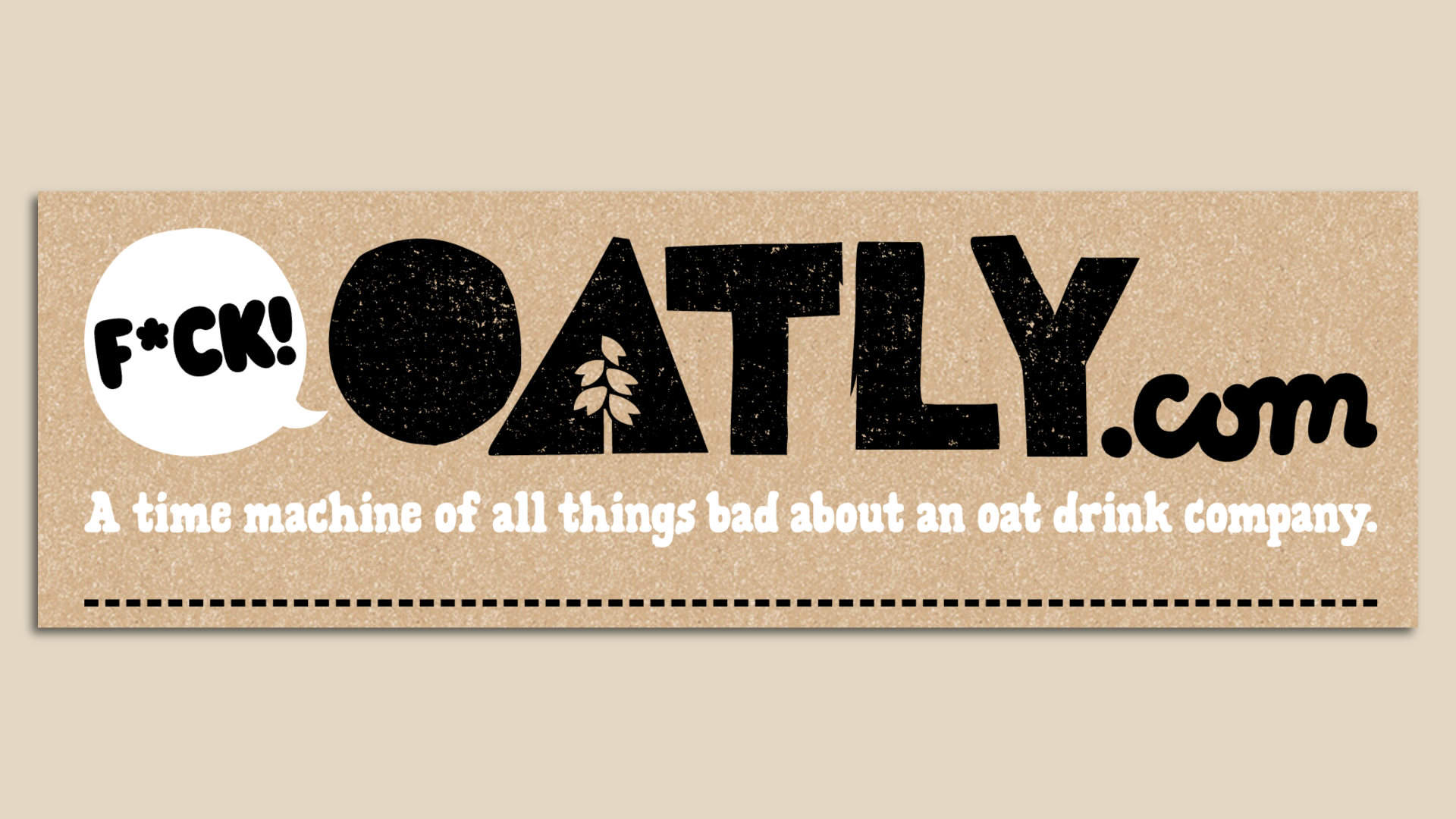
Screenshot: FckOatly.com
Oatly, the plant-based food brand known for its dairy alternatives, is going on offense by voluntarily sharing all that is "wrong" with the company.
Driving the news: Its new obscenity-laced website, which was quietly launched in October, is an oppo researchers' dream and serves as a central hub for all of Oatly's controversies.
- The information is presented in plain English and includes critical tweets and Oatly's response to issues ranging from lawsuits to boycotts.
What they're saying: F*ckOatly is key to understanding the mission of the company, says Brendan P. Lewis, head of global communications and public affairs at Oatly.
- "We've said everything we need to say about [these controversies], so why not put it all in one place so that people can just see it for themselves? Let's just be completely transparent so that we can move on and drive our business," Lewis told Axios. "But we also know that as a business that's growing, we'll occasionally need to add [new controversies] to the website and we're quite open to it."
- "At the end of the day, we're trying to create a societal shift and a systemic change. This [site] is a good way to engage people and let them know what we stand for by being open about our missteps."
Yes, but: This approach doesn't work for everyone.
- Oatly views itself as a disrupter brand taking on the dairy industry, and F*ckOatly aligns with its other communications, like its free "Spam" newsletter and community engagement platform, "Oatly Fans."
By the numbers: F*ckOatly has seen a dramatic increase in organic traffic over the last week — from 54,000 total visits on April 16 to 247,000 today.
What we're watching: More communications teams are leaning into owned content, outlawing corporate jargon and sculpting the corporate narrative through proactive strategies like F*ckOatly.
4. Bud Light backlash continues
Illustration: Aïda Amer/Axios
Bud Light pours dropped in the first half of April at thousands of bars and restaurants, according to BeerBoard, a tech company that helps barrooms nationwide monitor their beer flows, Axios' Hans Nichols, Hope King and I write.
Why it matters: The Bud Light debacle underscores the dangers of weighing in on cultural, societal or political issues in the U.S. without having a good read on the market.
Zoom in: The initial data from BeerBoard — which counts Buffalo Wild Wings, TGI Fridays and Hooters as customers — is just a snapshot.
- But the decline in Bud Light pours indicates that some consumers are souring on the beer in the wake of a controversy that has laid bare the country's divisions over transgender rights.
By the numbers: Servers across nearly 3,000 locations using BeerBoard's network poured about 6% less Bud Light than other light lagers from April 2 to April 15, after the calls for a boycott.
- The brand had outperformed its category by 15% in the previous two weeks March 18 to April 1.
- Other data — from NielsenIQ and Bump Williams Consulting — have Bud Light sales down 21% in volume in the week that ended April 15, after an 11% drop the previous week, according to the New York Post.
State of play: Anheuser-Busch, the parent company of Bud Light, announced last weekend that the two executives who oversaw the beer's collaboration with Mulvaney had been put on leave involuntarily, the Wall Street Journal reported.
5. Communicator Spotlight: Karen Bartuch, head of brand marketing for SpotHero

Photo illustration: Shoshana Gordon/Axios. Photo: SpotHero
Karen Bartuch oversees brand marketing and communications at SpotHero, the Chicago-based tech company that connects drivers to open and affordable parking spots.
Why it matters: Bartuch is focused on turning SpotHero into a verb — similar to the way consumers use 'Googled' and 'Airbnb-ed'.
- "We find that once our customers use SpotHero a handful of times, they're hooked. Now as communicators and marketers, it's up to us to establish the brand more broadly so that it remains top of mind."
🚔 How she got here: Bartuch spent 10 years as a Chicago police officer before making the switch to corporate communications and marketing.
- "Being a police officer was in my bones. ... My family and friends were all police and it was a big part of my identity," she told Axios.
- Yes, but: Upon taking a PR job at Motorola Solutions — which provides technology for law enforcement — she realized a potential corporate career path.
- "I didn't have any role models or mentors in business that were telling me what to do or how to do it, but I realized pretty quickly that I can have an impact, especially at a company where I was a subject matter expert and core customer."
- From there, she was recruited to join PricewaterhouseCoopers and eventually found her way to Amazon Web Services before joining SpotHero.
💡 Learned on the job: The power of diplomacy.
- "When I came in, it was apparent to me that we needed to refresh the SpotHero brand. But as soon as we started to present new ideas, I got the feeling that the organization wasn't really ready," Bartuch said.
- "Rebrands are more than just creative — it's also about change management. So in this role, marketers have to be very thoughtful in how they present new ideas and brand concepts. We have to bring in people from across the company so that it feels like a unified journey."
6. Twitter check mark blues
Illustration: Brendan Lynch/Axios
Twitter users are pushing back against Elon Musk's new pay-for-verification policy, with many journalists and celebrities refusing to pay to keep their once-coveted blue checks, Axios' Rebecca Falconer and Sara Fischer report.
- Why it matters: Internet verification used to be a badge of honor. Now it's achievable for anyone who is willing to buy it.
What's happening: Twitter on Thursday began removing blue check marks from hundreds of thousands of accounts belonging to celebrities, journalists and other public figures who were verified by the platform before Musk changed the rules.
- The Twitter CEO later announced he's personally paying for some high-profile users to remain verified on Twitter, even when they indicated they didn't want this status under his new subscription system.
- Blue checks have returned to the Twitter profiles of many accounts with more than 1 million followers.
- This includes several famous Twitter users who are no longer alive.
7. 🩳 1 tweet to-go
Screenshot: Twitter/@sundarpichai
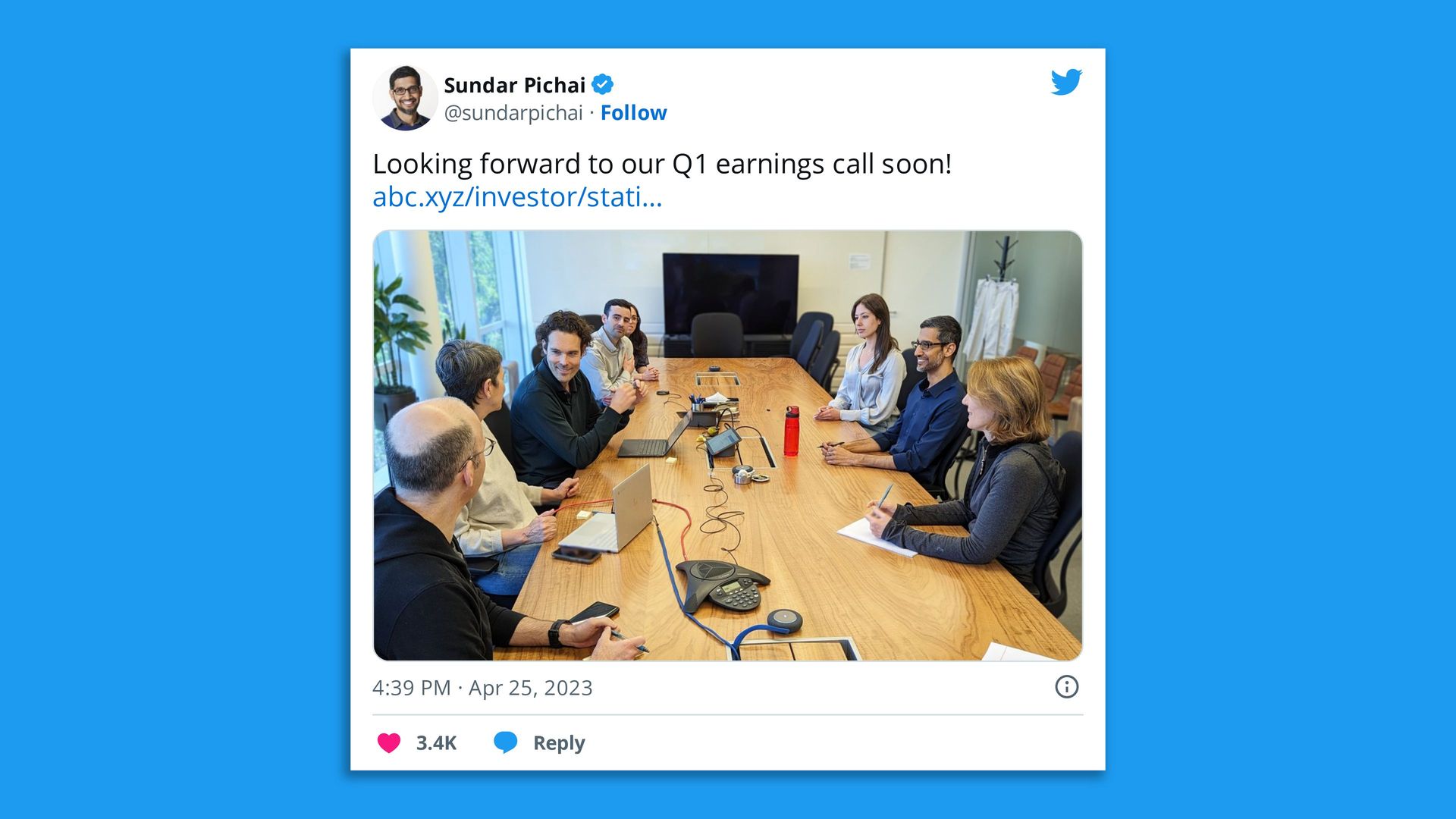
Google CEO Sundar Pichai is still out there having fun on Twitter.
- He posted this photo — featuring "creased cargo shorts" in the background — in response to his mention in Sunday's episode of "Succession."
🤓 Thanks as always! And a special shout out to editor Nicholas Johnston and copy editor Kathie Bozanich for pushing this newsletter across the finish line.
Invite your colleagues, friends and family to subscribe to Axios Communicators.
Sign up for Axios Communicators

Eleanor Hawkins unpacks the topics and trends driving Communications.