Axios Communicators

May 29, 2025

1 big thing: Steve Madden interview generates clicks and cash


Steve Madden has gone viral for his recent, no-holds-barred interview on "The Cutting Room Floor" podcast — and in the days following, the footwear company's stock price has also seen a bump.
Why it matters: Long-form interviews can be a risky public relations move, but when done right, they can attract new customers and generate business.
Catch up quick: Madden sat down with fashion podcaster Recho Omondi to discuss the shoe empire he founded, his time in prison for securities fraud, his penchant for "dupes," the impact President Trump's trade policies could have on the fashion industry and more.
Between the lines: For most executives, many of the topics Madden covered would be off-limits. However, Madden's unfiltered approach paid off by spotlighting his personal brand and offering insight into how the business runs.
- The interview is "a case study in how brands should just be themselves," Omondi said in a TikTok video. "They should just own everything, flaws and all, all their blemishes. So often, brands are so scared. You can't have a single real conversation with anybody from their brand."
- She called the Madden interview "refreshing" and an example of how important it is for brands to have personalities.
Yes, but: The interview, which is behind a paywalled Patreon account, had a chance to go viral because Omondi offers video clips she posts across social.
- The interview clips have garnered about 24.6 million views on TikTok and thousands of views on YouTube as of Tuesday, with Gen Z podcast listeners flocking to watch them.
- A recent Edison Research report found 76% of Gen Z listeners say they discover podcasts through clips on social media.
- More than 600 media stories have been written about Steve Madden since the interview first dropped on May 21, per Muck Rack data, which likely caught the attention of an even broader consumer base.
The big picture: Podcasts have become a preferred channel for executives and politicians to reach and appeal to specific audiences.
- During the 2024 presidential election, Kamala Harris joined "Call Her Daddy" and "All the Smoke," while Trump has joined Joe Rogan, Lex Friedman and Theo Von.
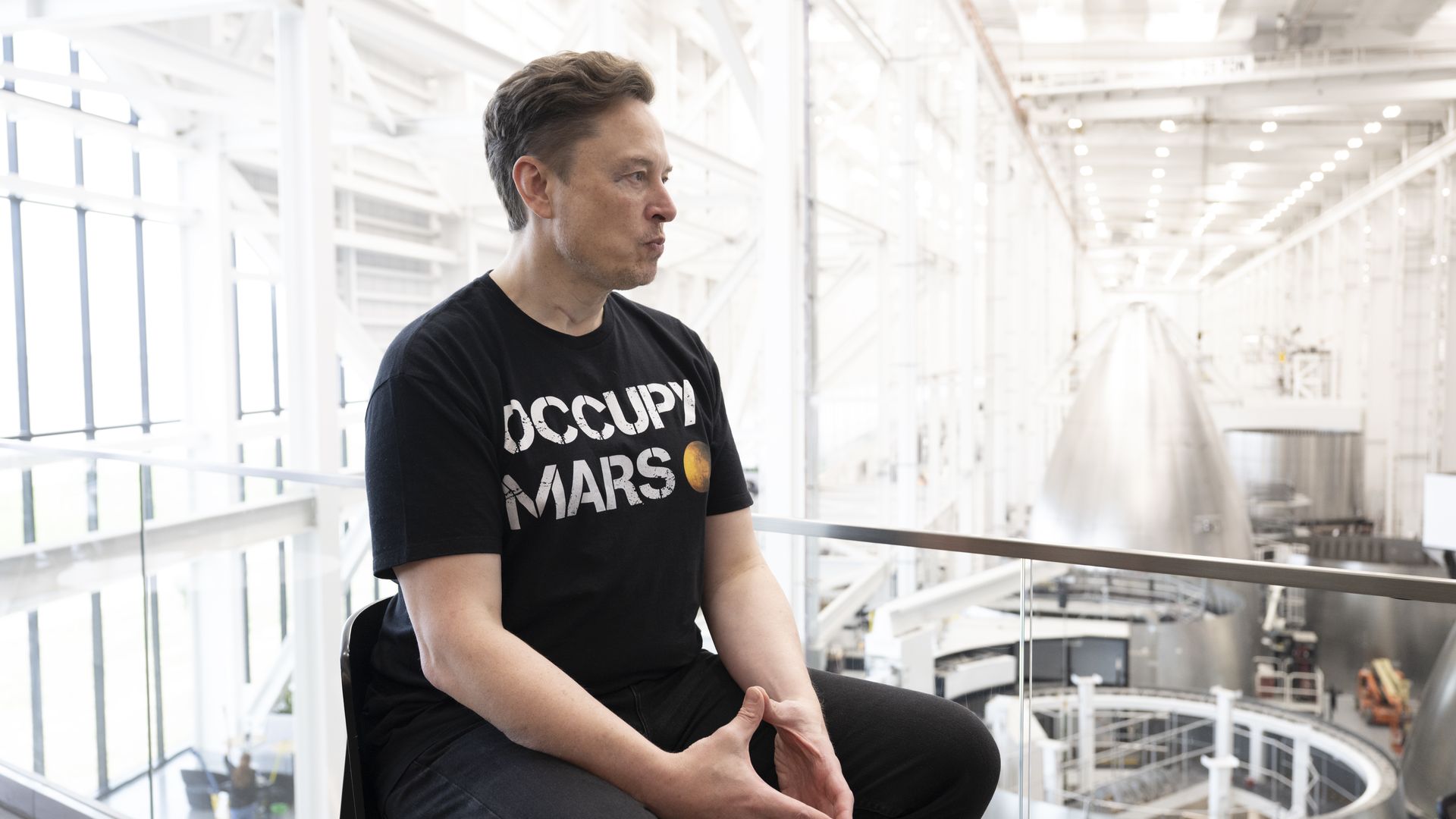
- Meta CEO Mark Zuckerberg followed a similar playbook to Trump, while Elon Musk has also hit the same podcast circuit.
- Airbnb CEO Brian Chesky, Netflix co-founder Reed Hastings and Uber CEO Dara Khosrowshahi have each joined "Masters of Scale," while Microsoft CEO Satya Nadella, Citigroup CEO Jane Fraser and SAP CEO Christian Klein recently appeared on "In Good Company."
What they're saying: "Steve Madden's interview shows how podcasts have become the proving ground for public figures," says Andrew Vontz, founder of One Real Voice, a podcast coaching consultancy.
- "Talking-point robots are headed for the scrapyard. Madden clearly thought deeply about these topics and didn't duck and cover — he owned his story, and that's exactly what broke through."
💭 Eleanor's thought bubble: I'm not ashamed to admit I bought The Row dupes after watching this interview — because Omondi is right, $790 for jelly shoes is outrageous.


4. DEI strongholds see reputation rise
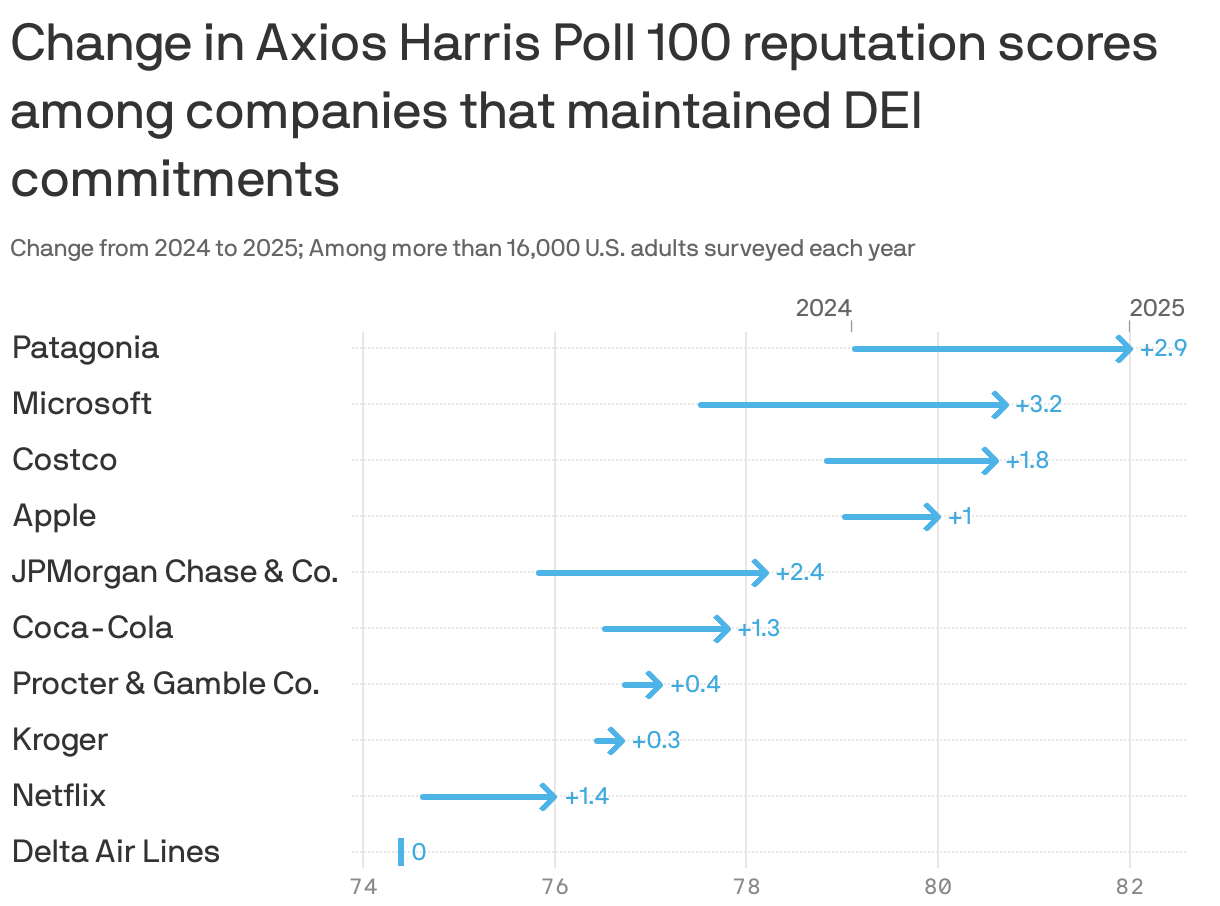
Companies that maintained their commitments to diversity, equity and inclusion saw reputation scores rise in this year's Axios Harris Poll 100 reputation rankings.
Why it matters: Unclear corporate values or a lack of conviction — most recently seen through mass DEI walk-backs — can hinder reputation.
By the numbers: Across all 100 companies, corporate reputation declined by an average of 2.34 points in 2025.
- However, the companies that held firm on their DEI commitments saw scores rise by an average of 1.5 points.
The big picture: Several companies have scaled back their DEI benchmarking goals amid concerns of legal exposure after the Trump administration's calls to dismantle DEI programs within corporate America.
- Yes, but: According to a recent Pew Research study, a majority of U.S. workers say increasing DEI at work is mainly a good thing.
Zoom in: Reputation scores are tabulated based on trust, culture, ethics, citizenship, vision, growth, and products and services.
- Patagonia and Costco rank within the top three in character, culture and citizenship.
- Microsoft, which saw one of the largest score increases since last year, ranked "excellent" across the categories of trust, culture and vision, among others.
Meanwhile, most companies that saw a decline in reputation in the past year also rolled back or revised their DEI policies.
- AB InBev — which ranked "poor" across the reputation categories of ethics, citizenship and character — has seen its reputation decline more than 10 points since 2021.
- The Walt Disney Company has seen a 7-point slide since 2021 and Target's score declined by 5 points. Both fall in the bottom 25% in terms of ethics.
Of note, Google revised its DEI policies but still saw a significant increase in score (+2.3 points) due to its "excellent" score for products and services and "very good" ranking for trajectory, vision and growth.
What to watch: Walmart, Target, Home Depot and Constellation Brands are warning investors about potential customer backlash following changes to DEI programs, according to a CNN report.
5. Bonus chart: Politicized reputations

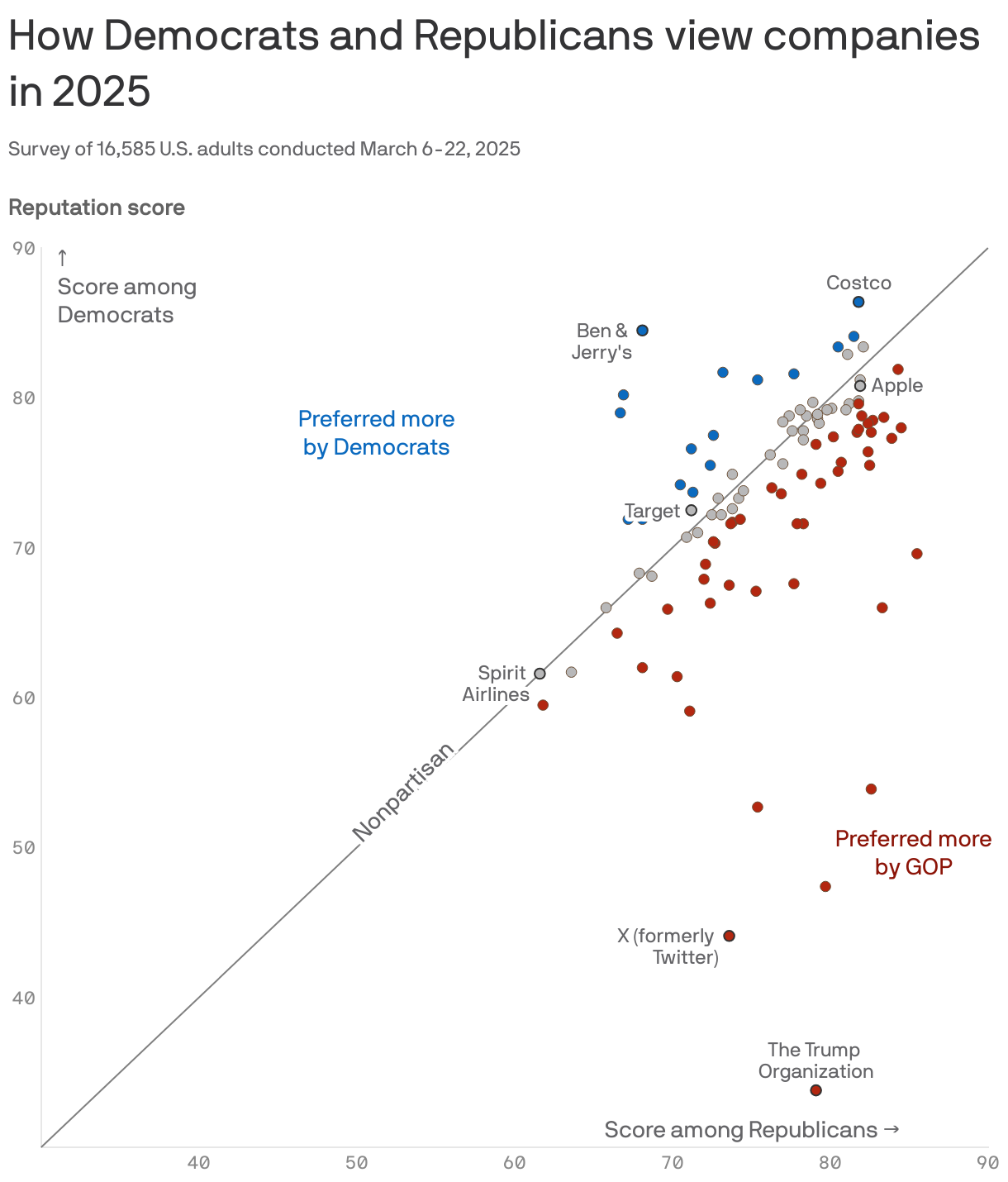
The average polarization score — the gap between how Republicans and Democrats view a brand's reputation — dropped to 2.55 points among the 10 highest-rated companies in this year's Axios Harris Poll 100 rankings,, down from 3.4 a year ago.
Zoom in: Chick-fil-A, John Deere and Arizona Beverage are seen by Republicans as the most reputable companies, while Democrats give Costco, Unilever (which includes Ben & Jerry's ice cream) and Patagonia top billing.
- Ben & Jerry's (+16.4 D), Pfizer (+13.3 D) and the Walt Disney Company (+12.3 D) skew the most toward Democratic consumers in terms of reputational perceptions.
- Even bigger gaps are seen for the companies that most skew toward Republicans: Elon Musk-brands Tesla (+32.3 R), X (+29.5 R) and Space X (+28.7 R); and the Trump Organization (+45.3 R). The common thread is alignment with President Trump.
- Of note, the most polarizing brands that lean Republican are near the bottom for overall reputation (Nos. 86, 95, 98 and 99). The most polarizing brands that lean Democrat fare better (Nos. 24, 61 and 76).
What we're watching: 8 in 10 consumers tell The Harris Poll that they care more about how brands can keep prices down than their politics.
6. Americans want AI to slow down



While the tech industry floors the pedal on AI, the U.S. public would be happy to hit the brakes.
Stunning stat: More than three-quarters of Americans (77%) want companies to create AI slowly and get it right the first time, even if that delays breakthroughs, the 2025 Axios Harris Poll 100 found.
- Only 23% of Americans want companies to develop AI quickly to speed up breakthroughs, even if it means making mistakes along the way.
Why it matters: CEOs, investors and tech companies have pushed the narrative of a do-or-die AI race — but most people would rather get AI right than get it first.
Between the lines: This finding is consistent across generational lines, but the margins vary.
- 91% of Boomers and 77% of Gen X favor slower AI.
- That number drops to 63% for millennials — but rises again to 74% for Gen Z, the youngest and most "digital native."
Yes, but: All this racing has spurred investment and development, but the public hasn't yet bought into the narrative.
7. 🤖 1 AI thing to go
Axios Communicators