Axios Communicators

April 24, 2025

👋🏻 Hey y'all!
- 🌸 Excited to see many of you tomorrow at our D.C. breakfast reception feat. conversations with Trump press secretary Karoline Leavitt and Airbnb exec and former Obama press secretary Jay Carney.
- Can't make it? Don't worry, I'll provide a summary in next week's newsletter.
Today's newsletter is 1,452 words, a 5.5-minute read.
1 big thing: New media's community pitch
Influential journalists who have positioned themselves as subject matter experts and amassed large followings are ditching traditional outlets to venture out on their own.
Why it matters: These independent journalists are grappling with the same challenges that many communication and brand teams face. That is, how do they differentiate themselves in the market and establish a strong reputation with the audiences that matter most?
State of play: As trust in media declines, independent journalists are pivoting away from writing for passive readerships and toward building a hyper-engaged community — and it's proving to be quite lucrative.
- The Free Press, founded by former New York Times writer Bari Weiss, boasts more than 155,000 paid subscribers and is estimated to generate at least $10 million annually from subscription revenue, per Axios' Sara Fischer.
- Former Bloomberg reporter Eric Newcomer announced his independent media entity, Newcomer, brought in $2 million in revenue in 2024 and he recently made his first round of hires.
- Former CNN reporter Oliver Darcy's Status newsletter has accumulated more than 70,000 total subscribers since its launch and is estimated to generate $1 million in annual recurring revenue.
- The latest big-name journalist to make this pivot is former Forbes editor Alex Konrad, who last month launched Upstarts Media, covering the startup ecosystem.
The big picture: The volatility of the news industry, paired with the growth of publishing platforms, has made independent journalism more appealing, but has also led to further media fragmentation.
- The formats and distribution channels are also evolving, with news personalities like Jim Acosta and Chris Matthews hosting daily live shows on creator-owned platforms like Substack.
Between the lines: Independent ventures enable journalists to become hyper-specific on coverage areas and desired audiences — plus, it allows them to engage with these audiences as they wish.
- Konrad created a WhatsApp group for the founding subscribers to his Upstarts newsletter, in which he actively hosts conversations.
- Substack writer Emily Sundberg is known for engaging in real-time through her comments section.
Driving the news: Christine Choi, partner at early-stage venture capital firm M13, gathered several journalists who ditched traditional newsrooms to build their own media empires — like Newcomer, Konrad, Polina Pompliano and Zack Guzmán — to help make sense of the evolving landscape for a room full of investors, founders and communication professionals.
- Media entrepreneurs like Business Insider co-founder Henry Blodget, Quartz co-founder and Charter media CEO Kevin Delaney and Capital Allocators founder Ted Seides were also in the crowd.
What they're saying: In-person events are a major component of community building, Konrad told me during our on-stage conversation at the M13 event.
- "The media landscape and technological trends [are] pushing us toward community, toward a direct relationship with your audience," he said.
- "The most important thing about events is to have a moment where I can talk to a bunch of people that matter to [the startup] ecosystem and help them meet other people within the ecosystem."
- "It's not just revenue for me. It's about seeing that close connection with our audiences grow."
What to watch: AI is disrupting the way news is created and distributed, which will make that human connection and sense of community even more important, says Pompliano.
- "People trust people, and people want to subscribe to people," she adds.
2. Marriott CEO talks DEI
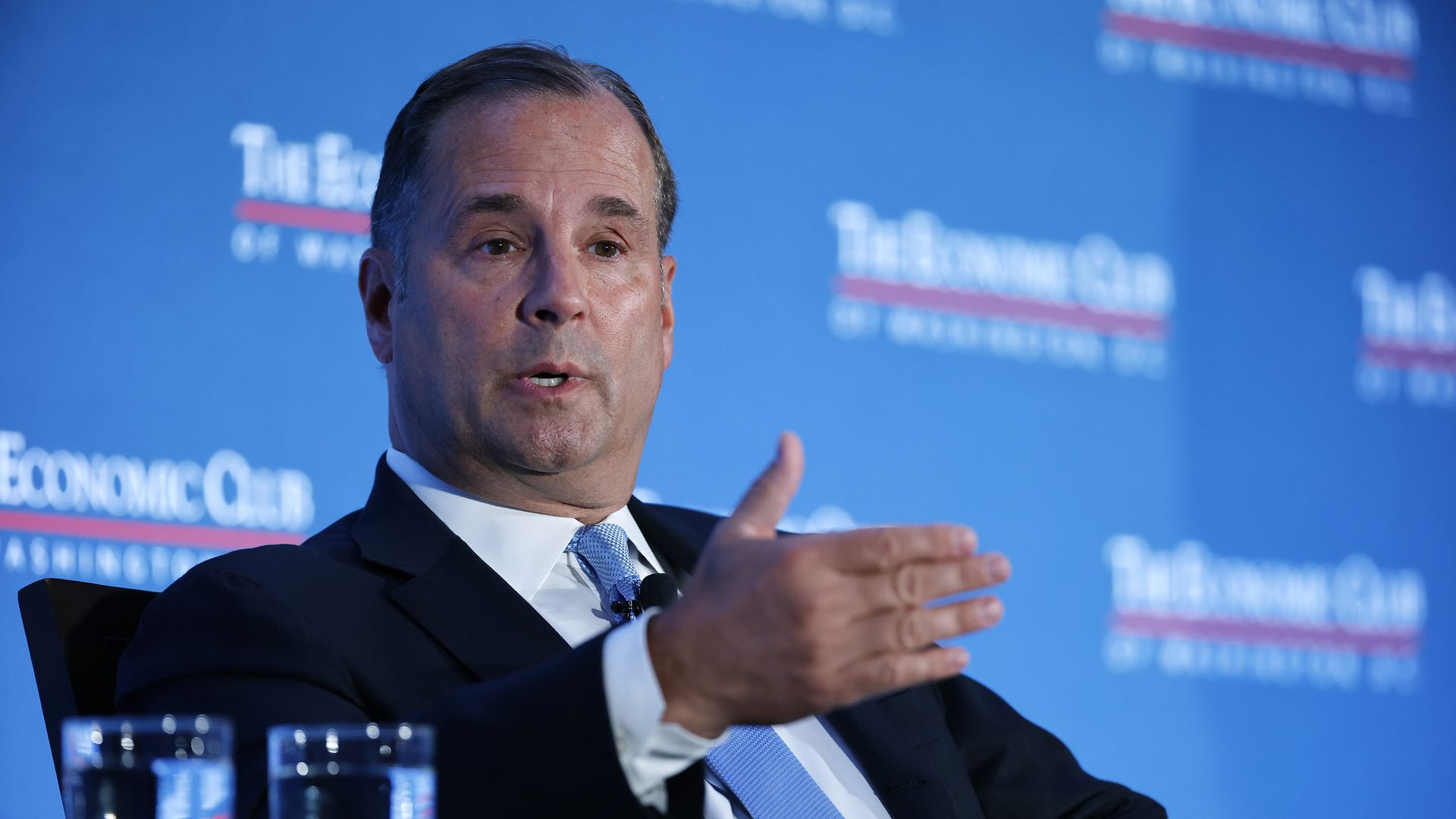
Marriott International CEO Anthony Capuano is one of the few executives openly talking about his company's diversity, equity and inclusion commitments.
Why it matters: Many corporate leaders are twisting themselves into a messaging pretzel when it comes to DEI or dodging the topic completely.
Driving the news: In a memo to employees, Capuano wrote that the world's largest hotel chain welcomes and creates opportunities for all. "The words might change, but that's who we are as a company," he wrote.
- "Within 24 hours, I had 40,000 emails from Marriott associates around the world, saying 'thank you,'" he told Fortune.
- "Many expressed appreciation to work for a company whose values aligned with their own."
Between the lines: Wordsmithing appears to be the preferred strategy of companies committed to DEI programs but seeking to avoid political or legal vulnerabilities.
- Mentions of DEI and "diversity equity and inclusion" in earnings calls have dropped roughly 82% since Q2 of 2021.
State of play: The Society for Human Resource Management dropped the word "equity" from its strategy and words like "belonging" or "opportunity" are being used among corporate communicators instead.
- Companies like JPMorgan Chase, Amazon and McDonald's have changed their DEI messaging or halted some of their programs in recent weeks.
3. Immigrant founders are the norm in key U.S. AI firms: study


More than half of the top privately held AI companies based in the U.S. have at least one immigrant founder, according to an analysis from the Institute for Progress shared first with Axios.
Why it matters: The Trump administration is hammering out its AI policies against the backdrop of intensifying global competition and its own "America first" program and strict border policies.
Zoom in: The IFP analysis of the top AI-related startups in the Forbes AI 2025 list found that 25 — or 60% — of the 42 companies based in the U.S. were founded or cofounded by immigrants.
- The founders of those companies "hail from 25 countries, with India leading (nine founders), followed by China (eight founders) and then France (three founders). Australia, the U.K., Canada, Israel, Romania, and Chile all have two founders each."
- The analysis echoes previous findings about the key role foreign-born scientists and engineers have played in the U.S. tech industry and the broader economy.
Flashback: A debate over foreign workers erupted among President Trump's supporters late last year, with Elon Musk and others speaking out in support of H-1B visas for high-skilled workers in "specialty occupations."
- Other Trump supporters argue the U.S. should focus on training U.S. workers and prioritize their development over foreign workers.
What we're watching: Trump signed an executive order in his first days in office directing his administration to develop an AI "action plan" to "sustain and enhance America's global AI dominance." The plan is due this summer.
4. 📚 Reading list
- 🪫The weight of CEO reputation: Musk plans to step back from DOGE after Tesla "blowback" (Axios).
- 🛍️ Social media influencers face backlash as users call them out for flaunting wealth while many of their followers struggle to pay rent or afford groceries (Axios).
- Yes, but: Finance influencers (or f-influencers) are thriving as they try to make sense of economic uncertainty on TikTok (WSJ).
- 🪜Companies are following the lead of Amazon and Meta by cutting more middle managers, leaving employees directionless (Axios).
- 🥊 The battle between higher ed and Trump escalates as Harvard sues the administration for freezing $2.2 billion in research money. (NYT).
- 🤖Anthropic is the latest to warn that fully AI employees are coming sooner than many anticipate (Axios).
- 🗞️ Meet the eight MAGA media outlets disrupting the White House briefing room (Politico).
- 🚨 Americans are less enthusiastic about policing dis-and misinformation today than they were two years ago, per Pew Research Center (Axios).
- 🔍 OpenAI would buy Chrome if Google was forced to sell (Axios).
5. Ice Bucket Challenge goes viral ... again

It's been over a decade since celebrities, brands and everyday people were posting videos of themselves on the internet being doused with buckets of ice to raise awareness about ALS.
Driving the news: Students from the University of South Carolina revived the trend last month in support of mental health.
- Thus far, the 2025 Ice Bucket Challenge has raised more than $322,000 for Active Minds, a nonprofit organization dedicated to promoting youth mental health awareness.
- According to Active Minds, its site has seen a 922% increase in traffic since the launch of the campaign.
The big picture: Former U.S. Surgeon General Vivek Murthy declared the mental health crisis a top public health concern in America, particularly among young people.
- Employers have also prioritized mental health in the workplace after the COVID-19 pandemic.
Zoom in: In the PR industry, high burnout rates are consistent across those working for brands and within agencies, as well as across seniority levels, according to a recent Muck Rack survey.
- 75% of those who work in agencies report high stress, most commonly describing stress levels at an 8 out of 10.
- Meanwhile, 71% of those who work in-house report high stress levels, with 6 being the most common rating.
Between the lines: Aside from awareness, nostalgic marketing campaigns like the Ice Bucket Challenge are also ripe for virality.
- Yes, but: Brands like McDonald's, Pillsbury and KFC participated in the 2014 ALS Ice Bucket Challenge, but we have yet to see any major brands jump on this trend.
💭 Eleanor's thought bubble: I hereby nominate the internet's favorite brand mascot, Duolingo's Duo the owl.
6. 📸 1 photo to go
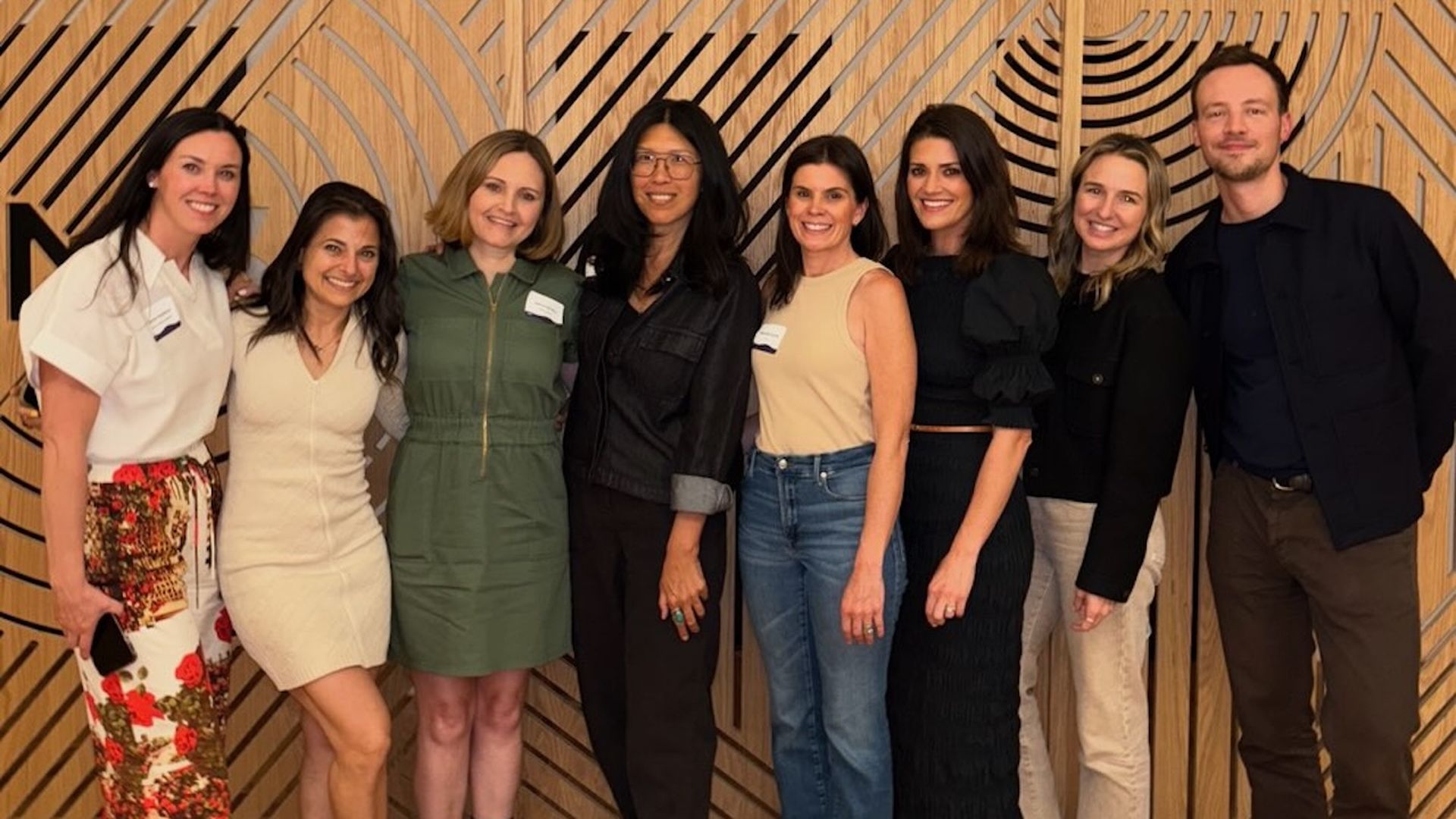
There was a strong showing of venture capital communication and marketing leads (plus me!) at the M13 event on Tuesday in New York City.
🦉 Thanks (as always!) for reading. And thanks to editors Christine Wang and Kathie Bozanich.
Was this forwarded to you? Subscribe to Axios Communicators.
Sign up for Axios Communicators