When DEI gets downgraded to I&D

Add Axios as your preferred source to
see more of our stories on Google.
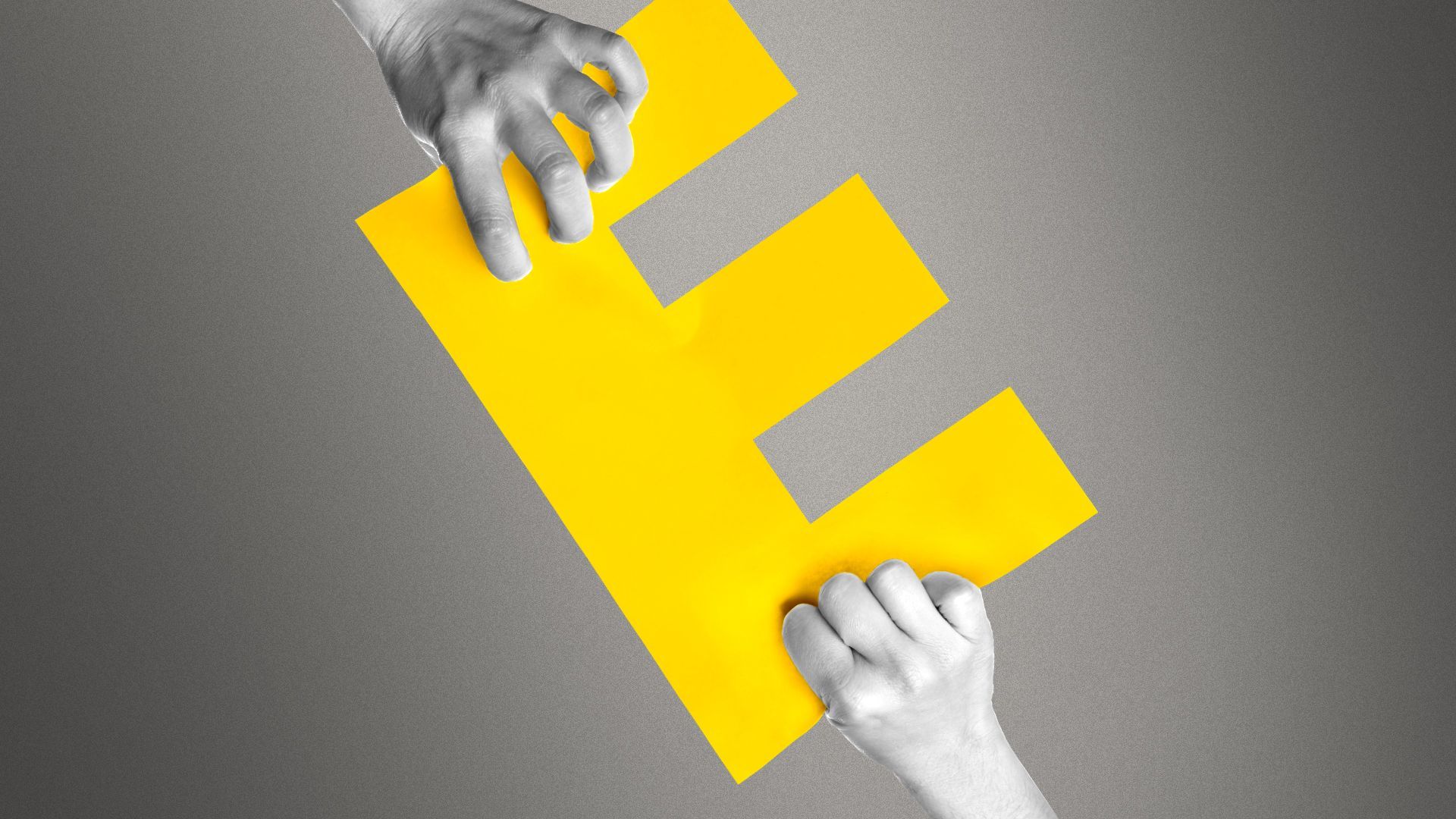
Illustration: Annelise Capossela/Axios
The Society for Human Resource Management (SHRM) announced last week that it dropped the word "equity" from its diversity, equity and inclusion (DEI) strategy — thereby setting off a bomb in the relatively staid world of corporate HR.
Why it matters: The shift — critics are calling it a retreat — comes as some companies are backing away from the diversity strategies launched a few years ago in the wake of George Floyd's killing, amid a barrage of attacks on companies by conservatives and Republican lawmakers.
The big picture: Many companies are rethinking, changing or abandoning DEI work.
- Just last week, CNN disbanded its race and equality reporting group, integrating those reporters across the newsroom.
- Last month, Tractor Supply, an 86-year-old rural retailer, announced it would end its DEI and environmental practices entirely.
Driving the news: "Effective immediately, SHRM will be adopting the acronym 'I&D,' instead of 'IE&D,'" the group announced on LinkedIn. "This strategic decision underscores our commitment to leading with Inclusion as the catalyst for holistic change in workplaces and society."
- "By emphasizing inclusion-first, we aim to address the current shortcomings of DE&I programs, which have led to societal backlash and increasing polarization."
What they're saying: "[O]ur commitment to equity remains steadfast," per the post, which explains that equity will be integrated into the inclusion framework.
For the record: In an interview, SHRM's president, Johnny C. Taylor Jr., told Axios that "we're not capitulating to anyone."
- "A lot of companies were already doing this. There's been the renaming, refocusing of, revisiting of, diversity pretty seriously over the last year. And I don't think that's a bad thing."
- "We can't come in and have a legitimate conversation with senior management when people are debating"... what the "e" means, he says.
- The common question: Does it mean equal opportunity or equal outcomes?
- DEI strategies weren't working, he says, pointing to a 2021 Gallup survey that found positive ratings of relations between Black and white Americans were at their lowest level in decades.
- "This is just a smarter approach," he says, adding time will tell if it's better. "We may be right here five years from now saying that approach didn't work."
The response: DEI experts say there isn't really a debate, and that "equity" can be fairly uncontroversial. It just means equality of opportunity — providing workers with what they need to be on equal footing in the workplace.
- For example, equity means making sure a worker with a hearing impairment has the software and tools they need to do their work. It also means providing accessible offices, or ensuring that workers who file expenses aren't burdened by a high credit card bill.
- "Who are the people that find 'equity' confusing?" asks Deb Muller, the CEO of HR Acuity who's been in the industry for decades.
- It's disheartening that the leading HR organization is doing this, she says.
Zoom out: Others told Axios that SHRM's action will embolden those who want to eliminate DEI work entirely.
- "They're in such a prominent position," says Alex Suggs, cofounder of a DEI consulting firm called Different. "If they are backing away from equity, that's giving a free pass to all the naysayers and giving more fuel to the fire of the backlash we're seeing."
The other side: SHRM's Taylor says that the SHRM post received hundreds of positive comments.
- One commenter wrote that the term "equity" is "often associated with quotas, affirmative action, and perceived biases in hiring practices."
The bottom line: Four years after the business world went all in on DEI, it's having second thoughts.
