Axios Communicators

April 09, 2026

👋🏻 Hey there!
- 🌸 Will you be in D.C. for WHCD? Join Sara Fischer and me for a brunch reception on April 24, where we will speak with newsmakers about AI's impact on the information and media landscape. Request an invite here.
Today's newsletter, edited by Christine Wang and copy edited by Kathie Bozanich, is 2,090 words, 8 minutes.
1 big thing: The value of words

High-quality CEO thought leadership can drive an average of $367 million in shareholder value in a single week, according to a new study by Cardinal40.
Why it matters: This study suggests words themselves can create value, independent of external news or disclosures — something communicators have long believed but haven't been able to prove.
How it works: Researchers analyzed more than 1,000 examples of CEO thought leadership from S&P 500 companies, measuring each piece against abnormal stock returns, while excluding communications tied to market-moving news.
- They tested 60-plus common writing traits, like tone and readability, and found little signal about why some outperform.
- The researchers then used AI to compare each document to a curated canon of existing, standout thought leadership.
- The analysis concluded that communications semantically closer to the canon were associated with stronger market returns.
By the numbers: The study found the gap between top- and bottom-tier thought leadership was associated with a 0.9 percentage-point swing in stock performance the following week.
- For the largest companies, that gap can translate into billions — the report estimates as much as $25 billion for the Magnificent Seven.
Yes, but: More thought leadership does not translate into more value, an important distinction in the age of AI slop.
- Weak or low-quality communications can correlate with neutral or negative outcomes, the research finds.
The big picture: As AI makes it easier to produce content at scale, the gap between generic and high-quality thought leadership may widen.
- Companies may invest more in distinctive executive voice or storytelling efforts.
- Recently, we've seen this with OpenAI's acquisition of TBPN and the high-paying editorial or storytelling roles at companies like Chime, Anthropic and Vanta.
- Plus, mentions of "storytelling," "narrative" and "storyteller" in corporate earnings and investor calls have increased 65% since 2020, according to AlphaSense data shared with Axios.
What they're saying: What qualifies as "good" thought leadership appears to come from the overall coherence, originality and clarity of the message, says Cardinal40 founder and CEO Ryan Jacobs.
- "We keep hearing how taste is going to actually be this incredibly important skill, because when AI is trained on everything, it loses its taste," Jacobs said. "So humans are going to need to inject their taste into it — and when they do, it can drive measurable returns."
The bottom line: While the study does not claim causation, it does point to a clear takeaway for communicators: better messaging is better business.
2. AARP proves print and digital can coexist


AARP, the leading advocacy group for adults age 50 and up, is increasingly leaning into social media and digital channels to reach seniors — but it's not ditching its print magazine.
Why it matters: Senior citizens are increasingly online, forcing AARP, a media behemoth in its own right, to rethink how it reaches its members.
- AARP is "constantly evolving how we connect with the millions of members we serve, building on the trust we have earned through platforms like AARP The Magazine while expanding how people engage across digital channels with a sophisticated, data-driven approach," CEO Myechia Minter-Jordan told Axios.
Where it stands: AARP runs the largest magazine in circulation. But it also has more than 385,000 subscribers on YouTube and 705,000 on TikTok.
- The organization helped fund a social networking site specifically for seniors that launched in 2022.
Zoom in: More than 90% of adults aged 50 and older have a smartphone, per AARP's own data. Nearly three-quarters report using social media.
- As with other segments of the population, that's largely where they consume news and other information.
What they're saying: "Our constituency is much like the rest of the world — on the forefront of all this technology," said John Hishta, senior vice president of campaigns at AARP. Older adults "engage with us and probably with their peers and families much like the younger generation does."
- The magazine "continues to reinforce our credibility as the preeminent organization that represents the 50-plus," Hishta said. "Members and the general public get value out of that."
Reality check: Like the rest of the media and advocacy worlds, AARP isn't making long-term promises. The organization reduced the frequency of its print magazine issues last year.
- Will there ever be a tipping point at which AARP decides to go fully digital in its communications?
- "I don't know the answer to that," Hishta said. "Ultimately, that will be determined, much like all of this other communication is determined, by the consumer."
💭 Thought bubble from Eleanor: AARP's shift underscores a broader reality for communicators, which is that knowing where your audience goes for news and information is half the battle.
- From TikTok to print magazines, AARP is evolving its communication strategies to meet audiences where they are — and it's bound to pay off as digital users continue to age into its membership bracket.
3. Exclusive: PeakMetrics raises $6 million in Series A

AI-powered monitoring platform PeakMetrics has raised $6 million in a Series A funding round, bringing its total capital raised to $16.3 million, Axios is first to report.
💡Why it matters: This comes as companies scramble to keep up with reputational risks that are now shaped or accelerated by social media and AI-generated content.
Details: The round was led by Moneta Ventures, with participation from Techstars, Parameter Ventures, VITALIZE Venture Capital and Gurtin Ventures.
- The company, headquartered in Los Angeles, has 22 full-time employees and supports more than a dozen Fortune 500 enterprise clients.
State of play: Dealmaking is heating up for AI-powered PR and marketing intelligence.
- Signal AI recently acquired media monitoring platform Memo for an undisclosed amount, and social media monitoring service Sprout Social acquired NewsWhip for $55 million in 2025.
- Profound, which tracks how brands appear in LLM outputs, recently raised $96 million in Series C funding at a $1 billion valuation.
The big picture: 90% of online content is projected to be synthetic in 2026, meaning comms teams are facing a volume-and-velocity problem that traditional monitoring tools weren't built for.
- The tracking challenge is identifying what coverage is real and coordinated, and which audiences are actually engaging with viral moments.
What they're saying: "AI has changed the speed and scale of how narratives spread online," said Nick Loui, co-founder and CEO of PeakMetrics.
- "This funding allows us to accelerate our mission of bringing clarity to a world of distorted information."
What to watch: As more consumers get information from AI chatbots, companies will need visibility into how they're portrayed in LLM outputs.
- This could lead to more consolidation within the intelligence and monitoring space as platforms race to become end-to-end "comms intelligence" hubs.
4. 🚨 MB (LIVE) in Chicago

We are hosting the fifth annual MB (LIVE) summit in Chicago on Sept. 17.
Why it matters: MB (LIVE) is Mixing Board, powered by Axios' signature gathering and a defining moment for the comms community.
Details: Mixing Board members and a select group of industry peers will gather for curated programming featuring newsworthy conversations, memorable shared experiences, great meals and time to connect.
- Wednesday, Sept. 16: Welcome reception
- Thursday, Sept. 17: MB (LIVE) summit
Catch up quick: In 2025, Axios combined its premium member subscription — Axios Communicators Pro — with Mixing Board to create a community for modern communications and corporate affairs professionals.
- Axios produces and oversees the community's editorial content and events, while the Mixing Board team supports the community by leading trainings, spurring conversations and making connections.
- Current members hail from companies like Amazon, American Express, Airbnb, BlackRock, BP, Coca-Cola, Delta Air Lines, Disney, Etsy, GE, GM, Instacart, Meta, Microsoft, Netflix, OpenAI, Qualcomm, Reddit, Salesforce, Samsung, SiriusXM, TikTok, T-Mobile, United Airlines, U.S. Steel, Walmart, Workday, Yahoo, and venture firms and nonprofits of all stages and sizes.
🎤 Last year's MB (LIVE) speakers included: Walmart EVP of corporate affairs Dan Bartlett, Him & Her podcast co-hosts Lauryn and Michael Bosstick, Poppi co-founder and brand advisor Allison Elsworth, M13 partner and head of brand communications Christine Choi and former Blue Origin principal Sara Blask.
What's next: MB (LIVE) tickets are first made available to Mixing Board members.
- ➡️ If that's you, reserve your spot here.
- 🧠And to learn more about Mixing Board, powered by Axios, click here.
Speaking of Mixing Board members ... 👇🏻
5. Communicator spotlight: Michaela Balderston of Lead Edge Capital
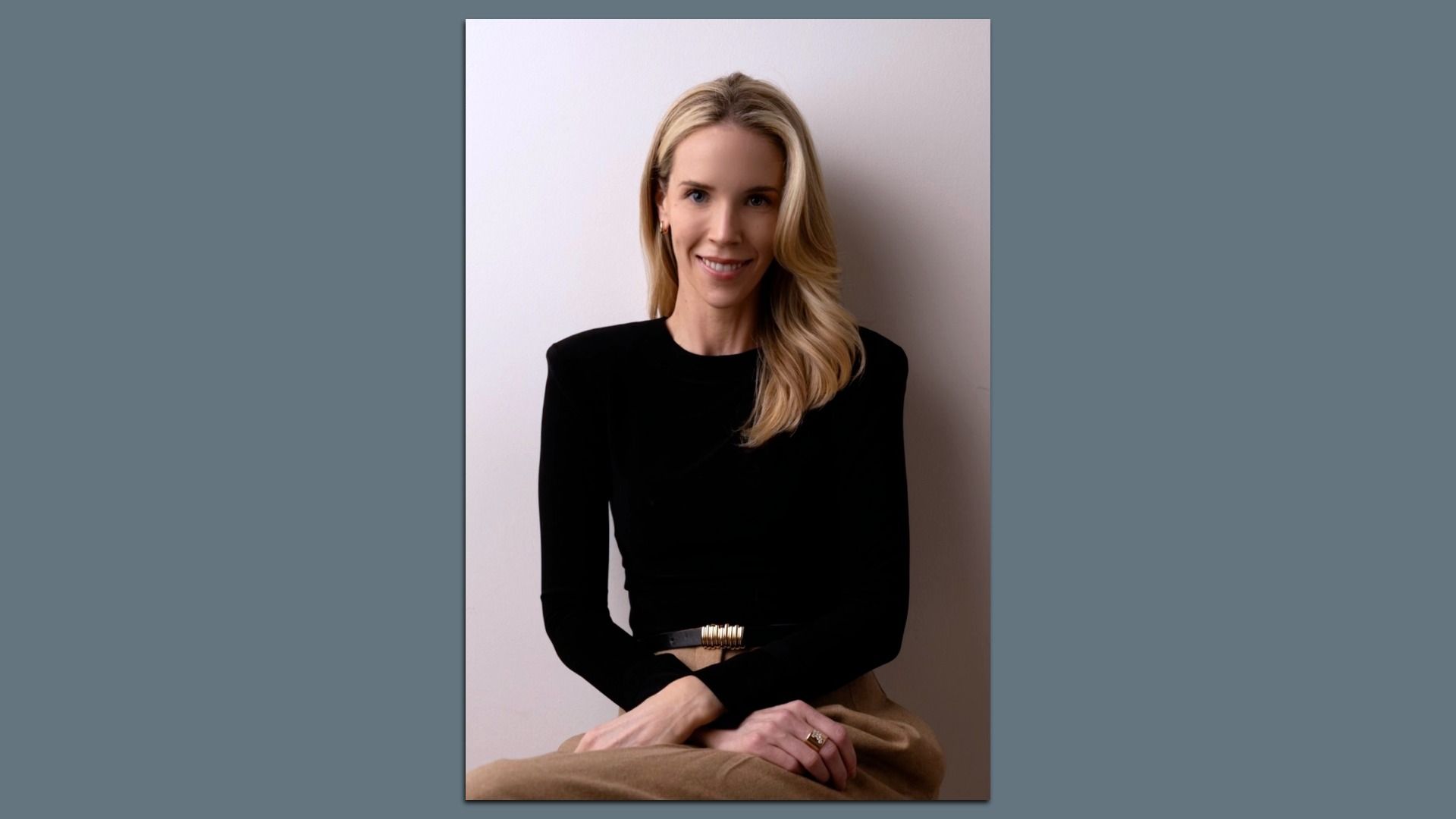
As chief communications officer of Lead Edge Capital, Michaela Balderston helps the growth equity firm differentiate itself in the eyes of investors and founders.
Driving the news: Lead Edge recently announced it raised $3.5 billion in commitments, bringing the fund's total raised capital to $9 billion.
What she's saying: "My job solely exists to help the firm raise money, deploy it and invest it," Balderston told Axios.
- "I think so many people lose sight of what investment firm comms should be — like, I'm not trying to build a media company. I think the best comms people know exactly what the objectives of their business are, and they saddle up to solely serve those objectives."
Catch up quick: Before joining Lead Edge, Balderston served as a partner at Tusk Ventures, where she helped establish the firm's brand by making Tusk synonymous with regulatory affairs.
- Earlier in her career, Balderston held communications and public policy roles at Nestlé, The ONE Campaign and Burson-Marsteller.
What she's watching: How comms teams are finding the proper balance between owned and earned content in the age of AI.
- "I think a lot of people in VC overcorrected to just creating all of this content from the firm, and they slept a little bit on traditional media," Balderston said.
- "Trust and third-party validation are paramount in our industry. When you're asking people to give you money or to take your money, there's a level of trust that is required. Going to third parties and having them tell the story about you can build trust. And so you're constantly having to think through, where do my audiences live, how do I get to them, and who are the people that they trust?"
Zoom in: Balderston used this playbook when rolling out Lead Edge's recent fundraise.
- "You really have to figure out and hop around each sphere of influence. We had that credibility builder with an exclusive in Bloomberg, but then we went on TBPN, because that's a much smaller but highly influential audience. And then there are the podcasts that tap into culture, and the trades, which are even more niche."
Best advice: If you build it, they will come.
- "I stopped a long time ago trying to explain the value of communications, and now I just try to show it," she says.
Go deeper ... read the spotlight in its entirety.
6. Exclusive: Beehiiv brings on Lance Frank as first comms hire

Lance Frank has joined Beehiiv as its first head of communications, Axios exclusively reports.
Why it matters: The hire signals that Beehiiv is outgrowing the "newsletter platform" label and is investing in communications to help build its narrative.
Details: Frank will report to Beehiiv CEO Tyler Denk and will oversee communications and events strategy.
- Frank joins Beehiiv from Paramount, where he most recently served as head of communications for CBS News, Stations and CBS Media Ventures.
What they're saying: "We still get put in the newsletter platform box, which is understandable given how Beehiiv started, but it really undersells what we've built and where we're going," Frank told Axios.
- "I think a big part of my job is to help the market understand this is an infrastructure for anyone who has an audience. So I think sharpening that story is definitely a huge priority in terms of how we're talked about and how we talk about ourselves."
Zoom in: Beehiiv has captured independent journalists like Joanna Stern, Tom Sietsema, Hope King and Oliver Darcy and traditional media organizations like Hearst, The Washington Post, Time and TechCrunch.
What to watch: Beehiiv recently launched its native podcasting offering and announced an AI integration that lets users manage and optimize their accounts.
7. 🧮 1 stat to go


The "Swiss army knife" executive is in high demand, as the number of C-suite leaders with more than two titles has increased by 121% over the last decade.
Thanks for reading! For more content, apply to become a Mixing Board, powered by Axios member.
Sign up for Axios Communicators