Axios Columbus

May 19, 2025

It's a new week, Columbus. Shoutout to our EMTs and paramedics!
🌥️ Today's weather: Cloudy with a high around 70.
🗳 Situational awareness: Attorney General Dave Yost dropped out of the governor's race Friday.
🎧 Sounds like: "Girls & Boys" by Good Charlotte.
Today's newsletter is 946 words — a 3.5-minute read.
1 big thing: Closing our housing affordability gap
Despite Columbus' rapid growth and increasing prices, the city's housing costs have yet to catch up to the price of construction.
Why it matters: That creates a gap that the city hopes to close with a proposed $500 million bond package.
State of play: Central Ohio faces a housing crisis, with demand outpacing construction, houses more expensive than ever and a deficit of affordable housing.
- The bond package backed by Mayor Andrew Ginther would continue "important progress" of $250 million in bonds previously approved in 2019 and 2022.
Between the lines: Housing in Columbus falls into a uniquely challenging gap.
- Despite average rent increasing consistently, it's still cheaper to live in Central Ohio than in most other major U.S. cities near our size.
The big picture: "I think people still expect rent to be much more affordable than what it actually costs to build apartments," says Bob Bitzenhofer, the Columbus Metropolitan Housing Authority's VP of planning and development.
- "'Affordable' at 80% of area median income rent is $1,200 for a one-bedroom, and people are like, 'Oh my god, that can't be right.' But math is math."
Yes, but: Lower rents don't shield the Columbus market from the rapidly increasing building prices faced by the entire country.
- "Cost of construction is pretty extraordinary right now," Erin Prosser, Columbus' deputy director of housing strategies, tells Axios.
That leaves developers — and the city — in a bind. Columbus needs housing and wants to keep prices down, but building it is expensive, and private developers don't build out of the goodness of their hearts.
- "What we know is that housing won't get built if there isn't enough revenue on the back side to pay that loan bill, keep the lights on and mow the lawns," Prosser says.
Follow the money: That's where the city hopes $500 million can help.
- Structured correctly, Prosser says, Columbus can inject capital dollars early in the process.
- That would close the lending gaps for developers by buying down their initial debt, allowing for lower rents required to maintain developers' bottom lines.
2. What will $500 million get us?
Prosser says Columbus' capital investment aims to incentivize two main types of housing developments.
Three-story walk-ups will be focused on construction affordability rather than density. These are "as straightforward as you can get," and likely built in slightly less in-demand areas.
Steel apartment buildings will be smaller, but with many more units per square foot.
- They require more expensive materials, but are designed to add "the kind of density that we're hoping for" along corridors that need it.
Multifamily developments make a bigger dent in Columbus' housing shortage than single-family homes do, and it's harder for the city to support single-family developments.
- To that end, Prosser says the city will continue contributing funds to nonprofit Central Ohio Community Land Trust — which builds and maintains ownership of houses and issues 99-year renewable leases to homeowners who then share equity when the property is resold.
The fine print: In many ways, policy changes have the potential to be more impactful to single-family housing than just cash injection, Bitzenhofer says.
- Columbus is updating its zoning codes, has established a new Division of Housing Stability and plans to create registries of vacant and foreclosed properties as well as wholesalers — or "flippers."
The last word: Bitzenhofer is hopeful that reforms will lead to fewer restrictions, which allows for more affordable housing.
- "If you have houses jammed right next to each other that cost $800,000, that's tough to sell. But if you have houses close together in an urban environment that cost $300,000 or $250,000, that's easier to sell."
3. 📈 Chart du jour: We're still growing
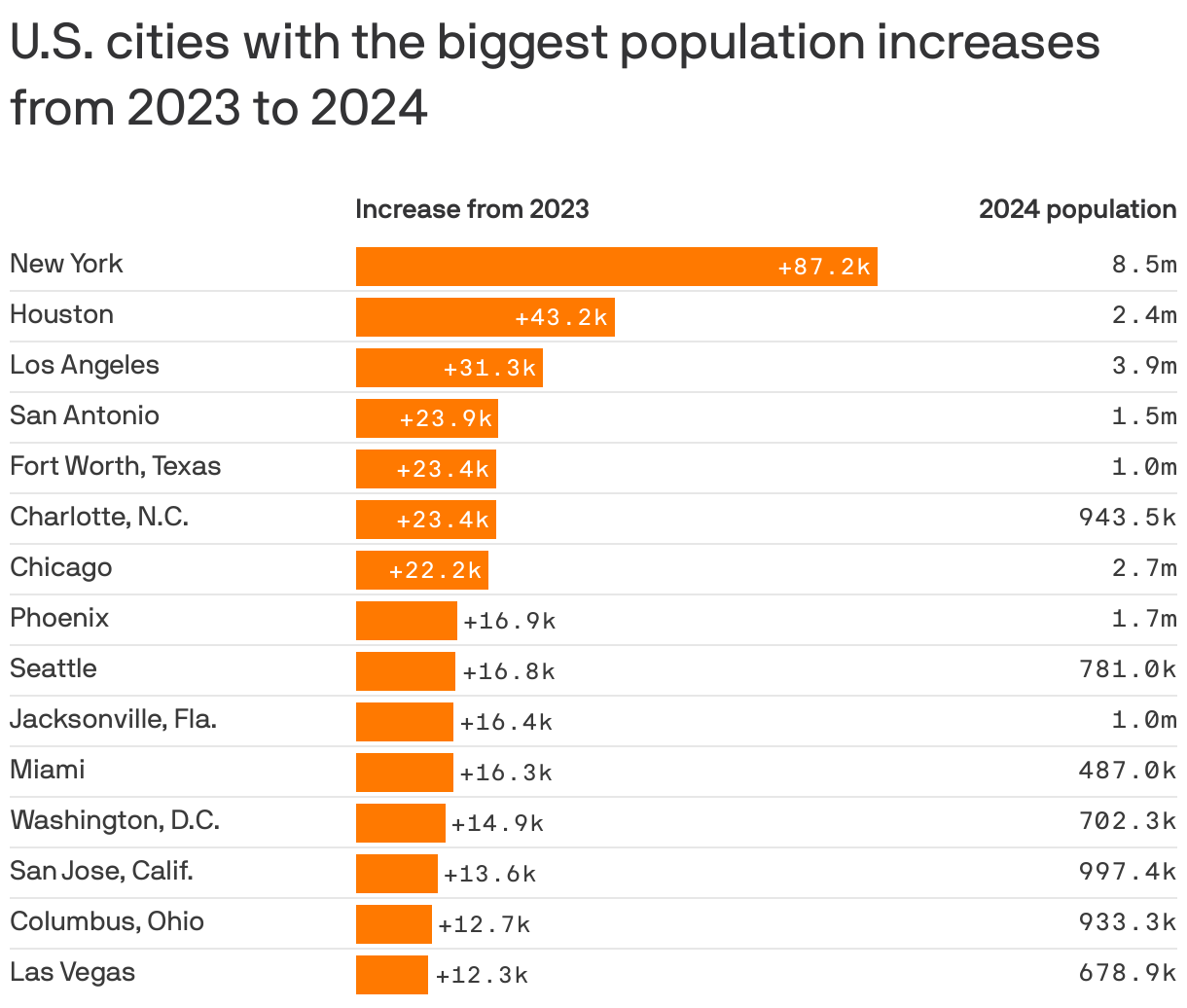
Columbus remains one of the fastest growing and most populous cities in the country, per new census estimates.
Be Part of Something Bigger

Be part of a community committed to staying informed and making a difference.
With an Axios Columbus membership, you're not just a reader — you're a vital supporter of our local journalism.
Why it's important: We couldn't do this without you. By joining our membership program, you'll get exclusive notes from the reporting team and more.
Thank you for your trust and continued readership.
4. 🍽 Columbites: Authentic Korean at Min-Ga
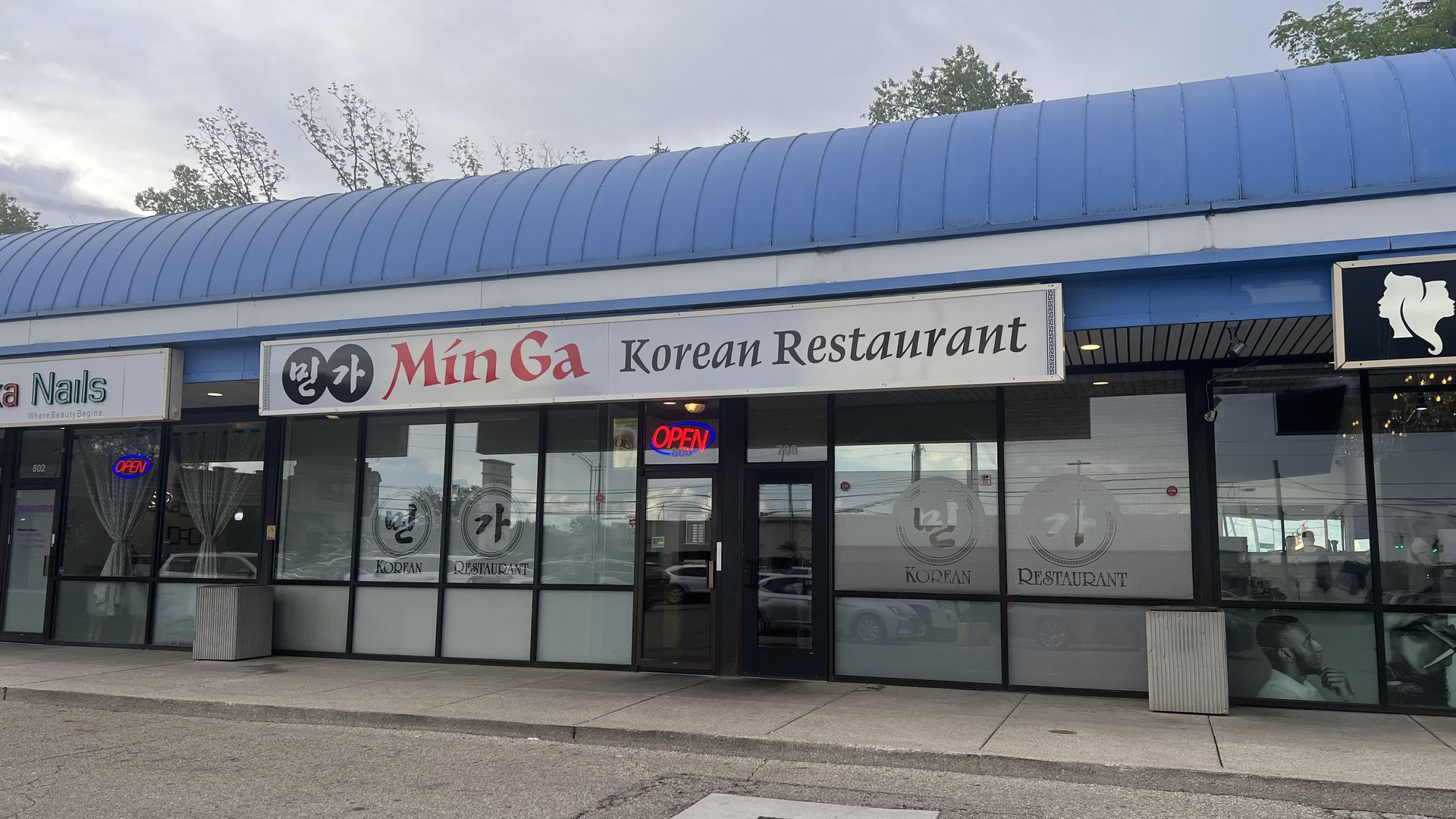
Asian & Pacific American Heritage Month was a great excuse for me to visit Bethel Road, Columbus' Asian food hotbed.
What I tried: The authentic Korean flavors at Min-Ga Korean Restaurant, a Columbus classic for 25 years.
The menu: Min-Ga might need to stay open for another 25 years for me to tackle all of this.
- The menu has 95 items, from seafood and kimchi pancakes to bibimbap and noodles.
What I ate: Regrettably, I was alone, so I ordered 2% of the menu.
- I started with pork dumplings ($12) with beef bulgogi ($19) from the barbecue as my main.
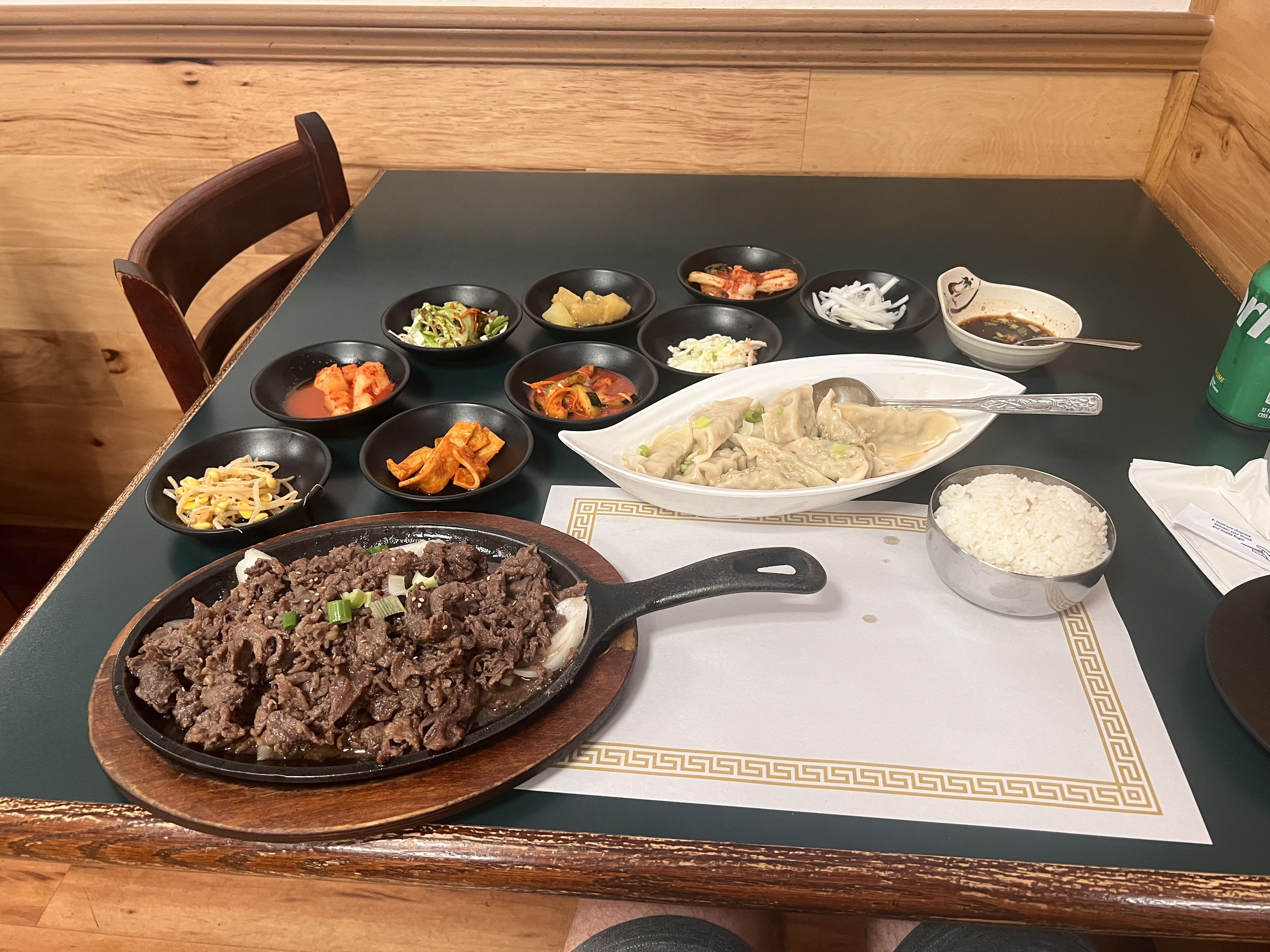
Best bites: I'm a bulgogi fan, and I've never had any this good.
- This isn't just marinated meat. Min-Ga serves its mains with free banchan, small side plates.
- I was given nine ranging from spicy cucumbers and coleslaw to bean sprouts and kimchi.
- The different flavors made for a fun and delicious experience, especially for a relative newbie to Korean food.
💭 Final thoughts: I ate maybe half of what I ordered, and spent much of my meal gawking at other tables' dishes.
- I'll definitely be back to order things I've never heard of.
📍 Stop by: 11:30am-9pm Sunday-Thursday, 11:30am-9:30pm Friday-Saturday. 800 Bethel Road. Menu.
🌎 Worthy of your time: This trip was part of our Eating Around the World series. Check out the other international foods we've mapped.
5. 👶 What we named our babies

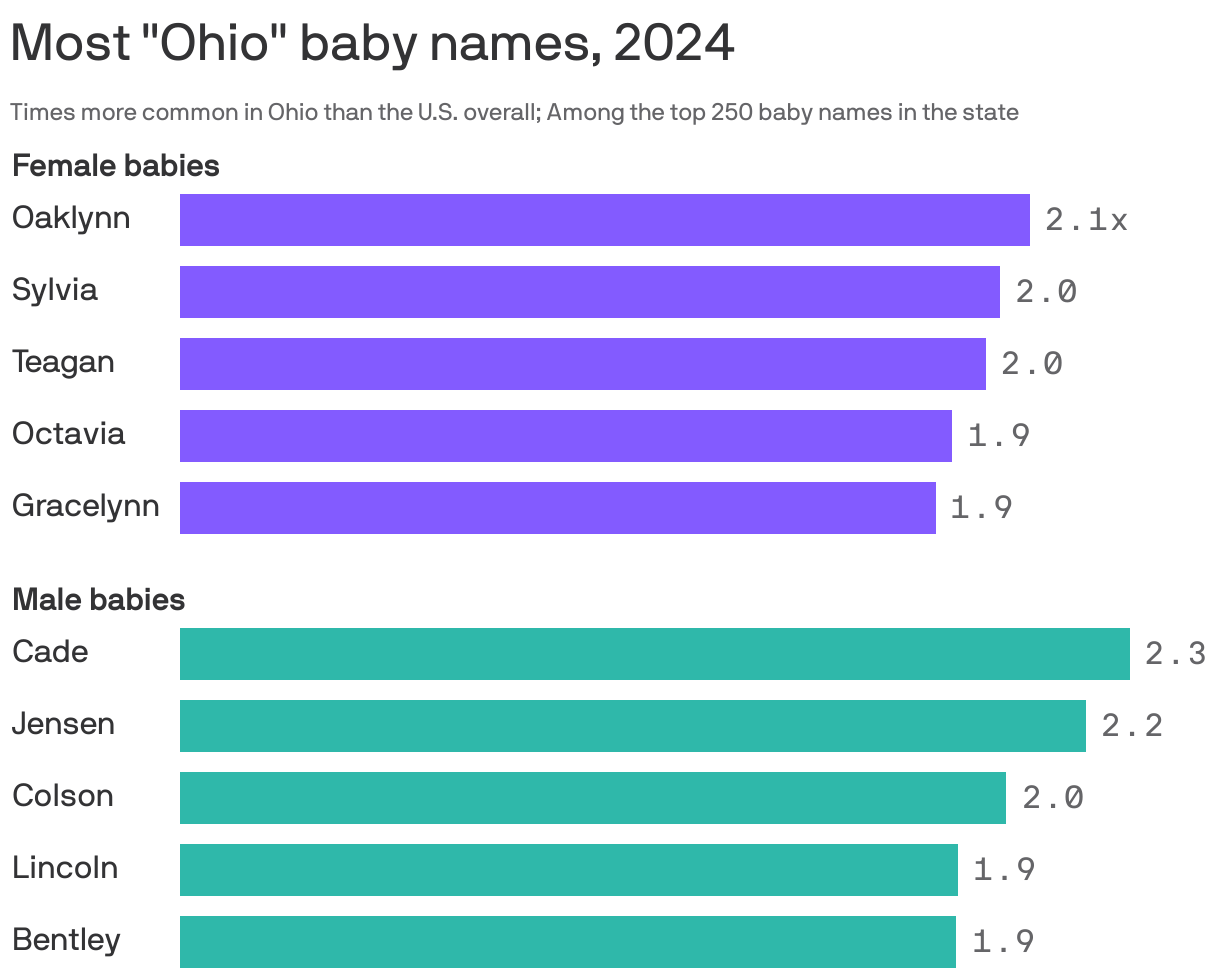
Oliver and Charlotte remained the most popular baby names in Ohio last year, per the latest Social Security Administration data.
By the numbers: Ohio parents are nothing if not consistent. It's the fourth straight year at No. 1 for Oliver (617 babies) and third straight for Charlotte (531).
The intrigue: Lainey barely cracked the top 100 for female names in 2022, then jumped to 25th in 2023 and is now in the top 10.
- Perhaps that's thanks to "country queen" Lainey Wilson.
Mr. and Ms. Irrelevant: Dylan and Juniper squeaked into the Ohio lists, each at No. 100.
Thanks to Tyler Buchanan for editing today's newsletter.
Our picks:
😎 Alissa is back from a week off!
🥩 Andrew is still thinking about that bulgogi.
🍔 Tyler is reading about the newest inductees into the White Castle "Craver Hall of Fame."
Sign up for Axios Columbus