Axios Closer

May 27, 2022
đź‘‹ Hi, it's Nathan leading you into the holiday weekend! It's a time for remembrance. Here's to a restful time for you and yours. We'll be back on Tuesday.
Today's newsletter, edited by Javier E. David, is 684 words, a 2½ -minute read.
đź”” The dashboard: The S&P 500 snapped a seven-week losing streak, ending over 2% higher in hopes of moderating inflation.
- Biggest gainer? Ulta Beauty (+12.5%), after the company reported better-than-expected earnings.
- Biggest decliner? Bristol Myers Squibb (-1.9%), relinquishing some of its recent gains after hitting a 52-week high Thursday.
1 big thing: Grills losing fuel
Illustration: Annelise Capossela/Axios
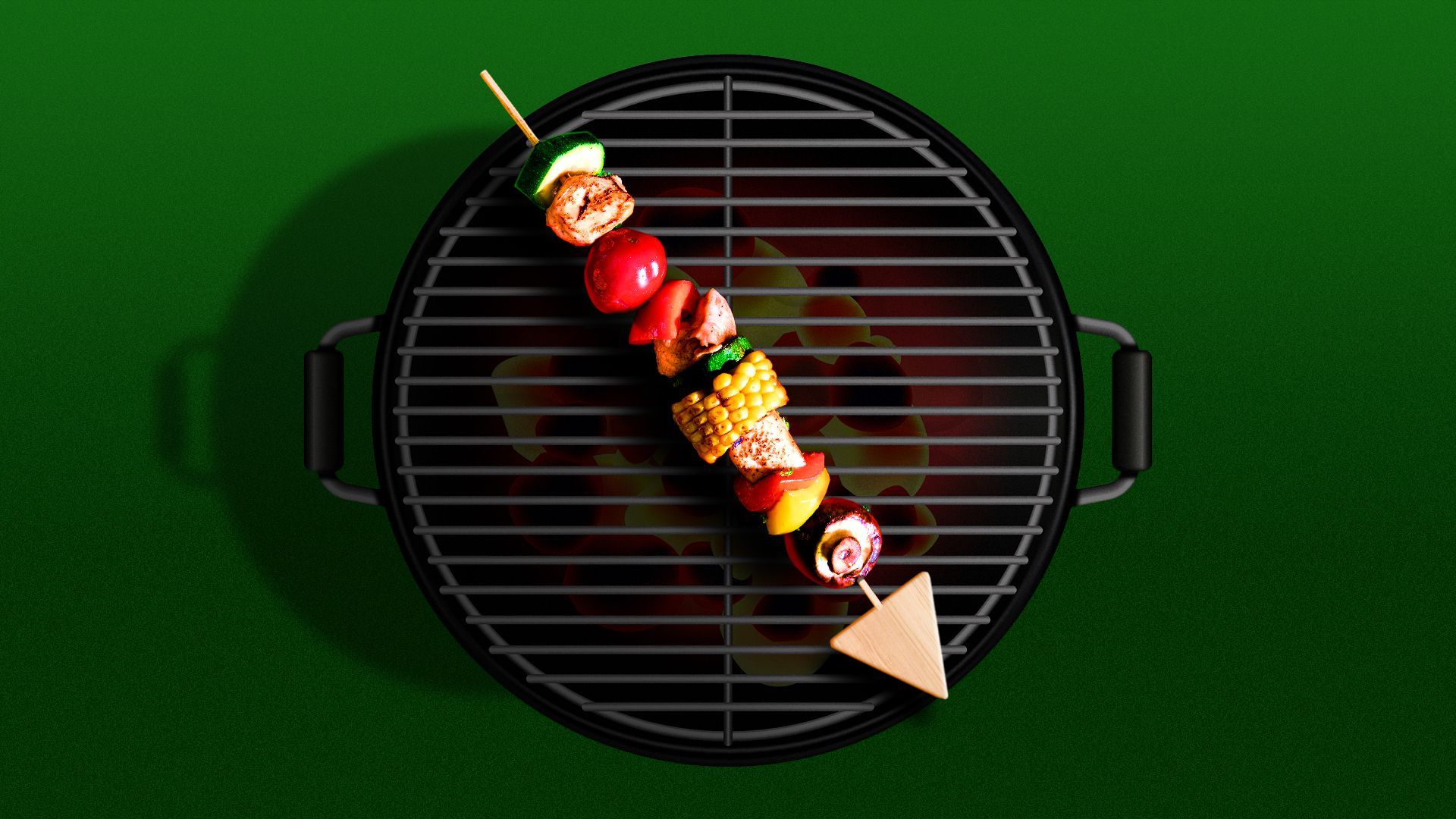
Grilling season won’t have quite as much sizzle this year.
What’s happening: With Memorial Day weekend upon us, sales of outdoor grills have fallen in 2022 as Americans divert spending elsewhere, or look to save.
- Grill masters Weber and Traeger reported first-quarter sales declines of 7% and 5%, respectively.
- “Since the beginning of March, the industry has seen a significant drop-off in year-over-year point-of-sale data with sharply reduced shopper traffic, both in retail stores and online,” Weber CEO Chris Scherzinger said on a conference call last week.
The big picture: The trend is another sign that consumer spending is shifting, as the economy rebalances after a heavy pandemic tilt toward durable goods.
- “A lot of demand was pulled forward over the last two years, especially among durable goods sales,” CFRA Research analyst Arun Sundaram tells Axios.
đź’ Nathan's thought bubble: After a couple of years of cooking their own food more often than usual, many Americans are ready to have someone else do the cooking for them.
- “A return to travel for many families” is among the key reasons for the decline in grill sales, Scherzinger said. “Right now, we are seeing a lot of pent-up demand for going out in travel and services."
Yes, but: A general slowdown in spending is also at play.
2. Charted: Consumers saving less


Americans are drawing down their savings to fuel spending in the face of decades-high inflation, Axios' Courtenay Brown writes.
- The personal saving rate — i.e., the share of people's income left over after spending money and paying taxes — fell to its lowest since the 2008 financial crisis.
Of note: Part of the drop came as Americans faced higher tax bills, reflecting a surge in capital gains from roaring markets.
- Axios' Neil Irwin crunched the numbers: If taxes paid stayed at the December level, the personal saving rate would be 6% (still down from that month's 8.7% rate).
The bottom line: Savings built during the pandemic are "getting eaten up by higher inflation and wages that aren't keeping up," Bleakley Advisory Group's Peter Boockvar wrote today.
4. Crime keeping NY away from the office

Illustration: Brendan Lynch/Axios
New York workers are dragging their feet in returning to the office, and crime is a reason why, Javier writes.
Driving the news: Office occupancy rates are languishing well below the national average, the New York Post reports. That's a drag on businesses that rely on foot traffic and subway ridership that's struggling to recover from the pandemic.
- Ex-investment banker and author Carol Roth told Axios recently that there's a ​"high degree of uncertainty for those businesses who depend on in-person foot traffic."
Why it matters: The Big Apple is in the throes of a crime wave that’s diminishing the appetite of workers who, while perhaps fatigued by remote work, are worried about an overall deterioration in public safety, delaying the city's revival.
Yes, but: Labor Department data shows a slow but steady decline in remote work, suggesting that more are opting for in-person work, even if it's hybrid.
5. Ear piercing mania
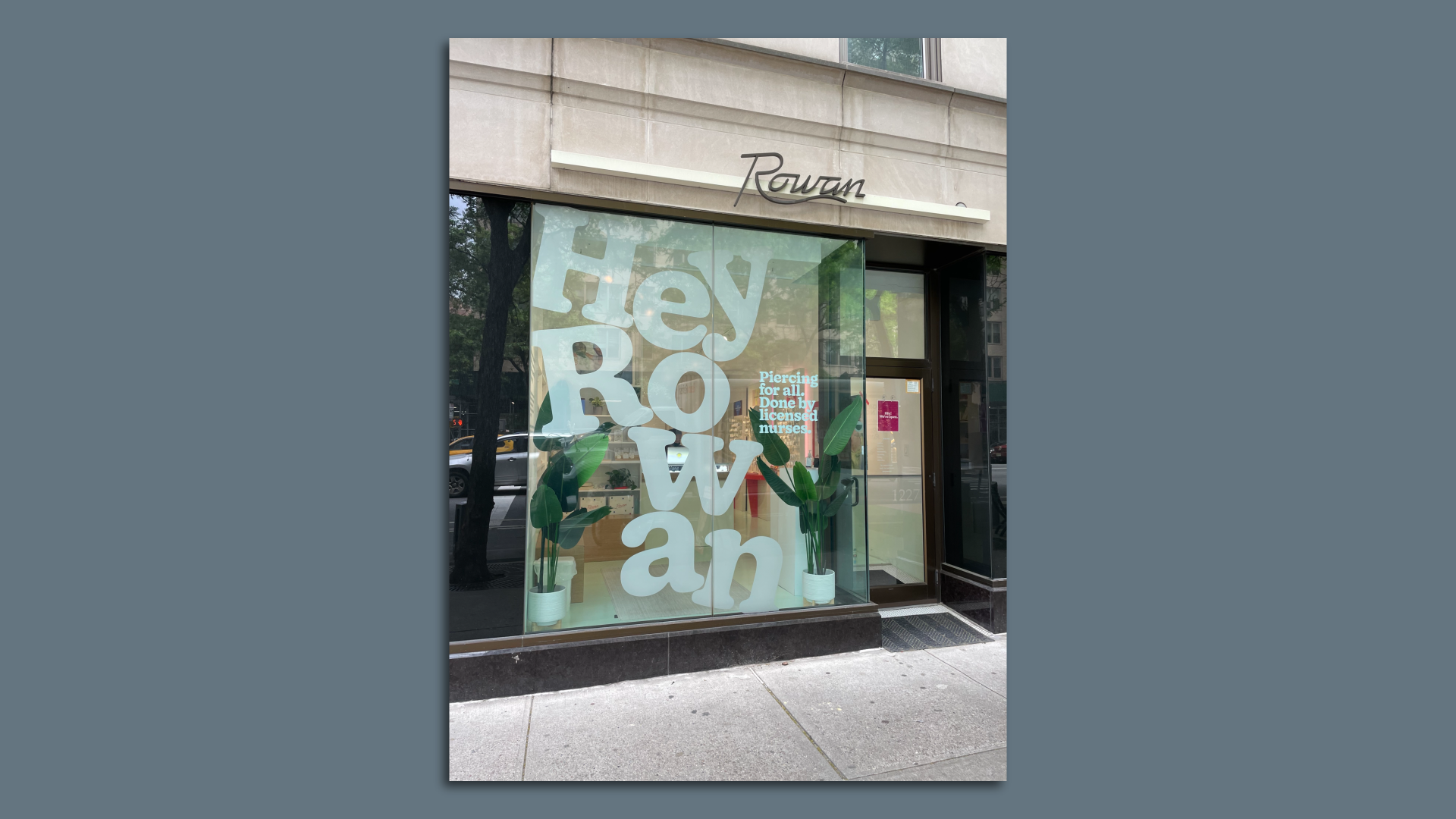
Rowan's new piercings-only store on Manhattan's Upper East Side. Photo: Jennifer A. Kingson
Ear piercing startups are popping up in pricey storefronts in New York City and elsewhere, while big retailers like Target, CVS and Walmart are also getting in on the act, Axios' Jennifer A. Kingson reports.
Why it matters: Retailers are capitalizing on ear piercing mania to attract younger shoppers, and to sell jewelry.
- Five Below, which sells items under $5 aimed at kids, is rolling out piercing services this year.
- Rowan — a startup and Target partner — sells subscription boxes with a new pair of designer earrings each month. It says most subscribers are 8–14 years old.
The big picture: Having your ears pierced is memorable — particularly the first time — and retailers want to capitalize on that.
6. What they're saying
"A falling savings rate tells me that consumers are dipping into savings to offset a subpar wage growth unable to keep up with inflation."— Jeffrey Roach, LPL Financial's chief economist
Thanks to Sheryl Miller for copy editing today's (and every day's) newsletter.
Sign up for Axios Closer

Catch up on the day's biggest business stories and look ahead to important trends. Led by Nathan Bomey.