Axios Closer

March 05, 2026

Thursday ✅.
Today's newsletter is 855 words, a 3-minute read.
📉 The dashboard: The S&P 500 closed down 0.6%.
🔥 Today's stock spotlight: Expedia (+13.7%) got a reprieve from AI disruption fears after a report said OpenAI is scaling back plans for direct shopping in ChatGPT.
1 big thing: Washington's chip grip
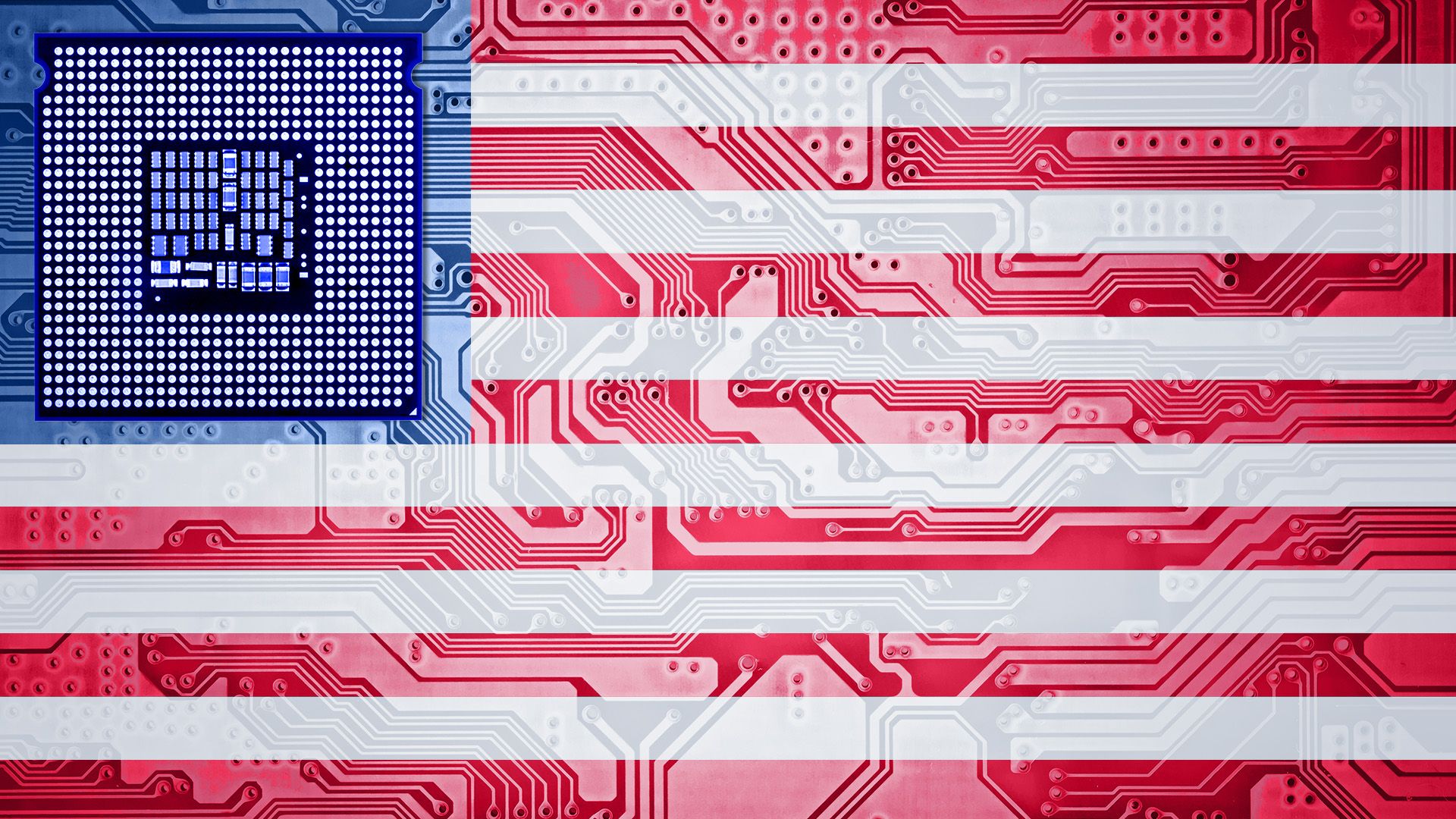
Selling chips overseas may soon come with more red tape.
- 🏛️ The Trump administration is reportedly weighing rules that would require foreign buyers to obtain licenses from the U.S. government to buy American AI chips.
Driving the news: The draft regulations would give the government sweeping control over AI chip exports abroad as companies like Nvidia and AMD seek to enter more markets, Bloomberg first reported.
Between the lines: An administration official characterized the draft from the Commerce Department as a "very, very early set of ideas" and said anything the administration does will be in line with the White House's AI action plan, Axios' Maria Curi writes.
- The draft, a sixth iteration, made it out of the Commerce Department, which requires a signature from Secretary Howard Lutnick, and was sent to the Office of Management and Budget last week, a source familiar told Maria.
The impact: Nvidia and AMD shares initially fell on the news but later regained ground.
- Nvidia closed up 0.2%, while AMD closed down 1.3%.
🔁 Behind the scenes: Chipmakers have been awaiting the Trump administration's approach to exports after the White House scrapped the Biden administration's "diffusion" rule.
- An industry source described the draft regulations as essentially "diffusion 2.0."
🗣️ What they're saying: "The Commerce Department is committed to promoting secure exports of the American tech stack," a Commerce Department spokesperson said in a statement, acknowledging "ongoing internal government discussions about formalizing that approach."
- The spokesperson added that "we will not" return to Biden's "burdensome, overreaching and disastrous" rule.
Representatives for Nvidia and AMD did not immediately respond to requests for comment.
2. Costco vows to share tariff refunds
Costco today said it would return any recovered tariff charges to members through lower prices and better values, even as CEO Ron Vachris warned that the "future impact of tariffs remains extremely fluid."
🛡️ Why it matters: The warehouse giant is positioning itself as a buffer between trade policy volatility and shoppers' wallets, Axios' Kelly Tyko writes.
- It's unclear whether the retailer will receive refunds tied to prior tariff payments, but Vachris pledged Costco would be transparent about how it passes along any savings if it does.
The big picture: Costco executives said the company didn't pass along the full cost of tariffs in many cases over the past year, absorbing some of the impact instead.
Flashback: Costco filed a lawsuit in November seeking to block the tariffs and secure refunds of duties it has already paid.
- The Supreme Court invalidated President Trump's tariffs last month, but the decision offered no road map for how refunds would unfold, leaving uncertainty around timing and process.
Yes, but: The day after the ruling, Trump said he would raise global tariffs to 15%, signaling trade tensions — and pricing pressure — may not be over.
- Vachris said Costco aims to shield shoppers where possible, noting, "We always want to be the first to lower prices and the last to raise them."
3. Other happenings
🥊 Anthropic was officially notified by the Defense Department that it will be labeled as a supply-chain risk, meaning it will be cut off from partners who work with the Pentagon. (CNBC)
👙 Victoria's Secret delivered one of its strongest quarters in years with fourth-quarter sales rising 8% to $2.27 billion. The company is betting that making lingerie "fun" again can reverse years of heavy discounting and sliding sales. (Axios)
💰 Berkshire Hathaway resumed stock buybacks for the first time since 2024, and new CEO Greg Abel bought $15 million in the stock himself, equal to his after-tax annual salary — a practice he pledged to do every year. (Reuters)
4. Trouble in the turnstiles
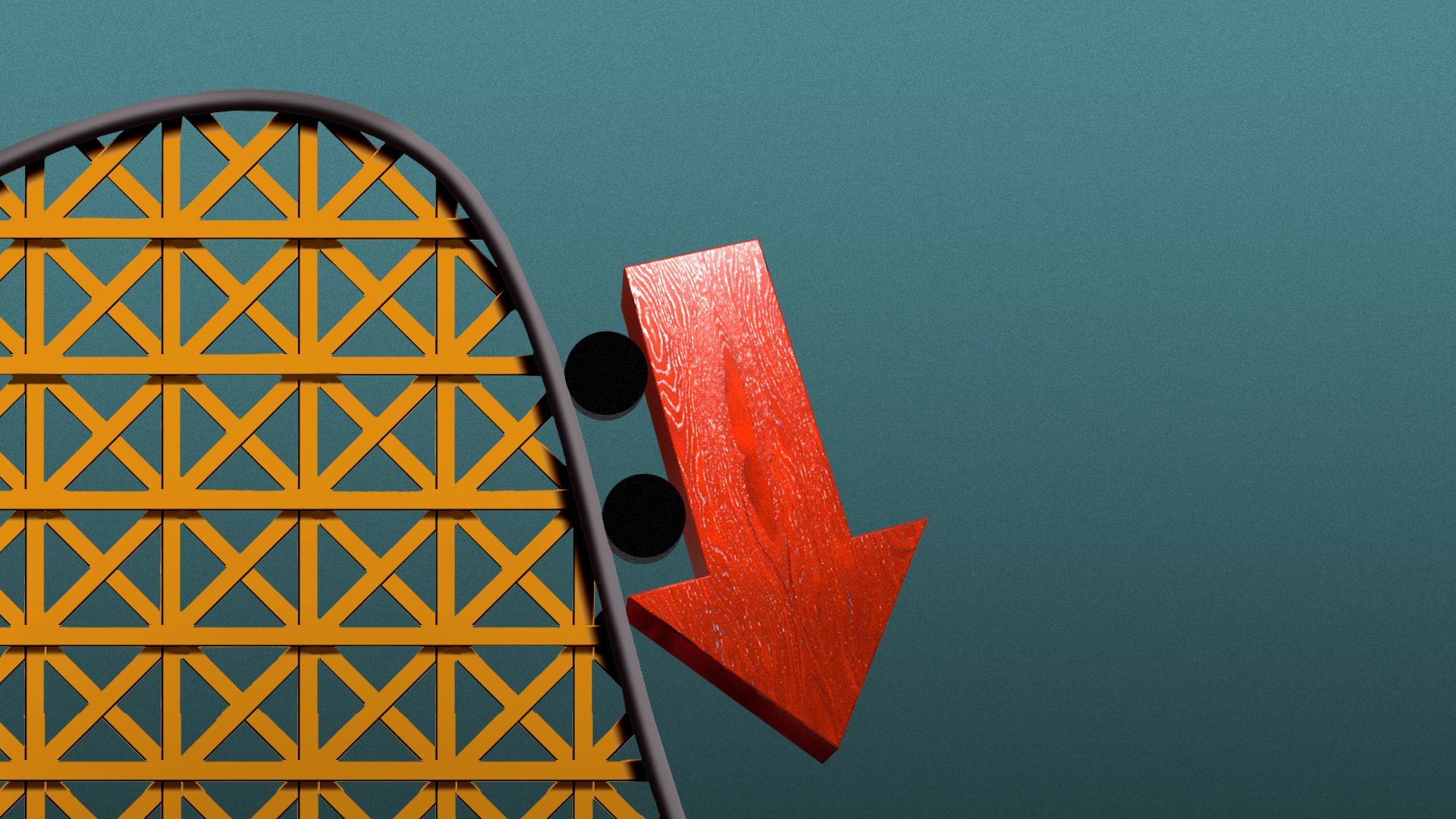
America's regional amusement parks aren't having much fun.
- Why it matters: Parks like Six Flags and SeaWorld have been staples in the entertainment landscape of middle America for decades — but they're falling behind just as their bigger destination rivals as thriving.
🎢 Driving the news: Six Flags Entertainment today said it will sell seven of its regional parks for $331 million to real estate investment trust EPR Properties.
The big picture: Interest in regional theme parks has been declining.
- Six Flags attendance fell 13% in the fourth quarter to 9.3 million, compared with a year earlier.
- Attendance at United Parks & Resorts — which includes SeaWorld and Busch Gardens — was down 2.5% in the fourth quarter to 4.8 million.
Between the lines: Regional parks aren't just competing with well-capitalized destination rivals like Disney, but also with entertainment options from streaming services, youth sports schedules, video games and general smartphone distraction.
🗓️ On this day in 1872, George Westinghouse secured a patent for his triple-valve air brake system for locomotives, a breakthrough that made trains far safer. The design introduced a fail-safe that reduced crashes, enabled longer and faster trains, and helped power the expansion of America's railroads.
Today's newsletter was edited by Pete Gannon and copy edited by Sheryl Miller.
- Did a friend forward this to you? Sign up here to get Axios Closer in your inbox.
Sign up for Axios Closer