Axios Closer

July 23, 2026

Thursday β .
Today's newsletter is 803 words, a 3-minute read.
π¨ Situational awareness: The Trump administration announced a new round of tariffs of up to 12.5% on 60 trading partners as a temporary tariff program nears expiration. Go deeper.
π The dashboard: The S&P 500 closed down 1.2%.
π₯ Today's stock spotlight: Lockheed Martin (+10.5%) sales rose 11% in the second quarter, and the company reported a record backlog of $230 billion, fueled by demand for missiles, precision-targeting systems and missile defense.
1 big thing: Oil slick


The S&P 500 just notched its worst day yet for July, as Big Tech stocks stumbled, bond yields rose and the global price for crude oil topped $100 a barrel.
- π Why it matters: Since hitting a high in early June, the stock benchmark has been unable to gain ground. It fell 1.2% today.
The intrigue: Corporate earnings, now underway, had promised to inspire investors, but their attention has been diverted by the worsening war with Iran and the related rise in oil prices.
- Investors are also increasingly worried by the massive sums tech companies are spending on AI.
π’οΈ The latest: Brent crude, the global oil benchmark, cleared $100 a barrel today after Iran-backed Houthi fighters said they had attacked two Saudi tankers in the Red Sea.
- And large-cap tech stocks stumbled, led by a drop of more than 14.5% in Tesla shares.
- Alphabet shares fell 7%, the most in over a year, after the Google parent raised its own forecast for capital spending to a higher-than-expected range of $195 billionβ$205 billion this year.
π° Stunning stat: It's not only Alphabet. Moody's expects "almost a trillion" in capital expenditures from just six hyperscalers next year.
Between the lines: Demand for capital from the giant tech companies may be part of the reason yields on U.S. government bonds have been on a seemingly relentless upswing lately.
- The yield on the 10-year Treasury note β which serves as an important component of borrowing costs throughout the economy β rose to 4.7% in intraday trading today, territory it hasn't sustainably seen since January 2025.
2. Musk on SpaceX + Tesla
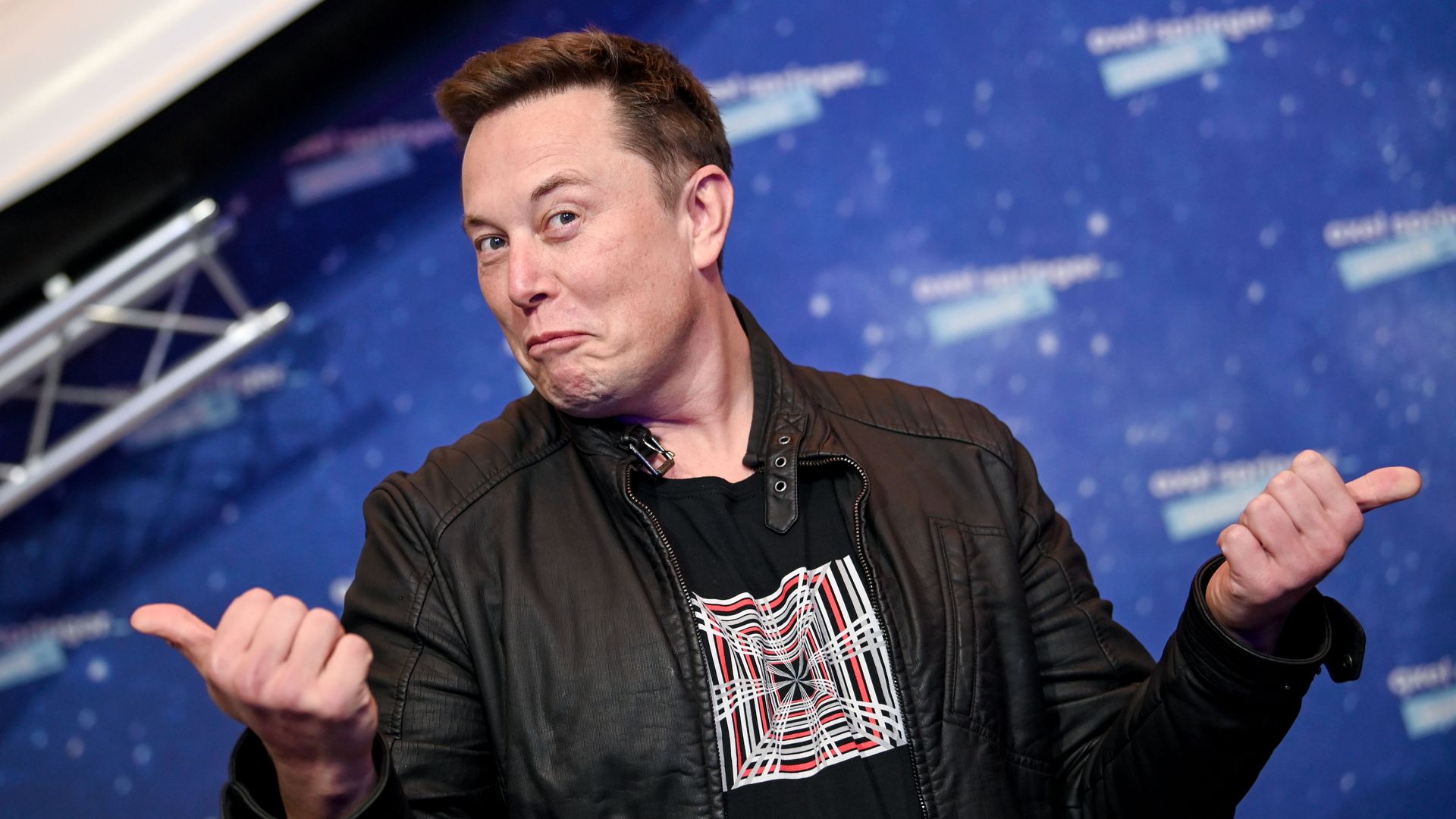
The first rule of a SpaceX-Tesla combination: Don't talk about a SpaceX-Tesla combination β at least on a Tesla earnings call.
Driving the news: Elon Musk was asked last night whether it would make strategic sense to combine his two public companies, given their existing collaboration and potential synergies, Axios' Pete Gannon writes.
- "So ... but obviously, we can't talk about combining companies and that kind of thing on an earnings call," Musk said. "It's got to be done with the appropriate process. And with that, I'll turn it over to Brandon, our general counsel."
π£οΈ Yes, but: The CEO returned to list all the ways in which SpaceX and Tesla overlap in terms of products, services, investments and supply chains.
- He cited their joint investment in Terafab, the giant AI chip manufacturing venture they plan to build together β eventually supplying AI chips to Tesla for robotaxis and Optimus humanoid robots, and to SpaceX for Starlink satellites and xAI infrastructure.
- He talked about Starlink's integration into Tesla cars, touting the satellite communications network as a crucial asset for robotaxi connectivity, but also as a perk for passengers in every personal vehicle.
- And he mentioned Grok, xAI's conversational AI assistant, being deployed in Teslas.
The bottom line: Musk wouldn't talk about whether a combination made sense. But then he kind of did.
3. Other happenings
π Intel shares were surging in extended trading after the company reported its fastest revenue growth rate for any quarter since 2011 and issued better-than-expected guidance. (CNBC)
πͺπΊ Google was hit with a $1 billion antitrust fine from the European Commission related to search. (Axios)
ποΈ Harley-Davidson raised its full-year, retail-sales outlook behind stronger-than-expected sales in North America in Q2, but motorcycle sales in Europe slipped. (WSJ)
4. Substack's human premium
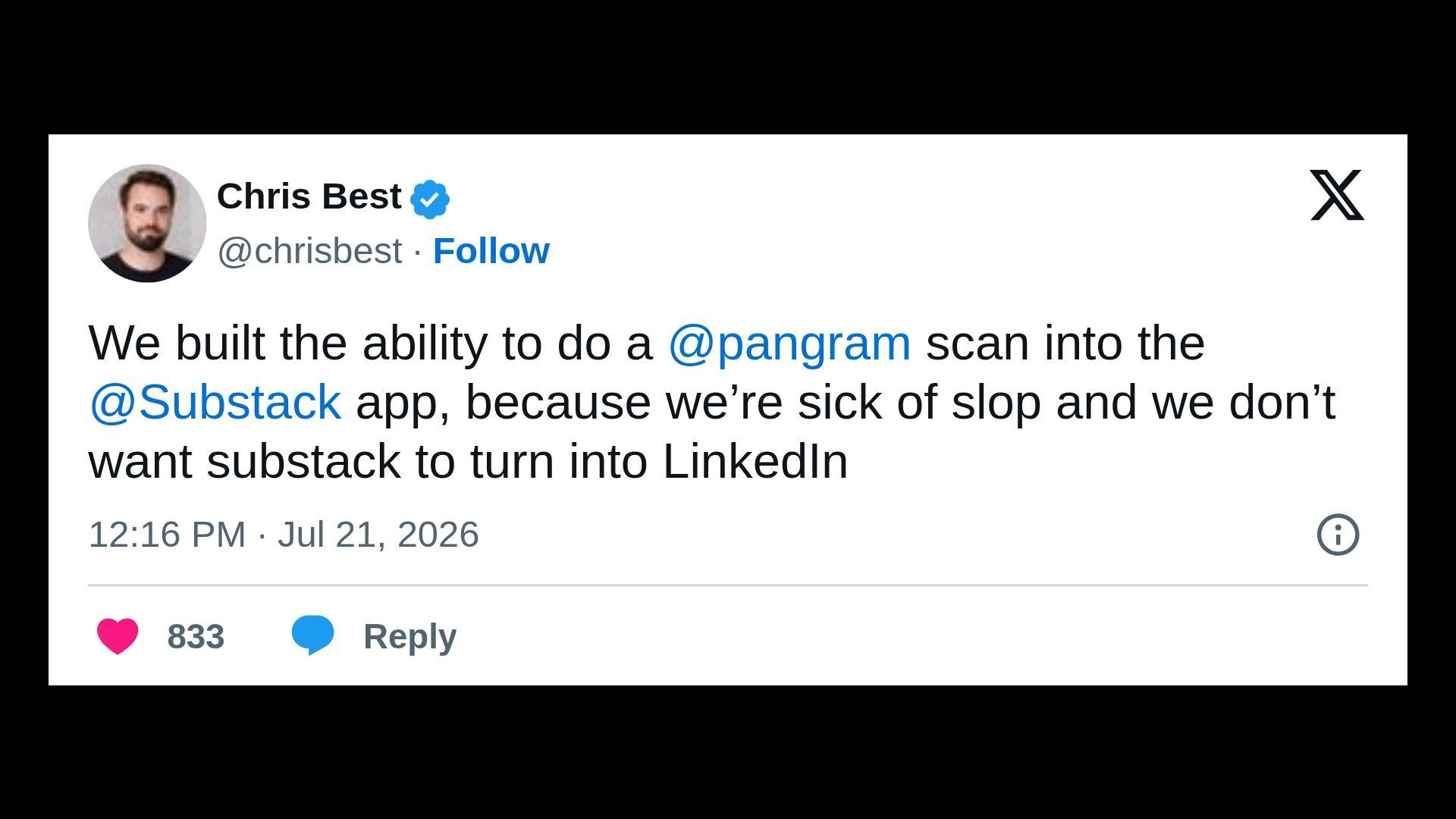
Substack is betting that subscribers, and the sponsors they attract, value authenticity and are willing to pay for content that is verifiably created by humans, Axios' Simon Hernandez-Arthur writes.
- π€ The media platform is partnering with Pangram, an AI-detection tool, to allow users to estimate how much text on the platform β including posts and comments β was made with AI.
What we're watching: Whether creators embrace Substack's push toward transparency around AI use and how rival platforms respond.
- Beehiiv allows AI use as long as it supports the creator's "original voice," is substantive, editorially relevant and "avoids manipulative practices."
Subscribe to Axios Communicators
ποΈ On this day in 1973, Nidec Corporation was founded in Kyoto, Japan. Odds are you've never heard of it β even though you probably use its products every day. The company's bread and butter is the tiny motors, fans and blowers humming inside everything from computers and vacuum cleaners to washing machines and refrigerators.
Today's newsletter was edited by Pete Gannon and copy edited by Sheryl Miller.
- Did a friend forward this to you? Sign up here to get Axios Closer in your inbox.
Sign up for Axios Closer