Axios AM

April 23, 2025

1 big thing: Trump's "empty shelves" warning

The CEOs of three of the nation's biggest retailers — Walmart, Target and Home Depot — privately warned President Trump in an Office meeting on Monday that his tariff and trade policy could disrupt supply chains, raise prices and empty shelves, Axios' Marc Caputo and Ben Berkowitz report.
Why it matters: The unvarnished scare seemed to work, officials tell us. For the first time, Trump seems more persuadable that his initial plan was too dangerous and disruptive. This slight shift helps explain why he vowed not to fire Fed chair Jay Powell, and publicly said tariffs on China will come down.
"The big-box CEOs flat out told him [Trump] the prices aren't going up, they're steady right now, but they will go up," an administration official familiar with the meeting told Axios. "And this wasn't about food. But he was told that shelves will be empty."
- Another official briefed on the meeting said the CEOs told Trump disruptions could become noticeable in two weeks.
- While that was happening, financial markets were slumping — stocks, bonds, the dollar — as investors panicked about Trump's latest threats to oust Fed chair Jerome Powell and step on the central bank's independence.
Then yesterday, Trump turned the dial down.
- His Treasury secretary, then his press secretary, then Trump himself all indicated optimism about a trade deal with China that would result in much lower tariffs than 145%.
- Treasury Secretary Scott Bessent told investors yesterday at a private investor summit in Washington that he expects "there will be a de-escalation" in the trade war with China in the "very near future," per CNBC.
Trump told reporters in the Oval Office that he had "no intention" of firing Powell, even though his top economic adviser said last week the White House was studying the details of doing exactly that.
- Markets, having gotten what they wanted, promptly rallied hard. Stocks soared and the dollar surged.
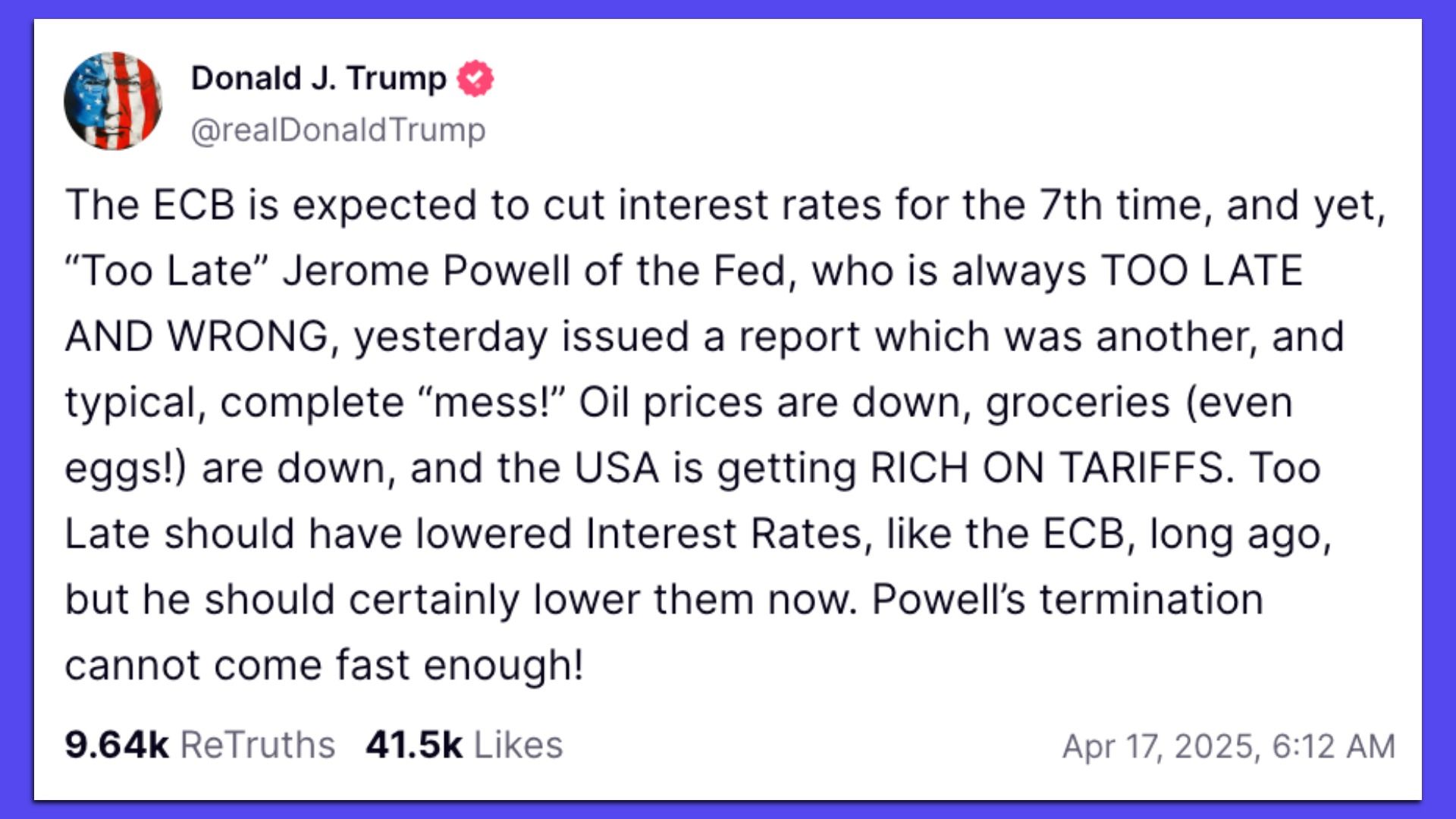
👀 The intrigue: White House officials bristle at the notion Trump has softened. One senior official said the president was just showing he's ready to make a deal and that he's "optimistic we can move forward."
- "This is what Donald Trump does. He leads with leverage," the official said. "He gets people to the table. China has expressed interest in negotiation. And the president has made clear that if they play ball, he'll play ball, too."
🎨 The big picture: For the first time since he entered political life, polls show most voters disapprove of Trump's handling of the economy.
- Inflation — which he claims is nonexistent — is still a little hot, growth is slowing, and manufacturers are losing confidence.
2. Advanced AI gets more unpredictable

3. 🪫 Elon's White House stepback
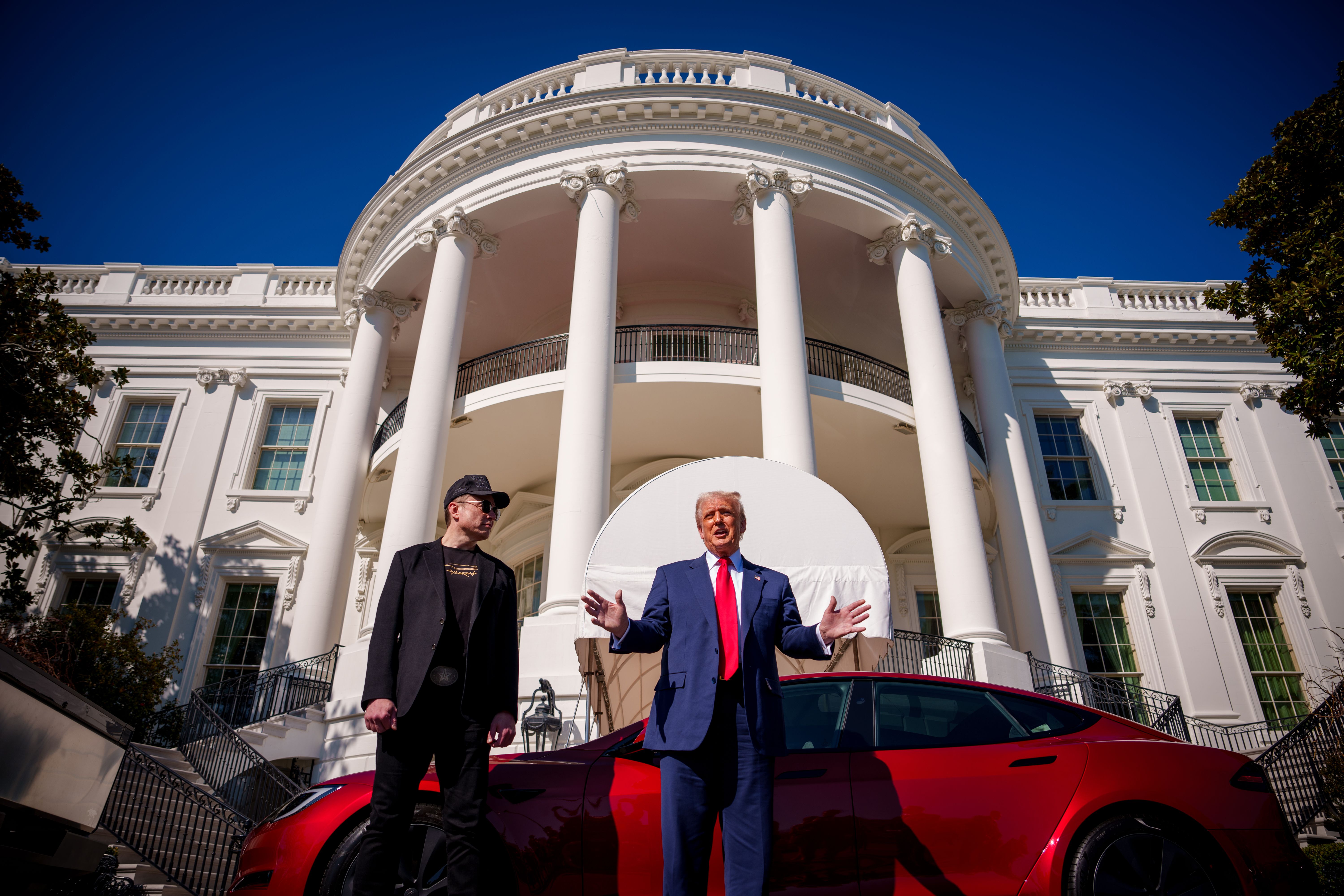
Discussing brutal Tesla results, Elon Musk said on an earnings call that he'll take a major step back from his work at the White House, likely starting in May, and devote "far more of my time to Tesla," Axios' Nathan Bomey writes.
- "I think I'll continue to spend a day or two per week on government matters for as long as the president would like me to do so and as long as it would be useful," Musk said.
Musk said his "time allocation to DOGE will drop significantly" likely starting in May, declaring the effort "mostly done."
- "I'll have to continue doing it for I think the remainder of the president's term just to make sure the waste and fraud that we stopped does not come roaring back, which it will do if it has the chance," Musk said.
🛣️ Between the lines: Tesla acknowledged for the first time that "political sentiment" may be undermining the company's financial performance and that tariffs are poised to do the same.
- The automaker fell well short of expectations on earnings and sales in the first quarter.
4. 🚛 Driverless trucks are here
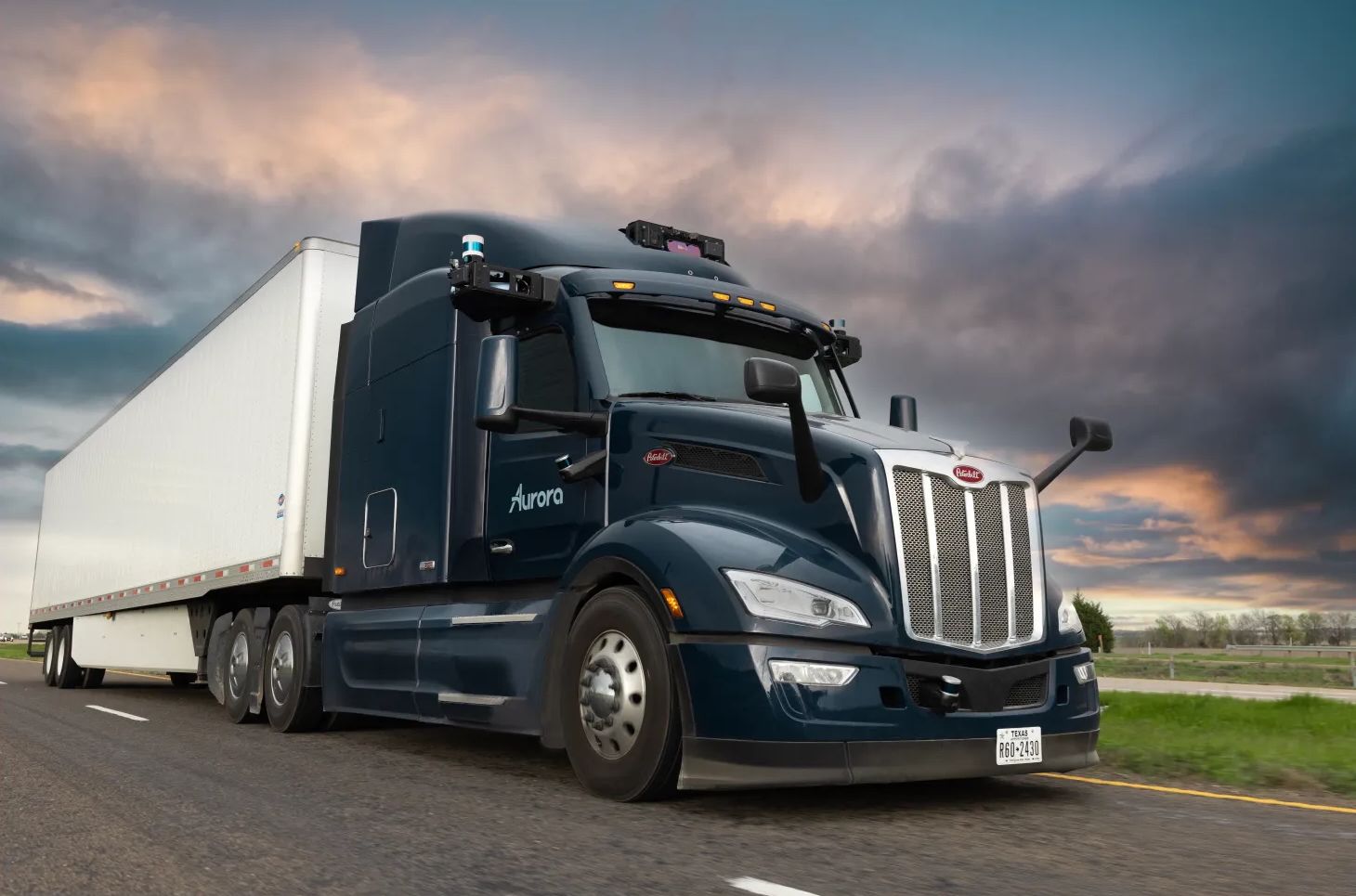
Drivers along a 200-mile stretch of I-45 between Dallas and Houston should get ready for something new: the semi-truck in the next lane might not have anyone in the driver's seat, Axios Future of Mobility author Joann Muller writes.
- Why it matters: Autonomous trucking companies have been testing their fleets on Texas highways for several years, but always with backup safety drivers in the cab.
Now one company, Aurora Innovation, says it's ready to go completely driverless, a key milestone that promises to reshape the trucking industry.
- The first autonomous truck is expected to roll down I-45 in the coming days, although Aurora officials declined to share any details.
Keep reading ... Get Axios Future of Mobility, out every Wednesday.
5. Trump's broadening deportation plans

6. 🇷🇺🇺🇦 Trump's "final offer" for peace deal

The U.S. expects a response from Ukraine today to a peace framework that includes U.S. recognition of Crimea as part of Russia, plus unofficial recognition of Russian control of nearly all areas occupied since the invasion, Axios' Barak Ravid reports.
- Why it matters: The one-page document the U.S. presented Ukrainian officials in Paris last week describes this as President Trump's "final offer." The White House insists it's ready to walk away if the parties don't make a deal soon.
Trump's proposal would require major concessions from Ukrainian President Volodymyr Zelensky, who previously ruled out accepting Russia's occupation of Crimea and parts of four regions in eastern Ukraine.
- While Russian President Vladimir Putin has reportedly offered to freeze the current front lines to reach a deal, he has previously rejected other elements of the U.S. deal, such as a European peacekeeping force.
- A source close to the Ukrainian government said Kyiv sees the proposal as highly biased towards Russia: "The proposal says very clearly what tangible gains Russia gets, but only vaguely and generally says what Ukraine is going to get."
🔮 What's next: Trump's envoy Steve Witkoff will travel to Moscow later this week for his fourth meeting with Putin.
- Full plan: What Russia and Ukraine get.
7. ⚠️ New data: Pollution hits home
8. 🪣 1 fun thing: Ice Bucket Challenge is back

Axios AM