Axios AM

December 02, 2025

🫶 It's Giving Tuesday! Smart Brevity™ count: 1,672 words ... 6½ mins. Thanks to Noah Bressner for orchestrating. Edited by Andrew Pantazi. Copy edited by Bill Kole.
1 big thing: Trump's purest form of power
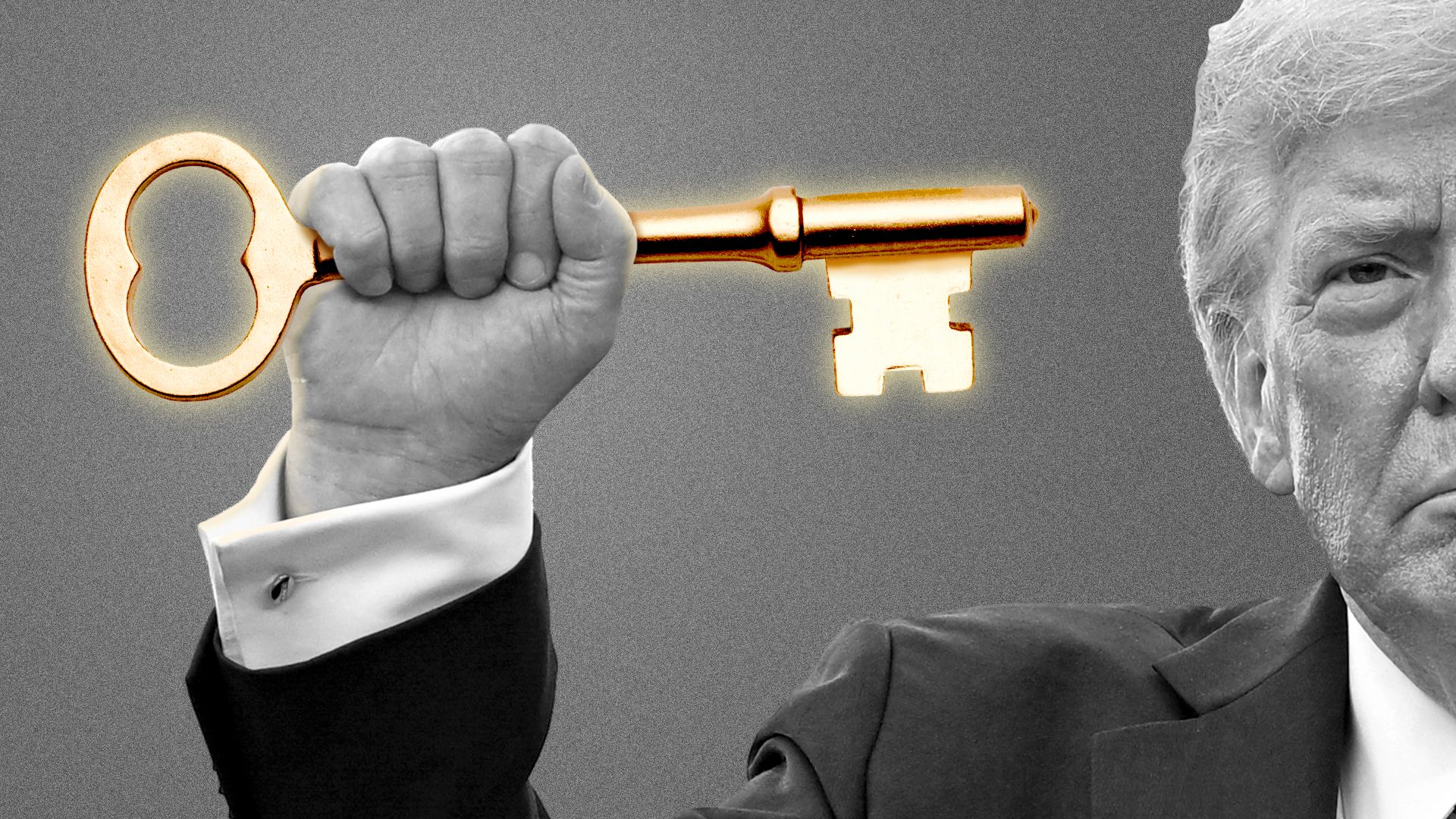
President Trump has embraced clemency as an expression of raw political power, seizing on a unique authority designed to go unchecked by Congress, the Constitution or the courts, Axios' Zachary Basu writes.
- Why it matters: No presidential power is more absolute than the pardon. And no president has wielded it more openly as a tool of personal and ideological loyalty than Donald Trump.
🔎 Zoom in: Trump's extraordinary move to pardon former Honduran President Juan Orlando Hernández — convicted last year of flooding the U.S. with tons of cocaine — is among the clearest examples yet.
- Prosecutors said Hernández, who led Honduras from 2014 to 2022, conspired with cartels to pave a "cocaine superhighway" into the U.S. — posing as an anti-drug conservative while running his country like a narco state.
- White House Press Secretary Karoline Leavitt called it a "clear Biden over-prosecution."
Between the lines: The Hernández pardon fits squarely within Trump's view of justice — serious criminal conduct matters far less than whether the defendant pledges loyalty, flatters the president or aligns with his ideological project.
- While the right-wing Hernández walks free from his 45-year prison sentence, left-wing Venezuelan dictator Nicolas Maduro — indicted on charges of narcoterrorism — faces the threat of a U.S. military invasion.
đź” Zoom out: The dynamic extends to Trump's domestic orbit, where MAGA-friendly financiers, operatives and celebrity allies have had their convictions wiped away with the stroke of Trump's pen.
- Changpeng Zhao ("CZ"): The billionaire founder of crypto giant Binance was pardoned despite pleading guilty in 2023 to money laundering violations. Trump — whose family's crypto venture has ties to Binance — later claimed he did not know CZ, saying on "60 Minutes": "I heard it was a Biden witch hunt."
- George Santos: The disgraced former GOP congressman — convicted of defrauding donors and lying to the House — had his seven-year sentence commuted by Trump after spending less than three months in prison.
- Paul Walczak: Trump pardoned the former nursing home executive, who pleaded guilty to tax crimes, less than three weeks after his mother attended a $1 million-per-person fundraising dinner at Mar-a-Lago. A White House official claimed Walczak was "targeted by the Biden administration over his family's conservative politics."
- Fake electors: Trump granted sweeping pardons to Rudy Giuliani, Mark Meadows and more than 70 other allies tied to efforts to overturn the 2020 election, including the "alternate electors" scheme.
2. 📝 Scoop: The letter behind Trump's pardon
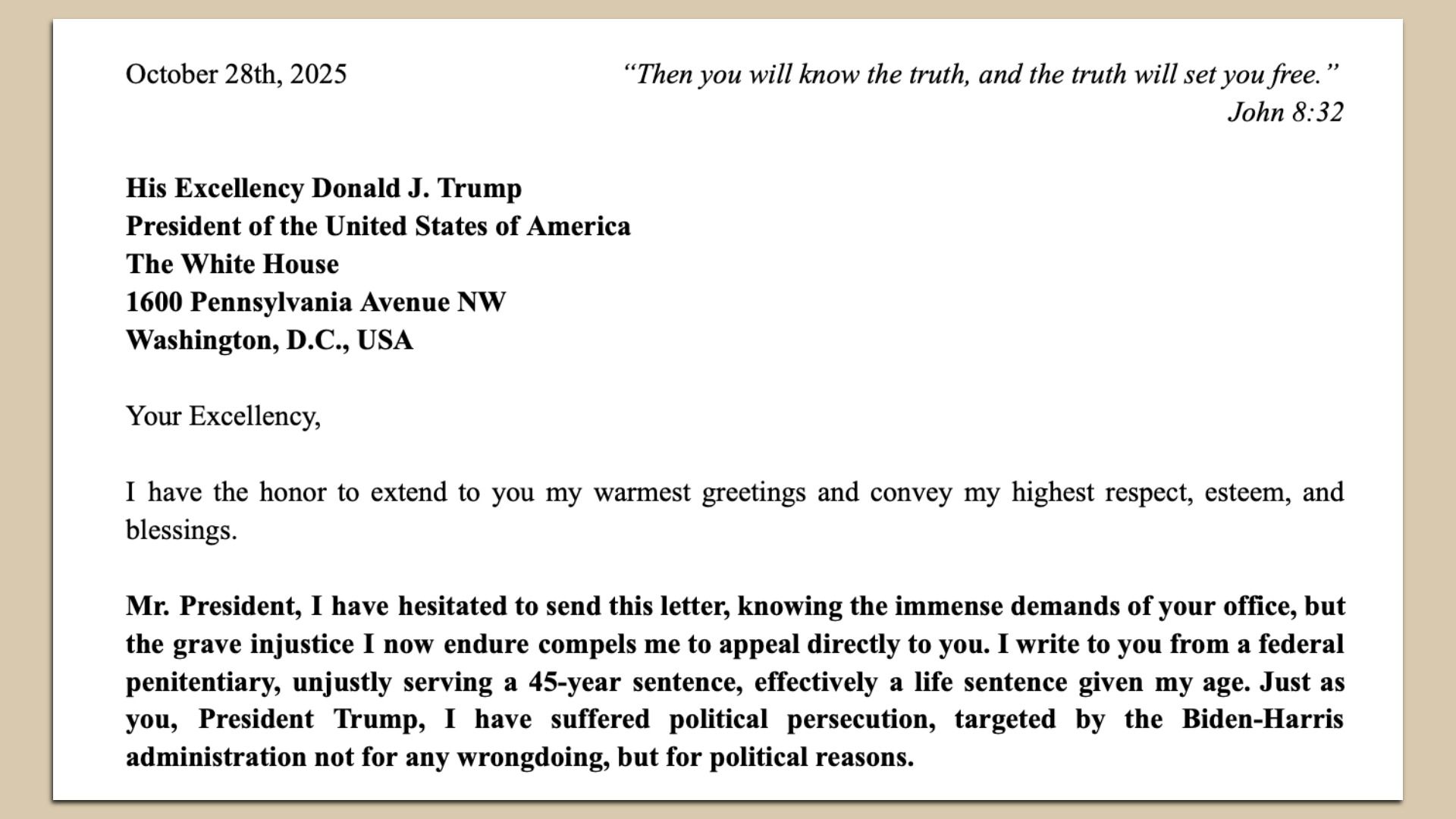
From a U.S. prison cell, Honduras' ex-president secured a likely pardon for drug trafficking thanks to a letter he penned praising President Trump — whom he called "Your Excellency" — and a persistent lobbying campaign by longtime Trump pal Roger Stone, Axios' Marc Caputo writes.
- Why it matters: The surprise announcement of Juan Orlando Hernandez's looming pardon is a window into the unorthodox, norm-shattering way Trump grants clemency.
Trump's announcement came just ahead of elections in Honduras, where the White House backed the right-wing National Party that Hernandez led as president from 2014 to 2022.
🔬 Zoom in: Shortly after Trump took office in January, Stone wrote three separate Substack posts calling for the pardon of Hernandez, who was indicted the day he left office in 2022 and extradited to the U.S. to face cocaine-trafficking and weapons charges.
- Stone cast Hernandez as a victim of leftist "lawfare" in Honduras and in President Biden's administration.
🥊 Stone told Caputo that on Friday, he reached out to Trump and reiterated those points. Stone claimed a pardon announcement would energize the right-wing party and called Trump's attention to Hernandez's four-page letter begging for clemency.
3. 📊 Mass killings hit lowest level in 19 years
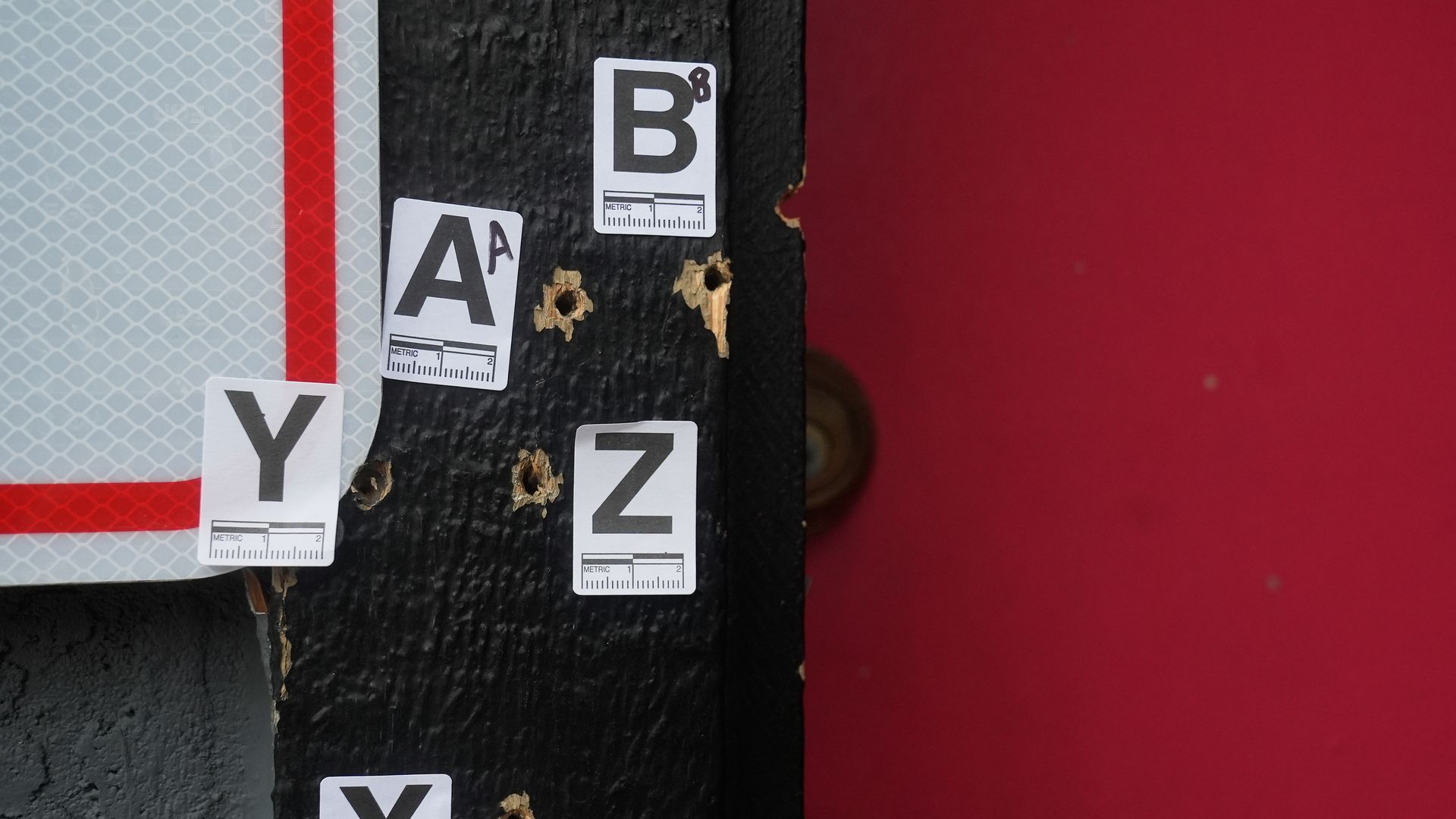
A shooting this past weekend at a children's birthday party in Northern California, which left four dead, was America's 17th mass killing this year — the lowest number since 2006, according to a database maintained by AP and USA Today in partnership with Northeastern University.
- Mass killings — incidents in which four or more people are killed in a 24-hour period, not including the killer — are down 24% this year compared to 2024, which was a 20% drop from 2023, AP reports.
- 82% of this year's mass killings involved a gun.
đź’ˇ Between the lines: Factors likely include an overall decline in homicide and violent crime rates, which peaked during COVID. Improvements in the immediate response to mass shootings and other mass casualty incidents could also be playing a part.
- 🎒 More states are funding school threat assessments, with 22 states mandating the practice in recent years, and that could be preventing some school shootings. None of this year's mass killings took place in schools. Only one mass killing at a school was recorded in 2024.
Reality check: Experts warn the drop doesn't necessarily mean safer days are here to stay.
- The Gun Violence Archive says there have been 381 mass shootings so far this year — distinct from mass killings.
- James Alan Fox, a criminologist at Northeastern University who manages the database, said the current drop is likely what statisticians call a "regression to the mean" — a return to more average crime levels after an unusual spike in mass killings in 2018 and 2019.
James Densley, chair of criminology at Metro State University in Minnesota, warned that a small change in a year's data "could look like a wave or a collapse ... 2025 looks really good in historical context."
4. ₿ Charted: Bitcoin's brutal stretch


Bitcoin is down nearly 32% from its all-time high of $126,080 in October, Axios' Pete Gannon and Madison Mills write.
- Why it matters: Crypto is proving to be the ultimate risk-on asset — a term for assets that attract investment when confidence is high. It has fallen hard at any sign of market trouble.
⚡ Bitcoin briefly dipped below $85,000 in yesterday's crypto rout. Early today, it was trading around $86,650.
5. đź‘€ White House: Admiral, not Hegseth, directed hit

Officials in Congress and the Pentagon "are increasingly concerned that the Trump administration intends to scapegoat the military officer" who directed a follow-up strike on two survivors of an attack on a suspected drug smuggling boat in the Caribbean, The Washington Post's Noah Robertson and Tara Copp report.
- Why it matters: Lawmakers have vowed to investigate whether a second strike during the Sept. 2 attack — the first of approximately 20 such strikes so far — could constitute a war crime.
🏛️ Admiral Frank "Mitch" Bradley, who White House Press Secretary Karoline Leavitt said yesterday ordered the second strike, is expected to provide a classified briefing Thursday to key lawmakers overseeing the military.
- The Washington Post reported last week that Secretary of Defense Pete Hegseth had given a spoken directive "to kill everybody" and that the commander "ordered a second strike to comply with Hegseth's instructions."
The story was murky about the timing of Hegseth's order. Five U.S. officials told the N.Y. Times that "Hegseth's directive did not specifically address what should happen if a first missile turned out not to fully accomplish all of those things. And, the officials said, his order was not a response to surveillance footage showing that at least two people on the boat survived the first blast."
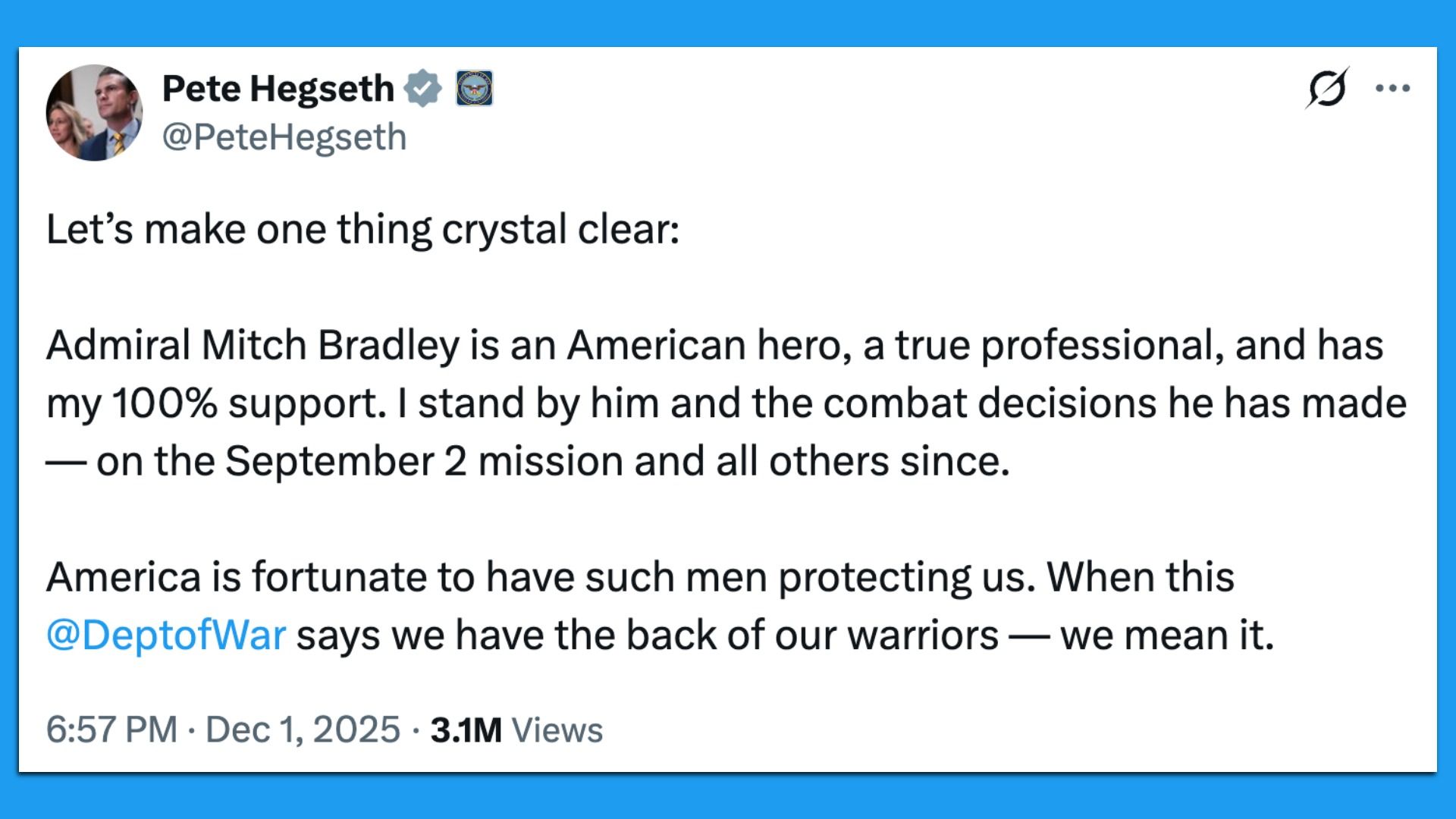
Leavitt said yesterday that Bradley, the officer who oversaw the attack, "worked well within his authority and the law, directing the engagement to ensure the boat was destroyed."
- Bradley is a Navy SEAL officer who is the commander of the U.S. Special Forces Command.
Keep reading (gift link).
6. đź‘€ Israel's strikes in Syria alarm Trump
The Trump administration is concerned that Israel's repeated strikes inside Syria — including on Friday — risk destabilizing the country and undermining hopes of an Israel–Syria security agreement, two senior U.S. officials tell Axios' Barak Ravid.
- "We are trying to tell Bibi he has to stop this because if it continues, he will self-destruct," one of those officials said, referring to Prime Minister Benjamin Netanyahu.
🎨 The big picture: Supporting President Ahmed al-Sharaa's efforts to stabilize Syria and encouraging him to engage in a peace process with Israel are key elements of the Trump administration's Middle East strategy.
- President Trump and his team have repeatedly sided with Syria's government in disputes with Israel — the only country in the region for which that's the case.
7. 🗳️ Driving the day: Unlikely House battleground
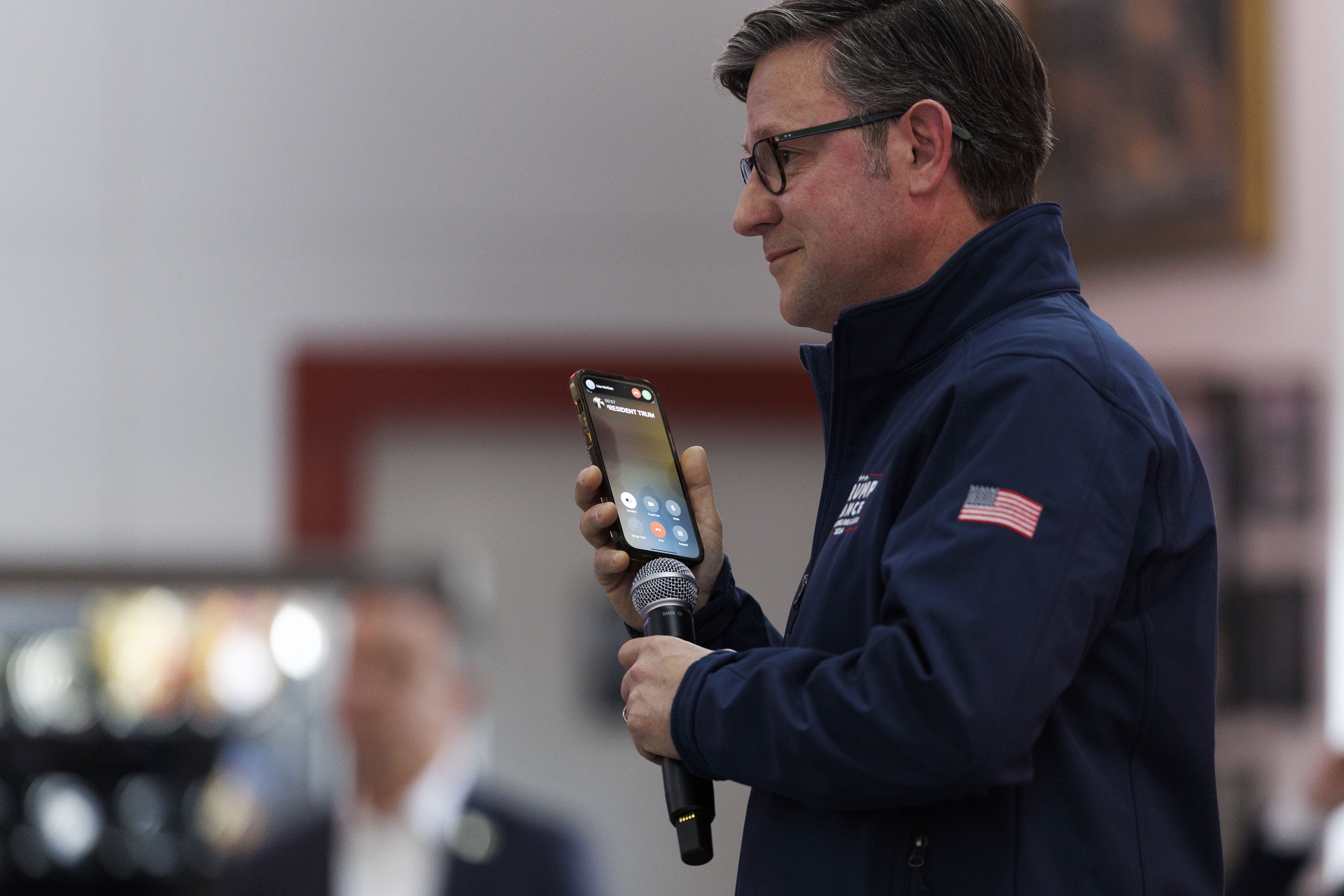
Tennessee's 7th Congressional District was designed just a few years ago to hand Republicans an easy win — but this year it has become an unlikely battleground with a credible Democratic candidate vying for an upset, Axios Nashville's Adam Tamburin writes.
- Why it matters: Republicans and Democrats alike are looking at today's special election for the seat as a critical bellwether heading into the 2026 midterms.
Trump won the district by 22 points in 2024. But the race has gotten surprisingly tight, drawing national attention and a flurry of last-minute campaigning.
- The latest Emerson College poll shows Republican Matt Van Epps leading Democrat Aftyn Behn by only 2 points, within the margin of error.
đź‘“ Between the lines: Democrats are emboldened by a wave of big wins in November that saw liberals of all stripes outperforming expectations across the country.
- Behn's campaign message has been laser-focused on affordability.
Guide to tonight's tally ... Share this story ... Get Axios Local: Newsletters in 34 cities.
8. âš˝ 1 for the road: U.S. Soccer's big plans

The U.S. Soccer Federation is undertaking ambitious and sprawling projects around next year's World Cup to boost the game from the youth ranks to the pros, AP reports.
- Why it matters: The organization's ultimate aim is to spread the sport at the youth level through school and community programs, expand fundraising efforts and position the U.S. professional leagues and national teams for future success.
đź§ Between the lines: The growth potential in the U.S. is enormous. This structural shift could reshape the talent pipeline.
Soccer Forward, the federation's legacy project announced last year, has begun selling schools on expanded soccer programs and bringing mini-fields into communities where the sport doesn't have a big footprint.
- The last time the U.S. hosted the World Cup in 1994, the U.S. Soccer Federation built on the financial infusion and the public's excitement to help launch Major League Soccer two years later.
📬 Thanks for reading! Please invite your friends to join AM.
Sign up for Axios AM