Axios AM

July 27, 2026

☕ Hello, Monday! Smart Brevity™ count: 1,977 words ... 7½ mins. Thanks to Erica Pandey for orchestrating. Edited by Bill Kole and Eileen Drage O'Reilly.
🇺🇦 President Trump will meet Ukrainian President Volodymyr Zelensky at the White House tomorrow, an administration official confirms to Axios. Zelensky will be in Washington for the funeral of Sen. Lindsey Graham (R-S.C.), one of Ukraine's loudest advocates in Congress.
- Laura Loomer, a far-right influencer and Trump confidant, met Zelensky in Kyiv last week after years of opposing U.S. support for Ukraine. She told The Wall Street Journal she now believes backing Ukraine is "America First."
- "It's looking good for Ukraine, right?" Loomer told AP. "Going into this meeting ... at the Oval Office is looking pretty good."
1 big thing: 2028 Dem cheat sheet
What Axios' Alex Thompson is hearing from Democratic insiders about the party's most likely 2028 Democratic nominees, as told to Jim VandeHei for his weekly Axios C-Suite newsletter:
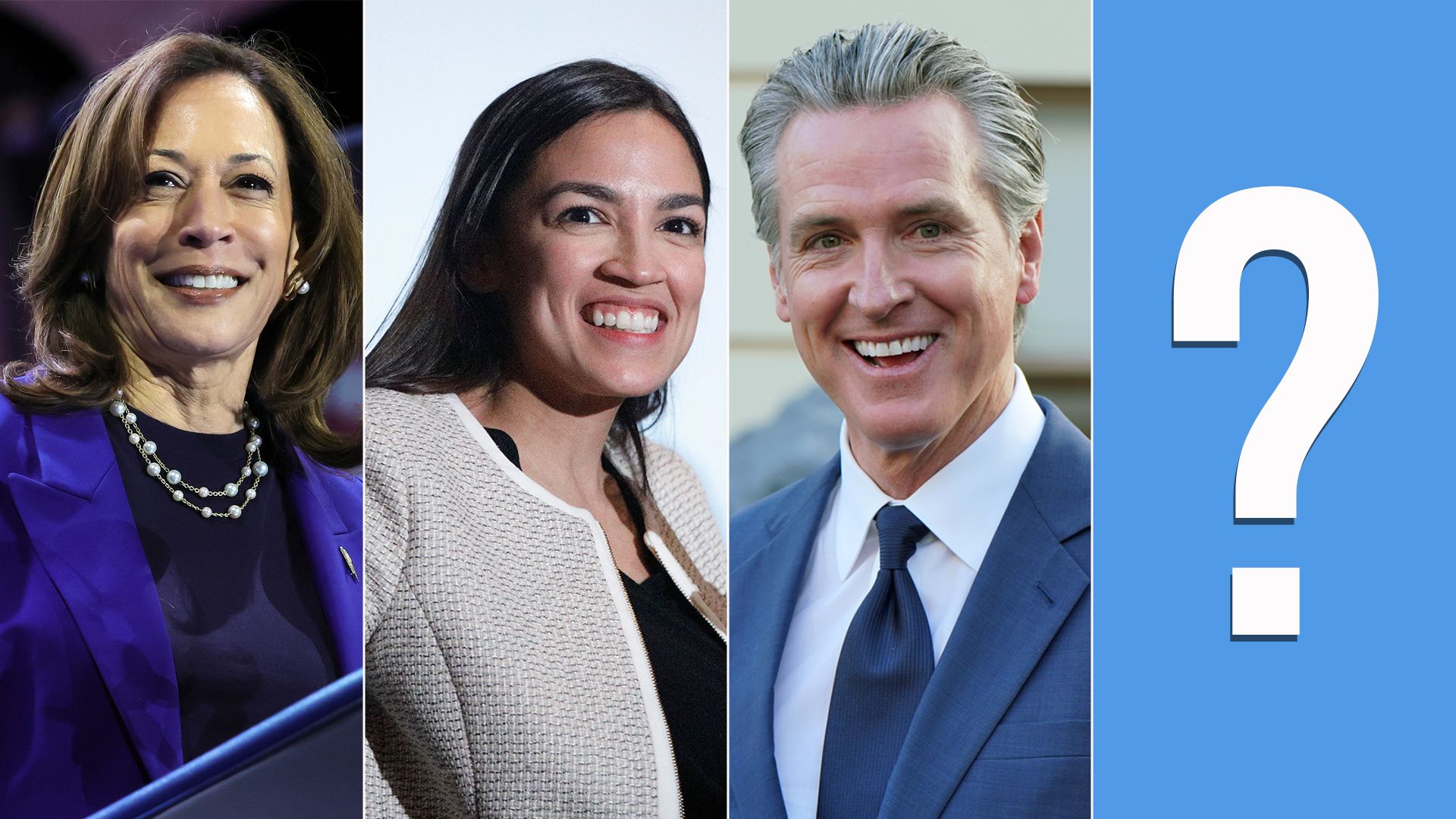
- Kamala Harris. She's far ahead of every other contender with Black voters, still the most important voting bloc in a Democratic primary. Her allies argue that no one else is as prepared for a national campaign. She was a better candidate in 2024 than in 2020 and is working hard to be a better, more authentic, less cautious candidate in 2028. Harris is likely a beneficiary of Democrats' preliminary choice Friday of South Carolina, instead of Nevada, for the first Democratic presidential primary of 2028.
- AOC. No one else can plausibly claim to be Bernie Sanders' rightful heir, and she channels where the energy of the party is right now. If Bernie endorses her on Day 1, she will raise $100 million without talking to a single donor. The question isn't whether she'd be a top contender, but rather whether she decides to run for Senate instead.
- Gavin Newsom. He's the best political athlete in the field who can stand apart in the debates. He can convincingly argue that he's done more than any other Democrat to push back against President Trump at a time when Democrats feel powerless. With his longtime connections in Silicon Valley and non-doomer views, he'll also have access to deep pockets — but that California baggage is heavy.
- TBD center-left candidate. Big business, the party establishment and some voters are desperate for a more moderate choice. They'll have many options, including Pennsylvania Gov. Josh Shapiro, Sen. Mark Kelly of Arizona, Rahm Emanuel, Maryland Gov. Wes Moore and Kentucky Gov. Andy Beshear. At a time of populist anger, it's unclear how big this lane is — and if it's big enough for more than one candidate. Right now, it feels like an establishment fantasy.
🗓️ The DNC's Rules and Bylaws Committee preliminarily set these six 2028 nominating contests before Super Tuesday: South Carolina, Jan. 22 ... Nevada, Feb. 1 ... New Hampshire, Feb. 8 ... New Mexico, Feb. 15 ... Michigan, Feb. 22 ... Virginia, Feb. 29. Read the announcement.
📈 If you're a CEO or on a CEO's team: Ask to join Jim's new weekly Axios C-Suite newsletter.
2. 🏛️ GOP obtains 1,100+-page Fauci diary
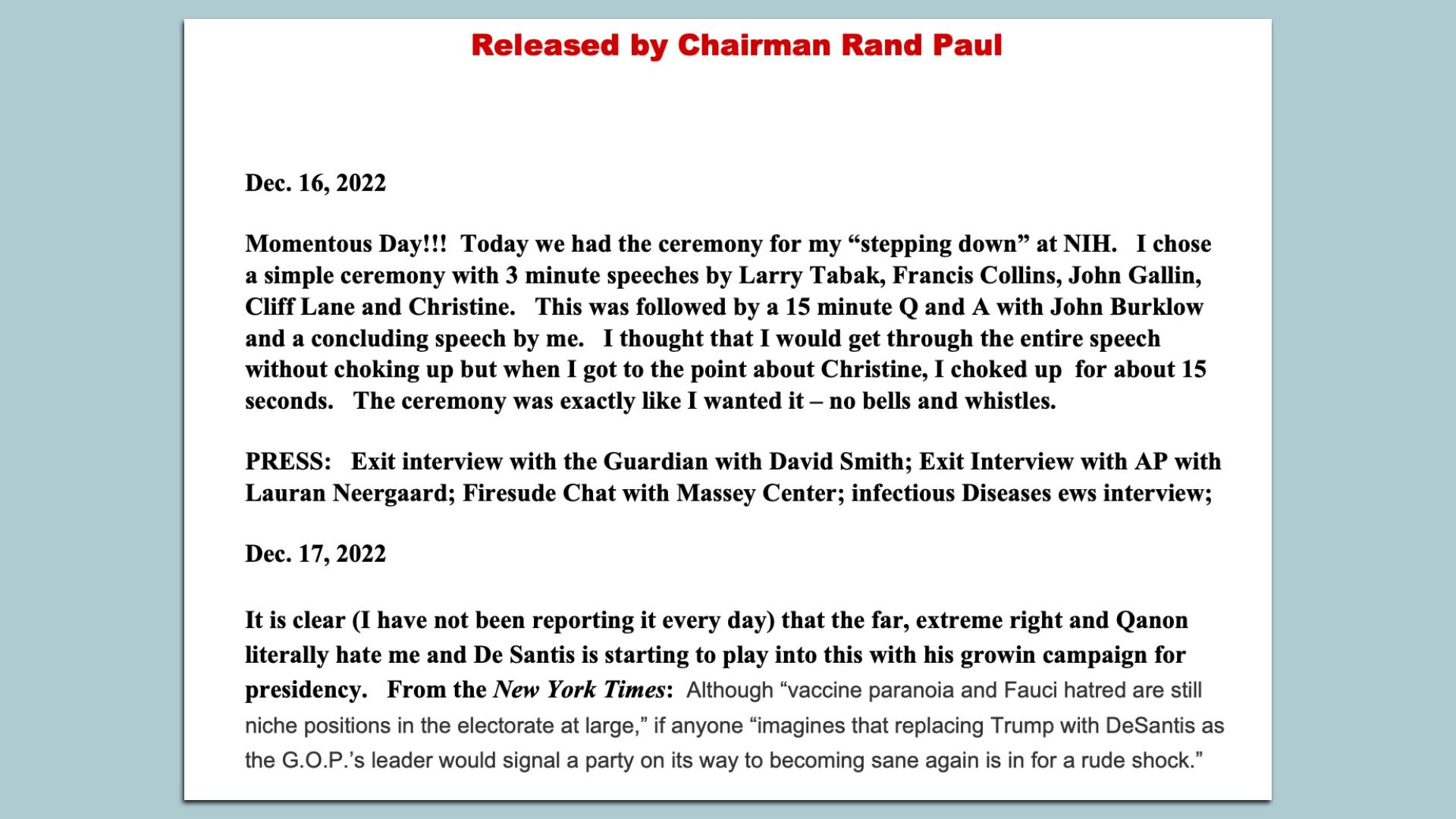
Sen. Rand Paul (R-Ky.), chair of the Senate Homeland Security Committee, obtained and posted more than 1,100 pages of diary-style contemporaneous notes by Dr. Anthony Fauci, a top government official during COVID who has become a villain of the right.
- "VERY INTENSE TIMES," Fauci wrote on March 7, 2020 — four days before the World Health Organization declared a global pandemic.
Fauci, 85, who retired in 2022 from his 38-year post as the high-profile director of the National Institute of Allergy and Infectious Diseases at the National Institutes of Health, will testify before the committee on Wednesday.
- Previewing the hearing's tone, the senator branded the entries, which include clippings and accounts of Fauci's many media appearances, "Tony's Diary: What He Wrote Privately vs. What He Said Publicly."
Paul, long critical of Fauci's statements about the origins of the virus, wrote in posting the document: "Fauci's personal diary reveals that as early as January 31, 2020, he was told by top virologists that the virus's furin cleavage site raised real doubts about a natural origin, with about half the scientists on that initial call believing it looked 'constructed.' Despite this early private uncertainty, Fauci spent the following years publicly and confidently dismissing the lab leak theory while insisting the science was settled."
- Fauci wrote on Jan. 26, 2020: "GAME ON!!! Things are changing rapidly. ... Remember, early on the Chinese were saying that there is no human to human transmission and all the original 27 cases were from the market. Now we know the market was not the source, it was the amplifier."
🥊 A source close to Dr. Fauci pointed out to me that he used similar language with USA Today's editorial board in February 2020:
"Almost certainly, somewhere, somehow a bat infected an intermediate host who infected a human. What epidemiologists feel is that the market was an amplifier of something that was already going on. So it didn't necessarily start in the market, but when people congregated in the market they got infected from each other as opposed to all of them getting infected from whatever animal there was in the market."
3. 🪖 Behind the scenes: Iran strikes paused

The top U.S. military commander in the Middle East, Adm. Brad Cooper, recommended stopping the bombing campaign around the Strait of Hormuz because it's reached the limit of its effectiveness, Axios' Barak Ravid reports.
- Why it matters: That advice from Cooper, the commander of U.S. Central Command (CENTCOM), together with other advisers, influenced President Trump's decision Friday to pause U.S. strikes against Iran, sources said.
The recommendation was an acknowledgement by both military and civilian advisers to the president that there are limits to what can be accomplished through military action, and specifically an air power campaign.
🛢️ Yesterday, Trump posted a string of AI-generated images showing fictional encounters with Iran, including a "STRIKE ON KHARG," Iran's oil hub in the Persian Gulf.
- Kharg Island — which sits some 15 miles off Iran's coast and handles 90% of its crude exports — has been a focus of the president throughout the war.
A strike on Kharg's oil infrastructure would ripple through global energy markets.
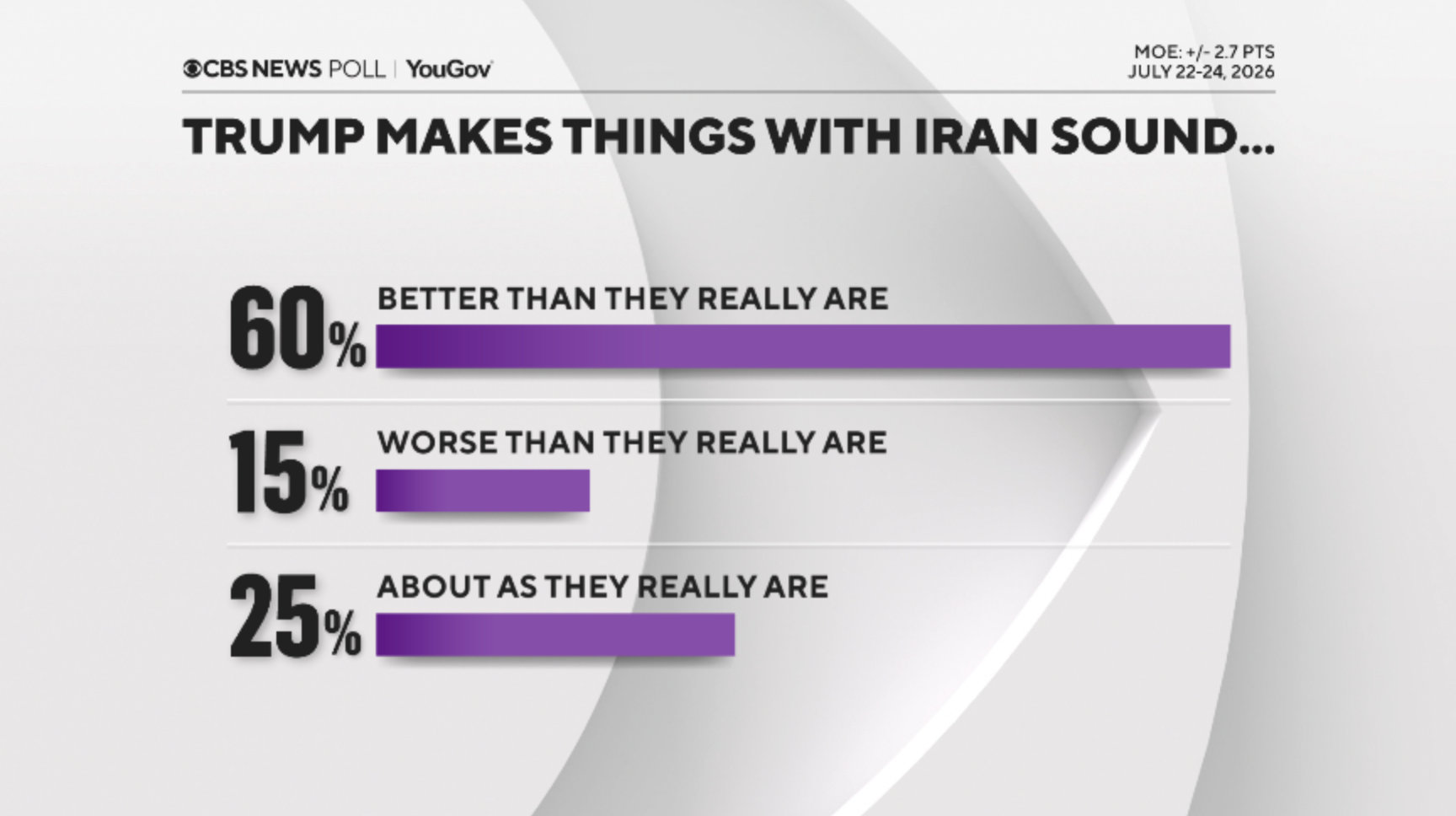
📊 Data du jour: Americans are skeptical of the administration's portrayal of the conflict, according to a new CBS News/YouGov poll.
- A majority say Trump is making the situation in Iran sound better than reality. 76% say the conflict has been harder than the administration expected.
4. 🦾 AI blurs job lines


Workers are using ChatGPT to knock out tasks that traditionally fall outside of their lanes, according to new OpenAI research first shared with Axios' Courtenay Brown.
- Why it matters: AI may change the work people do before it changes the number of people who do it. If this trend persists, it could reshape hiring and job design — long before those changes show up in labor market statistics.
Zoom in: Workers turned to ChatGPT to create marketing materials, troubleshoot software, perform financial calculations and explain regulations — tasks typically handled by specialists.
- Customer service workers, designers and HR professionals showed the highest rates of such crossover work.
5. ⚡ Silicon Valley's AI split

Tech companies are rallying behind open-weight AI models — and not just the usual suspects. Notably absent from the support: Anthropic.
- Why it matters: The renewed debate over open source is the latest Silicon Valley division in the AI race, Axios' Madison Mills writes.
🦾 Catch up quick: Nvidia, Microsoft, Meta, Palantir and dozens of other companies signed an industry letter Friday backing the open-weight AI ecosystem.
- Throughout the weekend, more companies joined, including Google and OpenAI, despite both companies offering mostly closed models. Anthropic — which also sells closed models — has not signed the agreement.
Nvidia doubled down this morning by launching the Open Secure AI Alliance, which calls for open research and regulatory support for open models as "defensive assets, not liabilities." Founding members include SpaceXAI, Thinking Machines and over 25 other companies.
- "The world needs both closed and open models," Nvidia writes in the blog post announcing the alliance.
💰 Between the lines: How a company makes money can help predict its position on open-weight AI.
- Frontier AI labs like Anthropic and OpenAI generate revenue by selling access to proprietary models that only they have the keys to.
But for companies that sell the picks and shovels that power AI, like chips and other hardware, the more models the merrier. Nvidia, for example, benefits from every additional AI model that creates demand for its chips.
👀 What we're watching: Beijing-based Moonshot AI plans to release its breakthrough Kimi K3 model for public download this week, broadening the open-source model's influence and user base, Bloomberg reports (gift link).
6. 🗳️ Dems' populist test
Democrats are learning a hard lesson Republicans know all too well: The party out of power doesn't just ride the anti-incumbency wave — it can also get swept up in it.
- Why it matters: The populist energy surging through the left after President Trump's return to the White House is roiling Democratic primaries and fueling establishment fears about the party's general election chances, Axios' Andrew Solender reports.
👀 Just ask Senate Republicans how that went for them in 2010, 2012 and 2022.
- "We saw it in Missouri, we saw it in Indiana more than a decade ago," said Rep. Brad Schneider (D-Ill.), the chair of the center-left New Democrat Coalition. GOP candidates who were "off-putting" and held "positions that don't reflect the majority of the state" helped Democrats win two seats "that I don't think we would have otherwise."
Driving the news: This past week, the Democratic Congressional Campaign Committee (DCCC) lost a third attempt to elevate a candidate in a House primary.
- In Arizona, former state Rep. Amish Shah — whose grassroots, door-to-door campaigning tactics the DCCC does not believe are effective — prevailed over the party favorite, ex-TV journalist Marlene Galán-Woods.
⚡ Shah's win came after progressives Randy Villegas of California and Matt Dunlap of Maine defeated DCCC-backed rivals in primaries last month.
- All three seats are key battlegrounds in Democrats' fight to retake the House in November.
The other side: Progressive Democrats say their candidates have tapped into voter angst. "Anti-establishment and anti-status quo candidates give us the best shot in the midterms at a time when Americans view our politics as corrupt and our system as unfair," said Rep. Ro Khanna (D-Calif.). "Running ChatGPT bland centrists is not the answer."
7. 🇮🇱 Bibi's centrist rival

David Remnick, the editor of The New Yorker, writes in a "Letter from Israel" that the strongest challenger to Israeli Prime Minister Benjamin Netanyahu in the election coming Oct. 27 is Gadi Eisenkot, a general who quit Netanyahu's war cabinet in 2024 and founded the centrist party Yashar ("straight, upright, just").
- "Most analysts here believe that, in a close election, Eisenkot can prevail if he attracts at least some 'soft right' voters in provincial cities like Kiryat Shmona, Ofakim, Ashdod, Nahariya, and Dimona," Remnick writes.
Eisenkot, 66, a son of Moroccan immigrants who rose to chief of staff of the Israel Defense Forces, pledges to restore Israel as a "Jewish, democratic, progressive, and liberal state," Remnick writes:
"Eisenkot is selling himself as the humble soldier, a political novice untainted by corruption or duplicity. ... At the urging of his consultants, and in response to the political realities of post-October 7th Israel, he is tacking further toward the center. He seldom voices reservations about the scale and prosecution of the war in Gaza."
Remnick concludes that the election will decide whether those themes can "compete with the fears Netanyahu ... spent years cultivating."
8. 🎰 1 Vegas thing: Cheap buffet holdouts
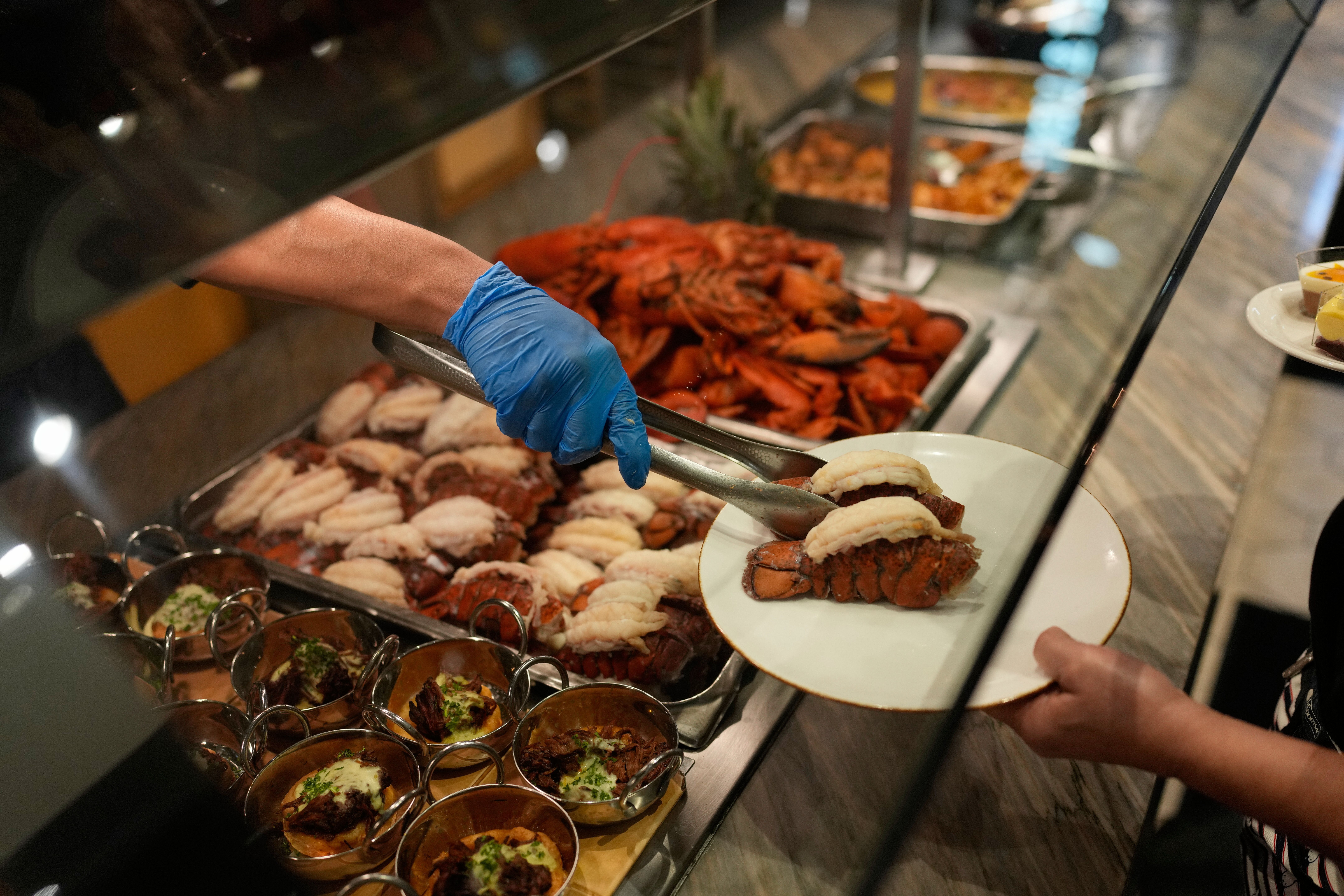
Las Vegas is changing, but "in a city increasingly full of affluent visitors, a few old-school hotels are hellbent on keeping the all-you-can-eat circus going," The Wall Street Journal reports in an A-hed.
- Case in point: The South Point hotel's buffet serves about 3,000 people a day — and consistently loses money doing it. Breakfast starts at just $16.95 and includes two Bloody Marys.
📬 Thanks for starting your week with us! Please invite your friends to join AM.
Sign up for Axios AM