Axios AM

March 10, 2026

1 big thing: World at war
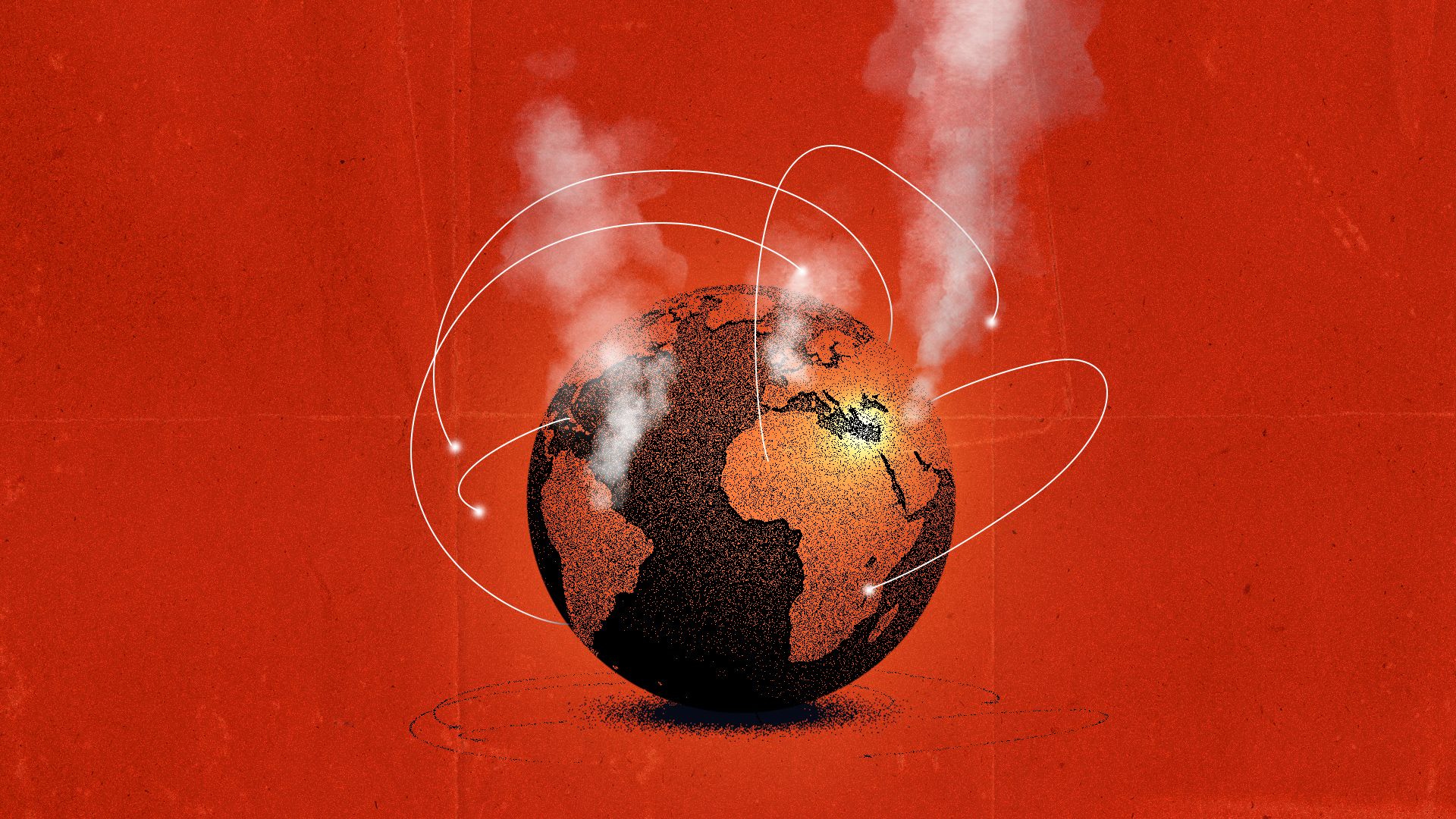
This isn't World War III. But it may be the closest we've come in decades — drawing in more countries, more great powers and more overlapping conflicts than any crisis since the Cold War, Axios' Zachary Basu writes.
- Why it matters: Ten days into President Trump's Iran campaign, the war has gone global. At least 20 countries are now militarily involved — shooting, shielding or quietly supplying — while a widening energy shock punishes nations far from the front lines.
🔎 Zoom in: Iran has struck at least 10 countries since the war began, hitting U.S. and Israeli bases, Persian Gulf capitals, oil infrastructure and civilian areas to impose maximum pain on Washington and its allies.
- Iran has effectively closed the Strait of Hormuz — the narrow chokepoint through which 20% of the world's oil flows — sending prices for oil, gas, plastics and fertilizers soaring.
- Israel is fighting on two fronts — pounding Iran while battling Hezbollah on the ground in Lebanon, where more than 500,000 people have been displaced in a week.
The war has spread far beyond the Middle East, pulling European militaries into the conflict and forcing NATO to shoot down Iranian missiles over allied territory for the first time.
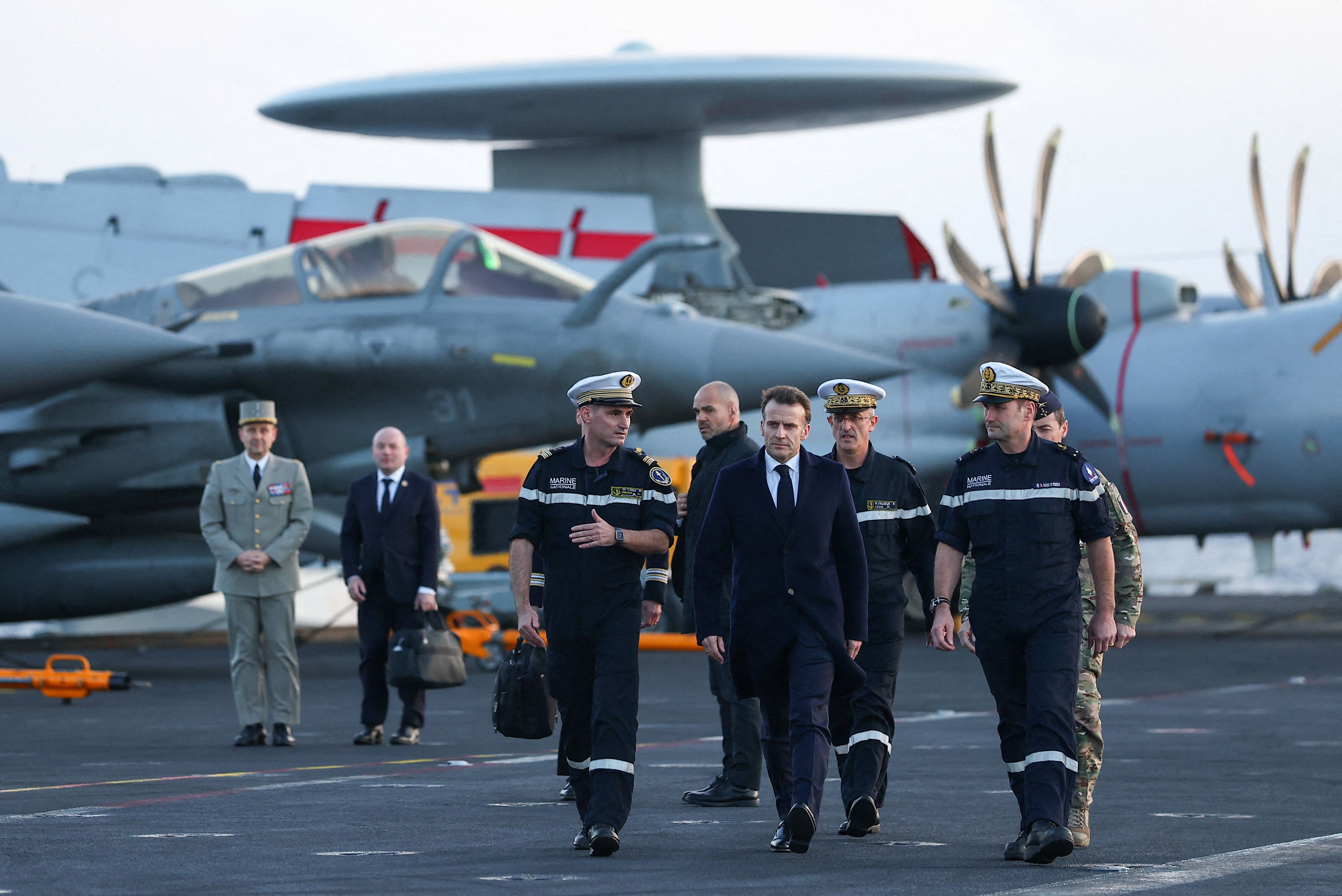
- France has dispatched its nuclear-powered aircraft carrier to the Eastern Mediterranean, joining British warships after an Iranian-made drone struck a U.K. air base on Cyprus, a member of the European Union.
Between the lines: As the shooting war rages, a shadow conflict is playing out among the great powers.
- Russia has been sharing satellite imagery of U.S. warships and aircraft with Iran, helping Tehran target American forces, The Washington Post first reported.
- Ukraine — which has spent four years defending against the same Iranian-made drones now battering the Gulf — has deployed specialists and low-cost interceptors to help protect the U.S. and its allies.
🇨🇳 China, which is set to welcome Trump for a state visit in a matter of weeks, is navigating the war from both sides.
- Facing billions of dollars in economic exposure, China has been calling for a ceasefire and pressuring Iran to reopen the Strait of Hormuz, which Beijing relies on for roughly 40% of its oil imports.
- At the same time, U.S. intelligence shows China may be preparing to supply Iran with financial assistance, spare parts and missile components, according to CNN.
2. ⚠️ Exclusive: Costly drone snafu

Nearly seven months ago, Ukrainian officials tried to sell the U.S. their battle-proven technology for downing Iranian-made attack drones. They even made a PowerPoint presentation — obtained exclusively by Axios — showing how it could protect American forces and their allies in a Middle East war.
- The Trump administration dismissed the Ukrainians, only to reverse course last week because of more-than-expected drone strikes from Iran, Axios' Marc Caputo, Barak Ravid and Colin Demarest write.
Why it matters: Snubbing Ukraine's offer ranks as one of the administration's biggest tactical miscalculations since the bombing of Iran began Feb. 28, two U.S. officials tell Axios.
- Iran's inexpensive Shahed drones have been linked to the deaths of seven U.S. service members and have cost the U.S. and its friends in the region millions of dollars to intercept.
- "If there's a tactical error or a mistake we made leading up to this [war in Iran], this was it," a U.S. official acknowledged.
🔭 Zoom in: Ukraine is the world's most experienced country in combating Shaheds, which Russia has bought, reproduced and labeled as Geran drones by the thousands for its invasion of its western neighbor.
- Ukraine has developed a low-cost interceptor drone, among other sensors and air defenses, to shoot down Shaheds.

👀 Inside the room: At a closed-door White House meeting on Aug. 18, Ukrainian President Volodymyr Zelensky offered the interceptor drones to President Trump as a way to strengthen ties.
- The Ukrainians made a PowerPoint presentation to U.S. officials that displayed a map of the Middle East and had this prophetic warning: "Iran is improving its Shahed one-way-attack drone design."
- The presentation included the idea of creating "drone combat hubs" in Turkey, Jordan and the Persian Gulf states, where U.S. bases are located, to address the threat from Iran and its proxies.
- "We wanted to build the 'drone walls' and all the things necessary like the radar, et cetera," a Ukrainian official said.
🔎 The intrigue: A U.S. official who saw the PowerPoint said Zelensky's team showed the presentation to the administration. "We figured it was Zelensky being Zelensky," the official said. "Somebody decided not to buy it."
- Zelensky told The New York Times that the U.S. requested anti-drone help last Thursday. He said that the next day, he dispatched interceptor drones and a team of drone experts to help protect U.S. bases in Jordan.
3. 🤖 Scoop: White House preps Claude purge
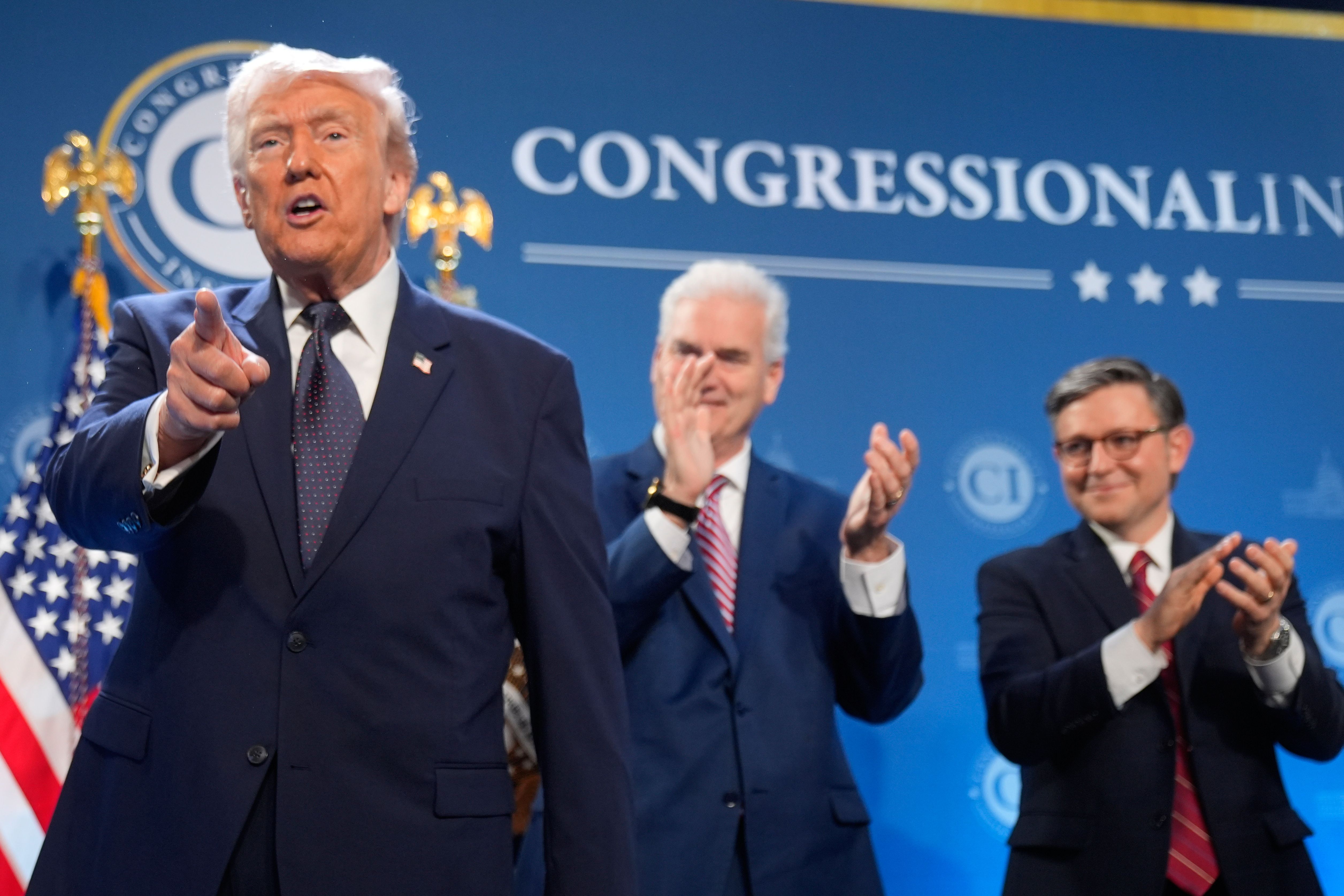
The White House is preparing an executive order directing the federal government to purge Anthropic's AI from its operations, Axios' Maria Curi reports.
- Why it matters: The move would escalate the administration's fight with Anthropic, which is already suing the Pentagon over its supply chain risk designation.
It would also formalize a broad push across agencies to remove Claude after President Trump said his administration would not use "woke" AI.
- Government agencies, including the Treasury Department, have already begun to offboard Anthropic.
- Anthropic said in a lawsuit yesterday that procurement laws don't give the administration the authority to blacklist a U.S. company over protected speech.
🔮 What's next: The order could be issued as soon as this week, a source said.
4. 🎖️ Honoring America's fallen

Above: Vice President JD Vance, Defense Secretary Pete Hegseth and Chairman of the Joint Chiefs of Staff Gen. Dan Caine salute during the dignified transfer for Army Sgt. Benjamin Pennington at Dover Air Force Base in Delaware last night.
- Pennington, 26, of Glendale, Ky., died after being wounded during a March 1 attack on the Prince Sultan Air Base, Saudi Arabia.
- He was the seventh U.S. service member to die in combat during the Iran war.
More on his life: "He was basically the quintessential all-American."
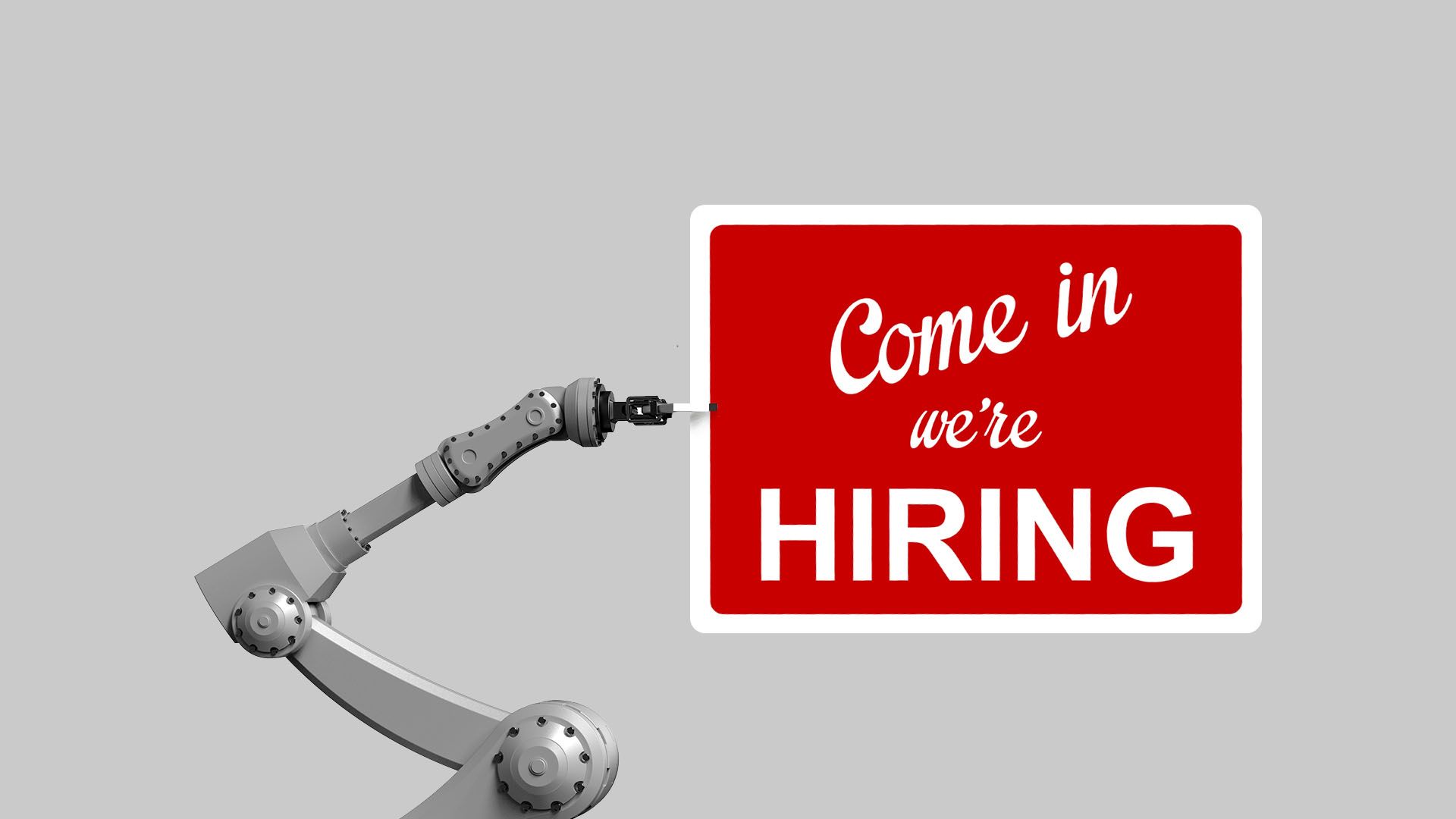
5. 📈 AI hiring surprise
6. 🍰 Jensen's 5-layer AI vision

Nvidia CEO Jensen Huang writes in a blog post out this morning — "AI Is a Five‑Layer Cake" — that decisions about how fast to build AI, who gets access and how to govern it will determine the technology's legacy, Axios' Herb Scribner writes.
- Why it matters: Huang — whose company underpins the AI boom — rarely publishes long essays about the tech's broader impact, offering other industry players and investors a rare window into his thinking.
In just his seventh blog post since 2016, Huang argues chip demand, expansion and hiring are still in the early stages of what he calls a long buildout.
- "AI is one of the most powerful forces shaping the world today. It is not a clever app or a single model; it is essential infrastructure."
Huang describes AI as a "five-layer stack": Energy → chips → infrastructure → models → applications.
"At the top are applications, where economic value is created. Drug discovery platforms. Industrial robotics. Legal copilots. Self-driving cars. ... Every successful application pulls on every layer beneath it, all the way down to the power plant that keeps it alive."
7. 🏎️ Grand Prix on National Mall
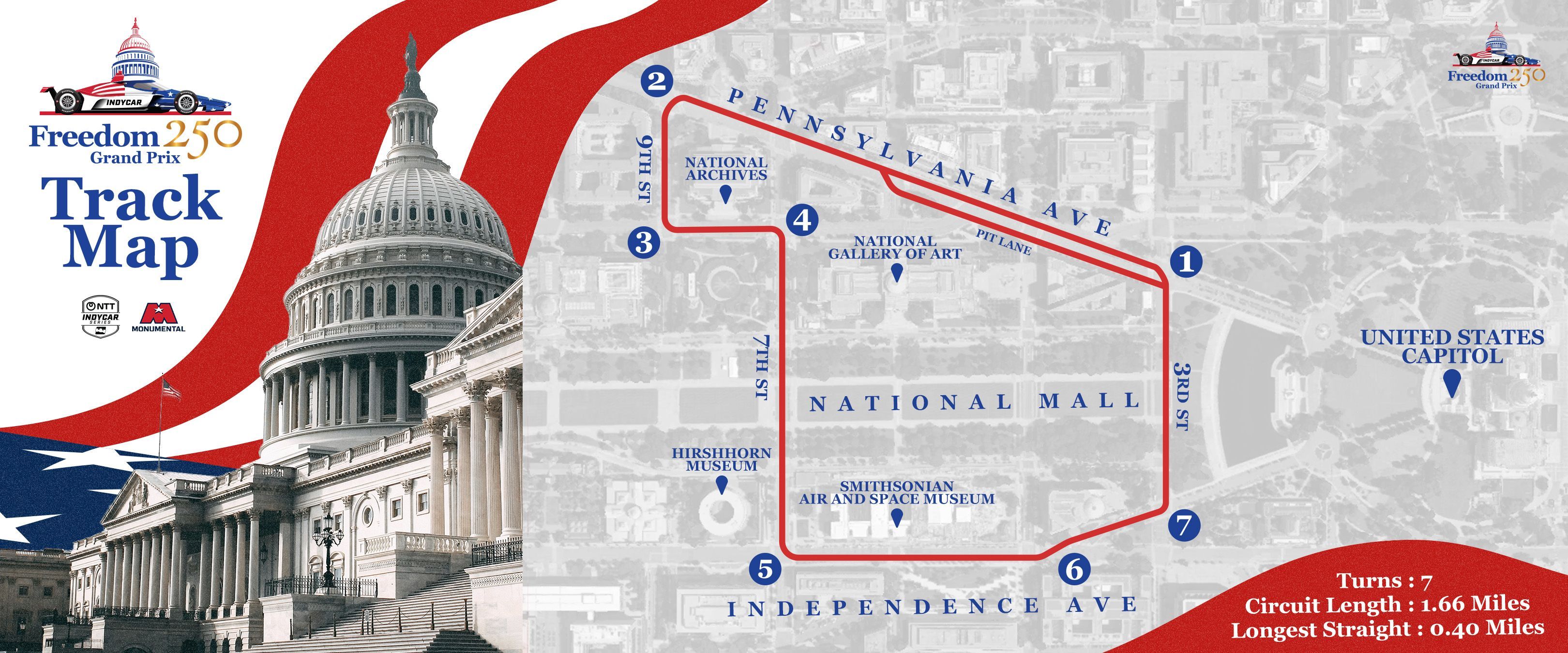
This map shows the course for Washington's Freedom 250 Grand Prix in August — the first-ever auto race on the National Mall, Axios D.C.'s Anna Spiegel writes.
- The IndyCar race — timed for America's 250th birthday — is free and open to the public.
The 1.7-mile, seven-turn course mixes a flat-out stretch down Pennsylvania Avenue NW with tighter, technical turns near 9th Street — all framed by the Capitol, Washington Monument and Smithsonian museums.

- Share this story ... Get Axios Local: Daily newsletters in 35 cities.
8. ☎️ 1 fun thing: Famous first call
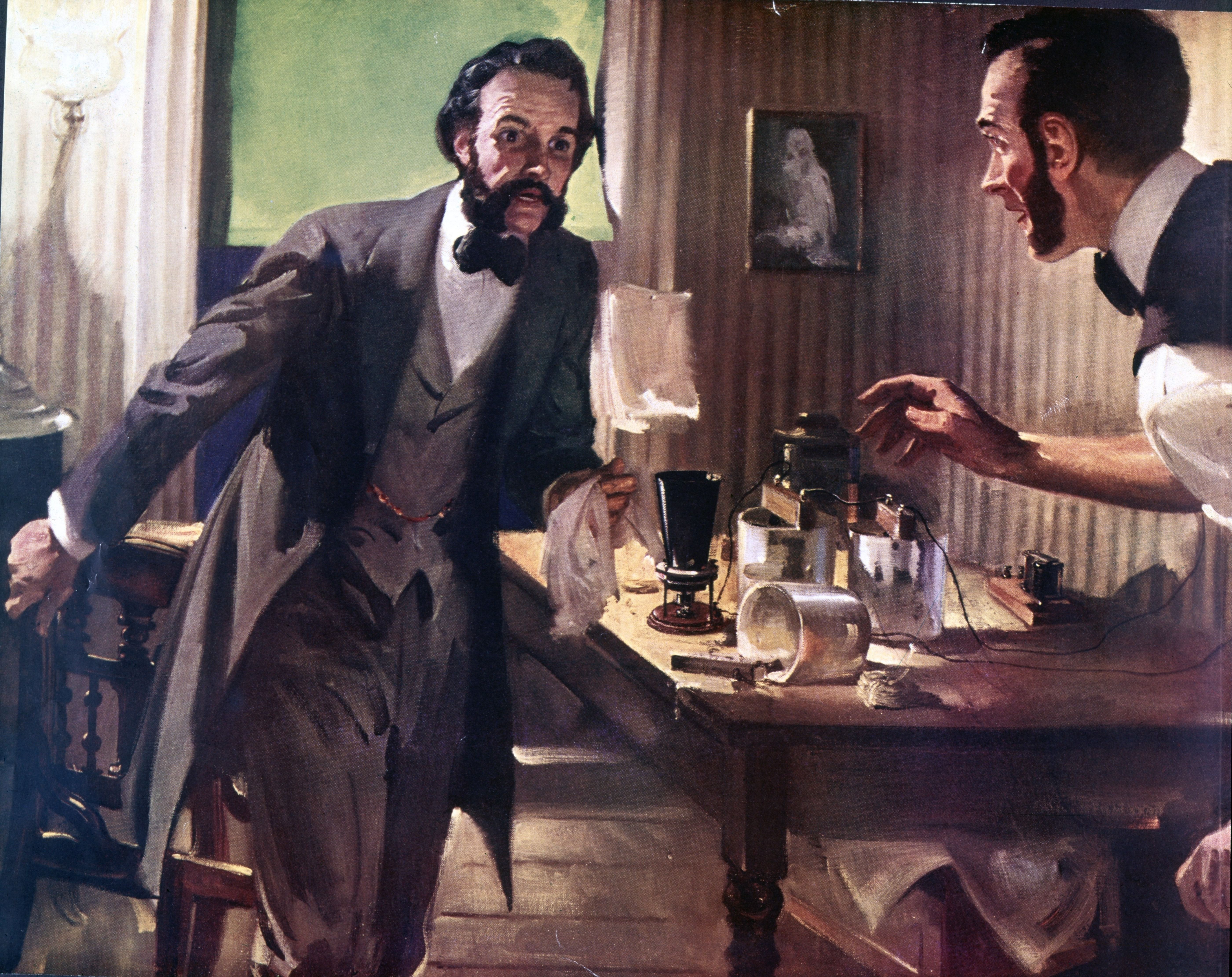
A phone call made in Boston 150 years ago today laid the foundation for the telecommunications industry as we know it, Axios Dallas' Naheed Rajwani-Dharsi writes.
- Why it matters: Alexander Graham Bell's first phone call to his assistant Thomas Watson on March 10, 1876, led to the establishment of the Bell Telephone Co., which evolved into the American Telephone and Telegraph Co., now known as AT&T.
The famous call — "Mr. Watson, come here, I want you!" — came after nearly a decade of experimentation.

Above: The cone-shaped device with a liquid transmitter that conducted Bell's voice, turned it into an analog signal and passed it through a phone wire connected to a receiver in another room.
Axios AM