Axios AM

June 14, 2025

1 big thing: Eight chaotic days
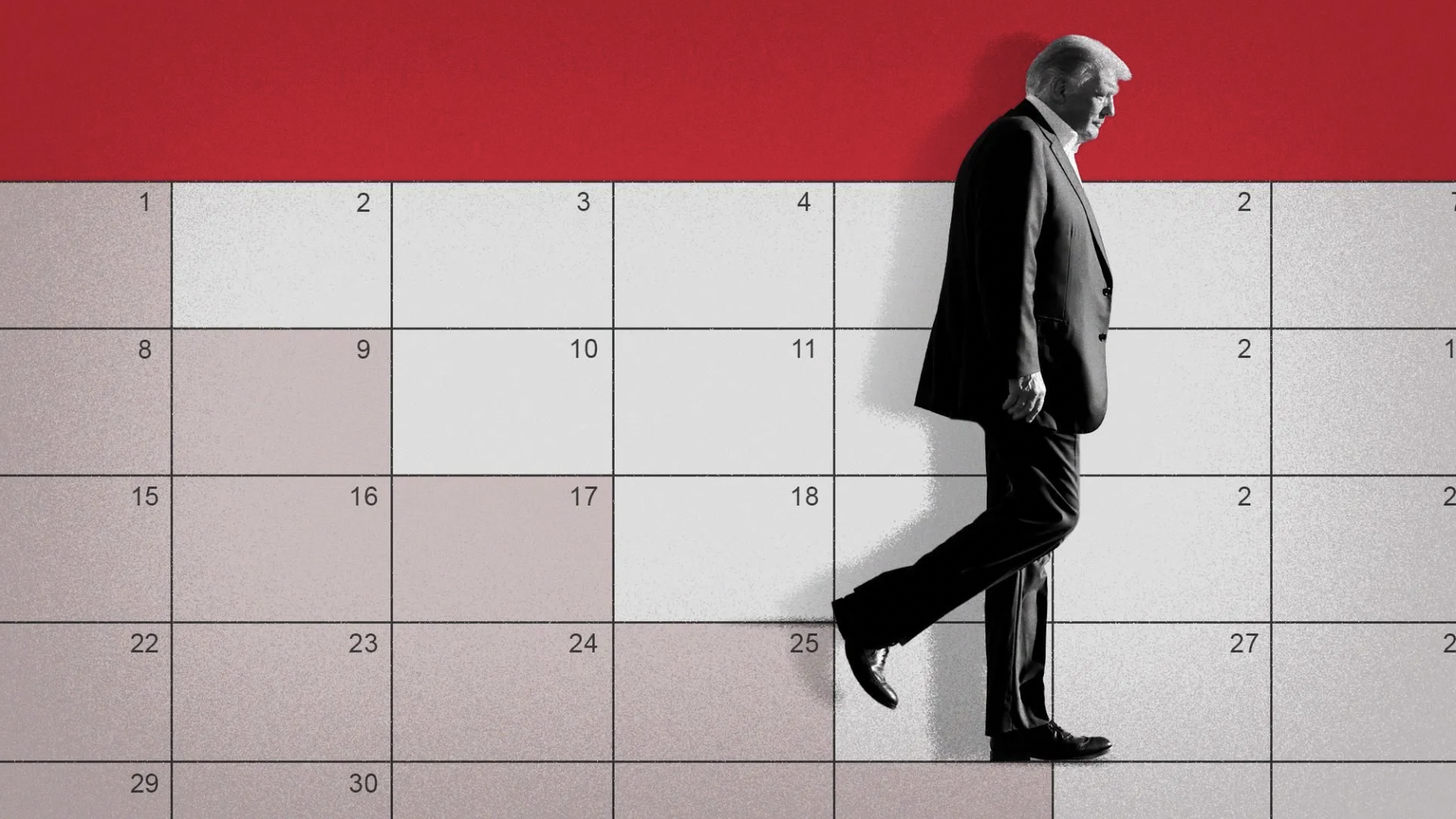
President Trump began the week of his 79th birthday reeling from his explosive public breakup with Elon Musk.
- He ended it with tanks in the capital, Marines in Los Angeles, a Democratic senator dragged away in handcuffs, thousands of protests planned nationwide, and a new war in the Middle East, Axios' Zachary Basu writes.
Why it matters: In a year already brimming with "holy sh*t" moments, the past eight days have brought unprecedented new intensity, stakes and challenges to Trump's presidency.
💥 Zoom in: America is on edge.
- Trump became the first president since the Civil Rights Era to federalize the National Guard without a governor's consent — sending troops to L.A. to quash protests sparked by his administration's immigration raids.
- Democrats, led by California Gov. Gavin Newsom, have accused Trump of blatantly defying the Constitution and pouring gasoline on the fire by deploying 700 Marines on domestic soil.
- When Sen. Alex Padilla (D-Calif.) tried to confront Homeland Security Secretary Kristi Noem at a press conference Thursday, he was forcibly removed and handcuffed.
👀 Between the lines: Trump officials want this fight, eager to flex executive power and frame Democrats as defenders of undocumented immigrants and violent agitators. But the backlash is threatening to spiral beyond the White House's control.
- Millions of people are expected to join "No Kings" protests in nearly 1,800 cities today — the largest single-day demonstrations against Trump since his return to power.
- Expect an extraordinary split-screen as Trump celebrates not only his birthday, but a massive military parade in Washington that he's dreamed of since his first term.
- "For those people that want to protest, they're going to be met with very big force," Trump warned this week, dismissing the demonstrators as "people that hate our country."
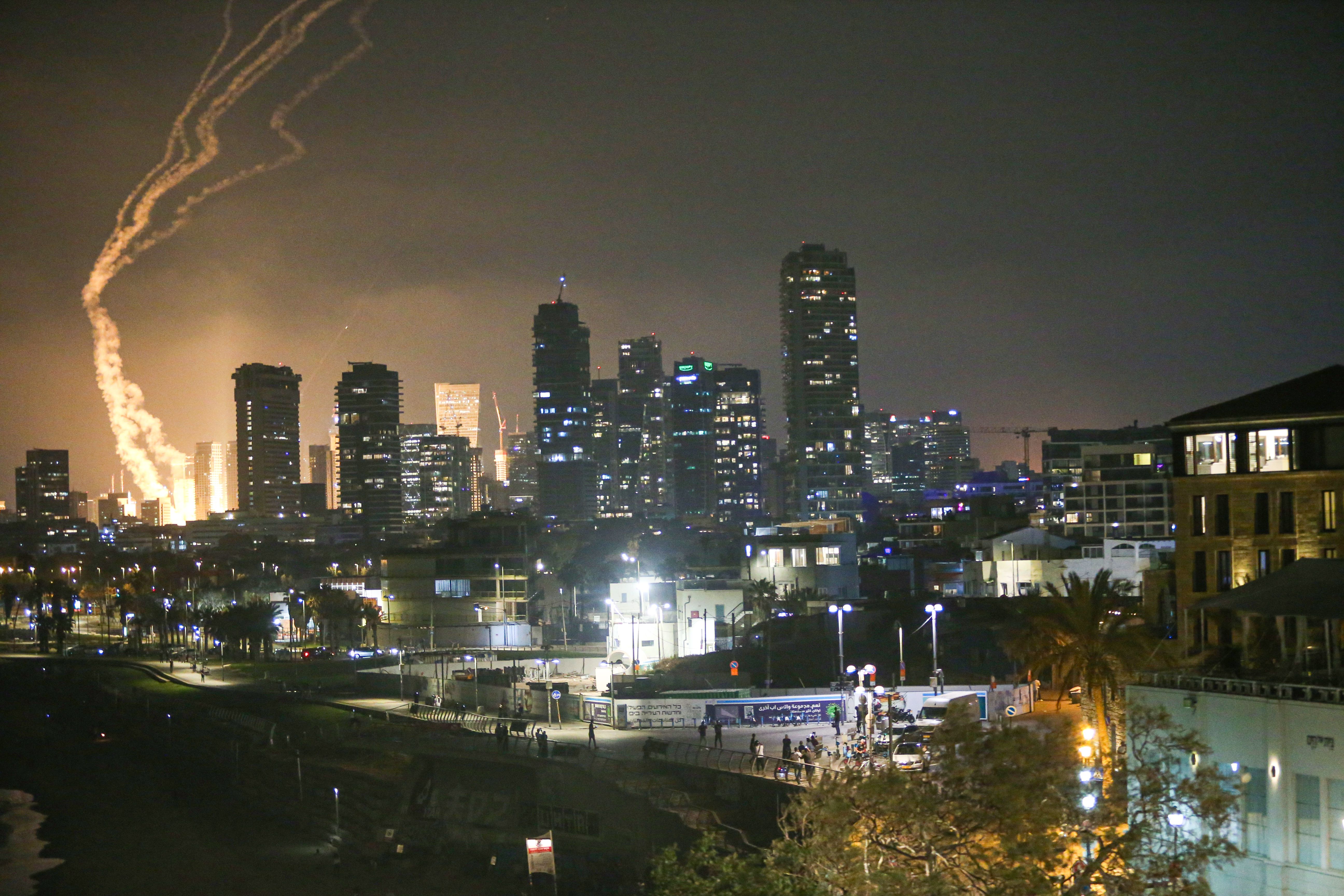
Zoom out: With unrest boiling over at home, Israel's unprecedented attack on Iran suddenly threatened to unravel Trump's crowning foreign policy achievement from his first term: "No new wars."
- Trump had publicly urged Israel not to strike Iran while he actively pursued a nuclear deal with the Iranians, and even assured allies that the U.S. would not participate in the operation.
- Israel did it anyway — bombing nuclear sites, assassinating top generals and scientists, and sabotaging missile facilities in one of the most sophisticated covert strikes in the history of the Middle East.
The intrigue: Trump now claims that the wildly successful operation — which he told Axios used "great American equipment" — could make it easier to reach a nuclear deal with Iran. But his MAGA base is deeply uneasy.
- Iran has launched retaliatory missile attacks against Israel, which U.S. forces helped intercept. Oil prices have surged, and the threat of Iran targeting U.S. assets in the region remains very real.
- Opposition to the "forever wars" in Iraq and Afghanistan helped fuel Trump's political rise — and many of his most loyal supporters view any new Middle East entanglement as a betrayal of that legacy.
- "[D]rop Israel. Let them fight their own wars," MAGA isolationist Tucker Carlson wrote in a post accusing the U.S. of complicity in the attack. "What happens next will define Donald Trump's presidency."
The bottom line: The pace of news in the Trump era, both at home and abroad, makes it exceedingly difficult to distinguish the chaotic from the consequential.
- But the past eight days — from the excommunication of Elon Musk to the start of a dangerous new era in the Middle East — reshaped the presidency in ways that won't easily be undone.
2. ⚡ ICE pauses raids on farms, restaurants, hotels
3. ☢️ Iran's toughest target
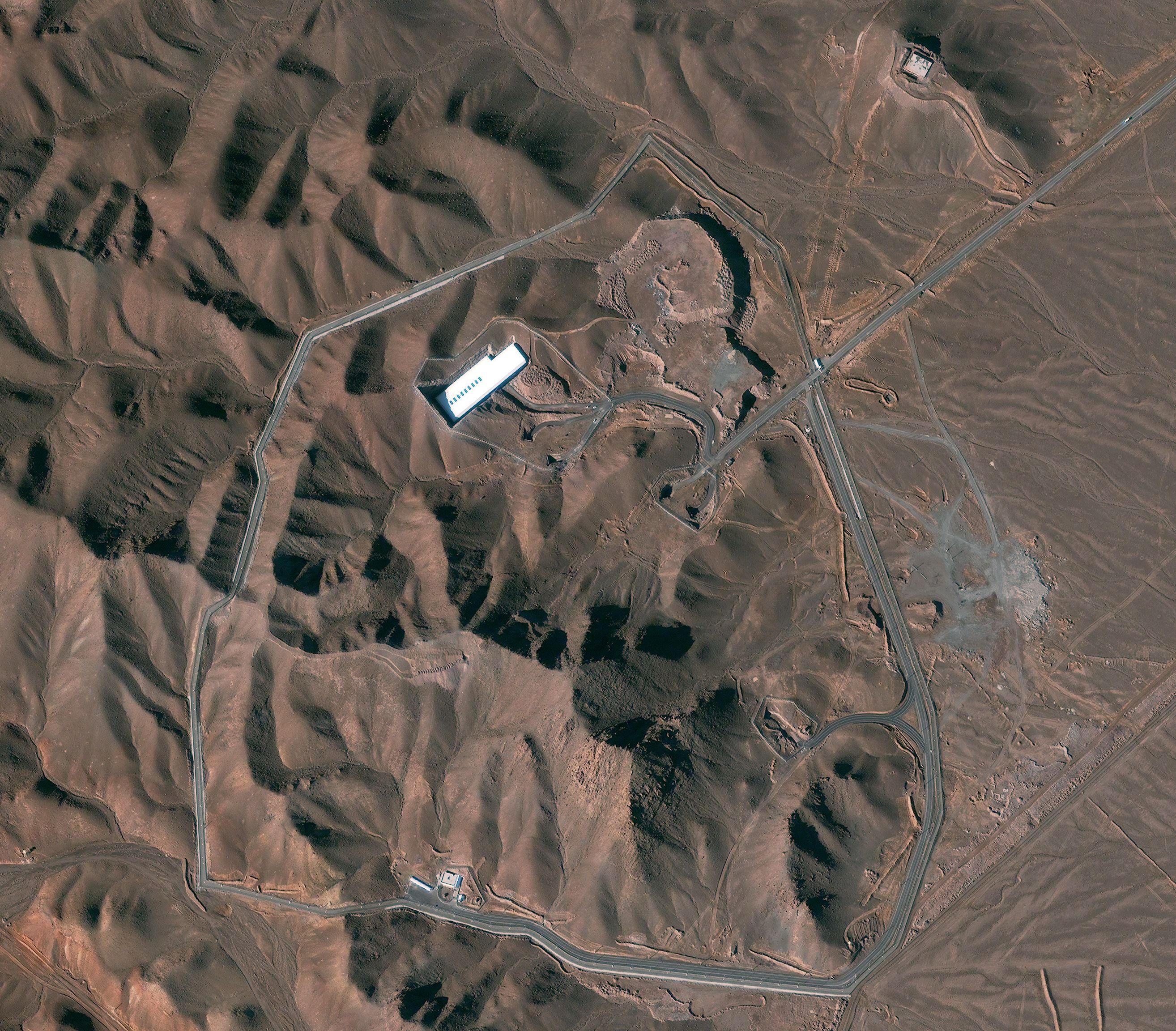
One factor that could determine whether Israel's audacious attack on Iran proves a daring success or a dangerous mistake is the fate of Iran's Fordow uranium enrichment site, Axios' Barak Ravid reports.
- The big picture: Israel will require unforeseen tactical ingenuity or U.S. assistance to destroy Fordow, which is built into a mountain and deep underground. But if the facility remains intact and accessible, a nuclear program Israel is determined to "eliminate" could actually accelerate.
"The entire operation ... really has to be completed with the elimination of Fordow," Israeli Ambassador to the U.S. Yechiel Leiter told Fox News yesterday.
- That's why the Israeli government hopes the Trump administration ultimately decides to join Israel's operation.
🔎 Breaking it down: Israel lacks the huge bunker busters needed to destroy this facility and the strategic bombers to carry them. The U.S. has both within flying distance of Iran.
- An Israeli official claimed to Axios that the U.S. could still join the operation, and that President Trump even suggested he'd do so if necessary in a conversation with Prime Minister Benjamin Netanyahu in the days leading up to launch.
- But a White House official denied that, telling Axios Trump said exactly the opposite. The U.S. currently has no intention of getting directly involved, the official said.
4. Iran retaliates
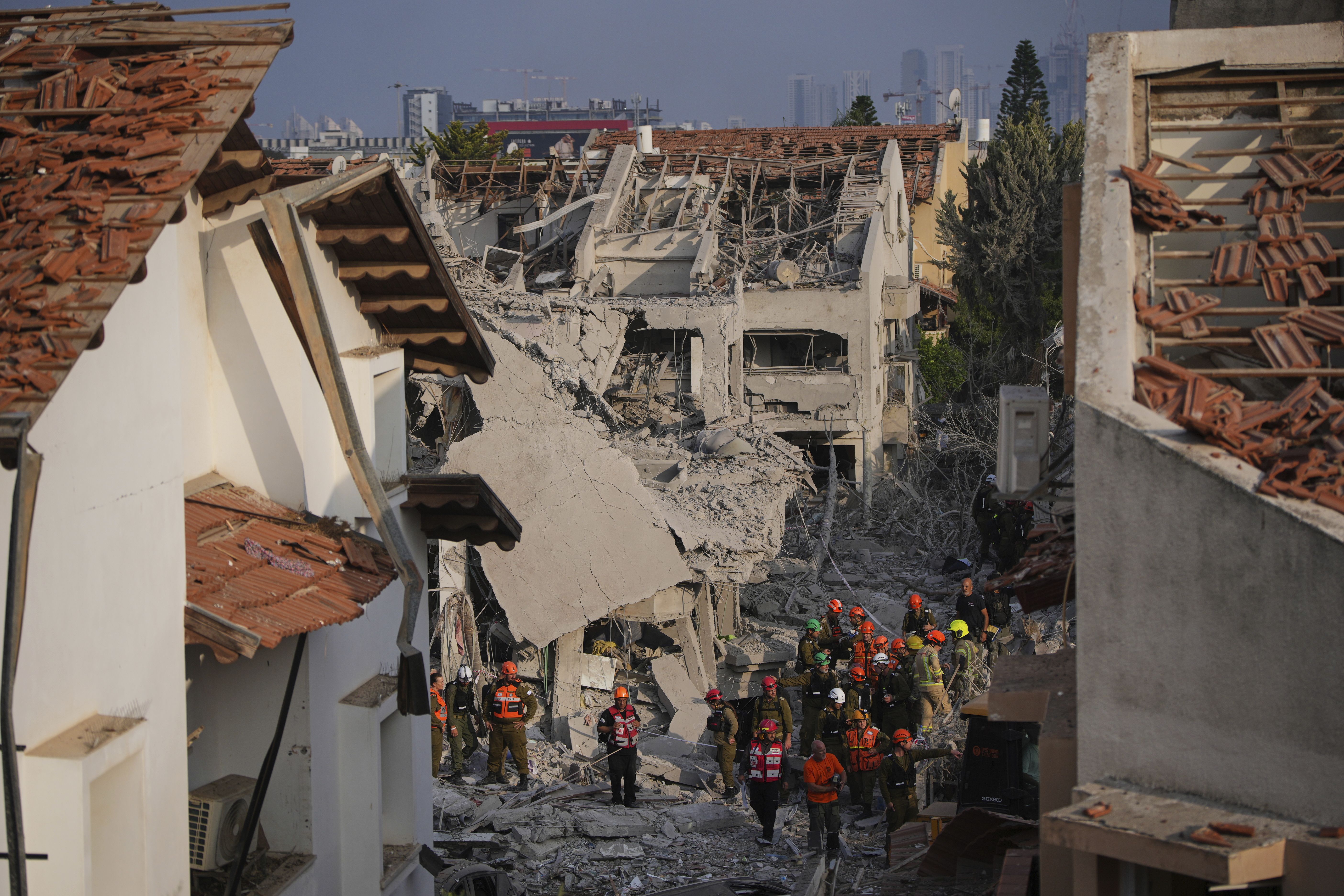
Iran mounted a major counterattack against Israel yesterday, launching barrages of missiles 18 hours after Israel's first strike, which kicked off a new war in the region, Axios' Barak Ravid reports.
- The U.S. is helping to intercept incoming ballistic missiles, according to an Israeli official and a senior U.S. official.
At least three people died and dozens were wounded Saturday morning in Israel after Iran's retaliatory strikes, AP reports.
- Iranian State media reported that at least 78 people had been killed and more than 300 wounded in Israel's attack, with most of the casualties being civilians. The strikes also killed top security officials and hit Iran's nuclear facilities.
"If (Iranian Supreme leader Ayatollah Ali) Khamenei continues to fire missiles at the Israeli home front — Tehran will burn," Israel's Defense Minister Israel Katz warned today.
- Iranian state television reported online that air defenses were firing in the cities of Khorramabad, Kermanshah and Tabriz, signaling the start of what could be a new Israeli attack.
5. 💰 Steel deal cleared
/2025/06/14/1749879354194.gif?w=3840)
6. 💉 Vaccine wrecking ball
7. 📞 Hotline's uneven reach
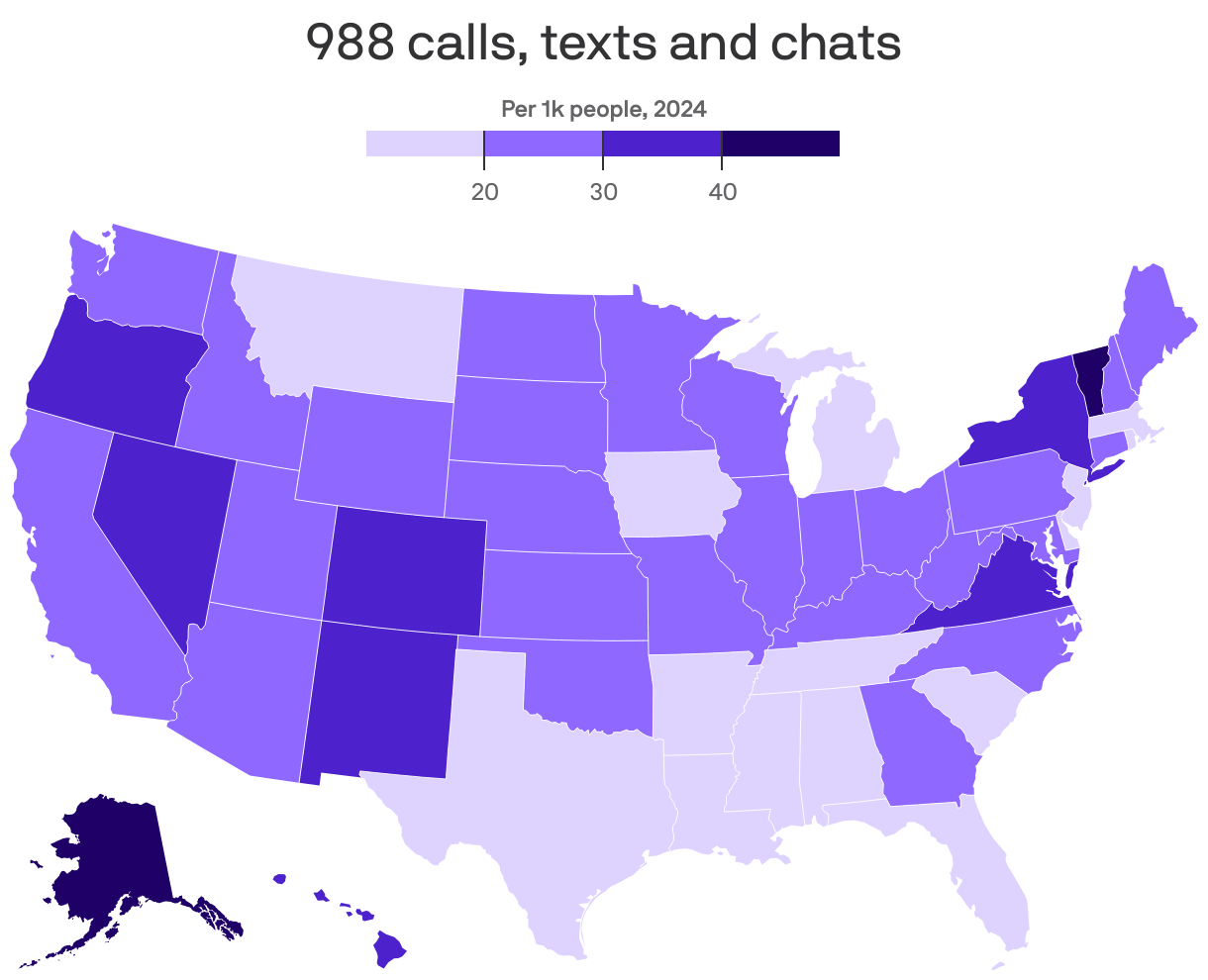
Use of the 988 national suicide prevention and mental health hotline remains uneven across states, Axios' Alex Fitzpatrick reports.
- Why it matters: The service was launched nearly three years ago to help address America's mental health crisis — but gaps persist.
Alaska (45.3 contacts per 1,000 people), Vermont (40.2) and New York (38.8) had the highest 988 contact rates among states in 2024, per new research published in JAMA Network Open.
- Delaware (12.5), Alabama (14.4) and Florida (15.6) had the lowest.
The 988 service fielded more than 16.3 million calls, texts and chats between July 2022 and the end of 2024.
- Still, many Americans remained unfamiliar with 988 as of last summer, per Ipsos polling.
8. 🤖 1 for the road: AI future

Sign of the times: Jam.dev CEO Dani Grant joined a video call, and she was alone with a dozen note-taking bots.
- Go deeper: AI enters the group chat
Axios AM