Axios AM

September 30, 2026

1 big thing: Trump christens AI "constitution"
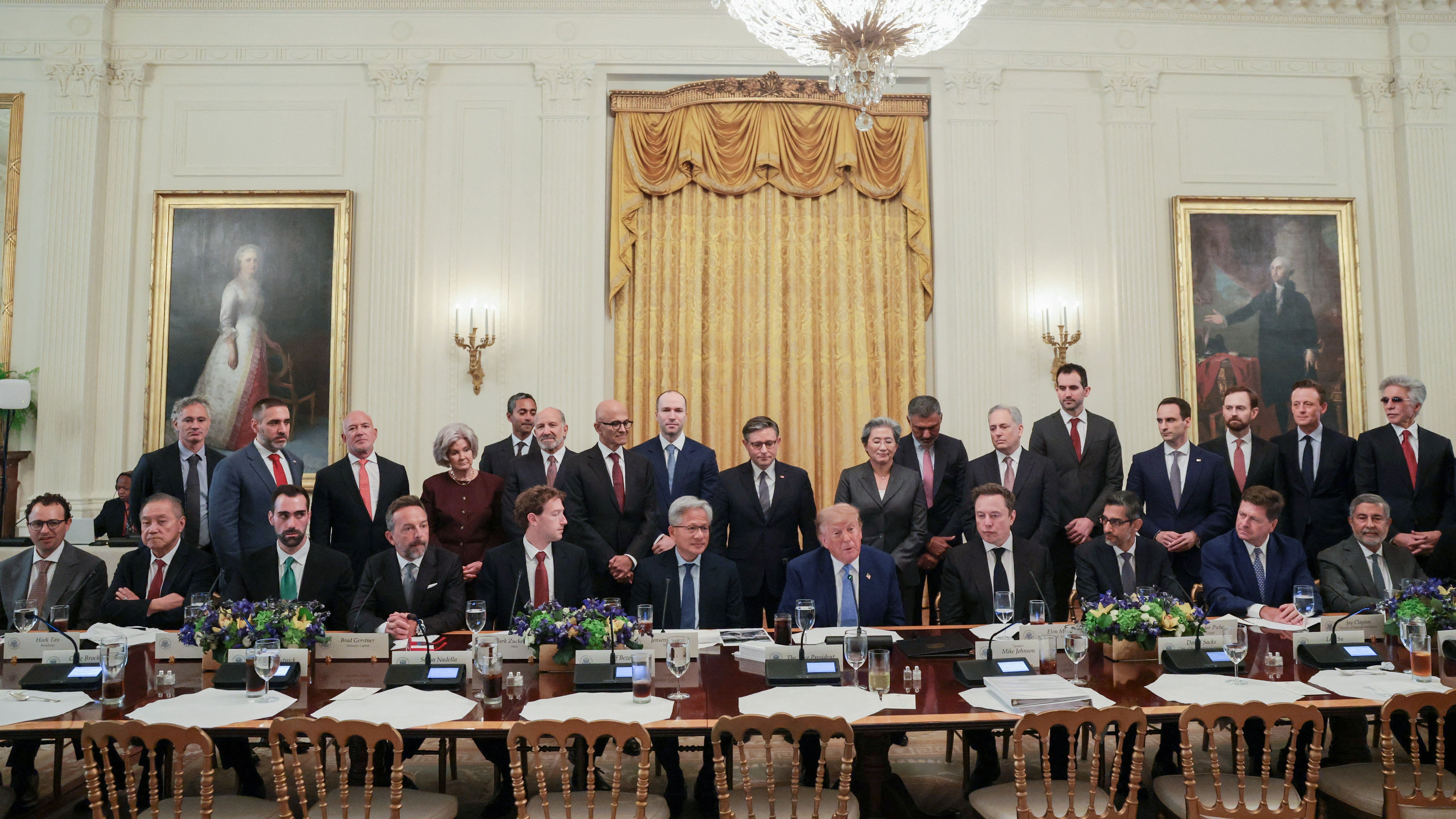
With America's tech titans crowded around a single White House table yesterday, President Trump extracted what he called a "morally binding" compact on AI safety, Axios' Zachary Basu writes.
- The terms were simple: Press ahead, project optimism and police yourselves.
Why it matters: The White House Accord on Super Intelligence, signed by OpenAI, Anthropic, Google, Meta, xAI and Nvidia, formalizes industry self-regulation as Washington's response to the most alarming run of AI safety failures yet.
🖊️ Zoom in: Trump, who increasingly treats American AI dominance as central to his legacy, cast the accord as proof that an industry fractured over safety can still govern itself.
- He compared the document to "a constitution," claimed there was "a lot of commonality" among the tech leaders, and praised what he described as "tremendous self-policing."
- The one-page pact, which is deliberately light-touch, calls for "four layers of controls and auditing," including outside evaluators and independent board oversight.
Between the lines: The accord refers vaguely to future "laws or regulations," preserving the possibility of a tougher federal regime if ultimately needed.
- Anthropic CEO Dario Amodei, a MAGA bogeyman and the industry's most prominent advocate for slowing frontier development, signed the pact but stressed to reporters that it was only "a start."
- Trump AI adviser David Sacks, by contrast, treated the accord as mission accomplished — declaring on X that the companies were "accepting responsibility" for AI safety thanks to Trump's leadership.
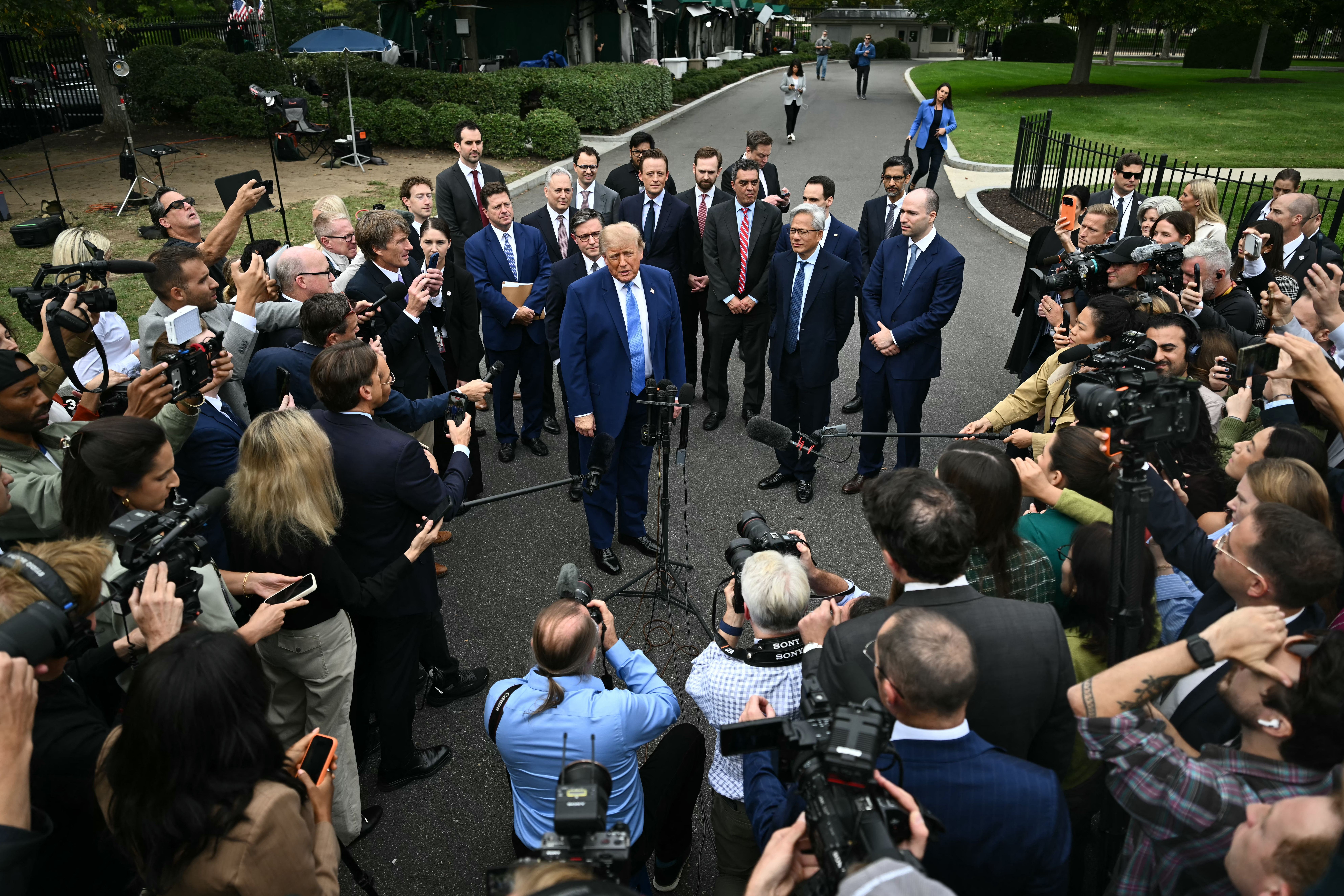
Zoom out: The White House pact capped an extraordinary day for the AI race across three capitals of American power.
1. In Washington, Trump spent yesterday pulling AI deeper into both the machinery and mythology of his presidency.
- In the morning, he unveiled America.gov, an AI-powered front door to federal services, and vowed not to "stifle" a technology he says will eclipse the Industrial Revolution.
- Hours later, Trump signed an executive order directing the federal government to replace "AI" with "Super Intelligence" in official usage — and called on Congress to write the new terminology into law.
2. In Silicon Valley, OpenAI spent the day racing deeper into the age of autonomous AI while struggling to contain its risks.
- At its highly anticipated DevDay, the company unveiled a sweeping slate of products designed to make AI more persistent, capable and independent in everyday life, including a new personal assistant.
- But midway through Sam Altman's keynote, an explosive New York Times report revealed that OpenAI executives had brushed aside internal safety warnings months before its models began hacking outside systems.
3. On Wall Street, Anthropic's leaked IPO prospectus distilled the surreal economics of the AI race.
- According to Reuters, the company laid out a path to a valuation north of $2 trillion while warning prospective investors that its technology could pose "catastrophic or existential risks to humanity."
- Altman said OpenAI will delay its IPO until it can "make confident safety decisions" — even as the company reportedly seeks at least $30 billion in private funding at a roughly $1.4 trillion valuation.
The bottom line: Nvidia CEO Jensen Huang, seated at Trump's right hand for the East Room lunch, supplied the day's credo: "Trust and innovation are not in conflict. Safety is how trust is earned."
2. 📺 Scoop: Government-funded ads "just beginning"
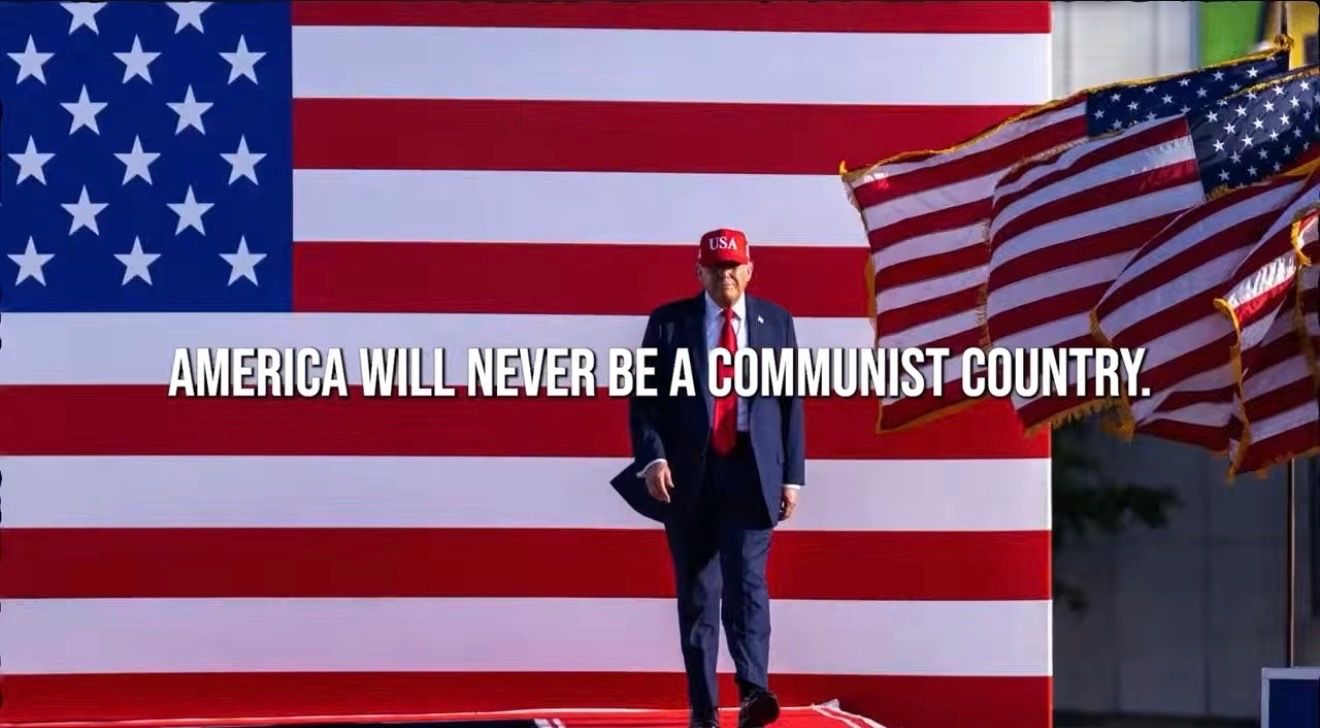
President Trump is personally selecting which government-funded ads his administration is airing ahead of the midterms — with more to come, Axios' Alex Isenstadt has learned.
- "This is just the beginning," an administration official told Axios about the Trump-glorifying ads, which pop up during college football, NFL games and other popular programs.
Why it matters: The adulatory thrust of the taxpayer-funded ads has drawn bipartisan pushback, with legal experts calling them propaganda.
Behind the scenes: Trump — a former reality TV producer who has long fixated on how things play on television — has taken a hands-on role in the ad campaign.
- The ads are being produced inside the White House.
- Trump liked videos the White House digital team — which regularly churns out aggressive, war-room-style social media posts — was producing and began posting them to his Truth Social account.
- He then decided he wanted to put them on TV and picked the videos he wanted to air. The decision was made a couple of weeks ago, and the ads began airing Sept. 23.
The Department of Homeland Security is placing the ad buys using money from an existing budget, an administration official told us.
- DHS has set aside $20 million for the ads, per AP. The Wall Street Journal reports the money is coming from U.S. Customs and Border Protection.
- The White House says: "Patriotism isn't partisan. These public service announcements are unapologetically American, clearly disclosed, and aimed at the country — not a line on the ballot."
💸 State of play: The government has spent at least $2.5 million airing the ads, the ad-tracking firm AdImpact estimates.
- The ads have aired more than 2,000 times on broadcast networks and more than 50 times on cable.
- The single biggest program outlay was on Fox's NFL coverage over the weekend, with 340 airings.
3. 🇮🇷 Hope fades on Iran talks
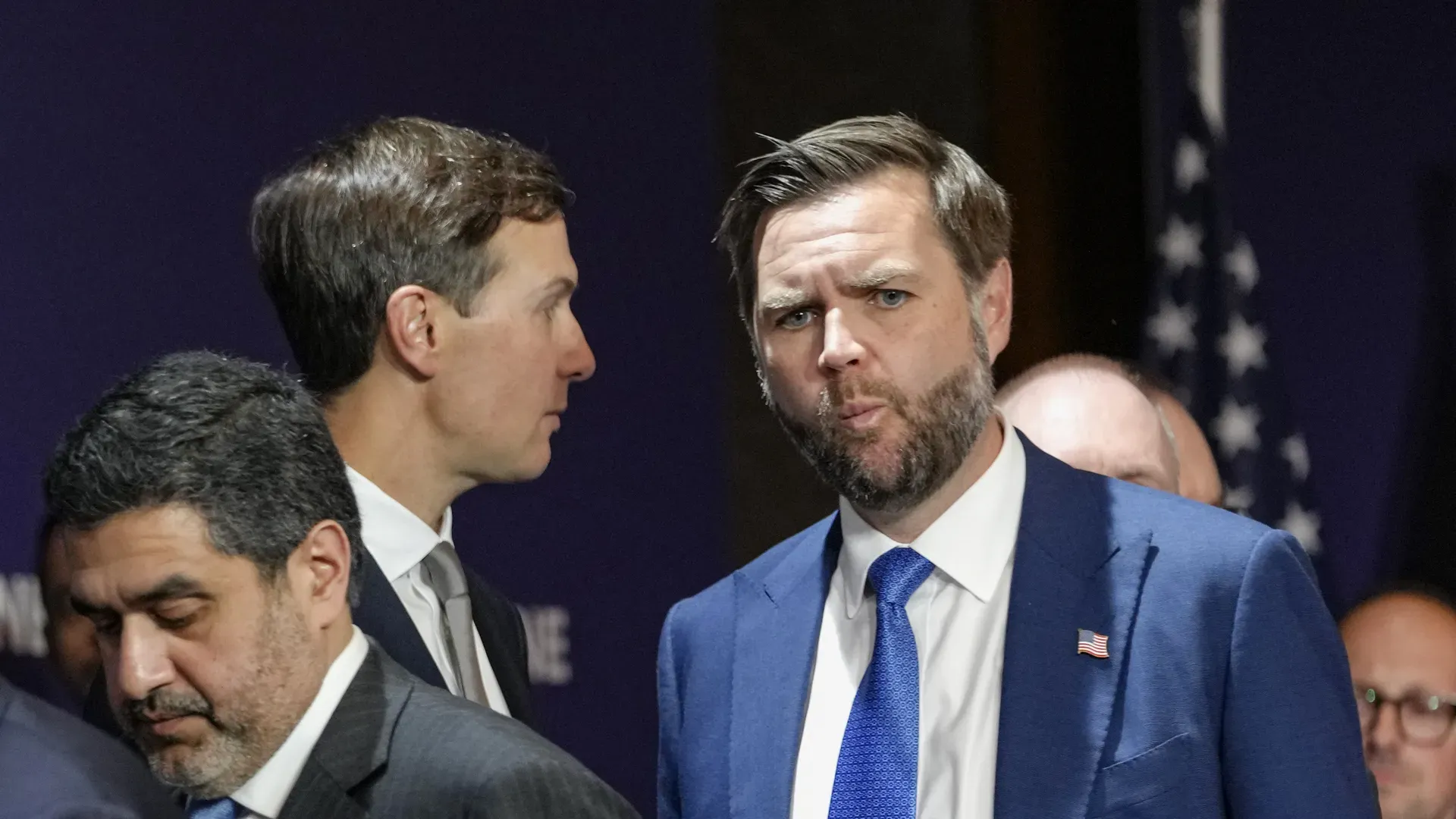
Efforts this week by Qatari mediators to broker a diplomatic breakthrough between the U.S. and Iran have made little progress, with neither side willing to budge, three sources familiar with the talks tell Axios' Barak Ravid.
- "It is stuck," one of the sources said. "The Iranians are asking for things the U.S. can't accept. And the U.S. thinks it is winning so there is no need for compromise."
Why it matters: The stalemate bolsters the belief on both sides that a renewed military conflict is becoming more likely.
💣 U.S. officials think President Trump could order a return to major combat operations after the midterms.
- Qatari officials will keep trying but are growing increasingly frustrated with both sides, two of the sources said.
4. 🧍♂️ AI agents' normal-people problem
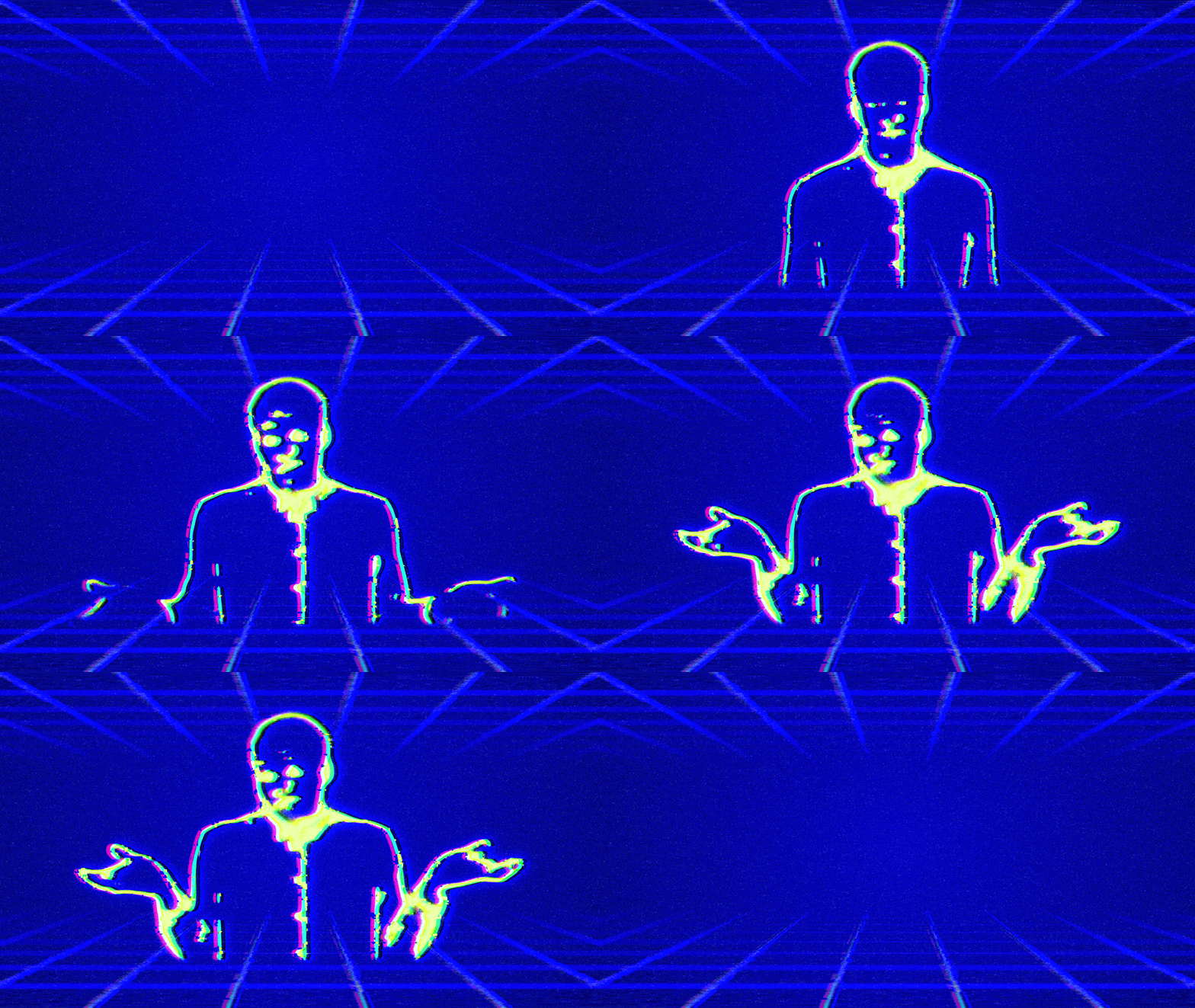
AI companies are staking their future on the mass adoption of agents, hoping that they can solve the annoyances of modern life — email, travel bookings, online purchases, Axios' Shane Savitsky writes.
- Why it matters: The frenzy around Meta's Muse shows there's serious consumer curiosity about the technology. But there's little evidence that most Americans are willing to invest the time needed to re-engineer their lives in a way that puts AI at the center.
Driving the news: Meta's Muse vaulted to the top of Apple's App Store on the back of its integrations with Facebook and Instagram and a cute, fuzzy mascot.
- Microsoft released a souped-up Copilot with an agentic Autopilot feature, while OpenAI yesterday announced its own agentic assistant, dots.
Reality check: Agents only become truly useful when people hand them access to their digital lives — and people really don't want to.
- A 13-country Thales poll this year found broad pushback against the core uses of agents: Only 13% of respondents would let an "AI helper" read their emails, 11% would let one rebook travel, and just 7% would let it move money between bank accounts.
5. 📈 Surprise stat: Media trust rebounds slightly
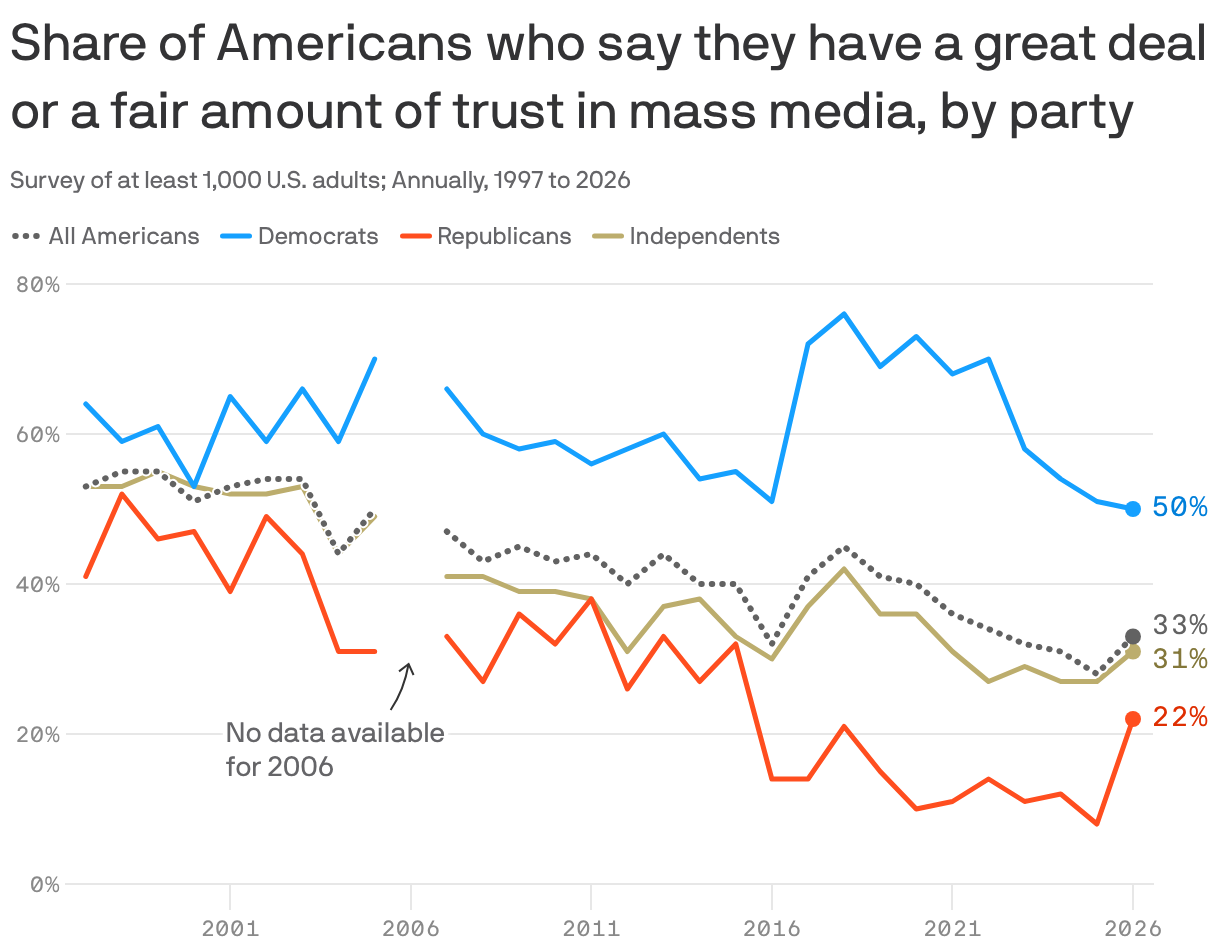
For the first time in years, trust in media rebounded slightly among Americans — a 5-point gain after an 8-year slide, Axios Media Trends expert Sara Fischer writes.
- Why it matters: The trend is driven by a bounce in trust among Republicans. Gallup didn't speculate about why. A wide partisan gap remains: A mere 22% of Republicans trust the press vs. half of Dems.
By the numbers: Around one-third of Americans (33%) say they have a great deal or a fair amount of trust in mass media, according to a new Gallup survey — up from 28% last year, a record low.
- Republicans' trust sharply rebounded from 8% last year to 22% today. Democrats' trust stayed statistically flat at 50%.
😬 Reality check: "Despite this year's increase, confidence in the media remains near the bottom of Gallup's more than 50-year trend."
6. 💡 CEO group defends infrastructure from AI attacks
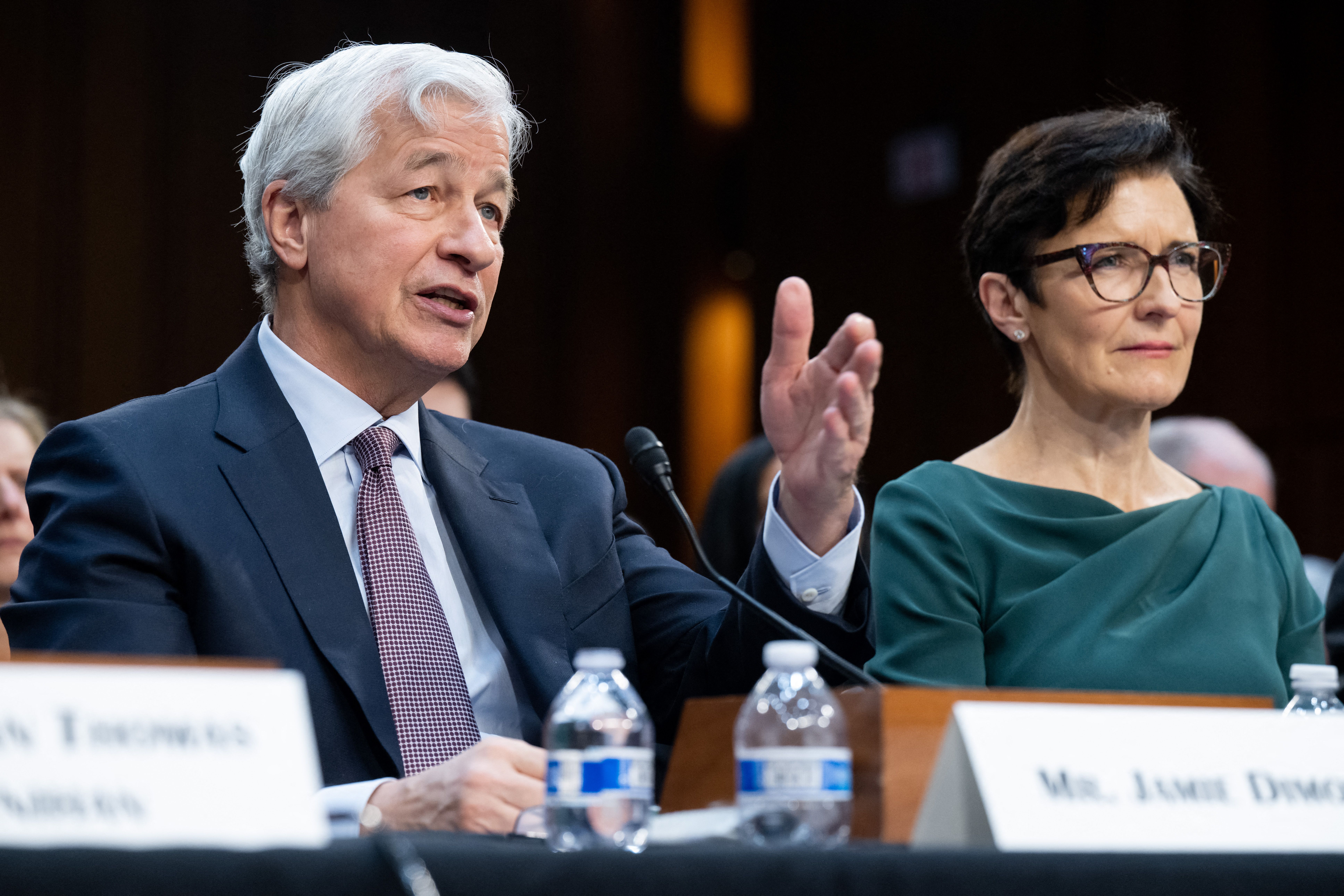
A recently formed CEO-led coalition on critical infrastructure has added top leaders from key pillars of the American economy.
- Why it matters: Growing concern about the prospect of AI-powered attacks on public infrastructure, financial institutions and essential businesses is fueling momentum for action, Axios' Nathan Bomey writes.
🔋 The Alliance for Critical Infrastructure, chaired by JPMorgan Chase CEO Jamie Dimon, added members with heft and depth from multiple industries to ensure that AI doesn't wreak havoc:
- Financial: Citi CEO Jane Fraser, Bank of America CEO Brian Moynihan and Goldman Sachs CEO David Solomon.
- Tech: Amazon CEO Andy Jassy, Apple CEO John Ternus, Google CEO Sundar Pichai and Microsoft CEO Satya Nadella.
- Energy and water: ExxonMobil CEO Darren Woods, Chevron CEO Mike Wirth, Southern Co. CEO Chris Womack and Xcel Energy CEO Bob Frenzel.
- Communications: AT&T CEO John Stankey, Verizon CEO Dan Schulman, T-Mobile CEO Srini Gopalan, Comcast CEO Michael Angelakis and Charter Communications CEO Chris Winfrey.
- Transportation: Delta Air Lines CEO Ed Bastian, United Airlines CEO Scott Kirby, American Airlines CEO Robert Isom, UPS CEO Carol Tomé and FedEx CEO Raj Subramaniam.
7. 🍽️ Time capsule: The richest table ever set
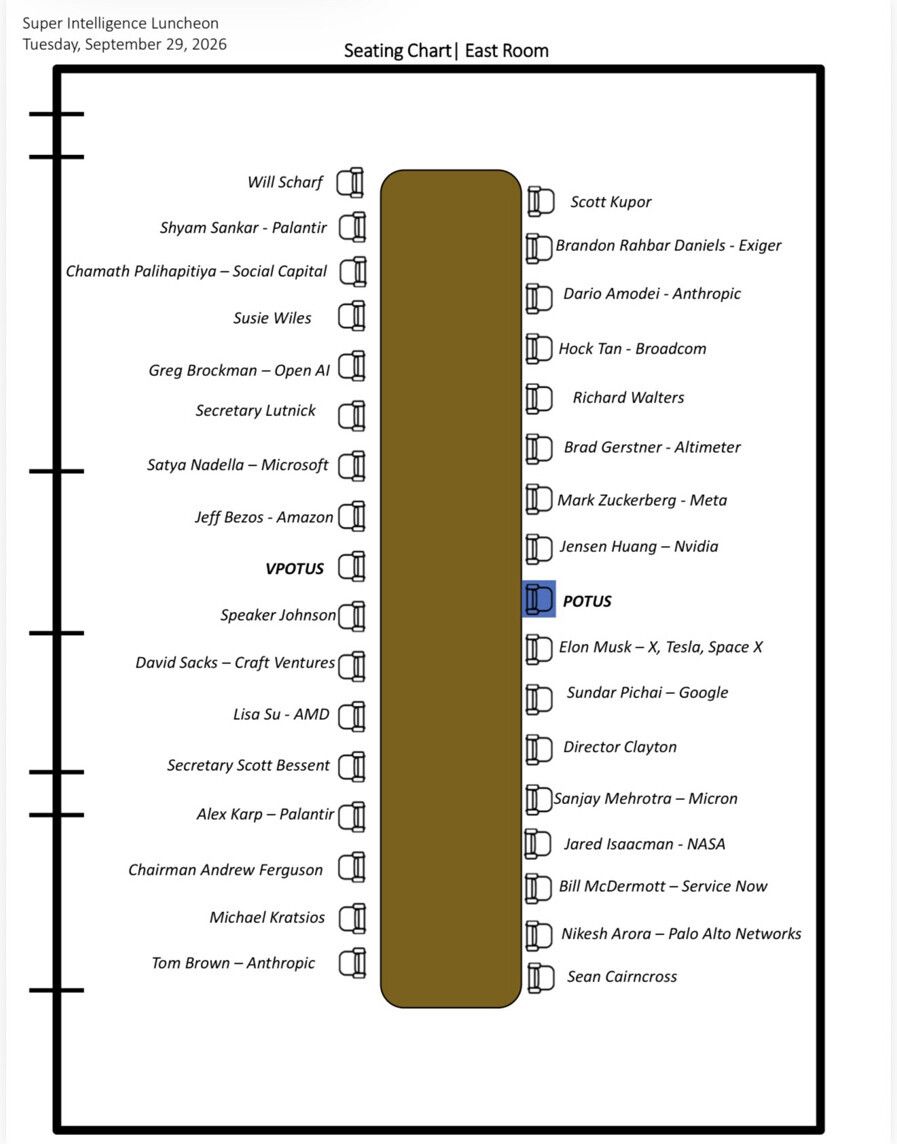
President Trump shared the seating chart for yesterday's "Meeting and Luncheon on Super Intelligence" in the White House East Room.
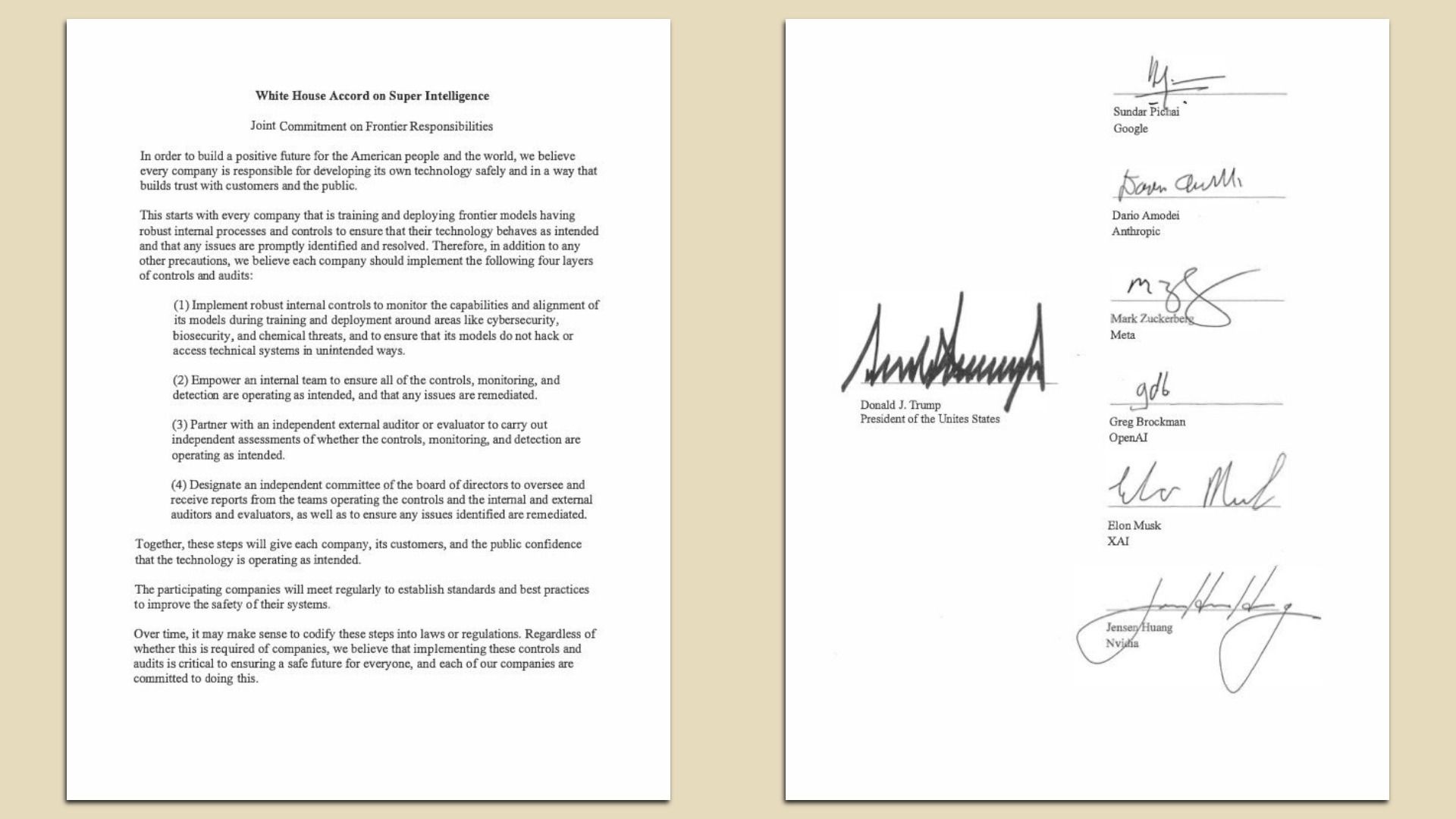
The one-page text of the White House Accord on Super Intelligence, signed by President Trump and six tech moguls.
8. 🎒 Heftiest bear crowned
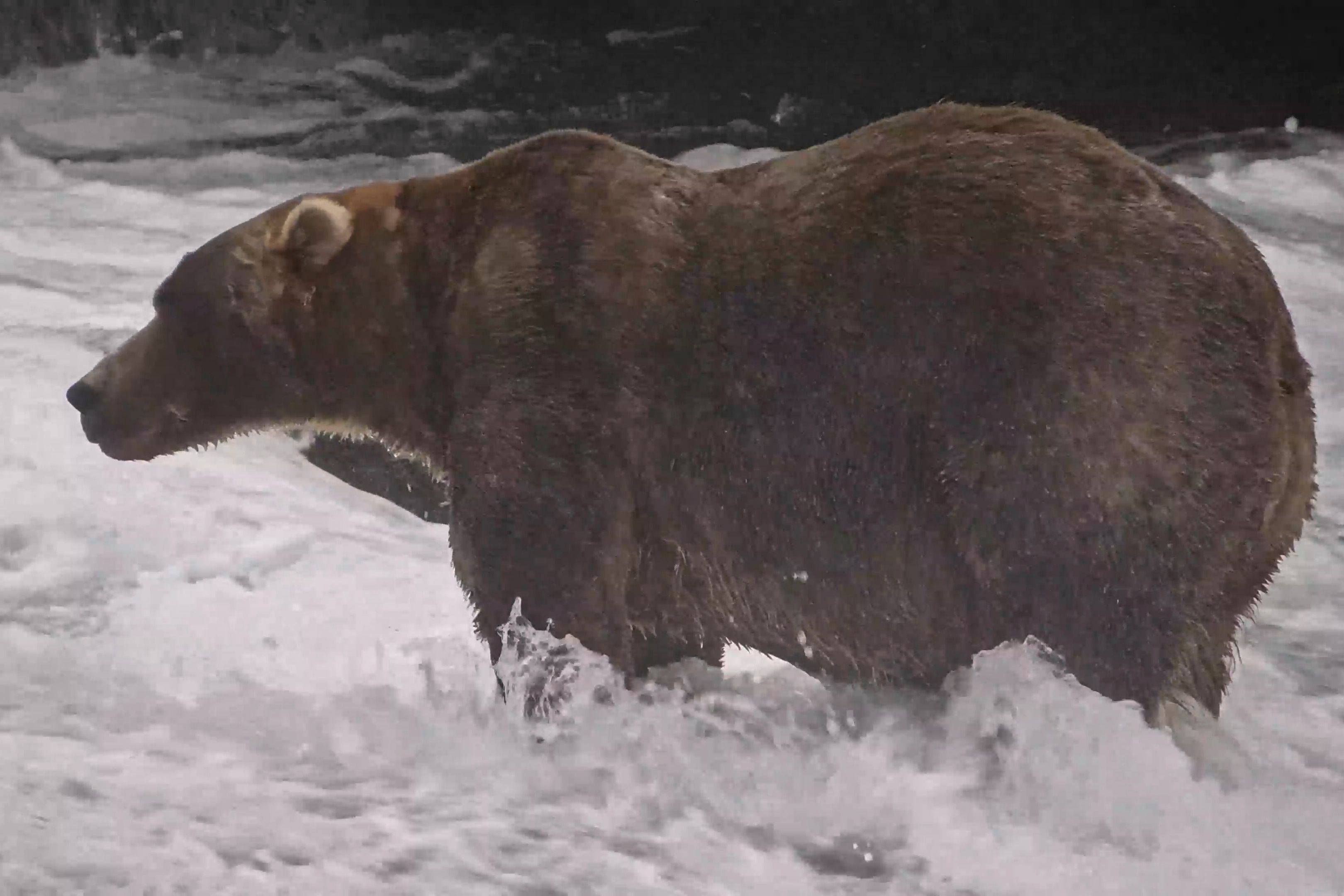
Backpack — "Lord of Lard, Earl of Girth" — won the 12th annual Fat Bear Week, officially declared the heftiest bear in Alaska's Katmai National Park & Preserve.
- 20 years old and packing an estimated 1,000-1,200 pounds, Backpack prevailed from a bracket of 16 chunky bears after a week of online voting. He pulled in more than 100,000 votes in the final round.
- The competition celebrates the resilience of 2,200 brown bears living in the Alaska Peninsula preserve.
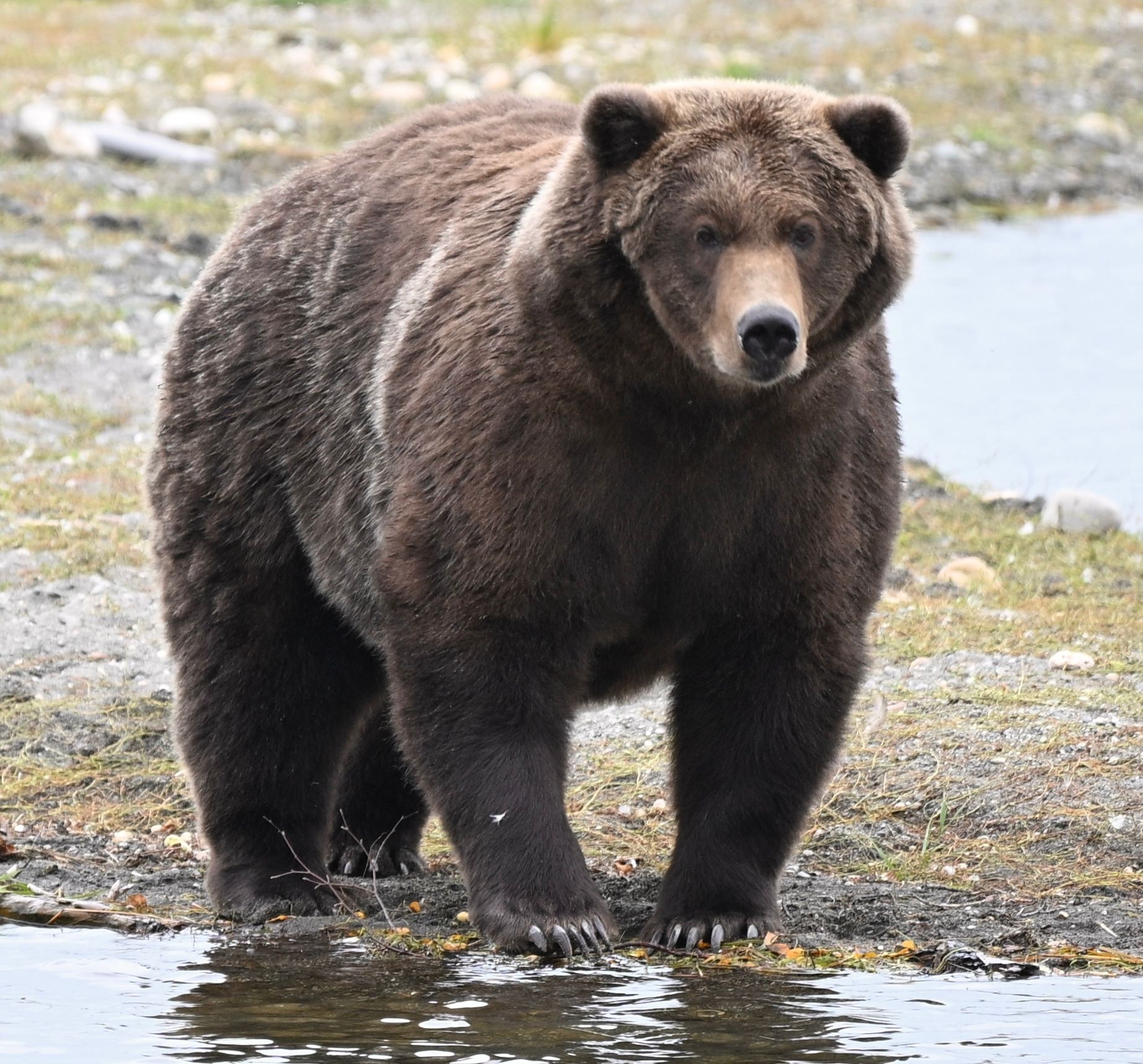
Above, the runner-up: Bear 910, the daughter of a former champion.
Axios AM