Axios AM

March 23, 2026

1 big thing: America's arsenal of tomorrow
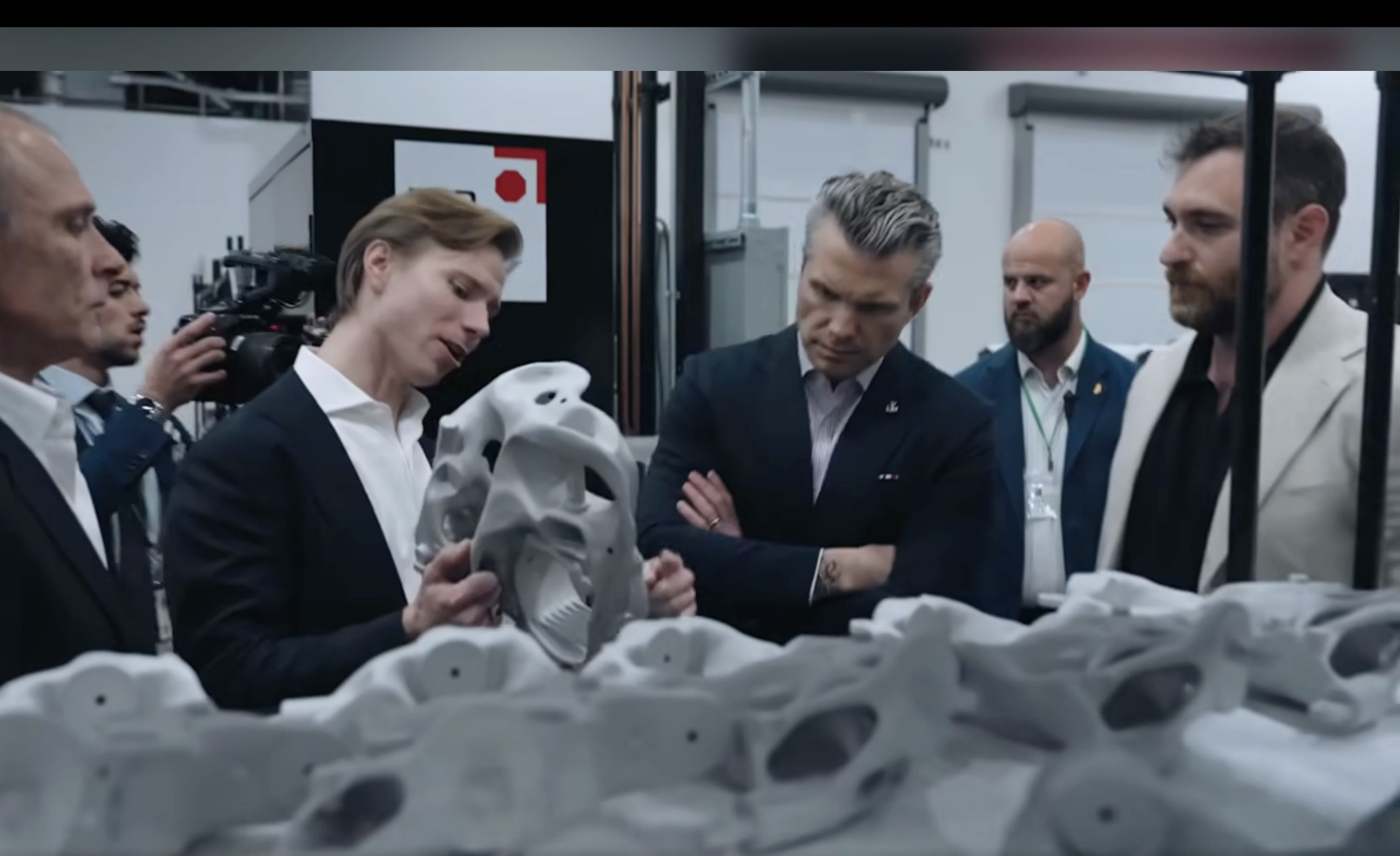
TORRANCE, Calif. — A cruise-missile airframe is being 3D-printed before my eyes. The AI-driven system, the size of a shipping container, hums as it stacks layer on layer of aluminum and proprietary advanced metals.
- Why it matters: This white-floored factory at Divergent Technologies, just outside L.A., is a window into the American arsenal of the future.
Each of Divergent's printers, engineered and manufactured in the U.S., can produce hundreds of these missile airframes each year. They're part of a new generation of "low-cost" missiles that are roughly one-tenth the cost of a legacy system.
- The finished missiles, including parts from other contractors, run $200,000 to $500,000. Legacy standard missiles range from $2 million to $6 million each.
- Divergent calls its revolutionary capability "one-factory, any-product manufacturing." With no switchover time, the same 3D-printing bay I watched can spit out suspension parts for a McLaren supercar.
Lukas Czinger — Divergent's 31-year-old co-founder, president and CEO — told me: "America has the opportunity today to create the world's leading manufacturing base by adopting leapfrog technology."
- Since the Iran war began three weeks ago, Divergent — like other defense contractors — is enjoying a surge of incoming interest. "Everyone has woken up to what some people knew," Czinger told me. "There's consensus in the [Pentagon] now … that munitions at scale are required today, not tomorrow. And that is what has accelerated our business here."
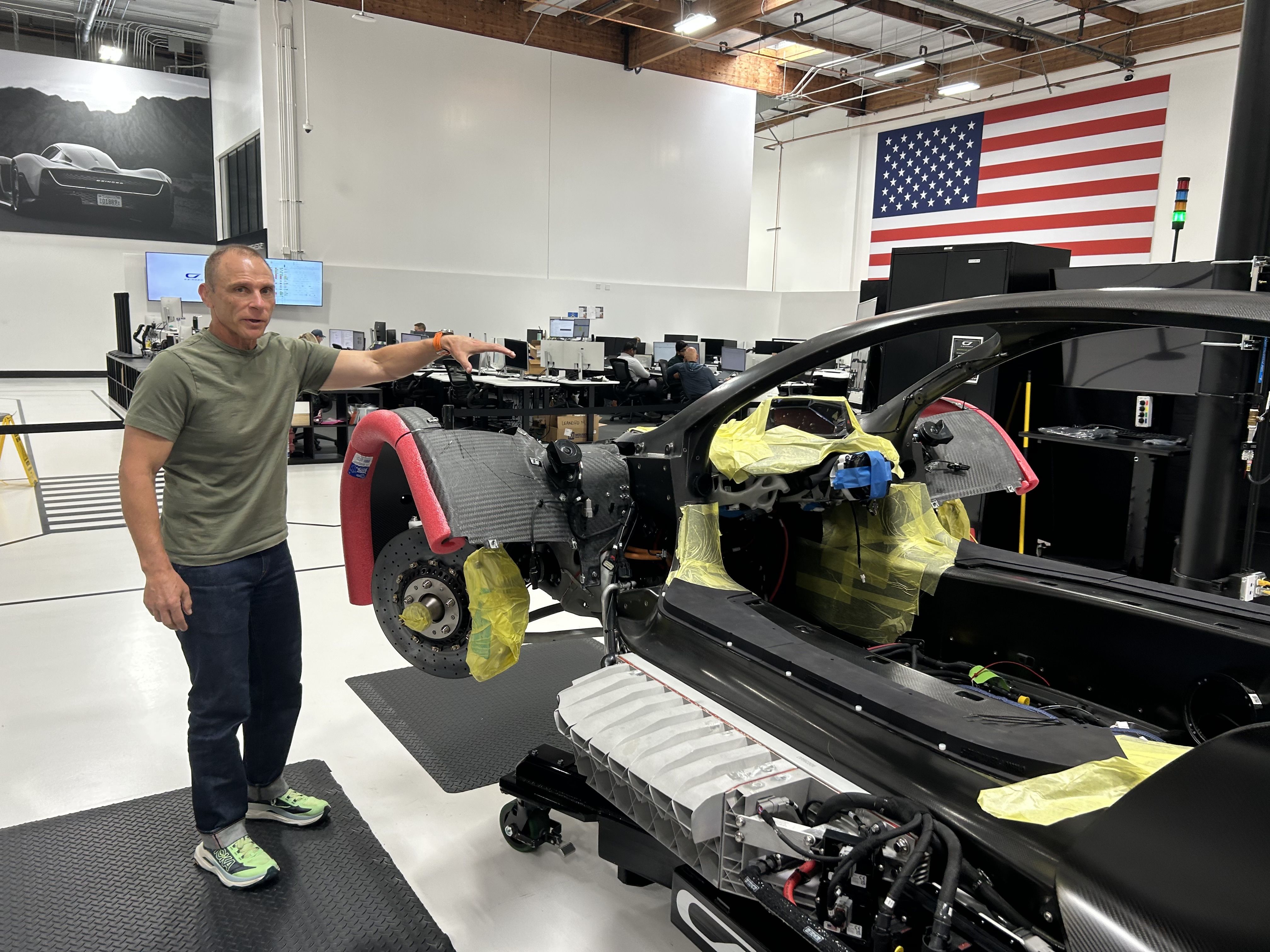
🖼️ The big picture: Divergent is one of the defense-tech companies that the Pentagon has branded the "Arsenal of Freedom" — a Trump administration effort to mobilize the defense industrial base as part of revitalizing America's manufacturing might.
- A bunch of these frontier defense firms — including Divergent and Epirus, which makes the counter-drone system we showed you last year — are clustered in the South Bay area of L.A., in Torrance, El Segundo and Hawthorne. It's a patriotic, capitalist enclave in the bluest of states: Many of the factory floors have 15-foot American flags hanging high.
- The result: weapons of war at the speed of Silicon Valley. Working with a prime contractor, Divergent recently took a whiteboard design for a missile "from requirements to first flight in 71 days," Czinger told me.
The backstory: Divergent was started in 2014 by Lukas Czinger's dad, Kevin Czinger, as a software-driven race-car manufacturer, and maker of what the company calls "the world's fastest street-legal hypercar," the 21C.
- Kevin Czinger, 66, Divergent's founder and executive chairman, told me his company is part of a breed of startups, "driven by national security needs, that will allow America to lead in the engineering and making of things for the next 100+ years. We can, within a few years, completely reposition America to be the leading maker of things in the world again."
2. 💰 Charted: Superstar stock domination


The stock market is increasingly dominated by a few huge and extremely profitable "superstar" companies, Axios Markets author Emily Peck writes.
- The most profitable third of publicly listed U.S. stocks account for roughly two-thirds of total market capitalization — the highest share on record, going back to 1963.
The AI boom made the biggest companies even more profitable last year, says Ernie Tedeschi, chief economist at Stripe.
- The big guys aren't simply the Magnificent 7 tech companies, but include Home Depot and JPMorgan Chase.
- "We're just seeing explosive growth in established companies," Tedeschi tells Axios.
🔭 Zoom out: The U.S. stock market is incredibly top-heavy — just a few firms make up nearly 40% of the S&P 500's total market cap.
- The current level of concentration in the market is now higher than it was in 1932, according to data cited recently by Morningstar.
Go deeper: Why it's not a bad thing.
3. 🚘 New robotaxi rule: Trust your instincts!
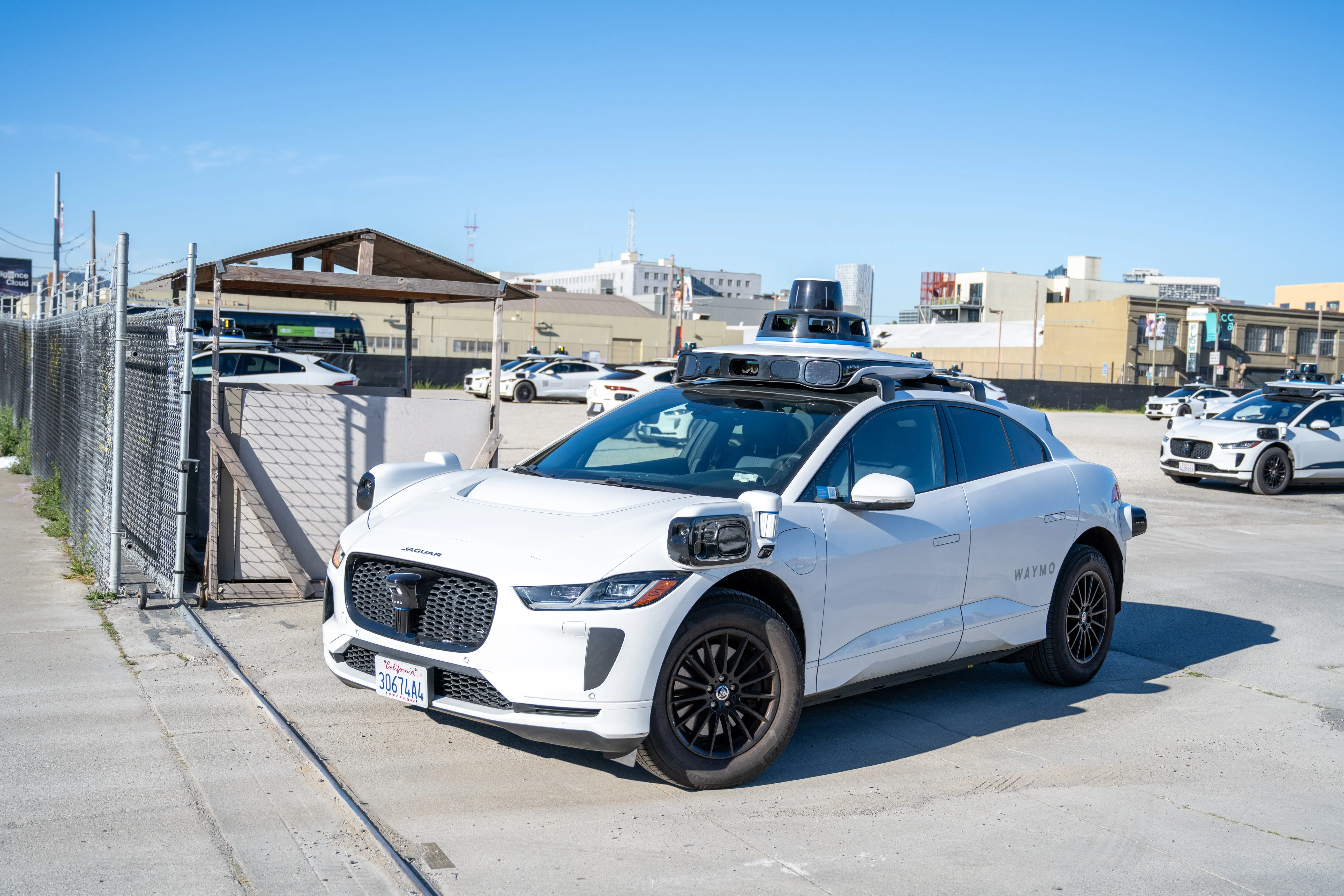
Robotaxi operators are discovering that built-in safety redundancies can sometimes backfire, Axios Future of Mobility author Joann Muller writes.
- Why it matters: Every incident involving robotaxis — every dumb or potentially dangerous error — is being scrutinized as operators work to earn public trust.
In one infamous incident, many of Waymo's robotaxis stopped operating and blocked traffic during a chaotic power outage in San Francisco that knocked out traffic signals and cellular networks.
- Waymos are trained to call for remote guidance when they encounter a traffic light that's not working. But operators were quickly overwhelmed.
Waymo attorney Allison Drutchas explained that the company is identifying "areas or times when that extra level of conservatism is no longer appropriate, and the car should sort of trust its opinion and proceed, even if it hasn't gotten a response from remote assistance."
- That means treating the intersection like a four-way stop and yielding appropriately to other traffic.
4. 🏛️ Washington's new monuments

A 13-foot, one-ton statue of Christopher Columbus was installed on the White House grounds early yesterday, the N.Y. Times first reported (gift link).
- The statue — a replica of a monument in Baltimore that protesters tore down in 2020 — faces Pennsylvania Avenue outside the Eisenhower Executive Office Building.
The installation was arranged by Basil Russo, leader of the Conference of Presidents of Major Italian American Organizations, and "was built, in part, with pieces of the shattered statue that were retrieved from the Baltimore Harbor."
- The pedestal reads: "Destroyed July 4, 2020 ... Resurrected 2022 ... Rededicated by President Donald J. Trump, October 13, 2025."
- Read Trump's letter.
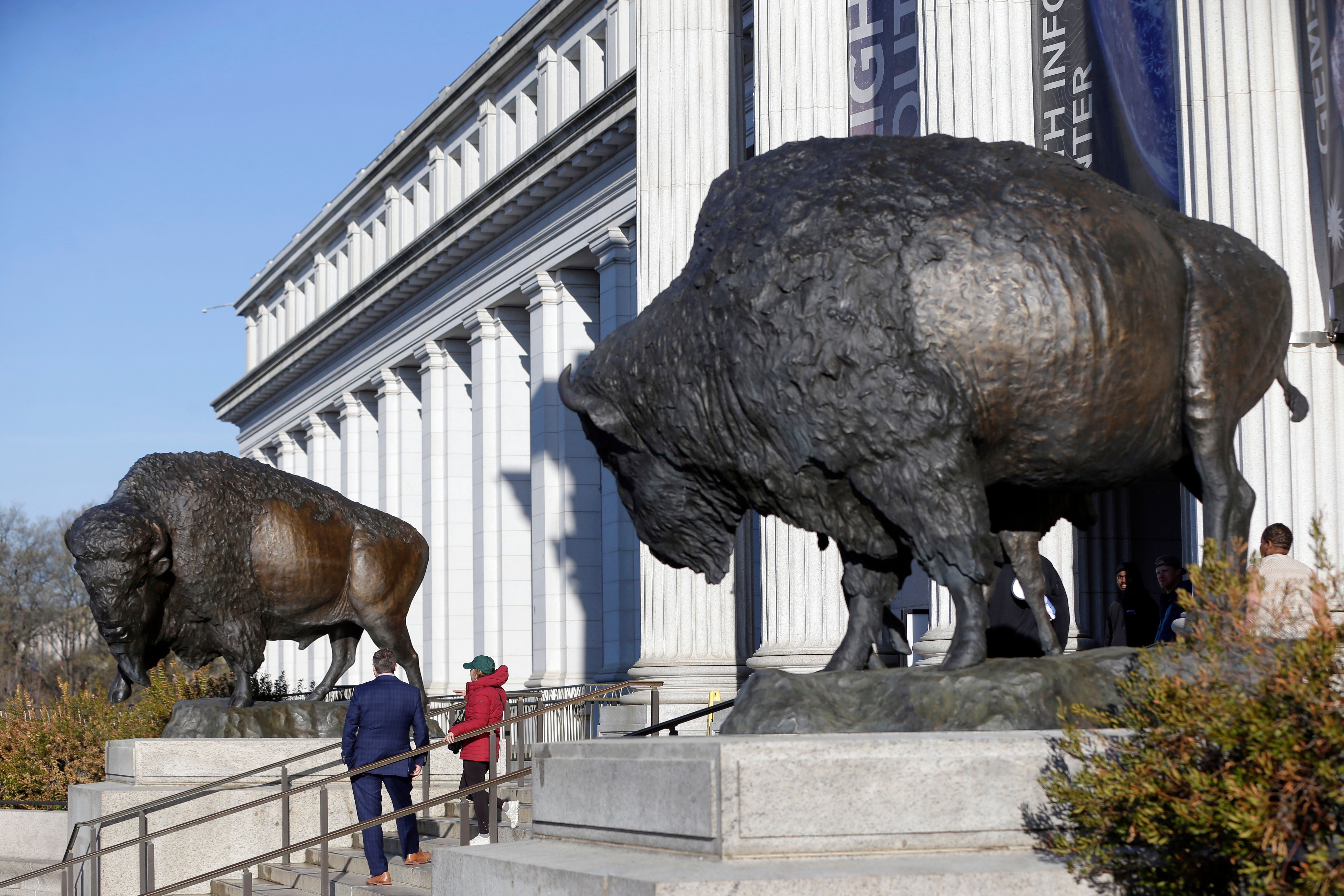
🦬 Above: The Smithsonian just installed these two larger-than-life bronze bison outside the Natural History Museum — permanent sculptures by renowned paleo-artist Gary Staab, Axios D.C.'s Anna Spiegel writes.
- The bison, based on historic Smithsonian specimens, celebrate the comeback of America's national mammal, once near extinction.
The bovines, which stand within sight of the Washington Monument, weigh in at 2,500 pounds each and are 125% life-size.
5. ⚡ Scoop: OpenAI eyes fusion deal
6. 📈 Larry Fink: "Growing with your country"
Larry Fink — chairman and CEO of BlackRock, the world's largest asset manager — says in a letter to investors, out this morning, that for more Americans to share in the future growth of their country, "we have to make long-term investing easier, broader, and more accessible."
- Why it matters: Fink, who calls himself a "long-term optimist," has worked passionately to stimulate a conversation about rethinking retirement in America. "The world is reorganizing around self-reliance — and that's expensive," he writes in the 17-page letter. "And that requires more long-term investment."
Getting more Americans invested in their own economy, Fink says, starts with "early wealth-building accounts and a long-overdue conversation about Social Security."
- Fink writes that much of today's economic anxiety comes from the feeling "that capitalism is working — just not for enough people. And a focus on short-term investing is not a fix for that. Rather, it is long-term investing ... that lets people build enduring wealth, and shows how their country's growth can benefit them too."
🔮 What's next: Fink is concerned about making prosperity "feel increasingly distant to those on the outside." He wants the country to navigate the coming AI jobs disruption so we don't replicate, for instance, the hammering the Rust Belt took during globalization, and instead help as many people as possible benefit from the dynamism of the economy.
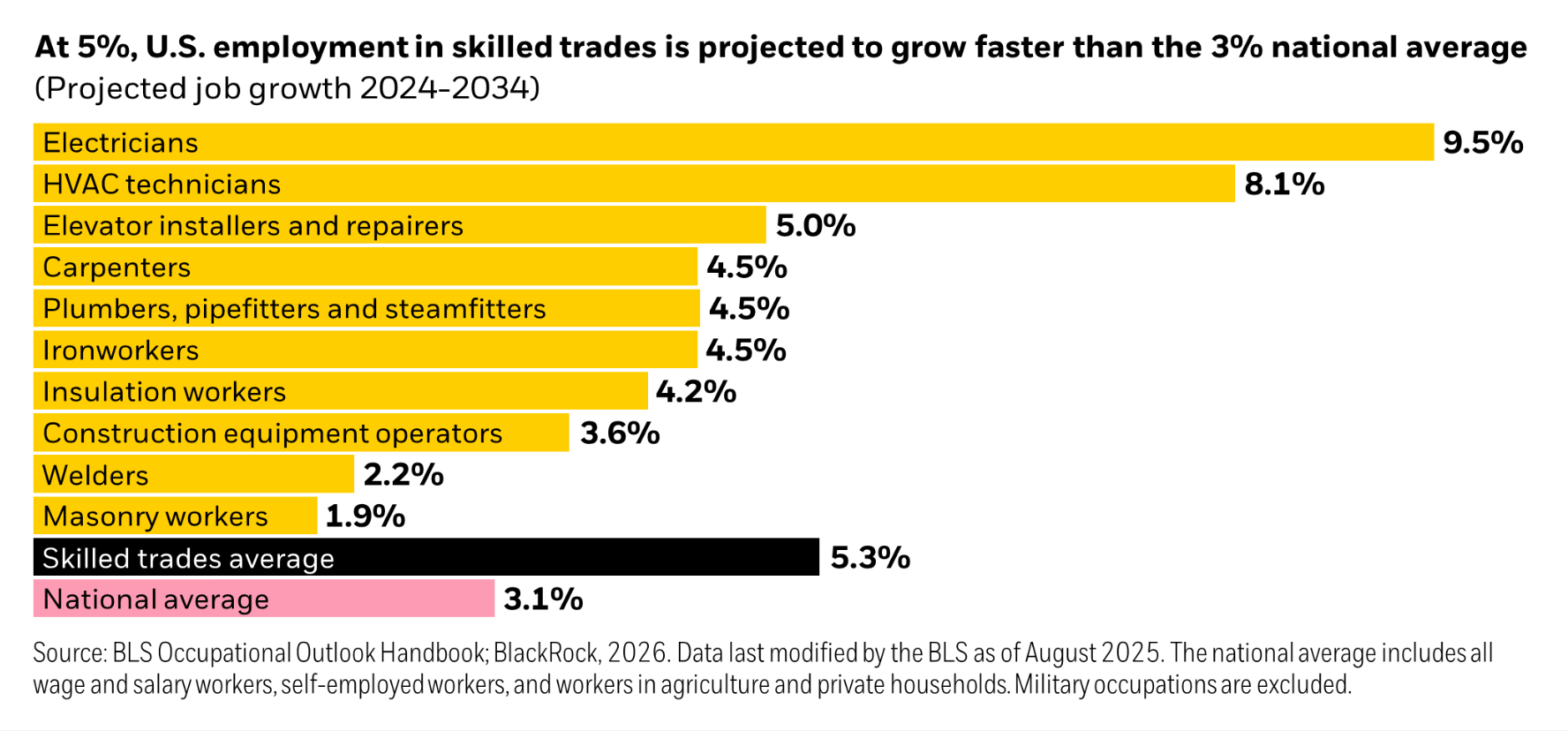
- In the short term, AI is spawning jobs that pay well: skilled trades, especially ones like electricians that are building the physical infrastructure of AI — data centers, power systems and electrical grids.
- "For decades," Fink writes, "many societies have equated success with a university degree and a white-collar path. As technology reshapes parts of that landscape, we need a broader conversation about opportunity, dignity, and the value of different kinds of work."
7. ⚖️ Targeting AI porn
Existing laws don't do enough to stop bad actors from using real people's PG social media photos to fabricate "deepfake" sexual content with AI tools, attorneys, legal experts and policymakers tell Axios Local's Jessica Boehm and Travis Meier.
- Three Arizona women say in a lawsuit that pornographic videos depicting their likenesses began circulating online after AI platforms were used to create sexual content based on their Instagram posts.
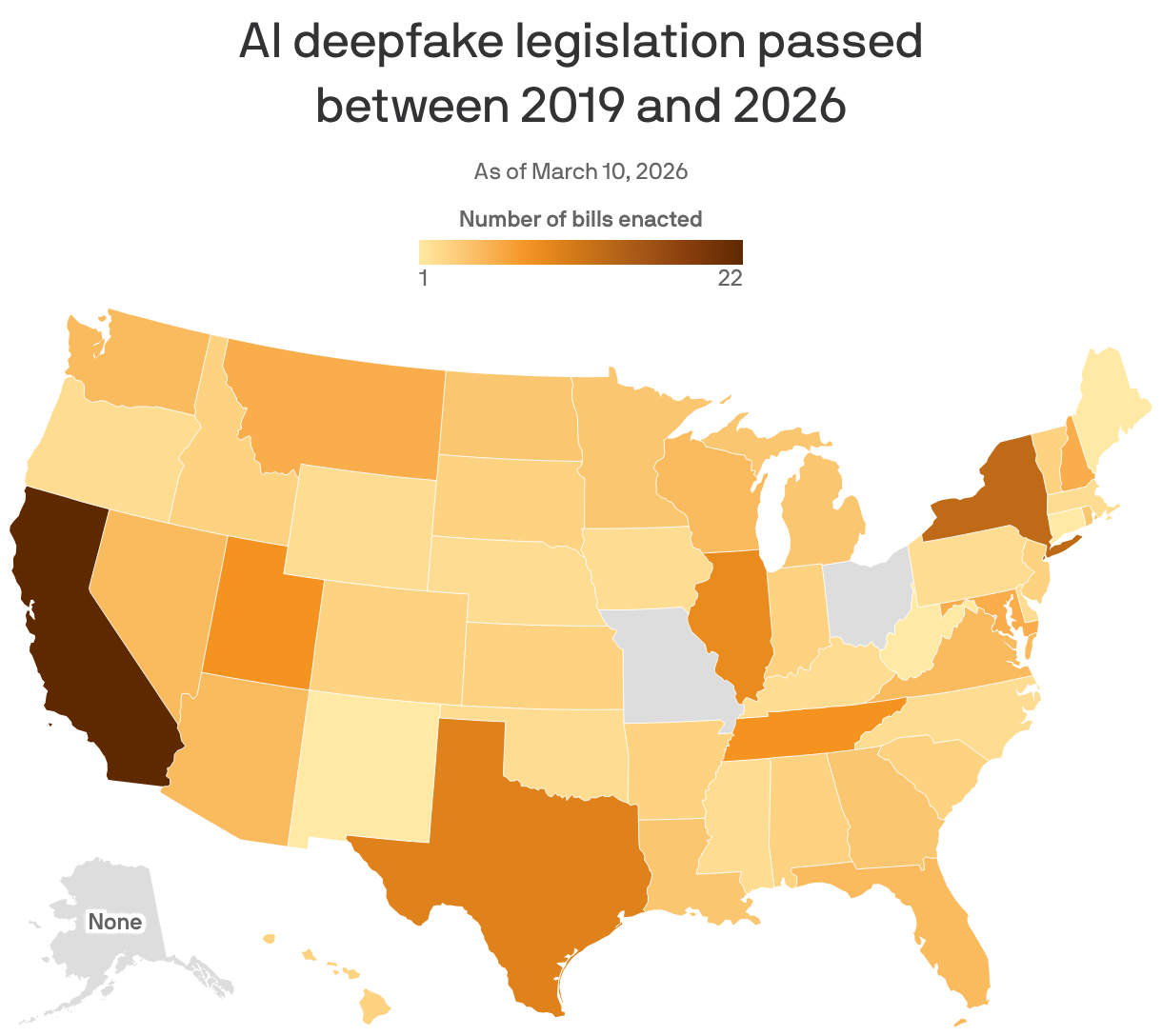
The big picture: Nearly every state has enacted legislation targeting AI deepfakes in recent years, according to Ballotpedia. But the laws vary widely, and many remain narrowly focused on election misinformation or child exploitation.
- Congress has stepped in. The Take It Down Act, passed last year, makes posting nonconsensual images a federal crime and requires platforms to remove them within 48 hours.
- More on the lawsuit.
🤖 New this morning: Alliance for a Better Future — a coalition of conservative groups that wants "common-sense" guardrails around AI development, and is ready to put polling, money and PR campaigns into the fight — is launching today, Axios' Ashley Gold writes.
8. 🍿 1 film thing: Amazon's big win
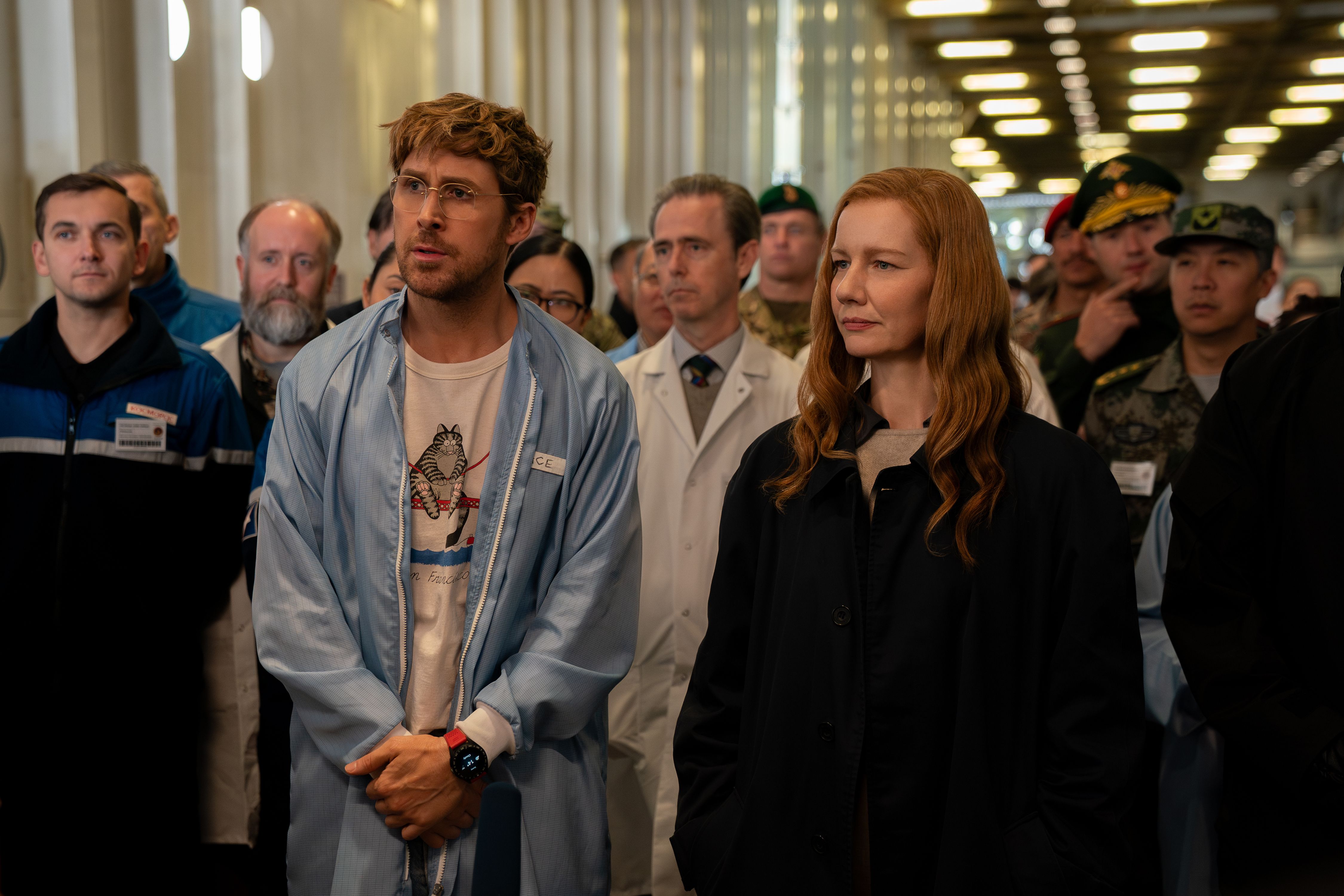
"Project Hail Mary" delivered $81 million in domestic ticket sales over the weekend — the biggest movie debut so far this year and a record for Amazon MGM Studios.
- The movie earned an additional $60 million in international markets.
The Ryan Gosling film follows a molecular biologist-turned-middle-school-teacher-turned-astronaut who wakes up with amnesia aboard a spaceship.
- Hollywood Reporter: "Box Office Supernova."
Axios AM