Axios AM

September 06, 2025

1 big thing — Scoop: Biden aides protested autopen pardons

2. 🥊 Part 2: Aides sound alarm
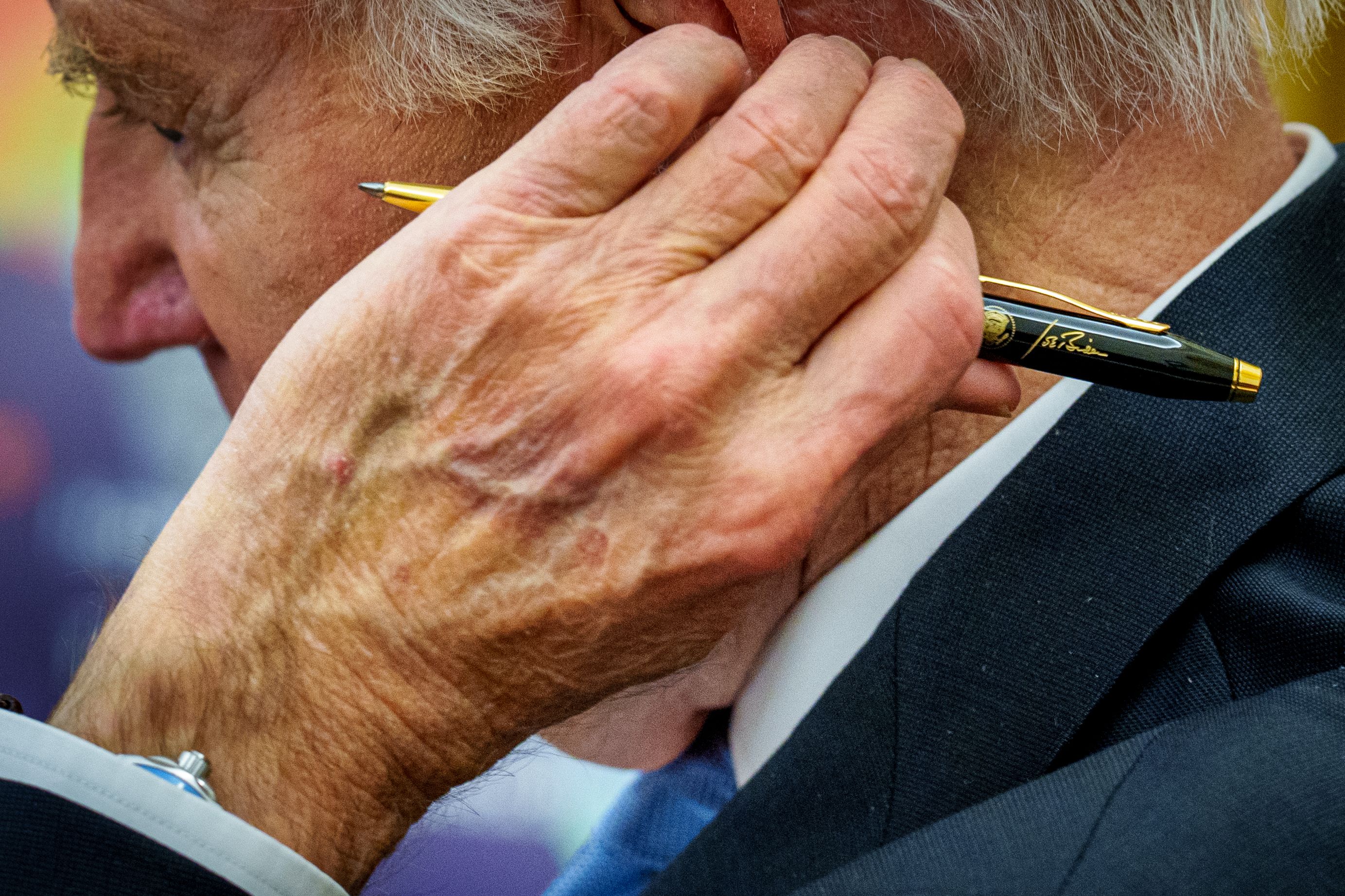
Several senior Justice Department officials raised objections about the clemency process with the White House Counsel's office, which was led by Ed Siskel, Axios' Alex Thompson reports.
- Siskel helped steer the clemency process in the administration's final months and did not respond to a request for comment.
On Jan. 17, just three days before leaving office, Biden granted 2,490 commutations — the most ever by a president on a single day. Biden said they were for people "convicted of nonviolent drug offenses who are serving disproportionately long sentences."
- Biden boasted: "With this action, I have now issued more individual pardons and commutations than any president in U.S. history."
📝 The next day, senior Justice Department ethics attorney Bradley Weinsheimer penned a scathing memo stating that calling the clemency recipients nonviolent was "untrue, or at least misleading."
- He listed some of those with violent crime records to whom Biden had given clemency — including a man who had pleaded guilty to charges related to murder after killing a woman and her 2-year-old daughter, after the mother threatened to reveal his drug-dealing business to law enforcement.
Weinsheimer said the DOJ had marked the man as "problematic," but Biden commuted his sentence anyway. "I have no idea if the president was aware of these backgrounds when making clemency decisions," Weinsheimer wrote.
- The New York Post first reported details of Weinsheimer's memo, along with other emails.
💬 Asked about the process for clemency, Biden told The New York Times in July: "I made every decision."
- Biden said he used the autopen only for the thousands of commutations and pardons because "we're talking about a whole lot of people."
- That explanation is undermined by records that indicate Biden only had to sign a few documents for every large group of people he granted clemency.
Zoom out: Internally, some senior Biden White House officials pushed back on the frequent requests to use the autopen.
- Biden White House staff secretary Stef Feldman, who was in charge of the West Wing paper flow, repeatedly asked for more details and confirmation of the president's intentions with the autopen — including when it came to clemency, according to several emails Axios obtained.
- On Jan. 16, when told to use the autopen to commute several cases related to crack-cocaine sentences, Feldman wrote back: "I'm going to need email from [Rosa Po] on original chain confirming [Biden] signs off on the specific documents when they are ready."
👀 What's next: The House Oversight Committee is to interview Zients on Sept. 18 about Biden's use of the autopen.
3. 🚨 Manufacturing goes in wrong direction

4. 📷 Trump makeovers
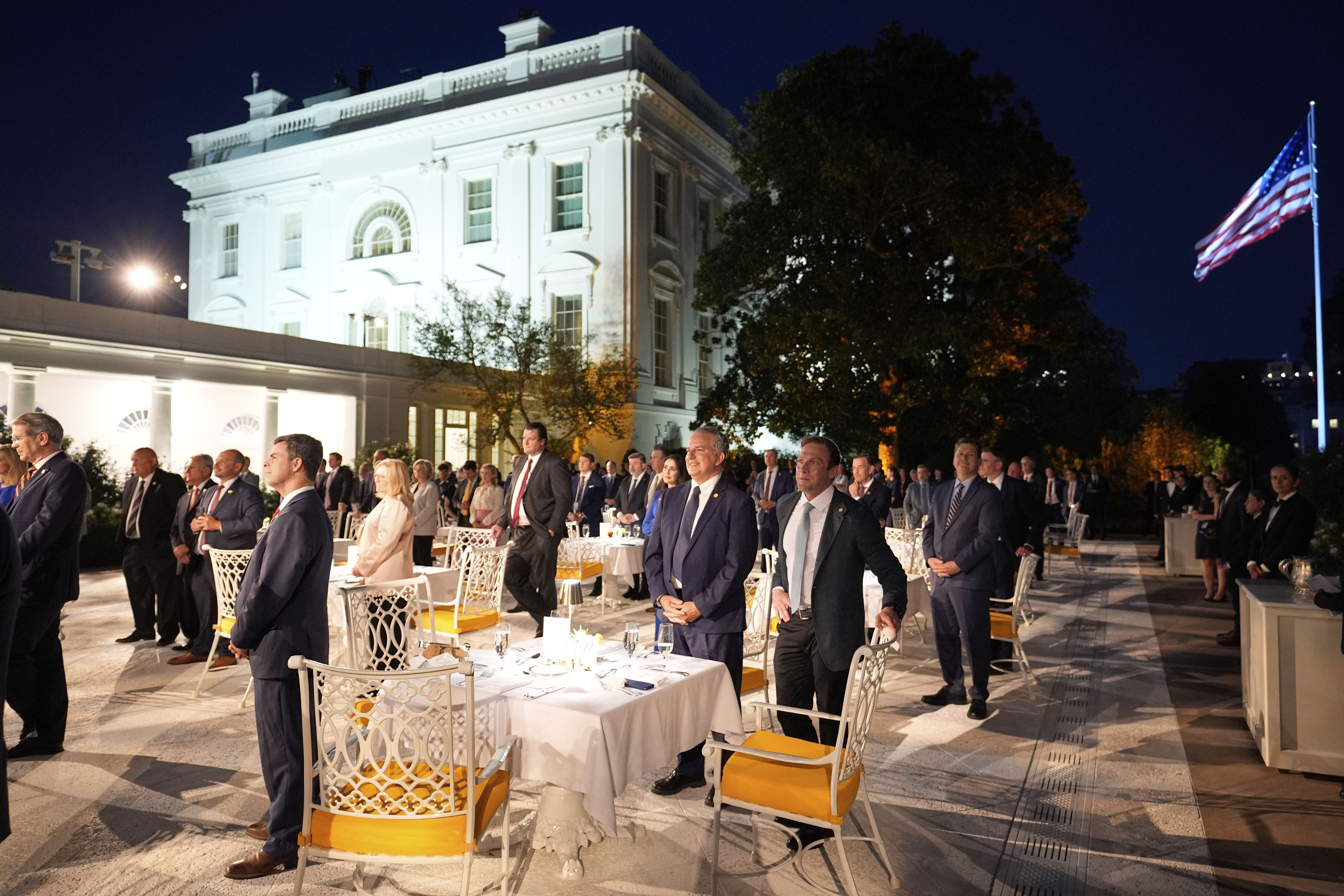
With a dinner for GOP lawmakers, President Trump last night inaugurated the Rose Garden Club — his Mar-a-Lago-esque dining patio in the newly paved Rose Garden.
- The president held a microphone as he addressed about 100 people — mostly House Republicans, along with some GOP senators, AP reports.

"We call it the Rose Garden Club," Trump said. "And it's a club for senators, for congresspeople and for people in Washington — and, frankly, people that can bring peace and success to our country."
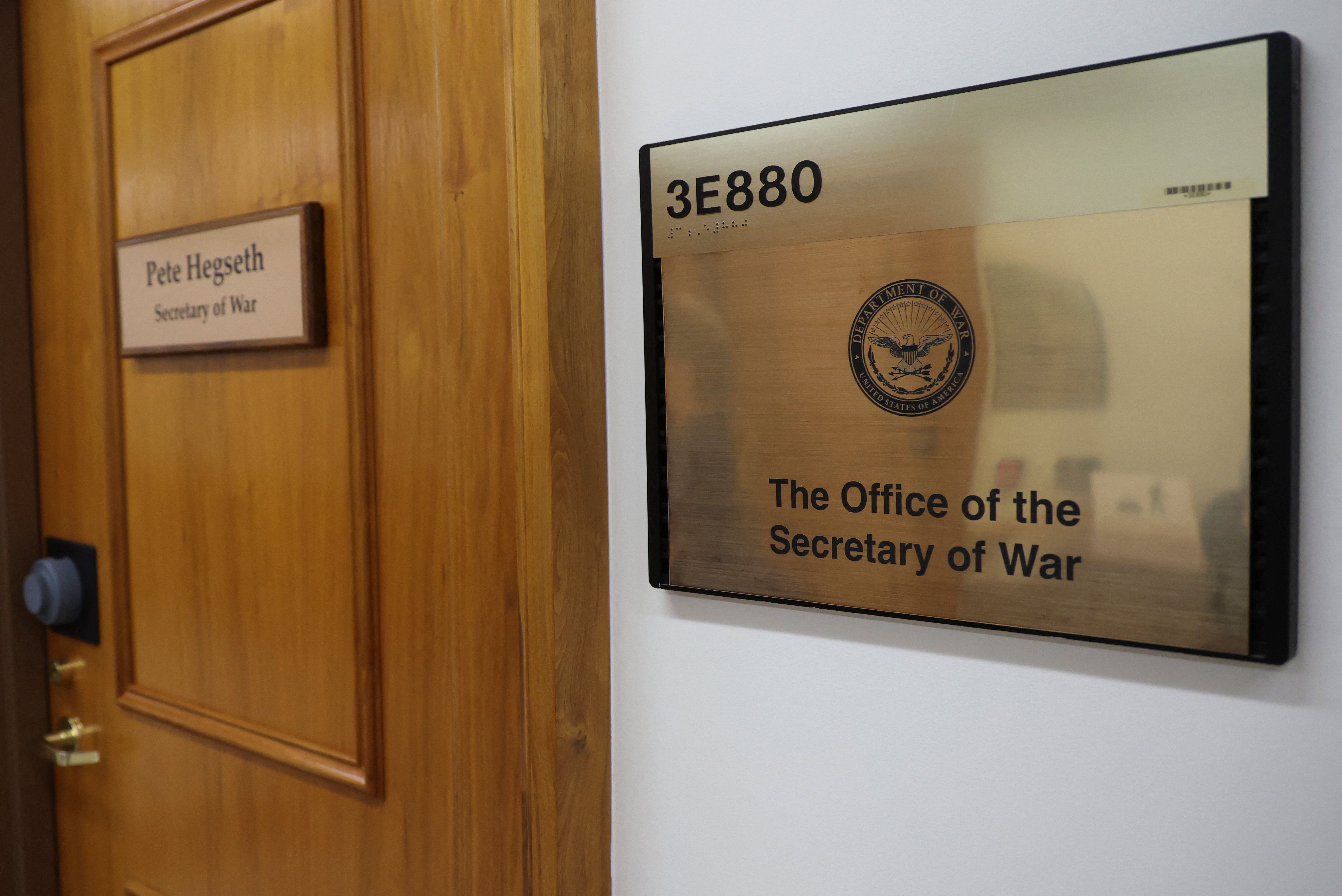
New signs at the Pentagon proclaim Pete Hegseth "Secretary of War" yesterday, as Trump ordered the Department of Defense to be renamed the Department of War — reverting to a title it held until 1949 (76 years ago).
- Officials made the change after World War II to emphasize preventing conflict.
"I think it sends a message of victory ... a message of strength," Trump said.
- The executive order restores "Department of War" as a "secondary title for the Department of Defense." (Congress would have to formally authorize a new name.)
It's Trump's 200th executive order in his 229 days in office.
5. 🤖 Anthropic to pay authors $1.5 billion

6. 📺 "Face the Nation," uncut and unedited
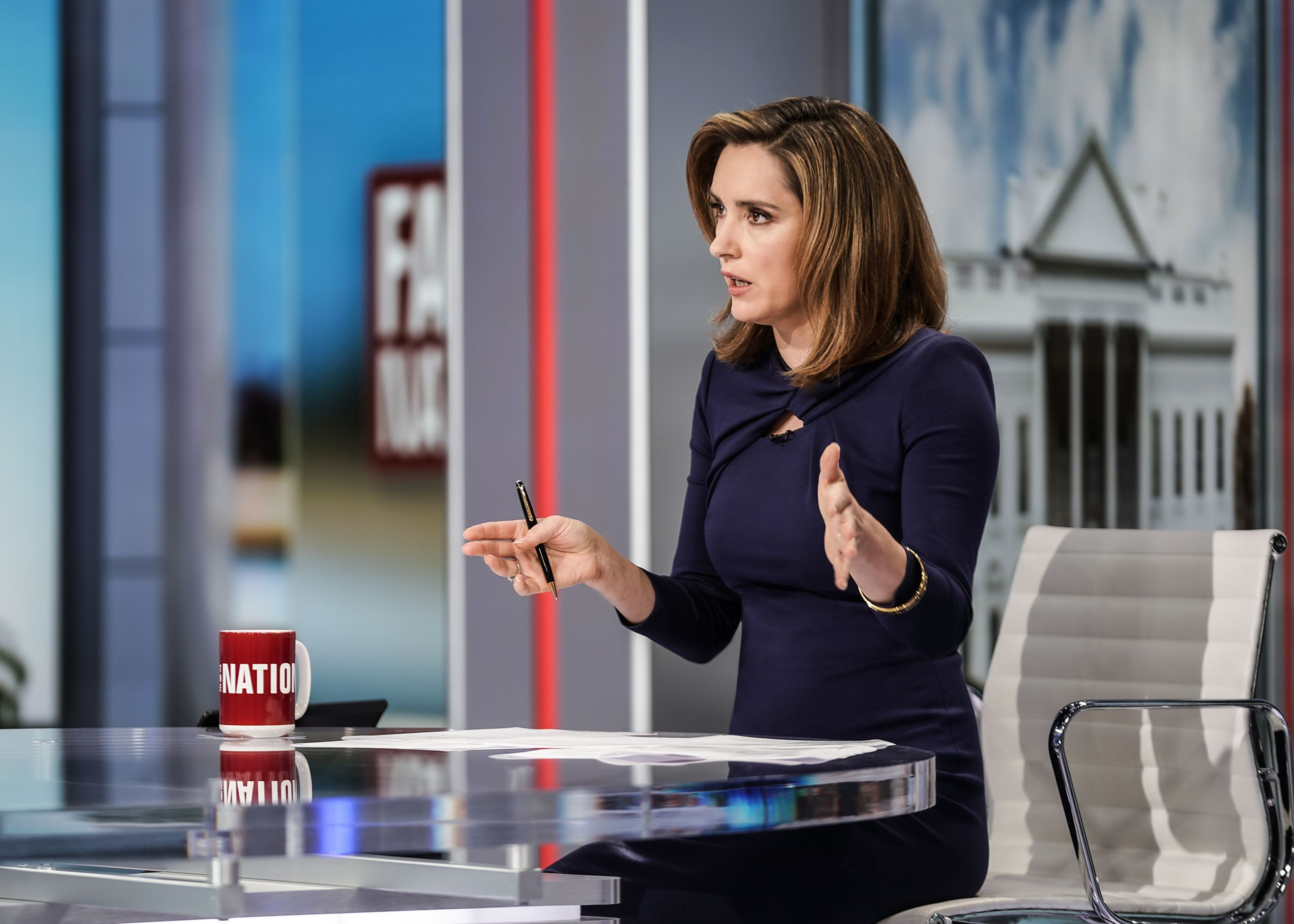
CBS is changing its rules for editing interviews on its Sunday morning show, "Face the Nation," after days of sharp criticism from the Trump administration over how the network cut its Aug. 31 interview with Homeland Security Secretary Kristi Noem.
- "In response to audience feedback over the past week," a CBS News statement says, "we have implemented a new policy for greater transparency in our interviews. FACE THE NATION will now only broadcast live or live-to-tape interviews (subject to national security or legal restrictions). This extra measure means the television audience will see the full, unedited interview on CBS and we will continue our practice of posting full transcripts and the unedited video online."
Catch up quick: It's standard practice at networks to cut and edit interviews for clarity or time. CBS News initially stood behind the interview, saying it "met all CBS News standards," The New York Times reports.
- The full segment was 16 minutes and 40 seconds and was released online. The version that aired on TV was 12 minutes and 15 seconds long.
The backdrop: CBS parent Paramount Global recently agreed to pay $16 million to settle a voter interference lawsuit filed by President Trump last October, even as press freedom advocates warned the company was buckling to political pressure.
7. 💰 Sky-high jackpot


The Powerball jackpot has climbed to $1.8 billion ahead of today's drawing, making it the nation's second-largest lottery prize ever.
- If nobody wins today, Monday's drawing could set a new U.S. record, Axios' Kelly Tyko writes.
Flashback: The world's largest-ever lottery prize was the $2.04 billion Powerball jackpot that one ticket purchased in California won on Nov. 7, 2022.
8. 🛝 1 fun thing: Tallest slide

The longest steel slide in the U.S. is 171 feet tall, and it's in Virginia Beach, Axios Richmond's Sabrina Moreno writes.
- The "Whorl" — a spiraling behemoth in Virginia Beach's Owl Creek Landing — requires sliders to climb a third of a mile up and ride down in a "specially made sack."
Axios AM