Axios AM

August 14, 2024

1 big thing: Harris plan to redefine herself
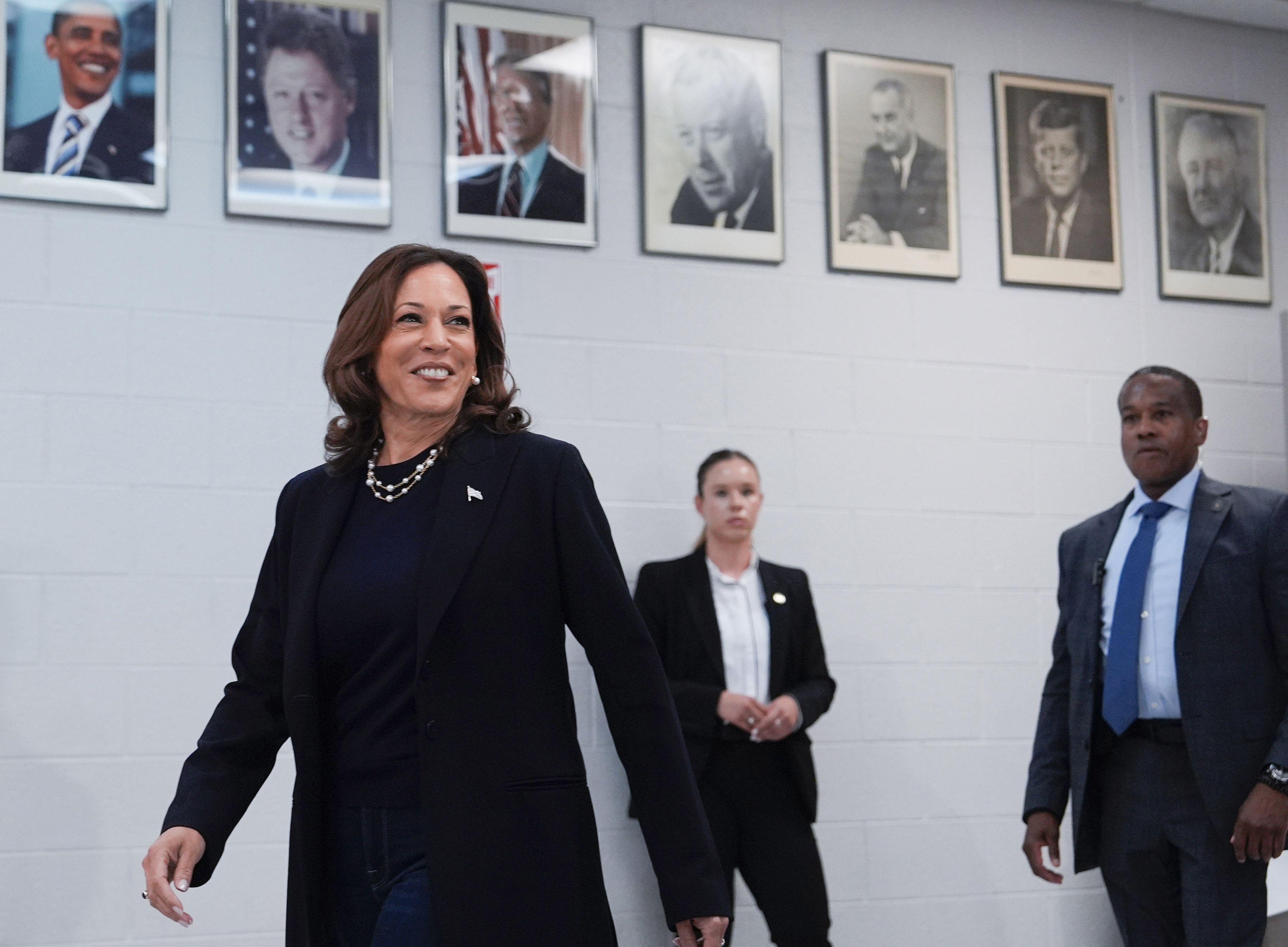
Vice President Harris, hoping to distance herself from President Biden's unpopularity on the economy, plans a new focus on middle-class worries and woes, Mike Allen and Jim VandeHei write in a "Behind the Curtain" column.
- Why it matters: Beginning in North Carolina later this week with her first policy speech, and continuing next week with the Democratic convention in Chicago, Harris will tell Americans — most for the first time —who she is and how she'd govern.
Harris won't say it this bluntly in public, but her advisers do so privately: She wants to break with Biden on issues on which he's unpopular. First up: rising prices. This is part of a highly choreographed effort to define herself — in some cases, redefine herself — as a different kind of Democrat.
- On Friday in Raleigh, she'll outline plans to lower costs of health care, housing and food for middle-class consumers, and tell how she'll "take on corporate price-gouging."
Harris was jazzed by a Financial Times poll this week showing her more trusted than former President Trump on the economy.
- Now, she wants to be not-Biden on inflation — arguably the biggest domestic topic of this campaign — by proposing clearer, more urgent solutions.
🖼️ The big picture: Harris doesn't want to be completely defined by the Biden-Harris record, advisers tell us. And she needs some distance: 80% of U.S. adults in Gallup polling say they're dissatisfied with the country's direction.
- She also wants a clean break from Biden's often-backward-looking lens on democracy and other issues. Harris, a California native who came up through Golden State politics, wants to carve out her own innovation agenda and will brand it with a generic, look-ahead spin: "Win the future."
- Tomorrow afternoon, Harris will appear with Biden in Prince George's County, Md., at an event on lowering costs for Americans — their first joint trip since he bowed out of the race 24 days ago.
A big part of the Harris plan is to unapologetically change some of her more liberal positions, and claim her White House experience helped change her mind. Yes, when she was running for president in 2019, she was against fracking, for decriminalizing illegal border crossings, and for single-payer health care (Medicare for All).
- No more. She has backed off all three.
She's also fine plucking popular Trump ideas, notably "no tax on tips" for service and hospitality workers — popular in Nevada, one of the biggest swing states.
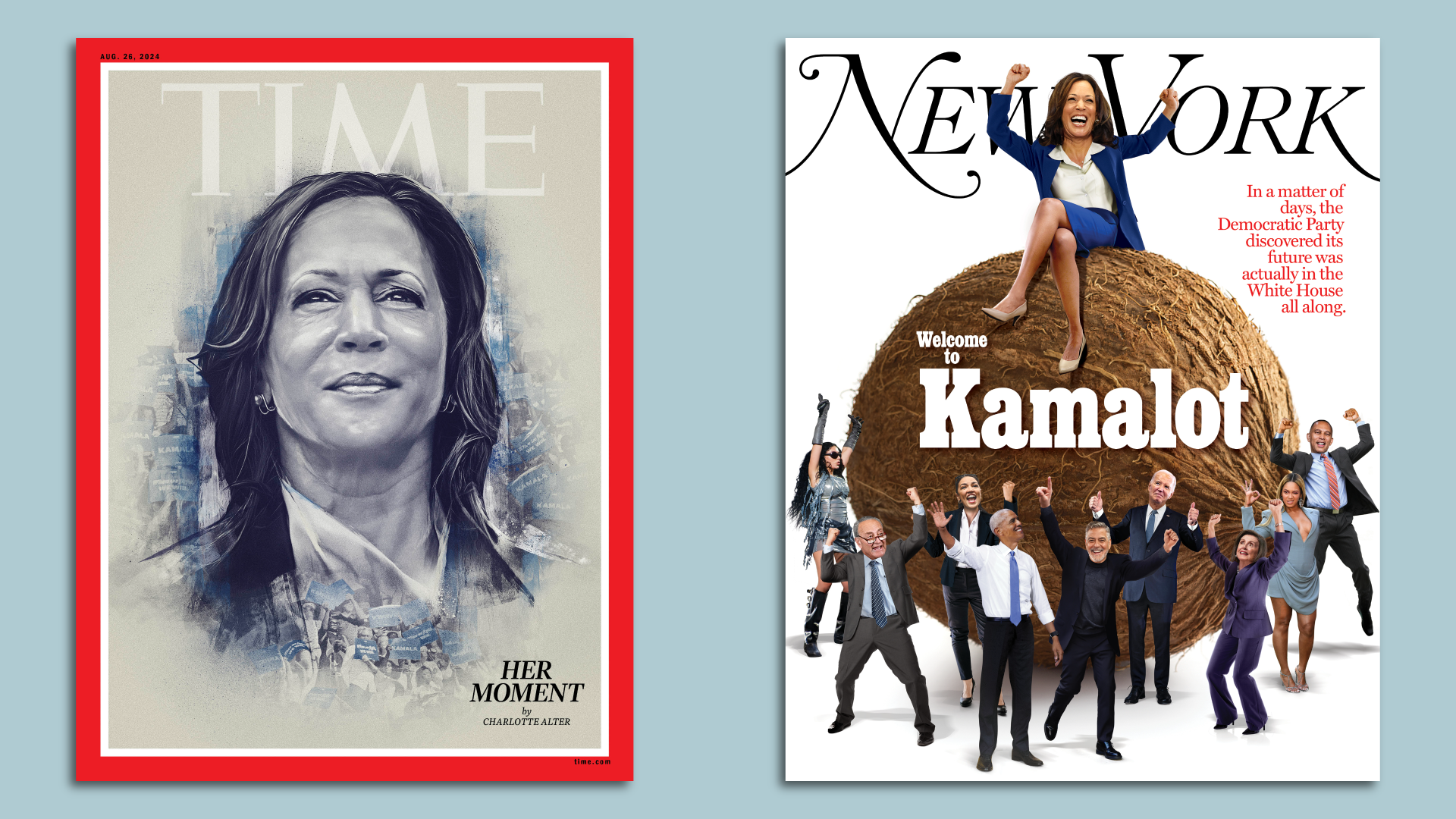
A big and fair question is: What does Harris really believe?
- Her bet: whatever she says in the small, three-month window of her snap campaign will be what sticks. Harris knows most people know little about her. So she believes she can define herself, even if it includes flip-flops and co-opts.
- "She can't break the glass ceiling with a weak foundation," Donna Brazile, a former Democratic National Committee chairwoman who has known Harris since the vice president was an up-and-coming D.A. in San Francisco. "She knows she has to be tough."
What we're hearing: We're told Harris wants to be seen as the change agent in the race.
- Her emphasis on the cost of groceries is meant to signal she can better relate to typical households than Trump.
Look for Harris to emphasize her record as a prosecutor, including settlements she won in price-fixing cases as California attorney general.
- Later, she'll present plans to help entrepreneurs and small businesses.
Context: Harris has said at rallies that fighting inflation will be a Day 1 priority, and that strengthening the middle class would be a defining goal of her presidency.
- She often says prices are too high. Biden has taken on shrinkflation and hidden "junk fees" that plague consumers and travelers. Just this week, the White House unveiled plans to "Lower Costs for Families and Fight Corporate Rip-Offs."
The backstory: In ads and her stump speeches, Harris emphasizes her middle-class roots — the daughter of a working mother who didn't own a home until Harris was in high school.
- A new Harris video notes she worked at a McDonald's while she attended Howard University.
Ashley Etienne, Harris' first communications director as vice president, said Harris was the first person she heard talking about the sandwich generation — younger adults caring for both kids and aging parents.
- "I realized that was me," Etienne said. "She has the ability to see people who've been lost by the system."
⏰ Reality check: The knock on Harris by some former staffers is she can overthink things to the point of exhaustion — and confusion.
- So it's not always clear what core, unbendable beliefs animate her. No doubt, she was a liberal in the Senate and during her failed 2019 presidential campaign. But her new persona and policy shifts suggest a repositioning to the center of the modern Democratic Party. Basically, she's a Biden Democrat — even if she hopes to downplay that in some areas.
2. 🗳️ Boys vs. girls election intensifies
3. 🔎 Homicides down in (most) major cities

4. 🇺🇦 Mapped: Ukraine takes Russian turf

A surprise Ukrainian offensive is reportedly forcing Russia to pull some troops out of Ukraine to defend a new front line on its own territory, Axios' Ivana Saric writes.
- Why it matters: The daring incursion has provided a much-needed morale boost for Ukrainian forces — and is yet another instance of Vladimir Putin's invasion spinning out of his control.
Ukraine launched its offensive last week and has seized almost 400 square miles of Russian territory so far, Ukraine's top military commander said.
- The offensive is a major embarrassment for the Kremlin, which seems to have been caught by surprise.
Kyiv will likely find the territory it has taken hard to defend — and is taking big risks by pushing troops and heavy weaponry into Russia.
5. 🪖 Nimble new defense contractors

A group of novel defense contractors — fueled by software and outside expertise, and hungry for big-money contracts — is finding traction, Axios Future of Defense author Colin Demarest writes.
- Why it matters: The Pentagon's inability to make unorthodox bets has rendered it under-supplied and vulnerable to more nimble adversaries.
Deputy Defense Secretary Kathleen Hicks said last week that the Pentagon "cannot tolerate the same old mindsets" as it competes with China and Russia.
- Pentagon chief tech officer Heidi Shyu separately called the pace of "nontraditional, venture-backed companies" entering the defense industry unprecedented: "They're nipping at the heels, I tell you. I have traditional defense contractors say: 'Hey, this isn't fair.'"
Reality check: Progress is easily undone — especially by a new administration, and a lumbering bureaucracy happy to revert to tradition.
6. 📊 Charted: Upward mobility
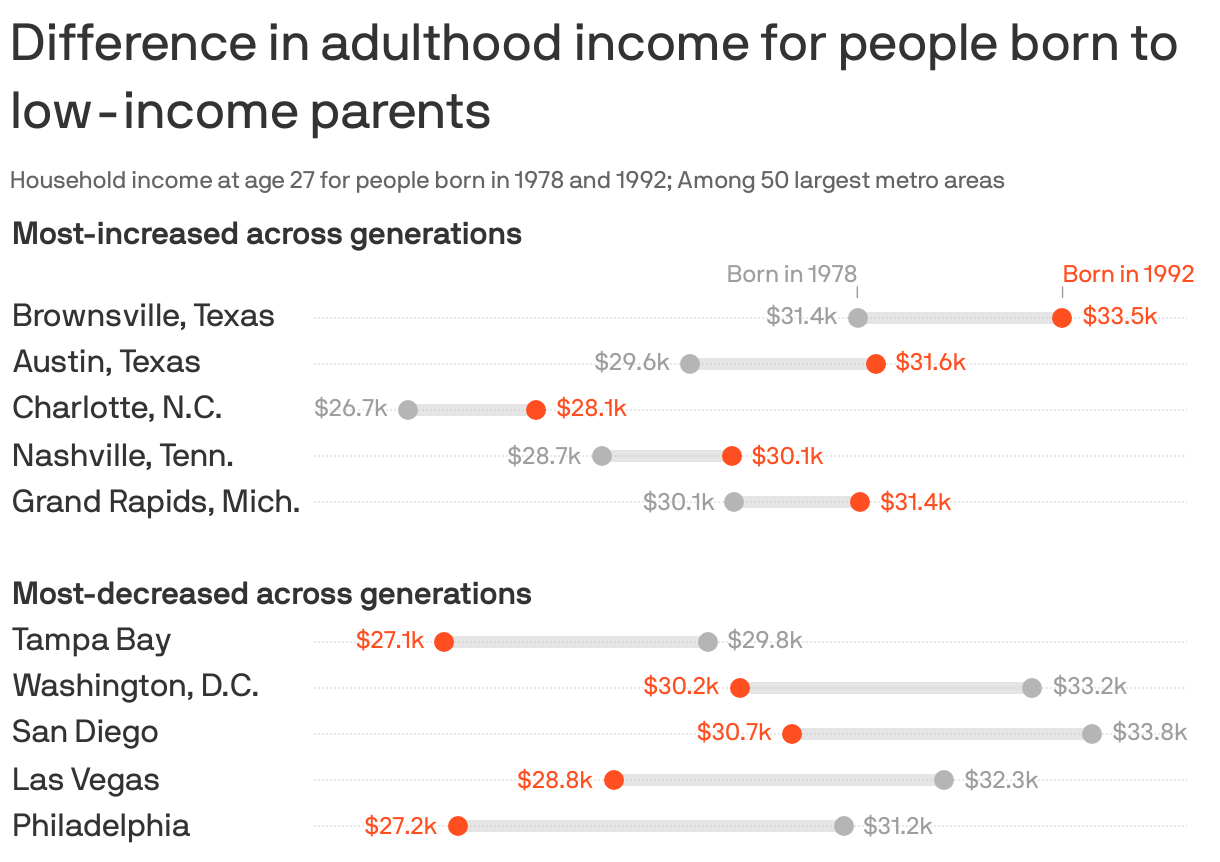
Americans born to low-income families are faring worse than the last generation in most major U.S. cities, Axios' Alex Fitzpatrick and Kavya Beheraj write from a new Opportunity Atlas analysis.
- Why it matters: Intergenerational mobility — the idea that you'll do better than your parents — is core to the American dream. But it's far from a guarantee.
🔬 Zoom in: In 38 of the 50 biggest U.S. metro areas, Americans born to low-income families in 1992 were doing worse at age 27 than those born in 1978 at that age.
- Brownsville, Texas, had the biggest increase in upward mobility across generations.
- Philadelphia had the biggest drop.
7. ⚡ Surprise climate tech hub

8. 🎃 1 for the road: Summer pumpkin spice

Axios AM