Axios AM

April 19, 2026

1 big thing: China wins by watching
2. 📱 Rogan's text from Trump: "Let's do it"
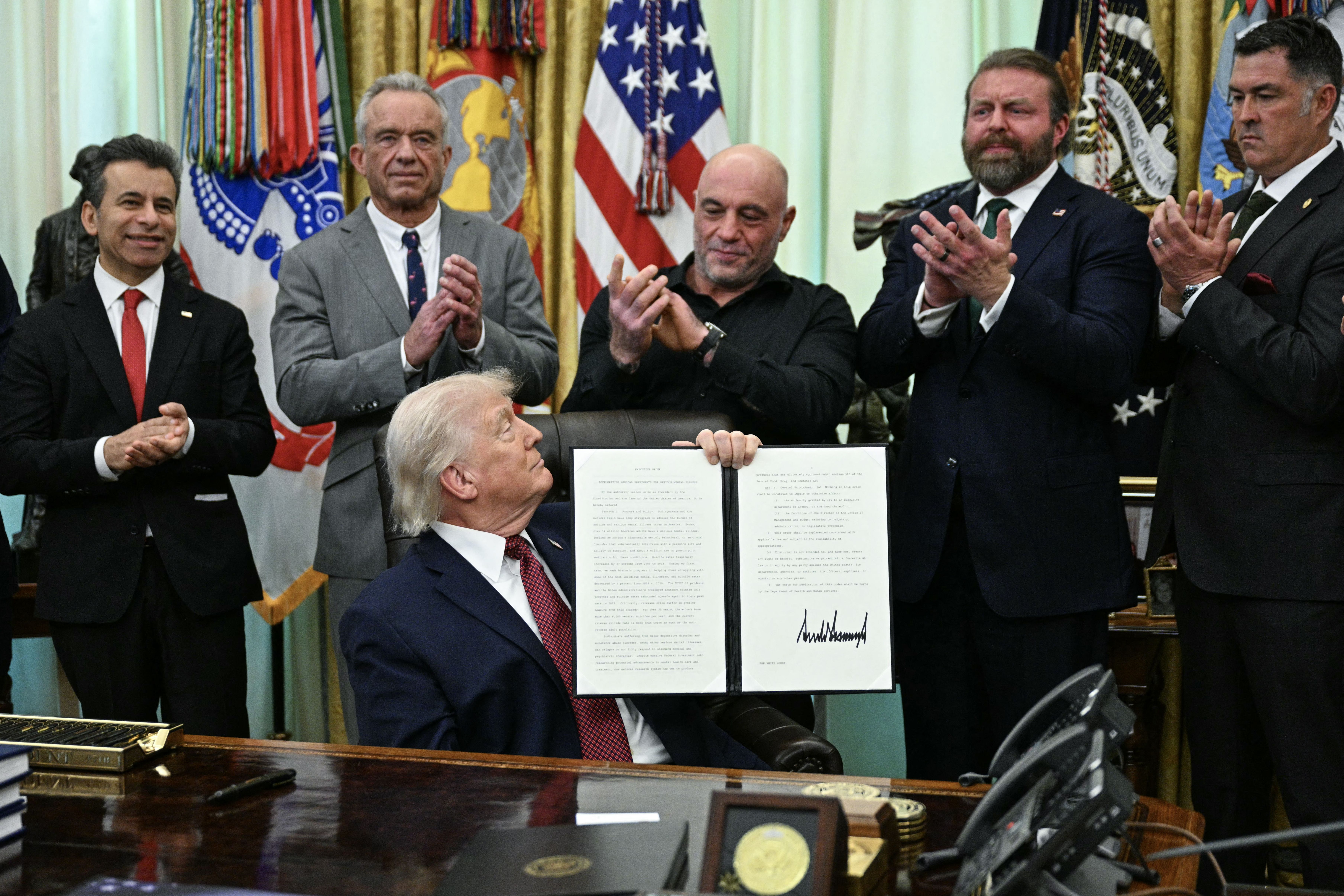
Joe Rogan, who endorsed President Trump in 2024 but has recently been critical, popped into the Oval Office yesterday as the president signed an executive order to speed reviews of certain psychedelic drugs, including ibogaine, to help treat serious mental illness.
- A tieless Rogan, standing behind Trump, said: "I want to tell everybody how this happened. I sent President Trump some information: We have a gigantic opiate problem in this country ... With one dose of ibogaine, more than 80% of people are free of that addiction. ... The text message came back: 'Sounds great. Do you want FDA approval? Let's do it.' It was literally that quick."
Trump smiled and the guests laughed.
- Ibogaine — currently designated a controlled substance — has been embraced by combat veterans and conservative lawmakers despite risks.
3. ⛏️ Red-state gold rush
Lawmakers in a handful of states are trying to make it easier to use gold and silver as currency and establish gold stockpiles, Axios' Emily Peck writes.
- Why it matters: These efforts are touted as a way to deal with the burden of rising inflation because the value of gold and silver has increased, while the dollar hasn't.
🍑 A draft bill in Georgia would authorize "mechanisms" that would let you pay for things in gold and silver, possibly using prepaid debit cards. It failed to pass, but backers plan to try again.
- Similar "transactional gold laws" have been proposed in Arizona, Oklahoma and Iowa — to varying degrees of success.
- Utah passed a law earlier this year.
Go deeper: "A new gold rush: States stockpile bars, encourage gold-backed debit cards."
4. 🎙️ New data: Voices that drove 2024


Right-leaning personalities were the dominant sources of news for 2024 election voters, according to a new Jordan Center/Ipsos poll.
- 8 of the top 10 non-politicians who were cited by voters as regular news sources — including all of the top 5 — were pro-Trump voices in the last election.
- The Republican advantage grew even more profound when including politicians: Donald Trump, JD Vance, Marco Rubio, Robert F. Kennedy Jr. and Karoline Leavitt all cracked the top 10. No Democrat did.
5. 🪫 Trump-branded megaproject falters
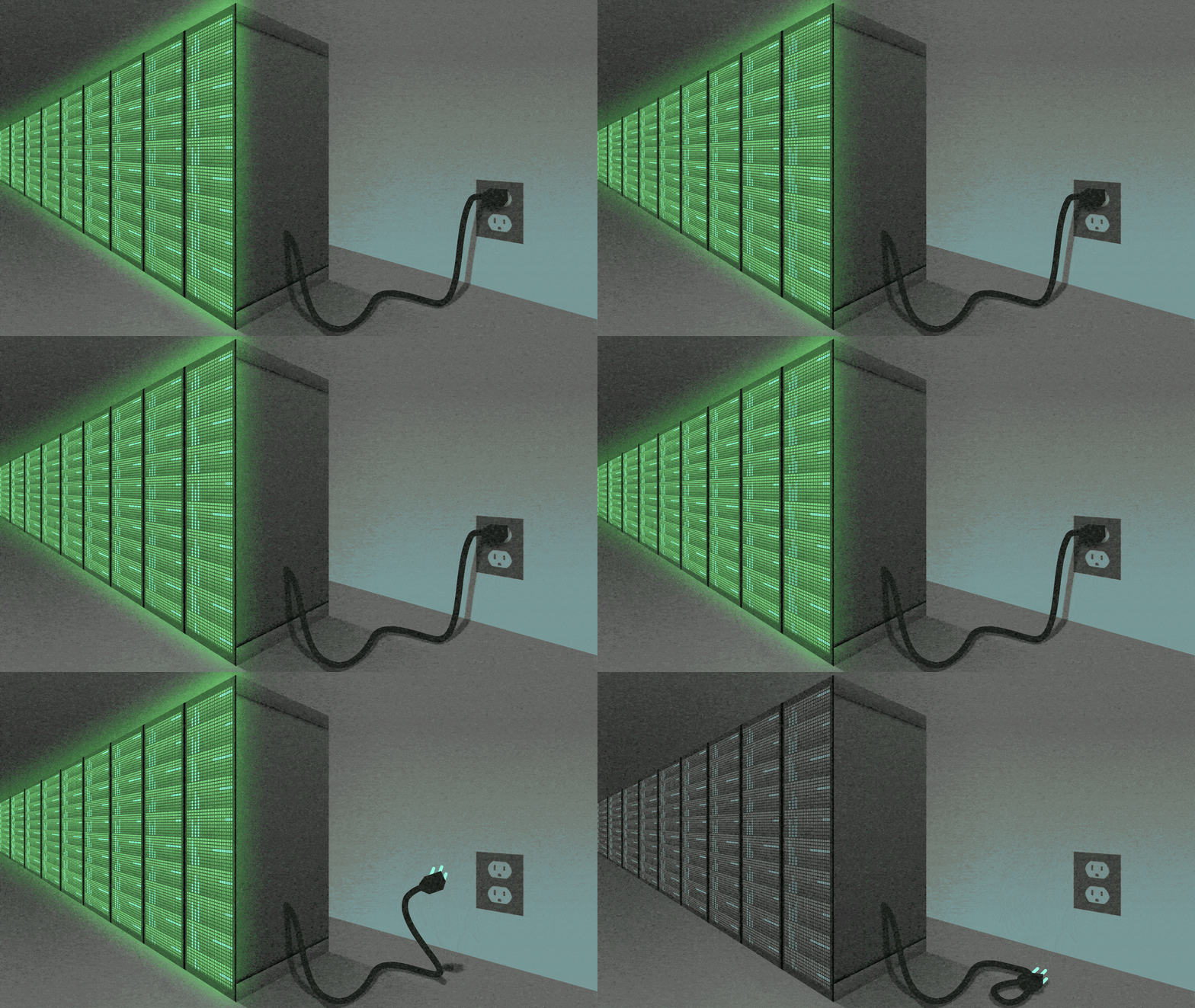
The world's largest data center project — backed by Trump allies and bearing his name — is stalled by delays and logistical hurdles that could stop it before it even starts, Axios national energy correspondent Amy Harder writes.
- The latest sign of trouble emerged Friday: Fermi America co-founder and CEO Toby Neugebarger abruptly departed, sending the company's already-fading shares plummeting in aftermarket trading.
Why it matters: Fermi America, co-founded by President Trump's former Energy Secretary Rick Perry, is a high-profile test of whether the biggest, most ambitious AI infrastructure projects can deliver on their promises.
🖼️ The big picture: The problems facing the company include the lack of a publicly confirmed anchor tenant — typically a hyperscaler — which is widely seen as essential to move forward.
- These hurdles are documented in an independent report by Cleanview shared exclusively with Axios, as well as earnings calls, public filings and comments from company executives.
6. 🎨 AI's taste test
AI makers say the newest models are smart, funny, empathetic, self-reflective and now also "tasteful."
- Why it matters: Some AI optimists and some AI critics — who agree on very little — argue that taste is one of the many uniquely human traits that can't be taught to a machine, Axios' Megan Morrone writes.
Anthropic says its newest model — Opus 4.7 — is "more tasteful and creative when completing professional tasks, producing higher-quality interfaces, slides, and docs."
🧬 How it works: Taste, here, doesn't mean Claude can tell you the pesto needs more garlic. It means aesthetic judgment and creative polish on work outputs.
- Consumer tech firm Patron Fund says it's building AI agents trained to exhibit aesthetic judgment and cultural fluency.
7. ⚖️ Secret history of the SCOTUS "shadow docket"
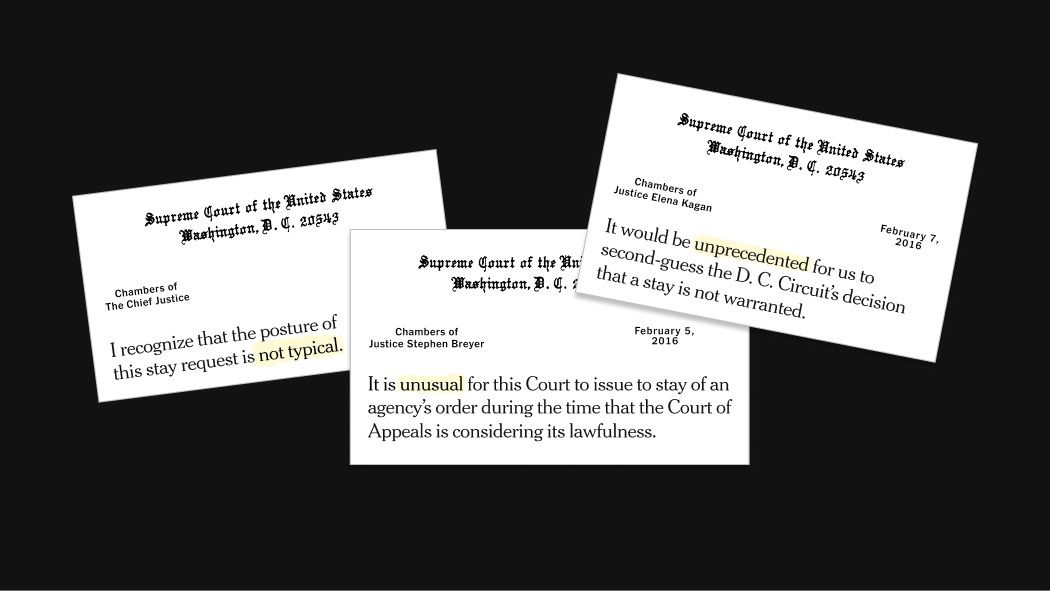
Seven memos among Supreme Court justices in 2016, obtained by The New York Times, illuminate the origins of the "shadow docket" — the expedited, secretive track that this Supreme Court has used to make many major decisions, including granting President Trump 20+ victories.
- A 5–4 vote halted a signature climate initiative by President Obama.
- The justices, writing "on formal letterhead, but addressing one another by their first names and signing off with their initials … sound notes of irritation, air grievances and plead for more time," The Times reports.
👀 My favorite paragraph, about Obama and Chief Justice Roberts: "The two men, both cerebral, polished Harvard Law graduates, had long posed a puzzle: How could such smooth personalities create so much friction?"
- Gift link: "The Shadow Papers" ... All 7 memos.
8. 💸 1 food thing: Burgers reach luxury levels
Axios AM