Axios AM

June 30, 2026

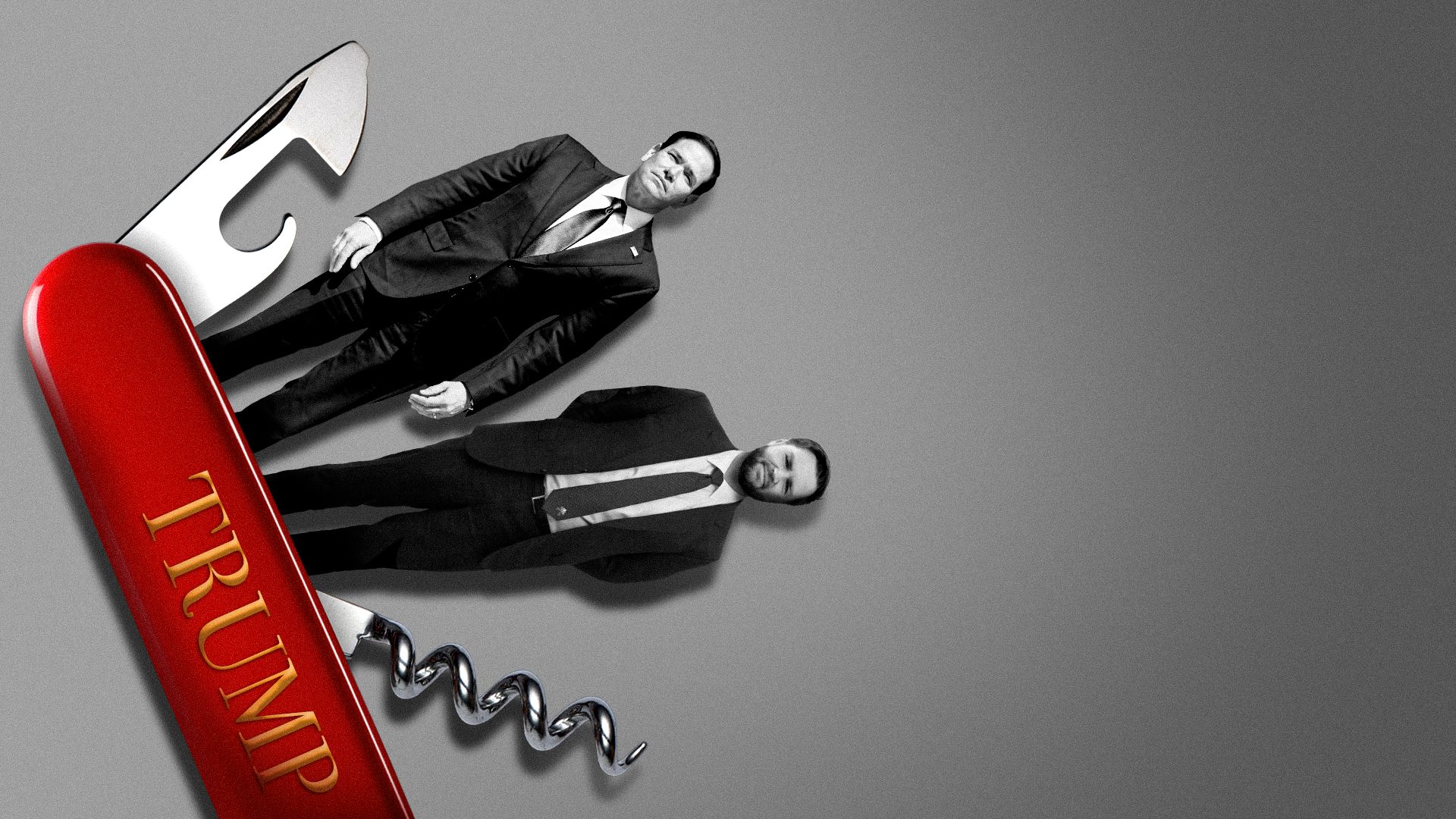
1 big thing: Trump's "Swiss Army" tools
2. ⚠️ New AI bust warning
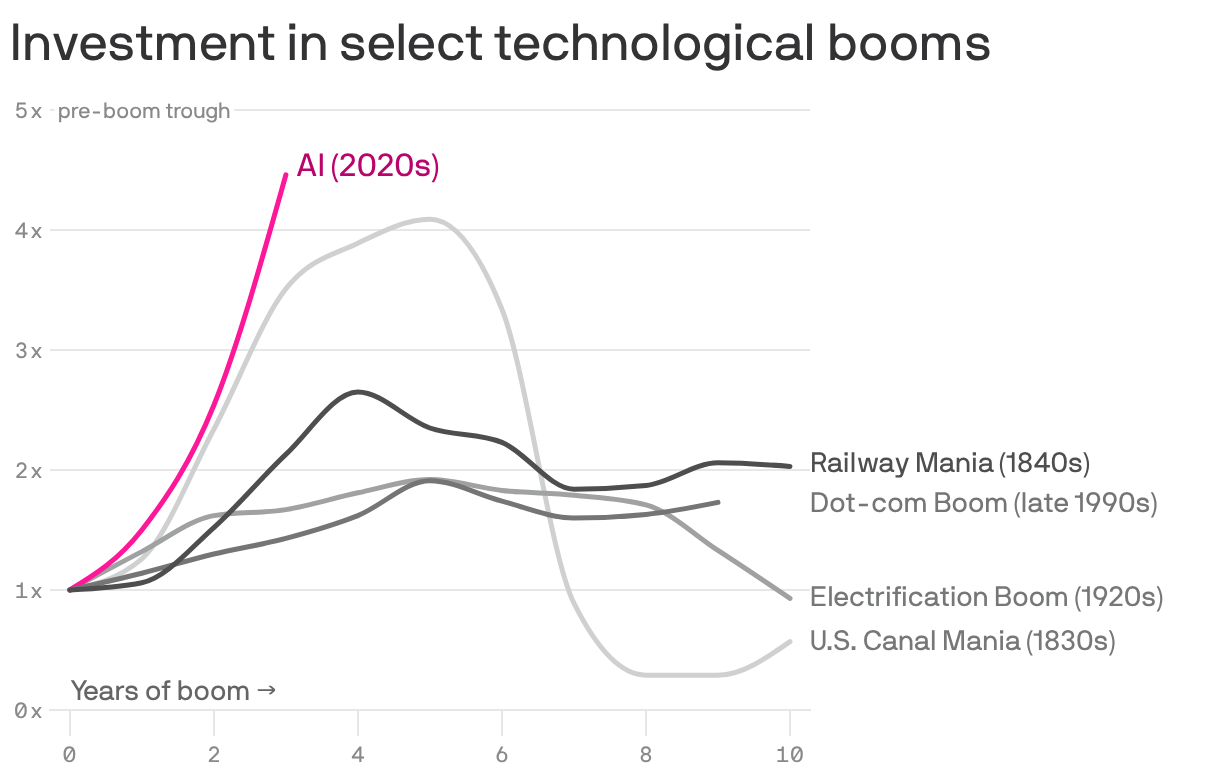
Today's AI buildout resembles earlier technological revolutions and capital booms that ended in painful busts.
- That's the new warning from the Bank for International Settlements, a top forum known as the "central bank for central banks."
Why it matters: The technological revolutions that transform the economy have a long history of attracting more investment than near-term returns justify, Axios' Courtenay Brown writes.
- AI could follow that pattern at a moment when the global economy is unusually reliant on a single investment boom to keep the expansion on track.
🔬 Zoom in: Some of the world's greatest technological breakthroughs — canals, railroads, the internet — sparked enormous investment booms, with capital pouring into new infrastructure years before the payoff became clear.
- If returns disappoint, today's surge in AI spending could become "a protracted investment bust" and spark a stock-market correction that could stunt worldwide growth, the BIS said.
💰 Stunning stat: The five biggest "hyperscalers" are expected to invest more than $1 trillion from 2025 through 2026, the Financial Times notes.
3. 💵 Trump's Supreme Court wall
The Supreme Court this term gave President Trump powers over the federal government that no modern president has held, Axios' Courtenay Brown and Andrew Pantazi write.
- But it blocked his administration on two of the biggest issues for markets: the Fed and tariffs.
Why it matters: The rulings hand the president firmer command of the bureaucracy, pulling back only where investors worried political interference could unsettle markets.
🔭 Zoom in: Case by case, the court gave Trump a freer hand to fire, deport and act before judges could catch up.
- The court gave his administration major immigration wins, including on asylum access and temporary protected status.
- It repeatedly sided with Trump on emergency appeals, letting contested policies take effect while litigation continued.
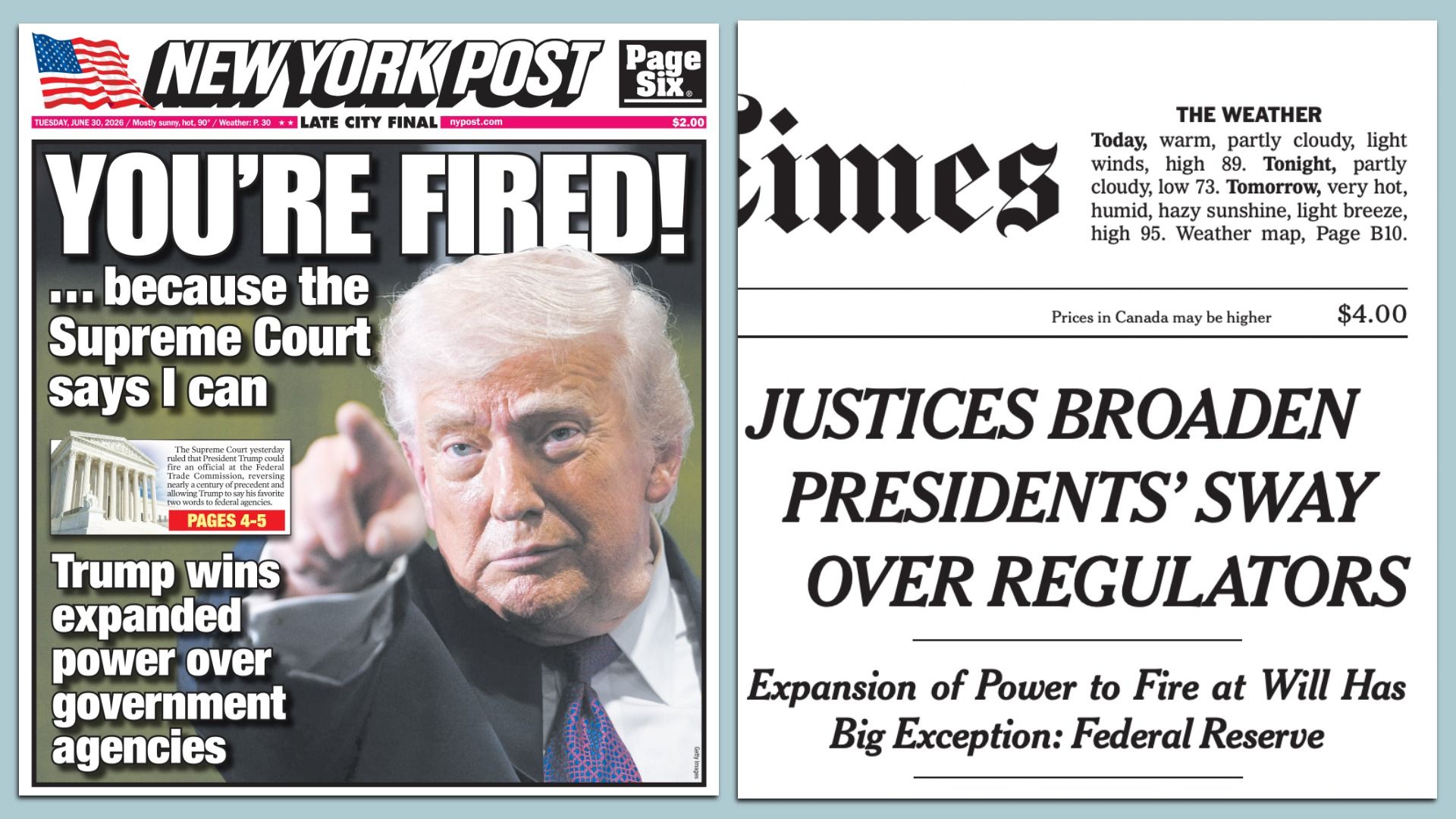
- It also let him fire Federal Trade Commission officials at will, making it harder for Congress to create independent agencies outside direct White House control.
At the same time, the court ruled against him in two high-stakes fights:
- The Fed: It denied his bid to immediately fire Fed governor Lisa Cook, ruling he must first clear the legal hurdles Congress put in place.
- Tariffs: It found he couldn't use the International Emergency Economic Powers Act (IEEPA) to impose sweeping tariffs, eliminating one of his fastest and broadest trade tools.
🥊 Reality check: The rulings haven't ended either battle.
- The White House has continued to pursue tariffs through other legal authorities after losing that case.
- Trump has said his administration will keep investigating whether it can ultimately remove Cook.
4. 📉 Charted: Crypto's rough year


Bitcoin is down 43.7% over the past year and now trades below its level on Election Day 2024 — before it rallied on President Trump's pledge to make America the world's "crypto capital."
- The token has shed more than half its value since hitting an all-time high of $126,080 in October.
Between the lines: Michael Saylor's Strategy Inc. — a major crypto holder — announced plans to sell as much as $1.25 billion worth of the coin.
- Saylor was famous in the crypto community for his "never sell" mantra.
5. ⛰️ Dems' next test from left

6. 🧑💻 Remote work is thriving
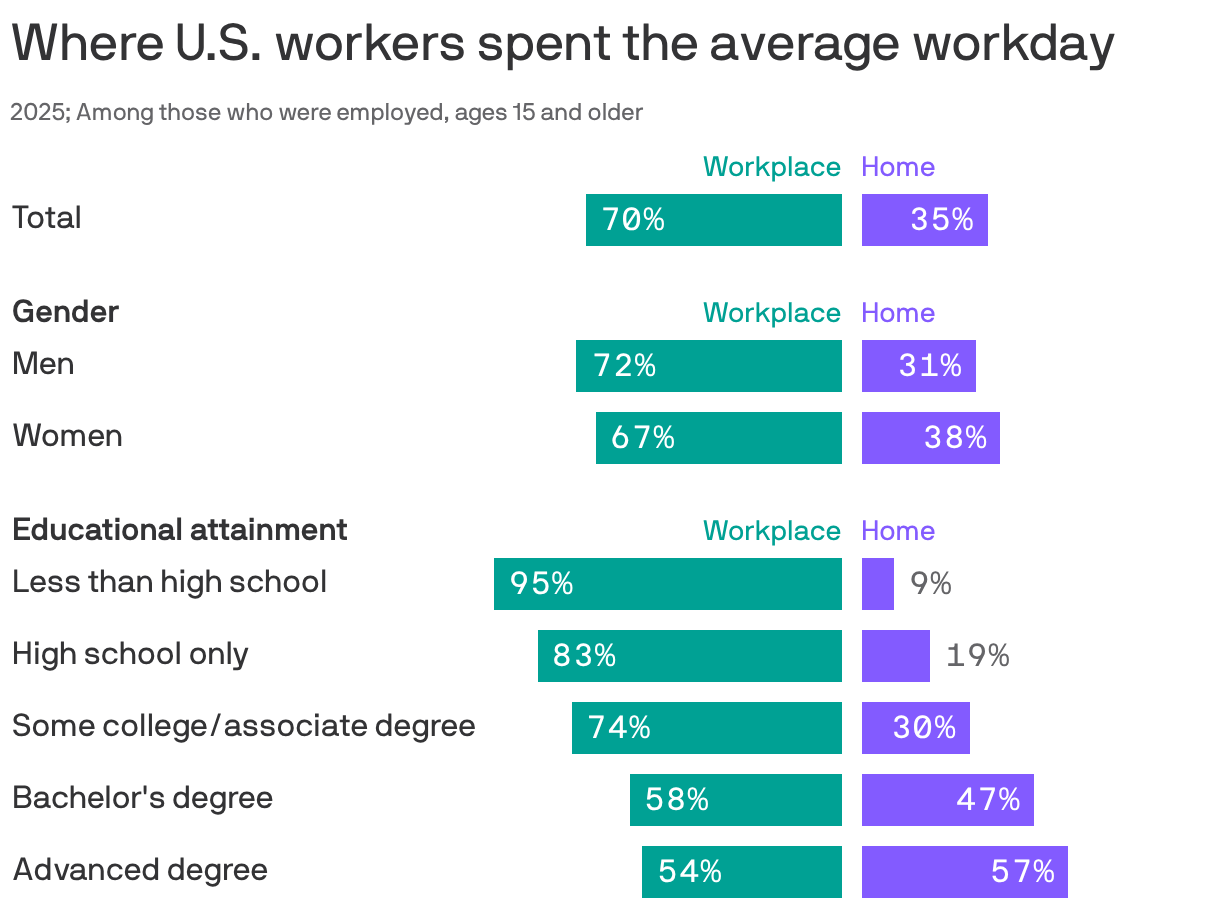
The CEOs lost this one: New government data shows 35% of U.S. workers did some or all of their work at home last year — significantly higher than in the previous decade, Axios' Emily Peck writes.
- In 2019, only 24% of workers did some or all of their work from home. By 2022, that number had risen to 34% and has held relatively steady since.
7. 🌡️ Mapped: Holiday heat wave
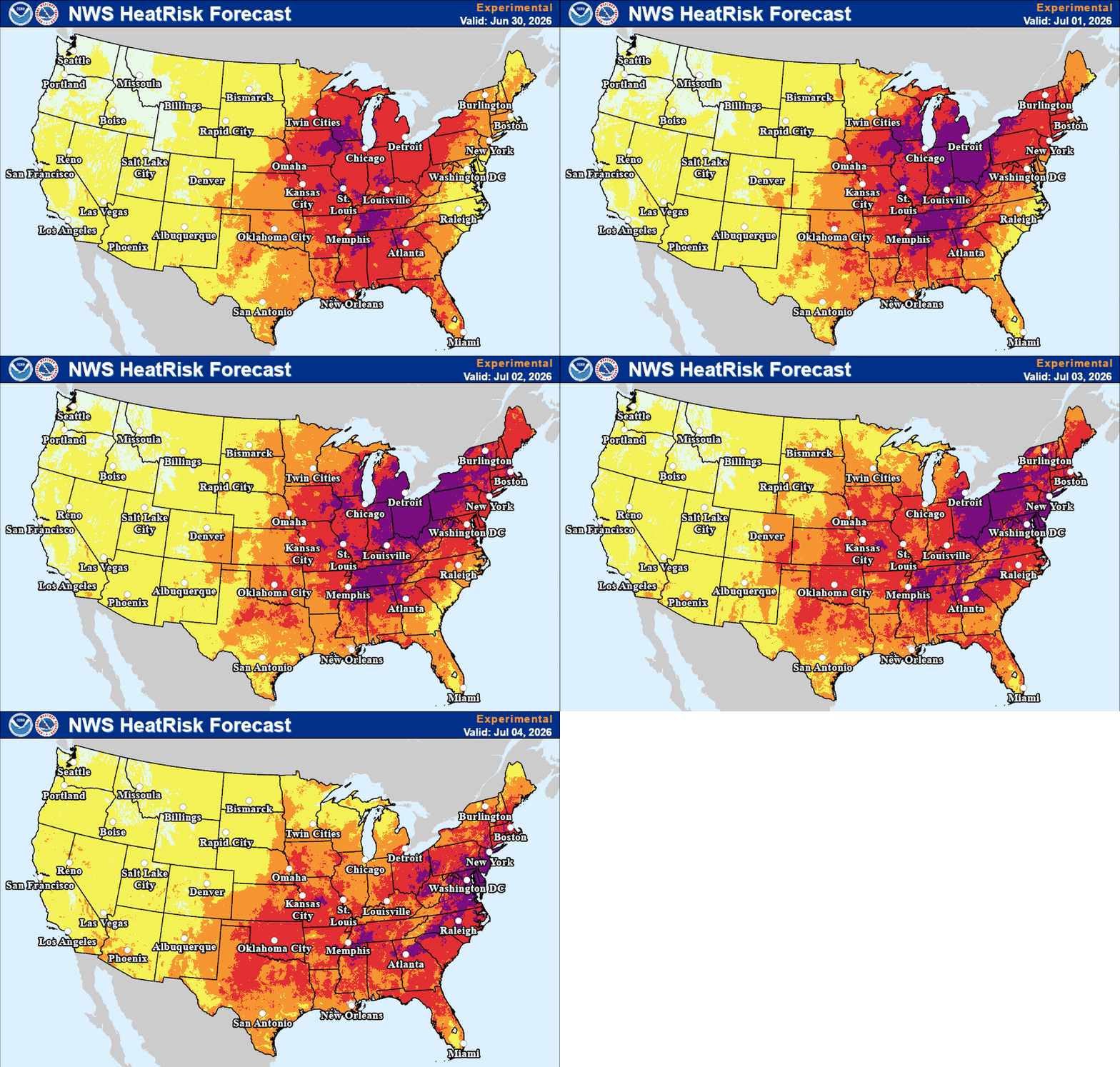
This map shows a dangerous heat wave building across the U.S. and creeping east ahead of the holiday weekend.
- More than 160 million Americans — about half the country — are under a heat advisory, watch or warning.
The National Weather Service warns that the extreme heat will peak in the Midwest with triple-digit temperatures from today through Thursday. Then it slides into the East for July Fourth.
- Go deeper: What's causing the heat wave.
8. ⚽ 1 for the road: World Cup shocks

All four matches in the World Cup's knockout stage so far have been won in the final minutes or on penalties:
- Paraguay beat Germany 4-3 on penalties yesterday to earn the biggest upset of the tournament and send the 2014 champions home.
- In the earliest-ever World Cup exit for the Netherlands, Morocco's leading scorer Ismael Saibari netted the decisive goal in a penalty shootout after a 1-1 draw last night in Guadalupe (near Monterrey), Mexico. Keep reading.
- Brazil came from behind to beat Japan 2-1 with a dramatic goal in the 96th minute.
- Canada opened the round a day earlier with a 1-0 win over South Africa on a 90th-minute goal.
📺 Today's schedule for the round of 32: Ivory Coast vs. Norway (1 p.m. ET) ... France vs. Sweden (5 p.m.) ... Mexico vs. Ecuador (9 p.m.).
Axios AM