Axios AM

September 03, 2024

๐ณ๏ธ Welcome back! Believe it or not, the Harris-Trump debate is a week from tomorrow.
- Smart Brevityโข count: 1,556 words ... 6 mins. Thanks to Noah Bressner for orchestrating. Copy edited by Bryan McBournie.
1 big thing: Crazy college parents
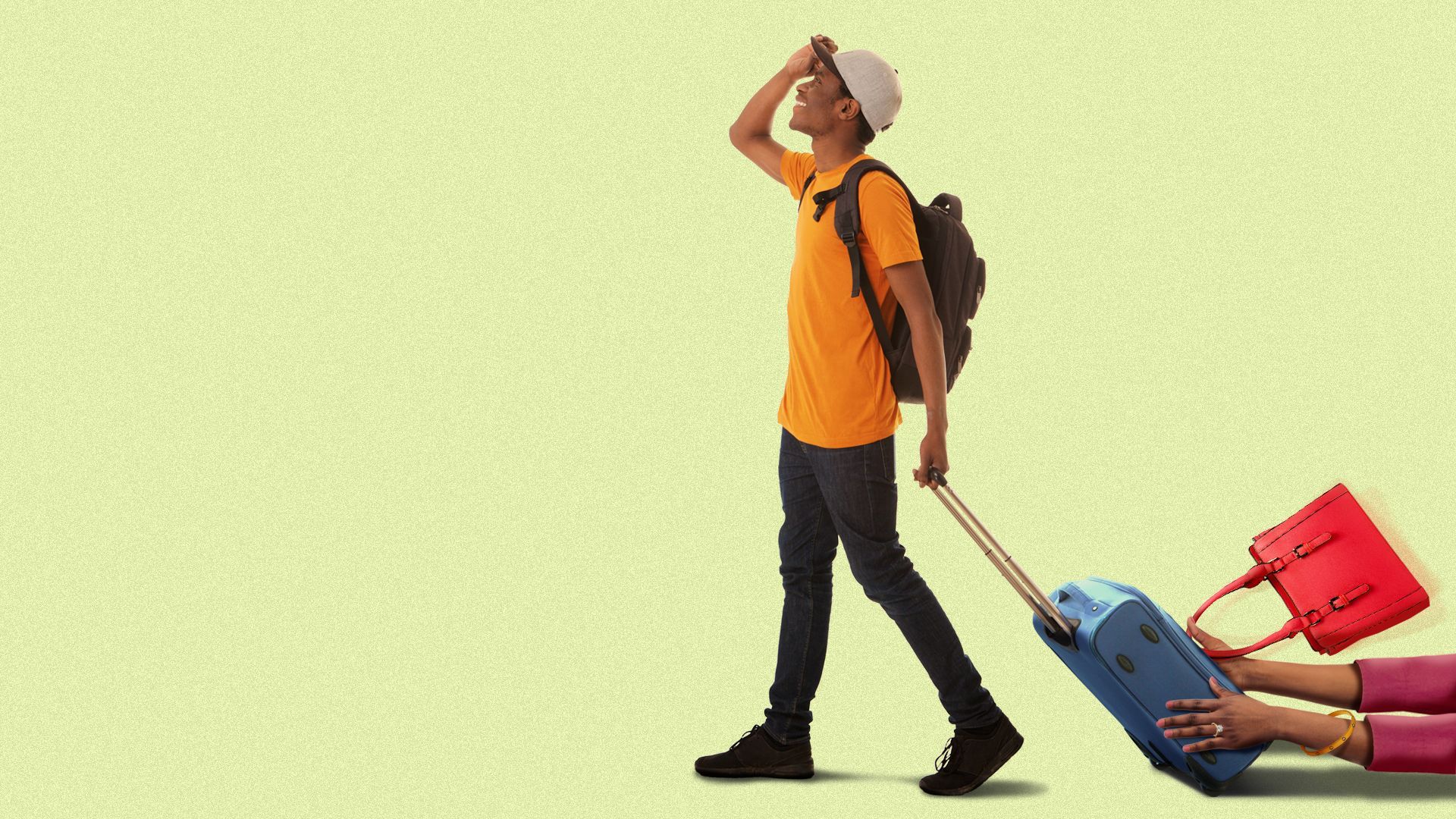
Many first-year college students from different states, backgrounds and majors have one thing in common: stressed-out parents struggling with the separation, Axios' Erica Pandey writes.
- Why it matters: Parents have grown more involved in, and more anxious about, their kids' lives. That's changing the experience of going to college โ and growing up.
They're using tech to track their kids, micromanaging orientation week and even having dorm sleepovers.
๐ผ๏ธ The big picture: Headlines and stats detailing a worsening teen mental health crisis and pandemic-induced learning loss are stressing parents out.
- "When your kid is having stress or anxiety or depression and they're living away from home, it's heartbreaking," says Lisa Heffernan, co-founder of a popular parent Facebook group, Grown and Flown.
On top of that, parents are just closer to their young adult kids than they used to be, she notes.
- 41% of parents say their young adult children rely on them a fair amount or a great deal for emotional support, according to a Pew Research Center survey.
- "Some parents are holding onto a level of involvement that's maybe healthy for a toddler deep into their kids' teen years, when it maybe becomes unhealthy," says Mathilde Ross, a senior staff psychiatrist at Boston University.
๐ Zoom in: Parents' stress is on display in online forums and Facebook groups, where parents are asking questions and offering emotional support to one another.
- Parents ask about minute-to-minute details of orientation, for advice from other parents for advice on their kids' roommate woes and where to shop for basic toiletries.
Counterpoint: Part of parents' micromanaging is just them missing their kids and wanting to do the little things for them, Heffernan says.
- And "if you're asking in a Facebook group, that means you're not bugging your kid."
2. ๐บ ๐ง Vance's "anytime, anywhere" strategy

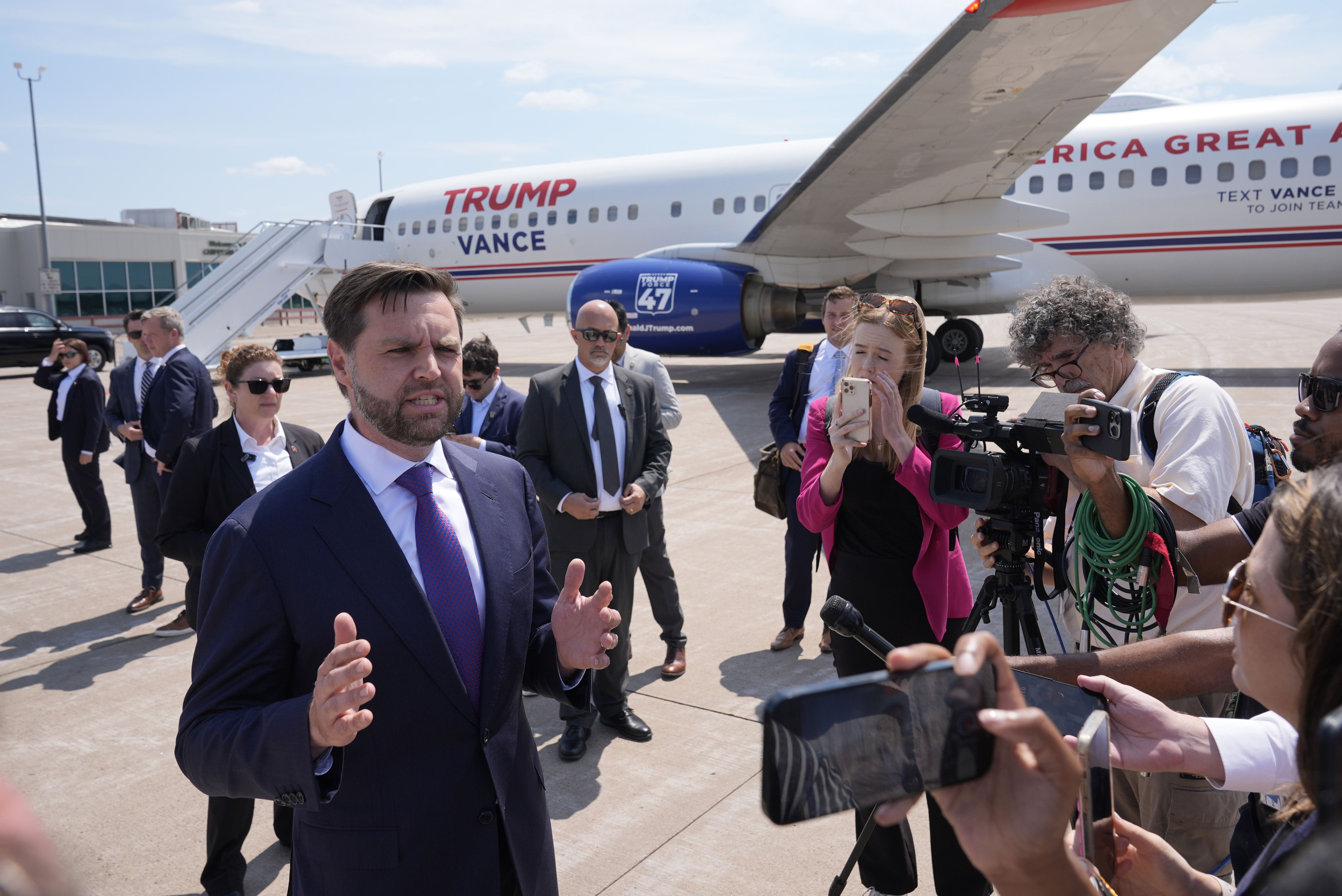
Campaign sources tell me that despite having to defend past comments that made him the butt of jokes, Sen. JD Vance (R-Ohio) has signed up for tough interviews in coming days by NPR and the N.Y. Times' "The Interview" podcast.
- Why it matters: It's part of a "come-at-me" media strategy by Vance, who has faced constant questions about "childless cat ladies" and other previous statements about women and parents.
๐ค The big picture: Vance, a Yale Law grad who always loved debate, invites questions from reporters on the trail โ and plunges into hostile interviews โ more often than any of the other three national candidates.
- Vance recently told his team he wants as many events as possible to include a press conference or press Q&A segment, a top adviser told me.
Inside the strategy: Vance's team says he's aiming to speak to the middle by engaging with outlets that reach beyond the MAGA base.
- "He can often be combative, but he's not trying to own the libs when he engages with the MSM โ he's trying to persuade the middle," the adviser said.
- In addition to exposure in legacy media, the MAGA base regularly sees Vance's press interactions go viral on X.
๐ฅ Reality check: It's not clear it's working. Vance was underwater in favorability โ 32%-44% โ in an ABC News/Ipsos poll out over the weekend.
- By contrast, Minnesota Gov. Tim Walz is seen favorably by a double-digit margin, 42%-31%.
๐งฎ By the numbers: Since being picked by President Trump, Vance has done 94 interviews, press conferences and gaggles with the media โ and has actively courted adversarial outlets that Republicans often avoid.
- Vance has given nearly as many interviews to traditional media outlets as he has conservative media, according to a campaign count.
- Vance did all five major Sunday shows in the past month, including three of them in one day.
Behind the scenes: Trump has been impressed with Vance in unscripted scenarios and has called him a "great political talent," a top campaign source says.
- "Vance's Combativeness May Vex Some Voters, but Trump Likes It," said a story on the front page of yesterday's New York Times.
๐ฎ What's next: Vance is scheduled to join "The All In Podcast" โ popular with the "tech bro" vote โ and is in talks with other major podcasts.
3. ๐ฐ Nvidia = Magnet for gamblers


Nvidia the chipmaker sits at the heart of an AI revolution, with the potential to transform life as we know it. Nvidia the stock has become a meme where gamblers' get-rich-quick dreams are increasingly coalescing, Axios' Felix Salmon writes.
- Why it matters: No other stock offers Nvidia's combination of immediate name recognition, enormous volatility, unrivaled liquidity, and meme value.
๐ผ๏ธ The big picture: Most companies boasting profits of more than $15 billion per quarter are relatively mature and predictable โ Berkshire Hathaway or Apple.
- Their profits this year will be broadly in line with their profits last year and next year.
Nvidia, by contrast, had profits of $16.6 billion in the second quarter, an increase of more than $10 billion from the same period a year ago.
- No one knows whether such profitability will collapse as the AI bubble bursts, will be sustained as AI reaches into ever-greater parts of our lives, or will continue to grow at an eye-watering pace for years to come.
- That makes Nvidia stock almost impossible to value using traditional calculations.
4. ๐ท 1,000 words

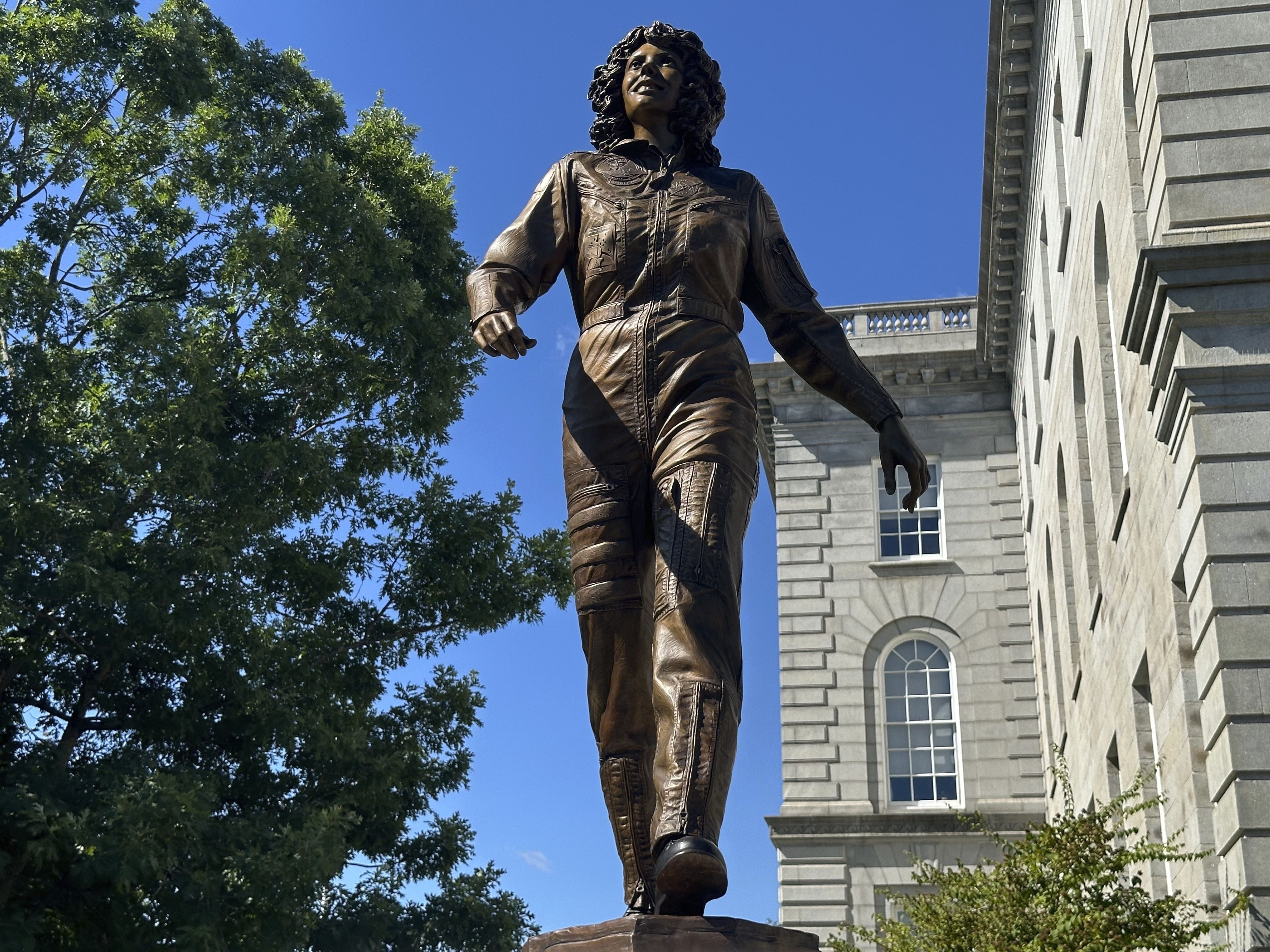
Decades after she was picked to be America's first teacher in space, Challenger astronaut Christa McAuliffe was honored with a statue on the grounds of the New Hampshire Statehouse in Concord, the city where she taught high school.
- She was one of the seven crew members aboard the Challenger when the space shuttle broke apart on live TV in 1986.
5. โณ Patients wait more for less
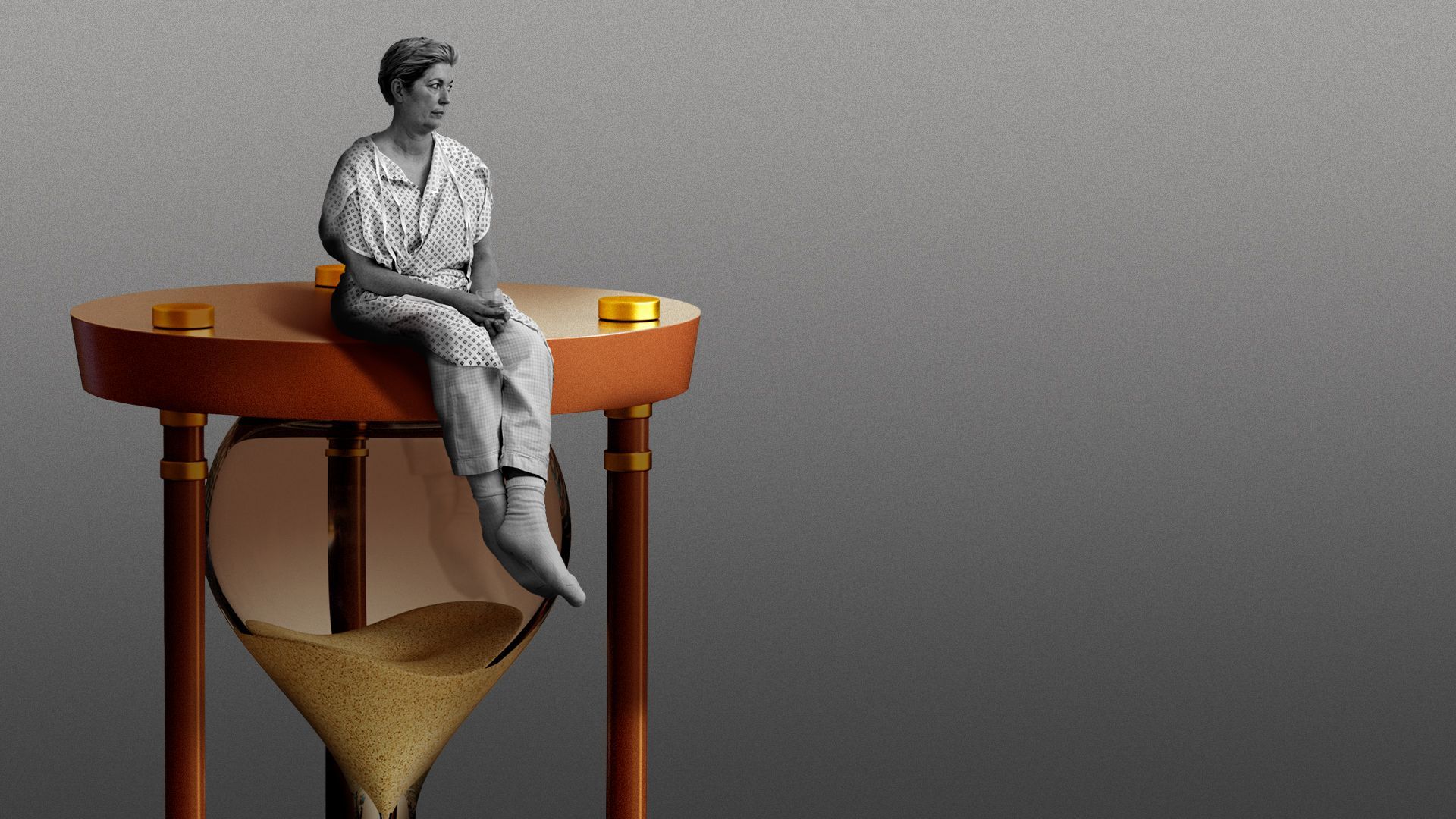
The U.S. spends more on health care than almost any other country. But patients increasingly are getting less in return, and enduring long waits to get less face time with their clinician, Axios' Tina Reed writes.
- Why it matters: Shrinkflation is hitting a sector that accounts for almost one-fifth of the economy โ eroding the doctor-patient relationship, and leaving many turning to urgent care clinics or telehealth services.
The trend is being felt especially in primary care, but also in many specialties.
- An Axios-Ipsos survey last month found that nearly 1 in 5 respondents said they had to wait more than two months to see a primary care physician or specialist, with waits trending longest in the Midwest.
- The most frequently cited specialties with long wait times included neurology (26%); ear, nose, and throat (26%); psychiatry (20%); and OB/GYN (17%). Primary care stood at 19%, per electronic health records company Tebra.
๐ญ The big picture: There's been across-the-board growth in patient volumes, largely from pent-up demand for services many put off during the pandemic.
- At the same time, tens of thousands of doctors have left the field due to burnout and other factors, and surveys indicate even more plan to retire early.
6. ๐ Spotting chatbots
As kids of all ages head back to school, educators are struggling to spot students who are letting chatbots write their reports, Axios' Megan Morrone writes.
- Why it matters: Commercial AI-text detection tools โ even those claiming high accuracy โ have some big flaws.
After the release of ChatGPT, teachers quickly realized that the plagiarism-detection software they'd used before failed to work on student submissions generated by AI.
- Academics, startups, and even OpenAI itself, began releasing genAI text detectors. None of those tools were very effective. And the problem has gotten worse.
Penn engineering professor Chris Callison-Burch and a team of researchers created a system for benchmarking the tools that say they detect machine-generated text, and found many of the claims "too good to be true."
- Aside from the checkers not flagging AI-generated text, the researchers found many of the tools flagged content that was actually written by a human.
7. ๐ Harris lifts Howard

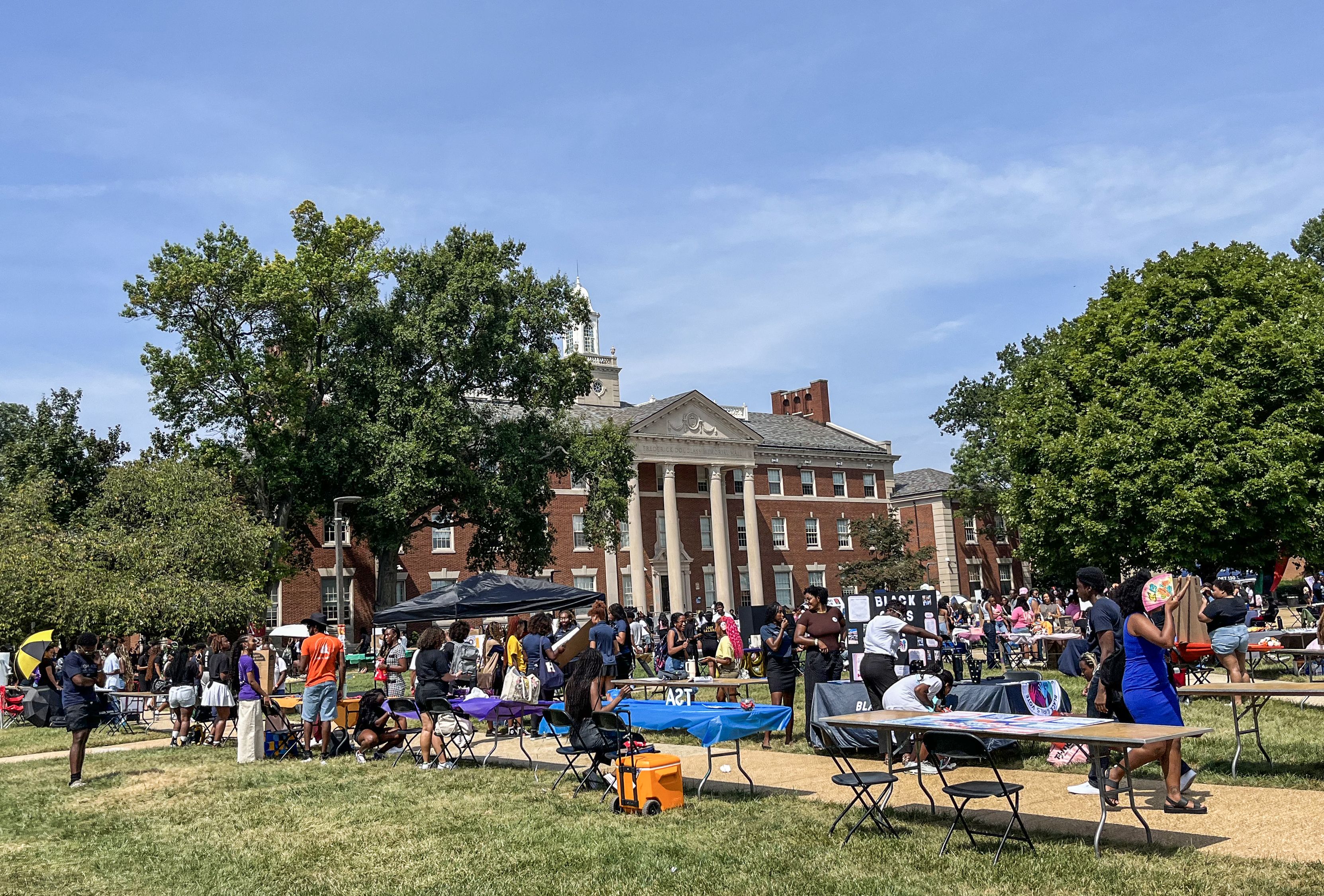
Howard University in Washington, D.C. โ one of the nation's best-known historically Black colleges โ has been central to Vice President Kamala Harris' origin story.
- Why it matters: The university is having a capstone moment as she seeks to become the first woman elected president, AP reports.
Howard has produced luminaries: Supreme Court Justice Thurgood Marshall, whose legacy inspired Harris to attend Howard, and author Toni Morrison, among others.
- Some at the university see Harris' elevation as vice president as another validation of one of the school's core missions of service.
If Harris won the White House, she'd be the first graduate of a historically Black college to hold that office.
8. ๐พ 1 for the road: "World's healthiest sport"
Pickleball is the fastest-growing sport in America. But when it comes to fitness, tennis outshines its younger cousin, Axios' Analis Bailey writes.
- Tennis players sprint across a wider court, swinging at heavier balls than pickleheads.
The average heart rate recorded on an Apple Watch while playing pickleball was 143 beats per minute, while tennis averaged 152 beats per minute.
- Tennis players also spent 9% more time in a higher-intensity heart rate zone compared to pickleball players.
Between the lines: At this year's U.S. Open, organizers are prominently displaying an ad proclaiming tennis "the world's healthiest sport" on ESPN broadcasts.
- Another ad this summer: "Live longer, play tennis."
๐ฌ Please invite your friends to join AM.
Sign up for Axios AM