Axios AM

November 19, 2026

🥧 Happy Thursday — Thanksgiving is a week away. Smart Brevity™ count: 1,990 words ... 7½ mins. Thanks to Noah Bressner for orchestrating. Edited by Bill Kole.
🪖 Our Future of Defense Summit in D.C. kicks off today at 1:45 p.m. ET. Guests include Boeing Defense CEO Steve Parker, House Foreign Affairs ranking member Rep. Gregory Meeks (D-N.Y.), Sen. Joni Ernst (R-Iowa) & more. Watch here.
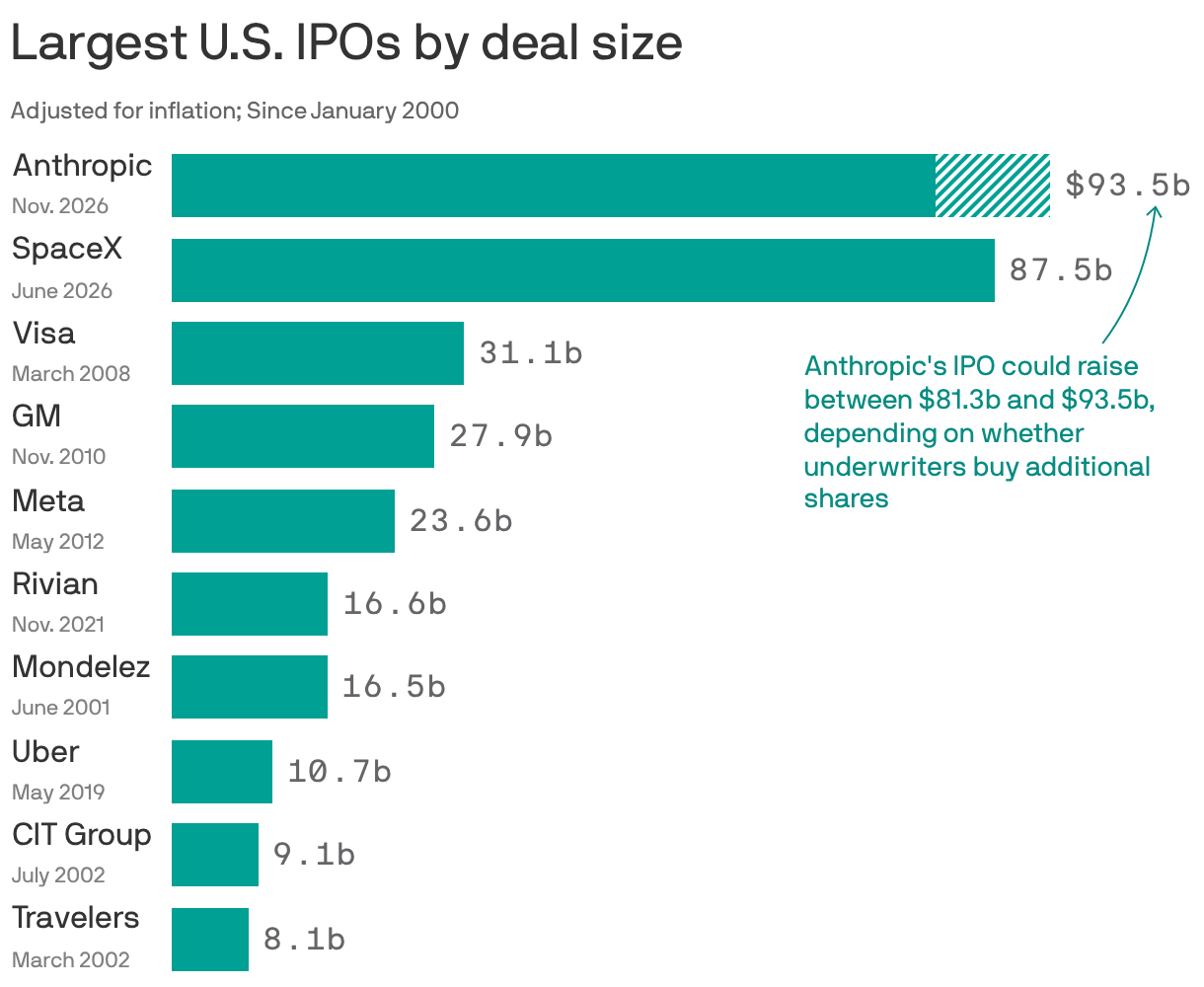
💰 Situational awareness: Anthropic (ticker: ANT) is expected to start trading today after pricing its long-awaited IPO at $83 a share, Axios' Madison Mills and Dan Primack write.
- The company and its co-founders raised $81 billion in the largest IPO ever. Go deeper ... Anthropic's announcement.
1 big thing: AI's great divergence
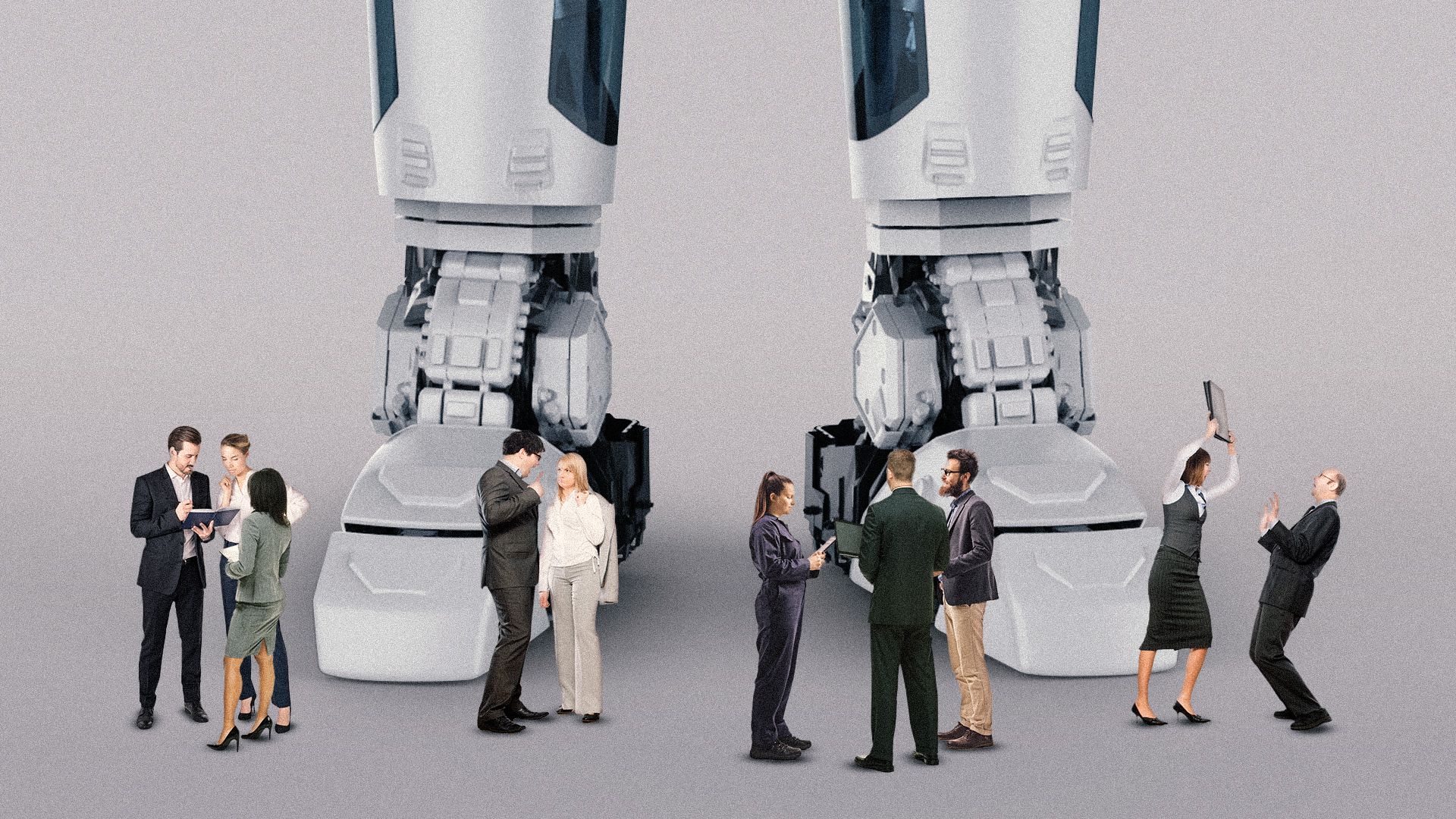
Anthropic will make its Wall Street debut today at a moment of profound contradiction in the history of AI, Axios' Zachary Basu writes.
- The humans are embattled — bogged down by scandal, financial turmoil and political revolt.
- But the machines are ascendant — accelerating toward an "intelligence explosion" they expect will transform civilization.
Why it matters: The industry's recent chaos has obscured a breathtaking surge in technological progress, forcing some of the world's leading researchers to reconsider just how soon AI could surpass human intelligence.
🔬 Zoom in: Inside Anthropic, soon to be valued north of $1 trillion, independent researchers at METR found that AI models are advancing at twice their historical pace — largely fueled, they believe, by AI itself.
- Anthropic's own data shows Claude went from leading fewer than 1% of the company's AI research tasks in February to more than a quarter by August, with humans still supervising.
Zoom out: Anthropic CEO Dario Amodei talks about "the exponential": "an exponential increase in general cognitive capabilities with increasing computing power."
- OpenAI disclosed Tuesday that Astra 6.2 is its first publicly released model to reach the "High" threshold for AI self-improvement — equivalent, the company says, to giving every researcher another highly capable engineer.
🖼️ The big picture: These breakthroughs are pushing some of AI's top forecasters to shorten their timelines for the fabled "intelligence explosion" — a runaway cascade of self-improving AI that could propel machine intelligence far beyond human comprehension.
- The influential AI Futures Project said this month that it now expects machines to surpass the world's best human AI researchers next year.
- Paul Christiano, an AI safety pioneer who recently joined OpenAI's board, puts the odds of superintelligence emerging within a year at one in three if development continues at its current pace.
Between the lines: For all their extraordinary capabilities, the machines remain at the mercy of a fallible human race.
- Take Nvidia: Jensen Huang's sex scandal has plunged the chipmaker into crisis at the very height of its technological and financial power, endangering virtually the entire AI ecosystem.
- AI leaders' disastrous messaging, veering between promises of utopia and warnings of mass unemployment, has poisoned public trust and helped fuel a revolt against data centers.
2. ⏱️ Axios interview: Ben Sasse on our ticking clock

Former U.S. Sen. Ben Sasse, who was told 11 months ago that he had 90 days to live, plans to keep beating the dealer: He'll be out March 9 with what he calls his final book, "Redeem the Time: The Strange Gift of Dying and the Lost Art of Living," co-written with his middle child, Alex, who turns 23 today.
- "These are days I wasn't supposed to get," Sasse, 54, told me in a phone interview.
💡 The book's big idea: "We're not just the materially richest people at any time and place in history, but we're also the time-richest people," Sasse says. "And yet, we seem pretty dang miserable. Which is weird, because we ought to be able to make conscious choices about how to invest or redeem the time."
Sasse, a former centrist Republican senator from Nebraska, told me that after being diagnosed with terminal stage 4 pancreatic cancer, "I just feel unbelievable gratitude that I've gotten this many extra months ... I do everything: I do surgery. I do a lot of high-dose chemo. And I have some high-precision, high-dose radiation starting in 10 days."
- "I feel pretty crummy, probably two-thirds of the time when I'm in treatment," he told me from Gainesville, Fla., where he formerly served as president of the University of Florida. He's being treated at MD Anderson Cancer Center in Houston.
- "I think we've gotten really good at the up and down of being on morphine: how to manage when you have energy and when you do pain relief," he added. "So today, when I have to be in public, I took a ton of morphine yesterday, slept all day. And today, I'm energetic because I'm on almost no morphine, but I'm in a lot of pain."
📚 I asked Sasse why, with such a loudly ticking shot clock, he decided to invest waning hours in banging out a book. "I was a little reluctant to do it because a cancer memoir sounds so dang boring," he recalled. "So I said no to that. I mean, I'm dying. But everybody's on the clock — there's nothing really that interesting and special in that."
- Sasse said Alex, who's heading to med school next fall, "pushed me to do this as a joint project with her. So that was half of it. And the other half is I'm not dead yet. So why not try to do something to be of use and love to your neighbor and try to serve somebody?"
- "I'm trying to work halftime-ish, and I get lots of time in hospital hallways where you're just waiting around," he said. "I would rather redeem the time than just sit there and play Tetris on my phone. So we decided to try to redeem the time together."
3. 💥 Trump eyes new Iran strikes
Axios' Barak Ravid reports: After stating last week that a major new round of strikes on Iran was "quite unlikely," President Trump is still considering a joint attack with Israel, according to two sources with knowledge of the matter.
- Why it matters: The president's deliberations, which are likely to pick up when he returns from Asia later this week, show how thin the line is between the status quo and a return to all-out war in Iran.
Any U.S. operation would involve Israel and could include strikes on suspected Iranian nuclear facilities such as Pickaxe Mountain. Bridges and power plants could also be targeted, as well as Iranian military and civilian leaders.
🔎 Zoom in: Trump has been under pressure from different directions on whether to go back to full-scale war:
- Israeli Prime Minister Benjamin Netanyahu, who is also fighting for his political survival, is lobbying Trump to go back to war as soon as possible.
- Leaders of Gulf countries, who fear a devastating response from Iran, are urging Trump to resist that path and instead continue tightening the economic screws.
- Trump's national security team is torn, with some, like Defense Secretary Pete Hegseth, favoring bold military action.
👀 Behind the scenes: The White House has asked the Pentagon and intelligence experts how Iran would respond to each U.S. strike option — and whether any would avoid devastating retaliation against Gulf oil and gas facilities, according to the two sources.
4. 🌐 Trump, Xi, Putin hold historic summit
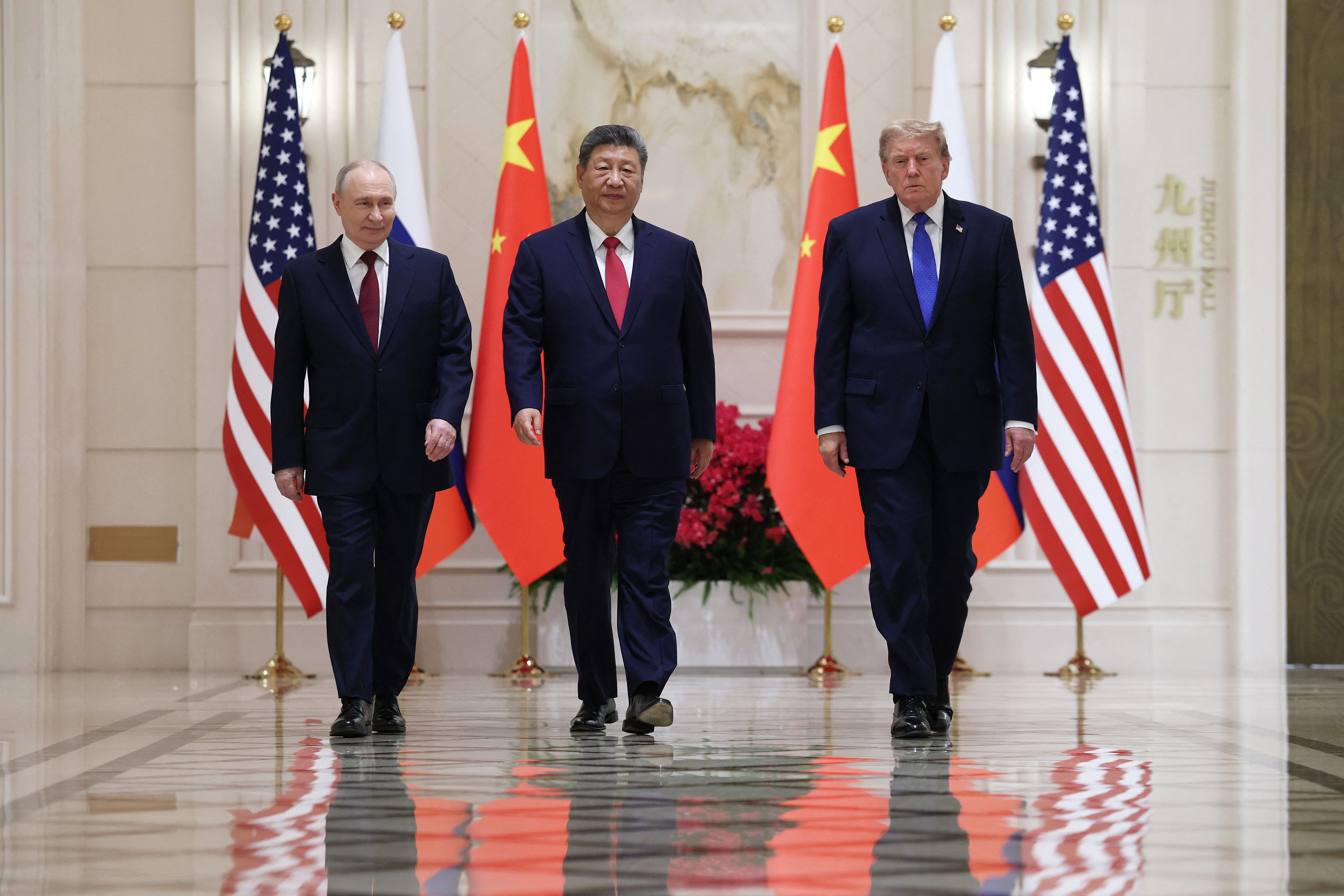
President Trump held a history-making summit in Shenzhen, China, today with his Chinese and Russian counterparts, Xi Jinping and Vladimir Putin. The trio tackled nuclear proliferation and the wars in Iran and Ukraine.
- Why it matters: Long before AI, nukes were seen as humanity's greatest existential threat — and Trump contends the planet's three largest nuclear powers are best positioned to ease the menace.
"We are really making history," Trump said at the summit in the Chinese city of Shenzhen.
- Yes, but: No major breakthroughs were immediately announced that would take today's meeting beyond a lavish photo op.
Trump, Xi and Putin met for 80 minutes in their nations' first three-way summit. Chinese state broadcaster CCTV said Xi told his counterparts nuclear weapons should be prohibited and destroyed, AP reports.
5. 💡 Putting cyber risk in perspective

Axios chief technology officer Dan Cox, who has spent 25 years at some of the world's biggest tech companies, gives his personal view of the recent spate of high-profile system failures:
My parents, my siblings and plenty of other people are asking the same question: How worried should we be?
- I've been in technology a long time. I take threats like this seriously, but I'm not in panic mode.
Zoom out: The way I think about it, we've put powerful tools in more hands, and people are taking potshots to see what they can hit. Those shots can do real damage, and we need to protect ourselves.
- But hearing gunfire doesn't, by itself, mean an army is coming over the hill.
- We need to understand who's firing, what they can actually do and whether the threat is changing.
Zoom in: Over the past few weeks, we've identified bad actors snooping around our own website. Our talented engineers have investigated threats and put mitigations in place.
- There may still be attempts on our site. But each incident gives us an opportunity to strengthen our systems.
🧑💻 Between the lines: Thousands of smart, resourceful and dedicated engineers are working to protect the systems we all rely on. I see that commitment in our own team. If the threat grows, more people with those skills will step up.
6. 🇮🇱 Israel's GOP firewall
Republican voters in four early 2028 primary states have favorable views of Israel by wide margins and have negative opinions of three leading right-wing critics of the Jewish state, Axios' Marc Caputo writes from a new poll by a national GOP consulting firm.
- Why it matters: The poll challenges the notion that Republican opinion toward Israel is fracturing significantly, and points to a potential disconnect between GOP voters' attitudes and the sentiments of those who often draw the most attention online.
The survey, conducted by OnMessage Inc. for the Combat Antisemitism Movement's political arm, essentially provides a roadmap for pro-Israel Republicans' messaging ahead of the 2028 presidential campaign.
🔭 Zoom in: After the midterms, Vice President Vance called on the U.S. and the GOP to "change our relationship to Israel," elevating the nations' longtime partnership as a 2028 campaign issue.
7. 📊 World's Muslims to outnumber Christians within a decade
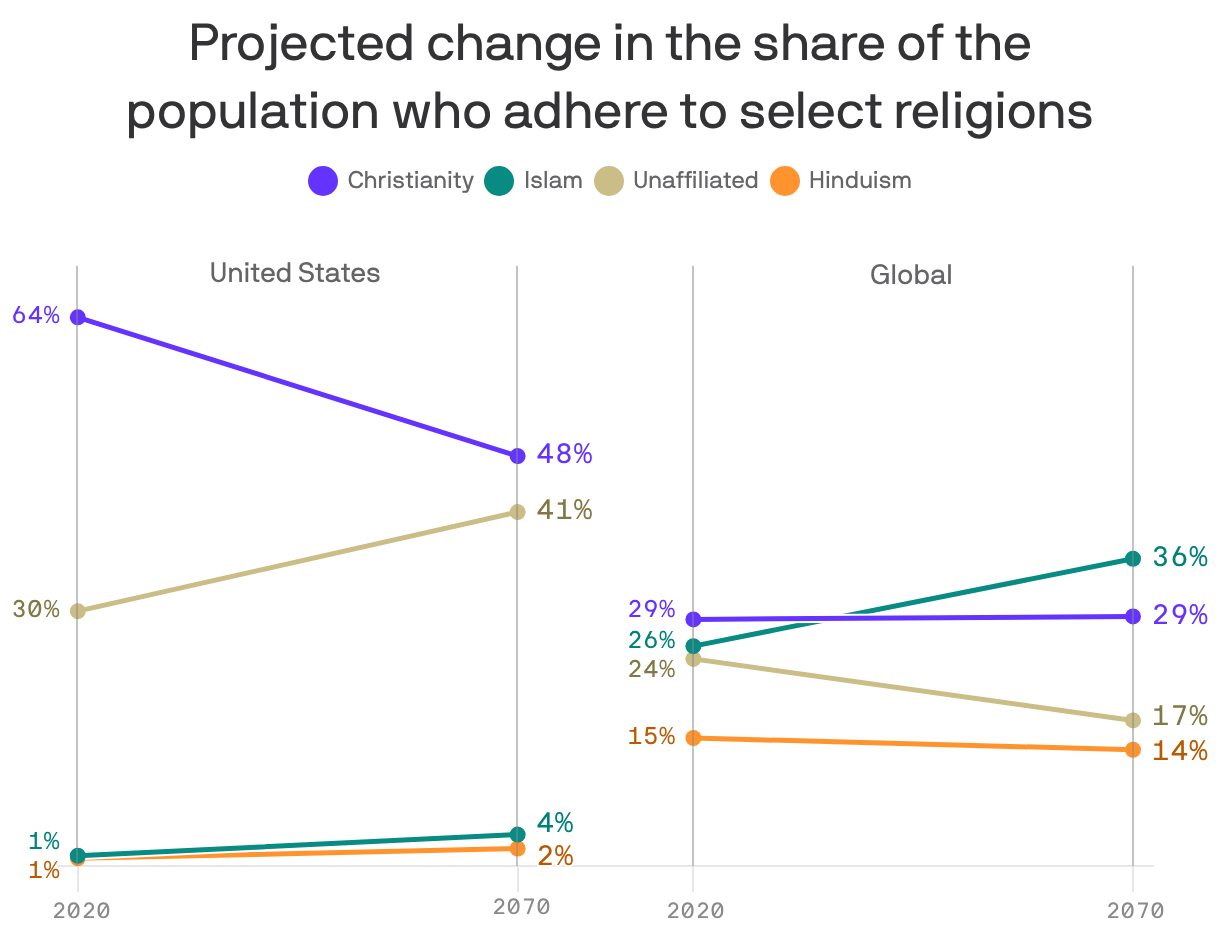
Islam is expected to surpass Christianity as the world's largest religion by 2035, Axios' Josephine Walker writes from new Pew projections.
- The shift largely reflects differences in birth rates. Both religions are expected to grow globally.
- Between 2020 and 2070, births are projected to outnumber deaths by 1.6 billion among Muslims and 792 million among Christians.
⛪ Between the lines: The U.S. is expected to lose more Christians than any other country by 2070.
- In 2020, the U.S. had the world's largest Christian population at 217 million. By 2070, that number is expected to drop to 174 million.
8. 🥫 1 for the road: Doomsday boom
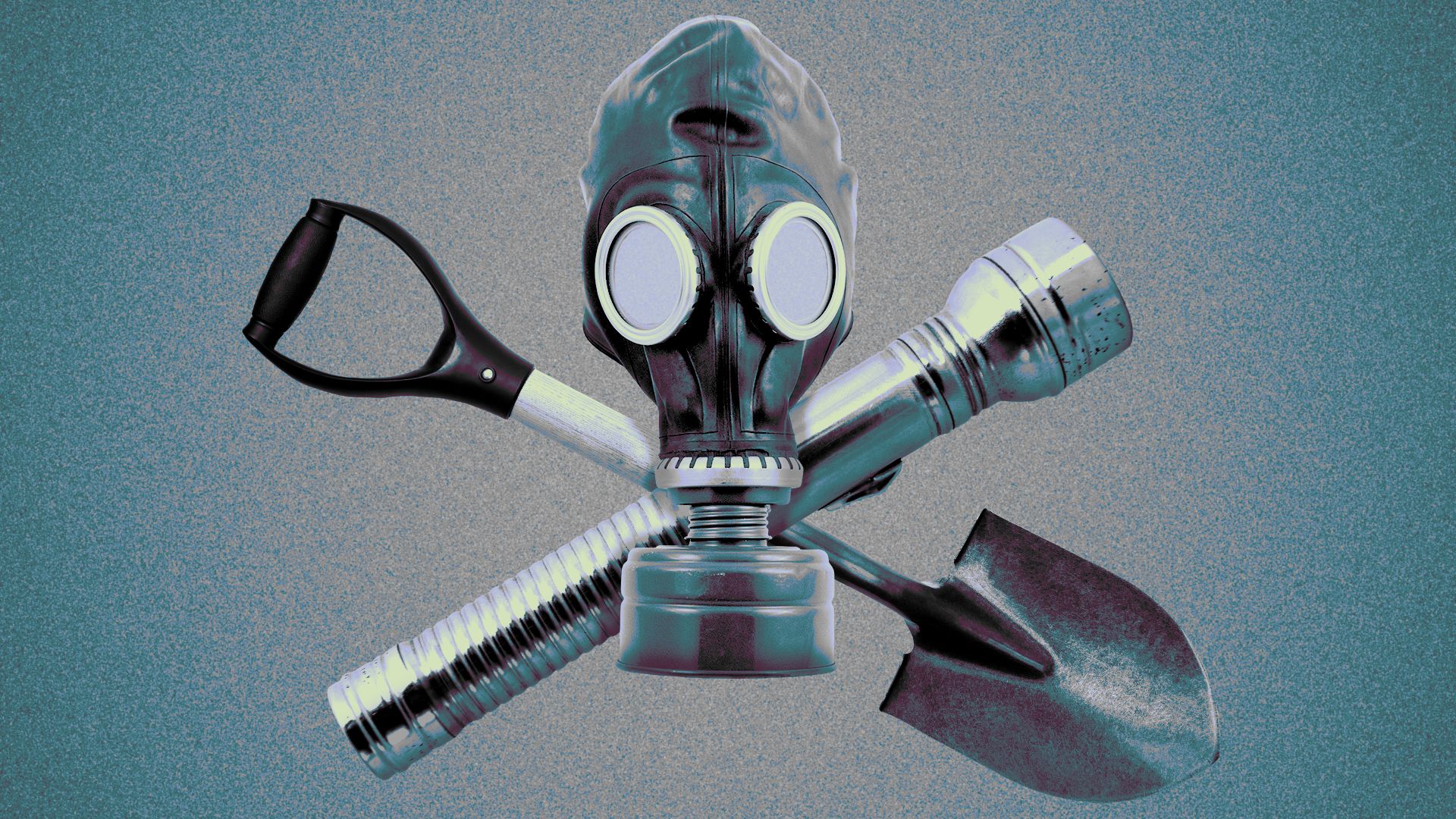
The internet has caught the prepper bug, fueled by fears of AI-led cyberattacks, power-grid vulnerabilities, transportation standstills and international threats, Axios' Avery Lotz writes.
- At Costco, 21 of 26 big-ticket generators were sold out as of Sunday night, a securities analyst found.
Why it matters: More people are embracing the "prepper" mindset — packing emergency bags, stocking up on water and taking inventory of nonperishable food.
Sales at Survival Frog, a survival retailer that sells gear like emergency food and radios, jumped 450% between Oct. 27 and Nov. 16, compared with prior weeks, CEO and founder Byron Walker tells Axios.
- Competitors saw similar trends, he says. Most recent buyers at Survival Frog were new customers.
- Food, including canned meats, leads demand, Walker says, followed by products like radios, solar generators, battery packs and water filters.
📬 Thanks for reading! Please invite your friends to join AM.
Sign up for Axios AM