Trump weighs strikes on Iran as Israel warns of chemical weapons

Add Axios as your preferred source to
see more of our stories on Google.
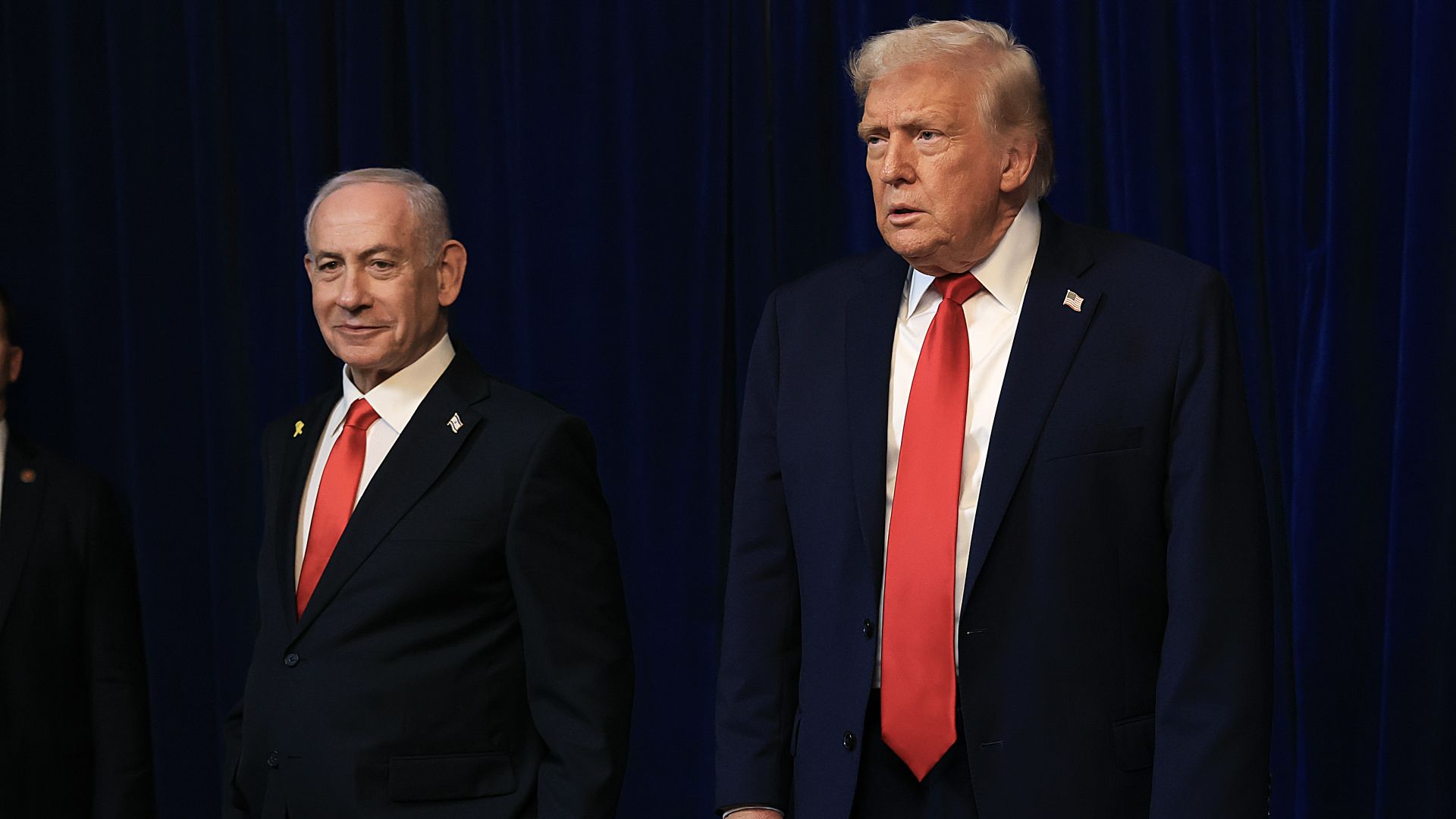
President Trump meets with Israeli Prime Minister Benjamin Netanyahu at his Mar-a-Lago resort in December 2025. Photo: Joe Raedle/Getty Images
After stating last week that a major new round of strikes on Iran was "quite unlikely," President Trump is still considering a joint attack with Israel, according to two sources with knowledge of the matter.
Why it matters: The president's deliberations, which are likely to pick up when he returns from Asia later this week, show how thin the line is between the status quo and a return to all-out war in Iran.
- Any U.S. operation would involve Israel and could include strikes on suspected Iranian nuclear facilities such as Pickaxe Mountain. Bridges and power plants could also be targeted, as well as Iranian military and civilian leaders.
- Trump indicated on Wednesday that a strike is not imminent. "We'll see, we are gonna have a new year coming up and we will see what happens after January 1. They have been nasty, these are nasty people," he told Fox News.
Driving the news: Trump has been under pressure from different directions on whether to go back to full-scale war:
- Israeli Prime Minister Benjamin Netanyahu, who is also fighting for his political survival, is lobbying Trump to go back to war as soon as possible.
- Leaders of Gulf countries, who fear a devastating response from Iran, are urging Trump to resist that path and instead continue tightening the economic screws on Iran.
- Trump's national security team is torn, with some, like Defense Secretary Pete Hegseth, favoring bold military action. The president and senior members of his team have said publicly and privately that the U.S. is heeding the advice of Gulf countries, but the president keeps coming back to the option of launching strikes.
- "As President Trump and Secretary [of State Marco] Rubio have stated, our economic pressure campaign is devastating Iran to such an extent that the President does not have any need to conduct major combat operations," a U.S. official said. "However, President Trump has all options at his disposal to ensure that Iran can never have a nuclear weapon."
Behind the scenes: The White House has asked the Pentagon and intelligence experts for their assessments of how Iran would respond to each of the strike scenarios the U.S. military has prepared, according to the two sources.
- The White House has asked whether any of the options would avoid triggering a devastating Iranian retaliation against the Gulf countries' oil and gas facilities.
The intrigue: The director of the Israeli spy agency Mossad, Roman Gofman, visited Washington and Miami last week for talks with CIA Director John Ratcliffe and White House envoy Steve Witkoff.
- Gofman, one of Netanyahu's closest confidants, was sent by the Israeli prime minister to press for resuming the war against Iran, an Israeli source said.
- The Mossad director relayed Israel's concerns about Iranian activities related to chemical weapons development, U.S. and Israeli sources said.
- Israel claims it has intelligence showing that Iran has boosted its research and development of chemical weapons as well as conducted tests.
- Trump was briefed about this new intelligence, a U.S. official said.
What they're saying: "There is indication that Iran is looking at gases, looking at bio, because we've shut them out with the nuclear. Nuclear is much harder. And they're looking at gas and biological weapons. Not nice," Trump told Fox.
Between the lines: But there is disagreement inside the Israeli and U.S. governments over how imminent the chemical weapons threat is.
- U.S. and Israeli officials say that while Iran has increased its work on chemical weapons, it isn't currently capable of conducting such attacks.
- "Gofman's argument was that if the U.S. and Israel don't act now, they will have to take military action at a later stage but under more difficult conditions," a source briefed on the matter said.
- But some senior U.S. officials were highly suspicious of Gofman's chemical weapons assertions. One said it felt "driven by an agenda."
The latest: The commander of U.S. Central Command (CENTCOM), Adm. Brad Cooper, visited Israel on Wednesday and met with Israel Defense Forces Chief of Staff Gen. Eyal Zamir and Gofman.
- Their discussions focused on Iran and on "strengthening coordination and joint readiness for different scenarios," the IDF said.
- Cooper also traveled to Saudi Arabia to meet with Crown Prince Mohammed bin Salman and military officials about Iran and the war in Yemen.
Zoom out: Tensions in the Strait of Hormuz have been rising in recent weeks, with Iran attacking more ships and the U.S. conducting more self-defense strikes without announcing them.
- Iran has resumed drone attacks on U.S. bases in Kuwait and Bahrain. Most of the drones were intercepted and there were no casualties.
- "We have been poking each other below the threshold of all-out escalation," a U.S. official said.
The big picture: Qatari and Pakistani mediators are still trying to break the deadlock in indirect negotiations between the U.S. and Iran.
- The Qataris met with Iranian Foreign Minister Abbas Araghchi in Oman on Tuesday, but no significant progress was made.
