Axios AM

October 23, 2026

πΆοΈ It's Friday! Smart Brevityβ’ count: 1,791 words ... 7 mins. Thanks to Erica Pandey for orchestrating. Edited by Bill Kole.
1 big thing: Wall Street's "day after"
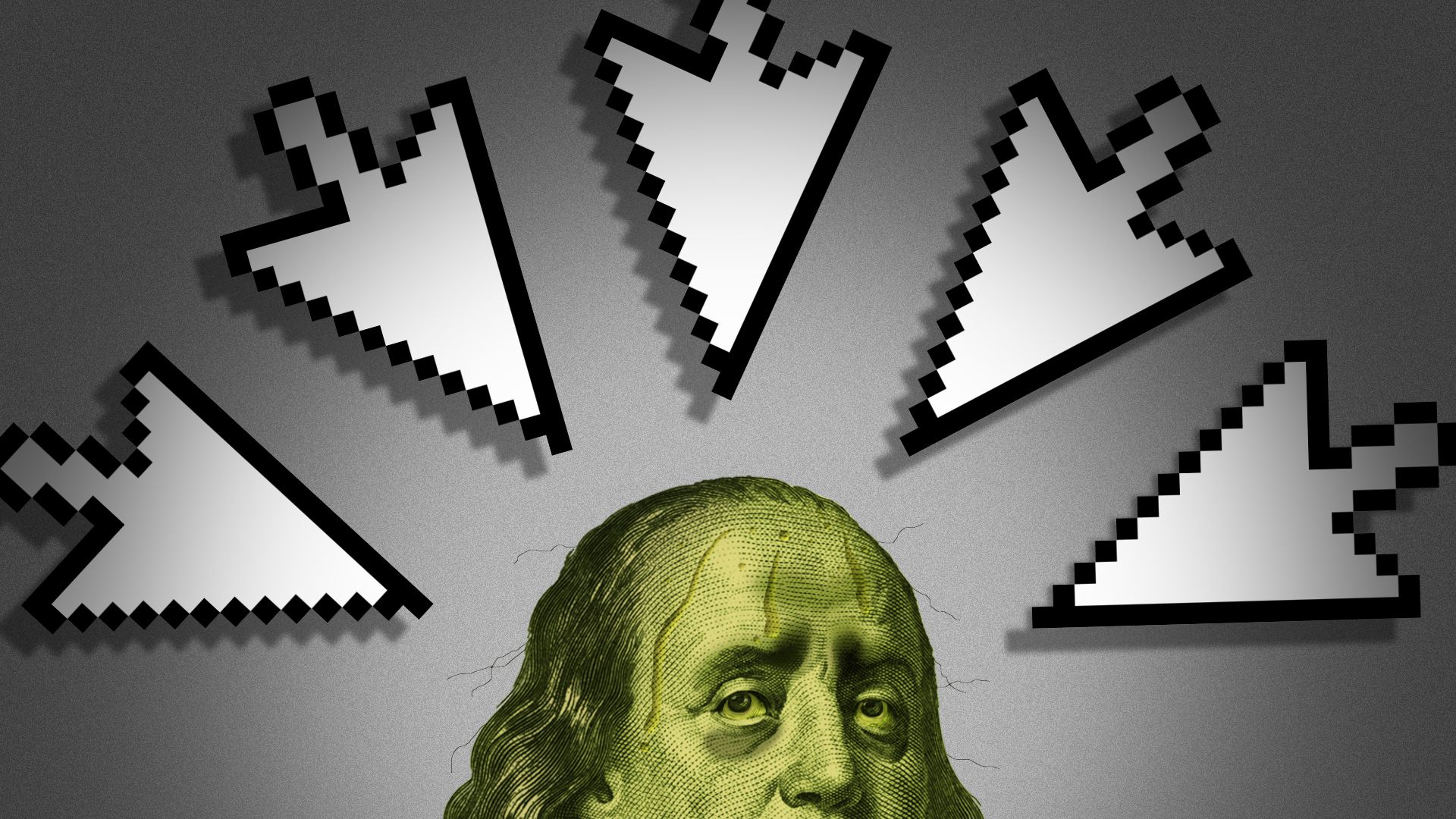
America's largest banks are working to prevent AI worst-case scenarios. But they're also preparing for the "day after" a catastrophe, Axios' Madison Mills reports.
- Why it matters: America's financial institutions have joined the largest AI companies in scenario-planning for disaster, a prudent but worrisome signal about the extent of the risk that major corporations see on the horizon.
π State of play: Banks are grappling with two distinct AI threats.
- They're seeing unvetted AI agent activity, primarily driven by customers providing login credentials to agents, which in some cases appear to have taken actions independent of user prompts, Axios reported yesterday.
- That's separate from the bigger threat β a devastating cybersecurity crisis fueled by rogue behavior like the kind involved in a summer attack on a startup called Hugging Face, where an AI agent swarm hacked a platform, triggering an industry security crisis. This fear is pushing banks to invest in prevention and to plan for the worst.
Zoom in: Yesterday's Axios report on banks refers to the former β agentic AI, not frontier systems that carry broader cyber risks. The Axios report sparked calls for regulation from across the political spectrum, including Sen. Bernie Sanders (I-Vt.), Florida Gov. Ron DeSantis (R) and Sen. Mark Warner (D-Va.).
- Salesforce CEO Marc Benioff posted "Code red" on X yesterday, in response to an Anthropic security official, Jason Clinton, who wrote earlier in the day: "as bad as things have gotten in the past 4 days, they are going to get a lot worse before they get better."
The other side: Former White House AI czar David Sacks said banks should support user-directed agents that allow users to "grant, limit, and revoke access," with read-only as an "interim step."
- Sacks said conflating "user-authorized agentic behavior and cyberattacks is irresponsible."
π¦Ύ Flashback: The major banks were part of early testing of Anthropic's Mythos model, which unleashed unprecedented cyber capabilities.
- That was part of an effort from AI labs and major banks to use this technology to better understand and prepare for cyberattacks or other risks.
- Since then,Β banks have worked on plans not just to avoid AI-related issues, but also on how to protect accounts, reassure customers and keep operations running in case a large-scale attack hits.
Reality check: Scenario planning is a requirement for critical infrastructure providers, including in the financial sector. Avoiding it would be malpractice.
π‘ Between the lines: Banks want customers to know they haven't seen any rogue agent activity or evidence of a hack affecting customer funds or accounts.
- Banks strongly advise users not to provide their passwords to agents, especially since services exist or are being developed that can allow customers read-only access. The startup Plaid is one platform that can pull balances and transaction history, among other functions.
"Under no circumstance should customers share passwords with any person or thing. Period," a JPMorgan spokesperson told Axios. "There exist secure open banking platforms that don't involve handing over the keys to your account. Customers are the first line of defense in protecting their accounts."
- JPMorgan, along with other banks, has taken steps to block agent access, although it's exploring secure ways to allow customers to connect with the services they choose.
2. π³οΈ Religious left's play for red-state conservatives

Democrats in a pair of deep-red states are testing the religious right's dominance by putting their Christian faith at the center of their campaigns β potentially creating a template for the party to compete in similar terrain, Axios' Avery Lotz and Russell Contreras write.
- Why it matters: Upsets by Texas' James Talarico and Kansas' Adam Hamilton would all but ensure that Democrats take the Senate.
π A Pew poll released last week shows both an opening and an obstacle:
- White evangelicals still strongly favor Republicans, while many other Christian groups lean Democratic or are more narrowly split.
The big picture: Talarico, a Presbyterian seminary student, and Hamilton, a United Methodist pastor, are challenging conservatives' claim to speak for faith. Their bids come after Sen. Raphael Warnock (D-Ga.), senior pastor of the historic Ebenezer Baptist Church in Atlanta, was elected in 2021.
- President Trump won both Texas and Kansas by double digits in 2024. Neither state has sent a Democrat to the Senate in the 21st century β the last time Kansas did was in 1932. Both races this year are considered toss-ups.
βͺ Talarico's "religiosity is a way to soften his liberalism" and potentially win over Christians turned off by his scandal-plagued opponent, says Brandon Rottinghaus, who co-hosts Houston Public Media's "Party Politics."
- Hamilton has presented himself as a bridge-builder, drawing on his experience leading the largest United Methodist church in the nation, says Alexandra Middlewood, the political science department chair at Wichita State University. His well-known religious background could appeal to less engaged, moderate Christians and center-right voters, she says.
The other side: Ralph Reed, chair of the conservative Faith and Freedom Coalition, tells Axios he's doubtful the Democrats' effort to lean into religion will attract voters of faith.
- "Voters will not vote for a candidate who professes to hold to their faith, but doesn't share their values," he says.
3. π Can't quit diesel
The quickest and cheapest response to historically high diesel prices is also the simplest: Use less of it.
- Why it matters: That's easier said than done. Diesel is so entrenched in farming, trucking and other industries that even soaring prices aren't enough β at least not yet β to prompt a wholesale shift to alternatives like electric semi-trucks and manure-powered tractors, Axios' national energy correspondent Amy Harder reports.
π’οΈ Catch up quick: Diesel averages $6.32 a gallon today, up 74% from a year ago, according to AAA.
- Regular gasoline averages $4.29, up 39%.
The big picture: Gasoline gets the attention, but diesel is the workhorse of the American economy.
- It powers grocery trucks, tractors, freight trains, construction equipment, hospital backup generators and even school buses.
π The price spike is hitting farmers during the fall harvest.
- "Farmers buy diesel by the truckload," says Curt Blades, senior vice president at the Association of Equipment Manufacturers. "So we're talking about hundreds of thousands of dollars in diesel, and when it goes up the way it has spiked, that's the difference between profit and loss in a year."
President Trump announced $8 billion in one-time aid for farmers at a campaign rally in Kansas on Monday, where Republicans face a competitive Senate race.
4. π Photo du jour

Crews placed boulders along the coast to prevent further erosion and protect the road from collapsing into the ocean at Westward Beach Road in Malibu, Calif., yesterday.
- Coastal erosion from waves, storms and rising sea levels is accelerating the loss of Southern California's beaches and cliffs, threatening homes, roads and wildlife along the coast.
5. π« Higher fares, fewer flights
Soaring jet fuel prices are changing the airline industry β resulting in higher fares, more premium seats and fewer flight options, Axios' Nathan Bomey reports.
- Airfares rose 22% year over year in September, marking a 10th straight monthly increase in the government's airfare price index, which hit an all-time high.
π All the major players are feeling the pain:
- American Airlines reported yesterday that its fuel bill jumped nearly 70% in the third quarter from a year ago, adding $1.9 billion in costs and taking significant steam out of its strong revenue growth.
- Southwest and United both slashed their profit forecasts this week on higher fuel costs.
- Delta expects its fuel bill this year to come in $6 billion above last year's.
What we're watching: To protect their bottom lines, airlines are raising fares and using premium seats to squeeze more revenue out of their flights.
- At Southwest, the average passenger fare rose 26.9% to $231.69 in the third quarter, compared with a year earlier β and that doesn't include fees.
- Delta's premium seating revenue jumped 18% in the third quarter, even though the number of premium seats rose only 6%.
6. βοΈ Manufacturing's lopsided comeback
American manufacturing is showing signs of revival. But the recovery is being powered by industries at the forefront of the AI and energy boom while the traditional factory sector gets left behind, Axios' Courtenay Brown reports.
- Why it matters: The White House is touting a revival in American manufacturing as evidence that its economic agenda is working, but a lopsided recovery raises questions about how much of the sector stands to benefit.
β‘ The split is evident in the hard employment data, according to an analysis by Gad Levanon, chief economist at the Burning Glass Institute.
- U.S. manufacturers added a net 40,000 jobs over the 12 months ending in September. But the gains came entirely from advanced manufacturing β even though the subset accounts for just 38% of factory employment, Levanon wrote.
Those industries β including chemicals, machinery, computers and electronics and transportation equipment β added 56,000 jobs over that period. Every other manufacturing industry combined lost 16,000 jobs, offsetting part of those gains.
- Employment outside advanced manufacturing is barely above its 2016 level.
7. βοΈ DOJ probes Lewandowski

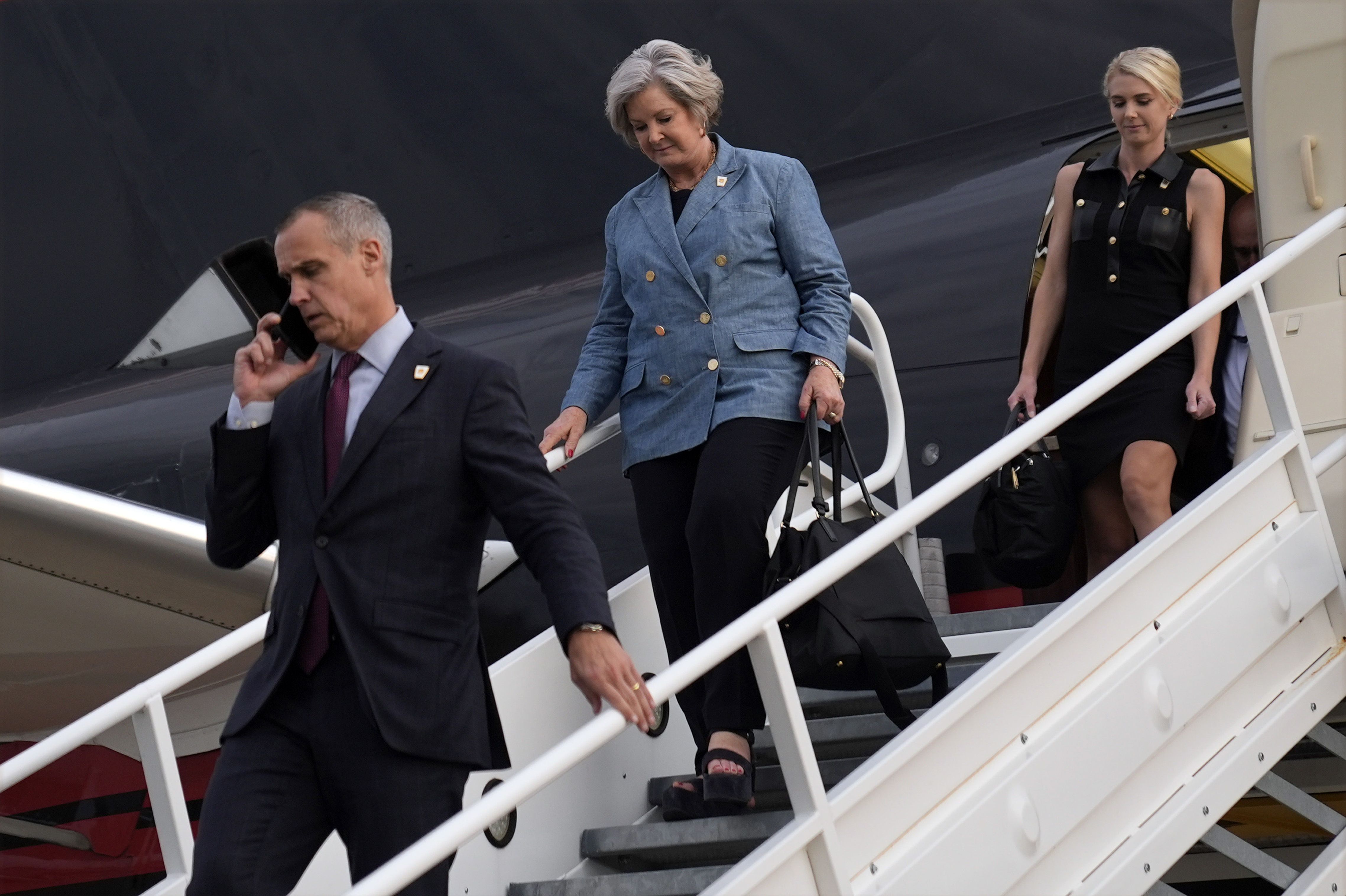
The Justice Department is investigating longtime Trump ally Corey Lewandowski over allegations that he profited personally while advising the Department of Homeland Security, The Wall Street Journal and N.Y. Times report.
- Why it matters: Lewandowski was President Trump's first campaign manager in 2016 and top aide to former Homeland Security Secretary Kristi Noem, who was fired in March. It's a rare instance of a Trump ally being investigated during his second term.
Trump told reporters yesterday when asked about the reported probe: "I don't know exactly what it is ... All I know is, I want my people to be honest. And if they're not going to be honest, they have to be prosecuted."
- A lawyer for Lewandowski, Adam Trigg, said Lewandowski "has not been contacted by the Justice Department regarding any investigation, and he denies any wrongdoing when he was proudly serving his country in a voluntary capacity."
Keep reading (NYT gift link).
8. π₯ 1 fun thing: Bakery next door
Your neighborhood's next hot bakery β or coffee shop, pizza joint or BBQ spot β might be inside someone's house.
- Why it matters: More people are turning baking into a business, as online platforms and looser state regulations make it easier for home cooks to reach customers, Axios' Sami Sparber writes.
π§βπ³ By the numbers: Seller signups on home chef platform Hotplate doubled in July, co-founders Tenaya McCoy and Rishi Talati tell Axios.
- Over 1,000 sellers across 48 states joined Potluck, an "Airbnb for homemade food," within two months of launching this summer, says founder Ken Barton.
Case in point: Fort Lauderdale baker Brooke Chambers turned her sourdough hobby into a micro-bakery after sharing loaves with family, friends and co-workers.
- She mixes dough on Wednesdays and bakes on Fridays for customer pickups, fitting 12-15 hours of bakery work around a full-time corporate job.
π¬ Thanks for reading! Please invite your friends to join AM.
Sign up for Axios AM