Axios AM

June 17, 2025

1 big thing: Bibi's new endgame
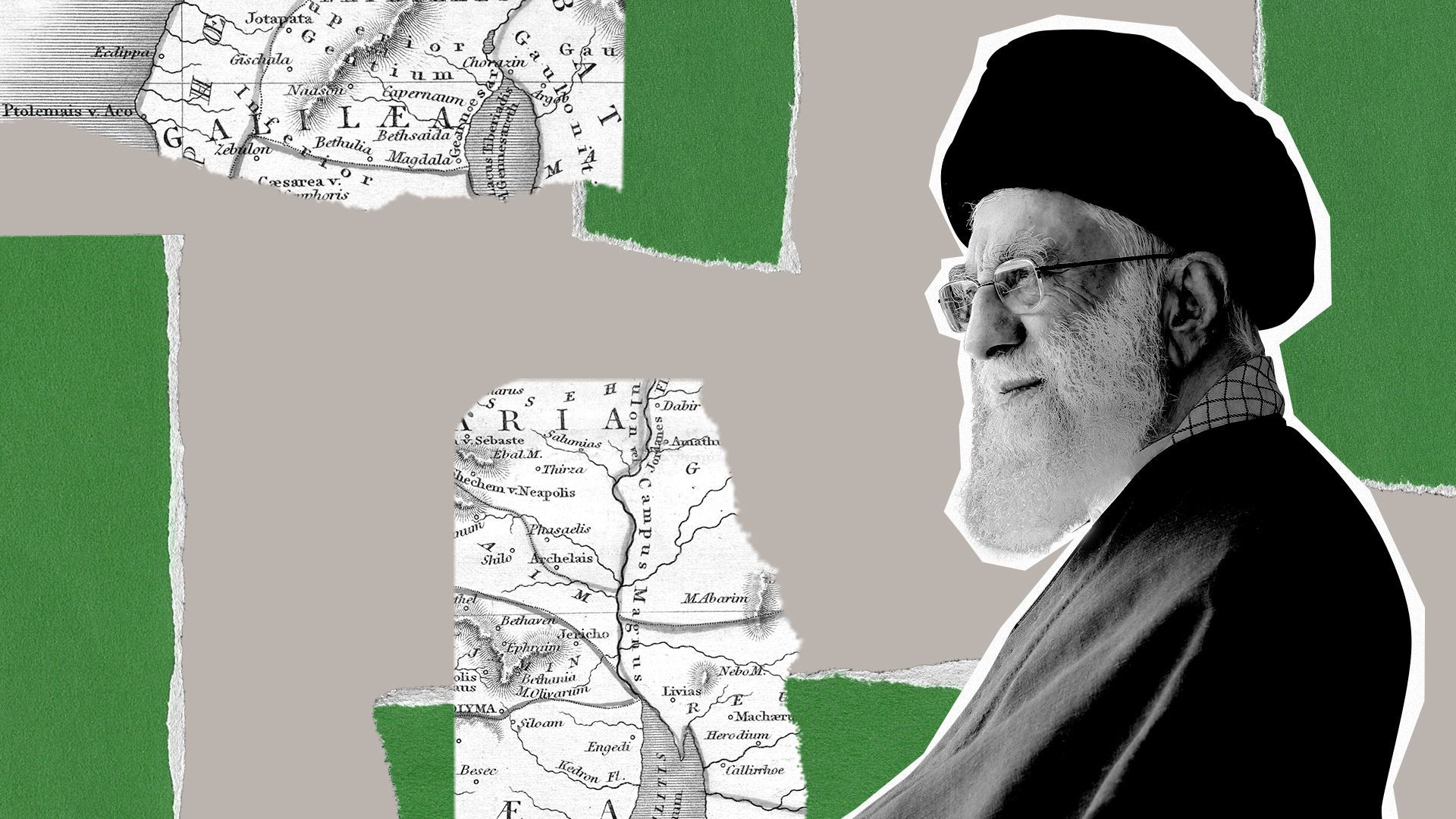
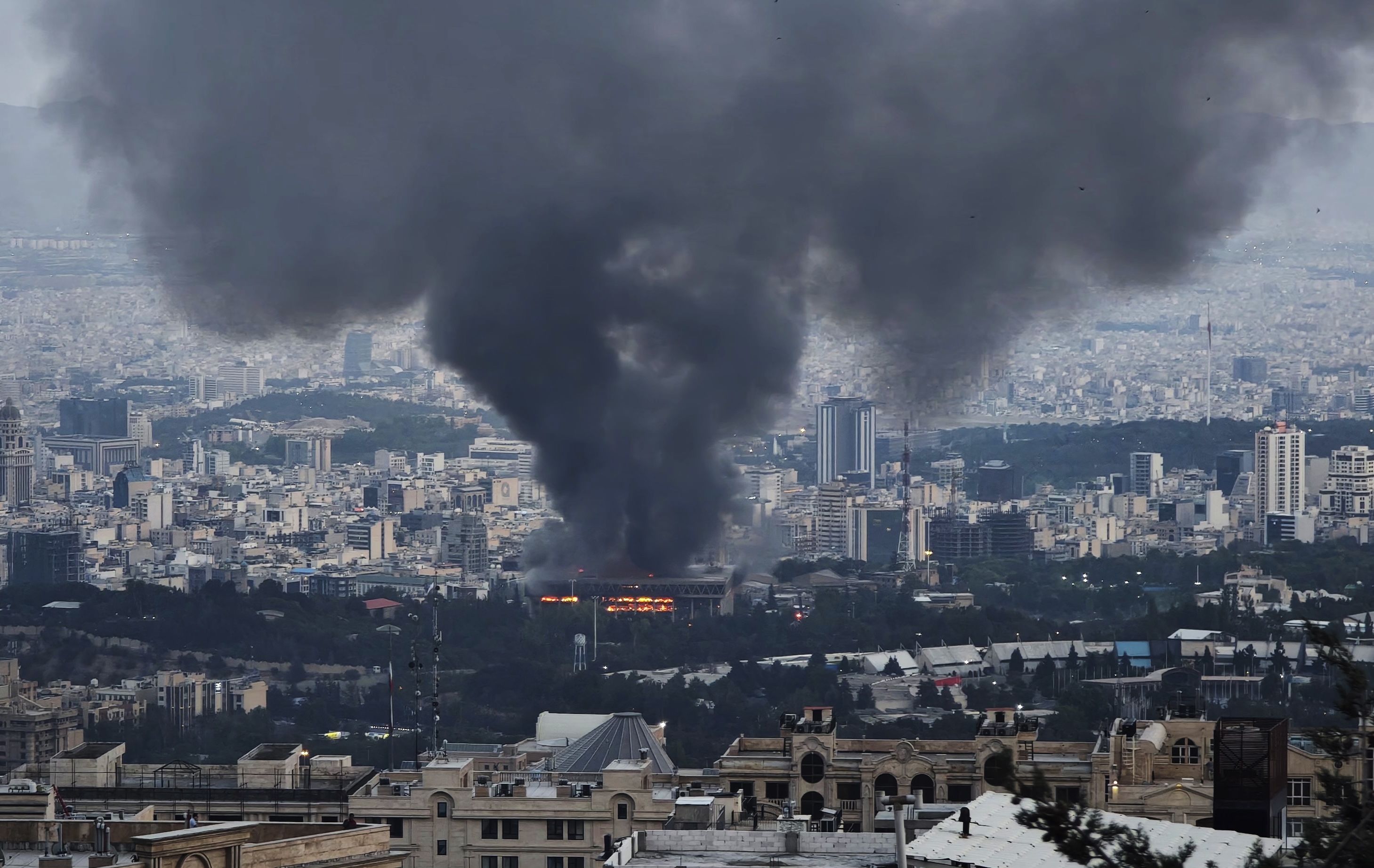
The staggering success of the first phase of Israel's war in Iran has left its air force in total control of the skies over Tehran — and its leaders contemplating regime change in the Islamic Republic, Axios' Barak Ravid and Marc Caputo write.
- Why it matters: Prime Minister Benjamin Netanyahu has effectively endorsed the idea in a string of media appearances in the last 48 hours. But President Trump has remained unconvinced, at least so far, U.S. officials say.
Friction point: When the Israel Defense Forces thought they had a window to assassinate Supreme Leader Ali Khamenei over the weekend, Trump opposed it.
- A senior administration official summed up the thinking: "It's the Ayatollah you know versus the Ayatollah you don't know."
- That's not to say Trump couldn't decide to "swoop in and do some gigantic action," the official cautioned.
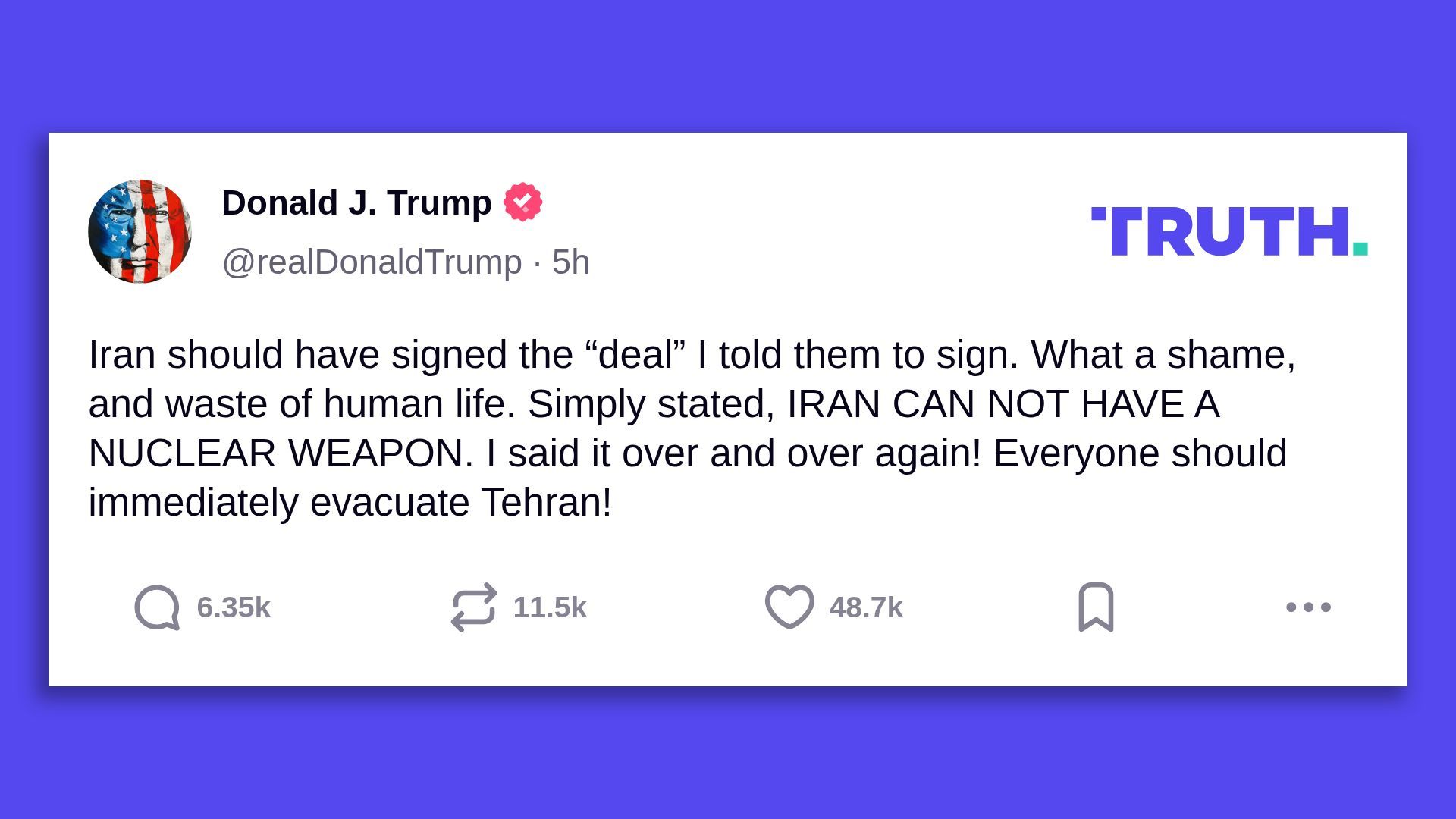
Driving the news: Trump issued an ominous warning overnight that everyone in Tehran (population 10 million) should "immediately evacuate," then announced he was leaving the G7 summit in Canada early.
- Speculation about an imminent U.S. attack spread like wildfire, before the White House denied it, and Trump himself suggested he might cut a deal.
- In an overnight strike on Tehran, the Israeli military said it killed Iran's top commander Ali Shadmani, who it described as the "closest figure" to Khamenei.
👀 Behind the scenes: Israeli officials tell Axios that regime change isn't an official war aim.
- It was not one of the objectives approved by the Israeli security cabinet ahead of the war. Several Israel Defense Forces (IDF) officials said they've received no such directive from the political level.
- But discussions about it are getting louder and more overt.
Netanyahu openly stated on Fox News on Sunday that the war could bring regime change to Iran. Then yesterday, he contended that killing Khamenei could "end the war."
- Subtlety is not the objective. Netanyahu appeared on an Iranian opposition TV program yesterday called "Regime Change In Iran" and mentioned that nobody saw the fall of the Soviet Union or Syria's Assad regime coming until it happened.
The other side: The White House supports Israel's stated war aims of eliminating Iran's nuclear and ballistic missile capabilities, but not a broader mission to reshape Iran through force.
- "They might be more comfortable with regime change than we are," the U.S. official said, referring to the Israelis. "They may be more comfortable with destroying the country than we are."
- "But generally speaking, the world should want this bomb capacity to be destroyed, and eventually we're going to have to get that done."
🥊 Reality check: Since the war started last Friday, there have been no widespread protests in Iran against the regime.
- Raz Zimmt, a top Israeli expert on Iran from the INSS think tank, told Axios that for now the regime is maintaining its cohesion and determination, and is even closing ranks in the face of the external threat from Israel.
2. ⚡ Trump's immigration whiplash
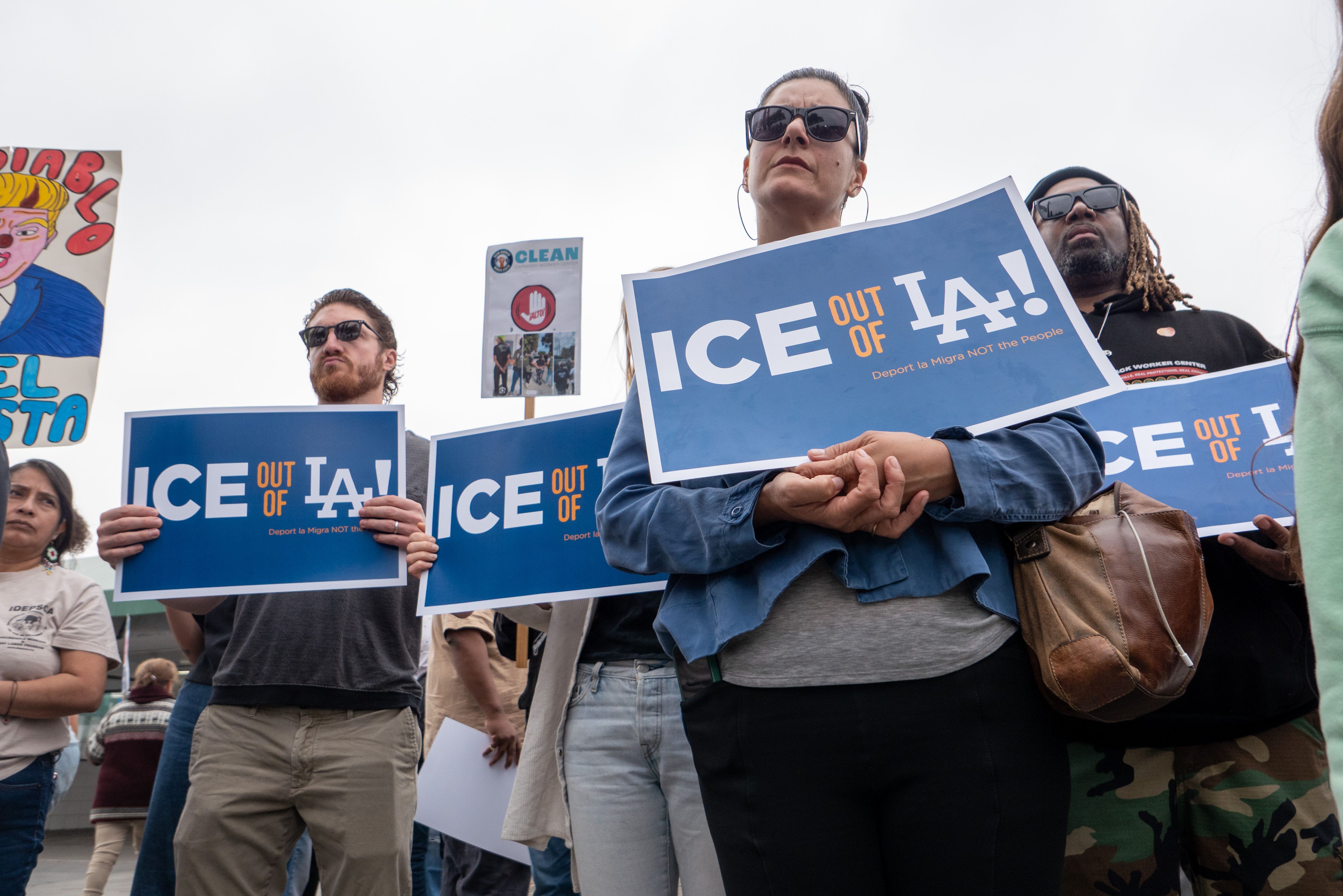
President Trump surprised immigration hardliners last week when his administration announced it would pause some immigration raids that were hurting the agriculture and hospitality industries.
- Then just as quickly, the MAGA pendulum swung back. Trump said Sunday that a new wave of raids would target immigrants in Democrat-run cities — and yesterday there were signs that farms, hotels and restaurants again will be subject to raids.
Why it matters: The whiplash in Trump's approach to his mass deportation plans is the latest illustration of how much his whims — and who speaks with him last — are shaping his decision-making, even on his signature policy issue, Axios' Marc Caputo and Russell Contreras write.
- ICE officials were told yesterday that agents should resume raids on hotels and restaurants, but also agricultural businesses, The Washington Post reported.
🔭 Zoom in: The confusion began late Thursday, when Trump announced on Truth Social that his "very aggressive policy on immigration is taking very good, long time workers away" from farms, meatpacking plants, hotels and restaurants.
- Trump's announcement, followed by official guidance pausing these types of workplace raids, came after a call from Agriculture Secretary Brooke Rollins.
- White House staffers say she bypassed the president's top immigration policy officials — Deputy Chief of Staff Stephen Miller and Homeland Security Secretary Kristi Noem — both of whom were angry about it.
Miller, Noem and a host of immigration hardliners then mounted their own pressure campaign to modify the modified policy. It worked.
3. 🤖 AI's high-stakes tug-of-war

4. ⏰ The "infinite workday"
5. 💰 Trump takes on team owners
6. 🎈 AI balloons over America

A startup called Near Space Labs is turning stratospheric balloons into flying robots that use AI to speed up insurance claims after disasters, Axios' Megan Morrone writes.
- Why it matters: Hurricane season in the U.S. is here, and many are bracing for the complicated aftermath of collecting insurance as well as the physical impact of potential disasters.
💡 How it works: Near Space builds and deploys autonomous devices with proprietary cameras and sensors that capture all kinds of ultra-precise data from disaster areas.
- The devices, known as Swift robots, travel in the stratosphere — higher than airplanes — at a vantage point that makes it easy to map large areas more cost-effectively than planes or drones.
- Near Space says insurers use the data collected by the robots to price risk accurately, allowing communities to stay insurable and get paid faster.
7. 🌡️ Mapped: Hotter summer nights
 Open embedded content from datawrapper.dwcdn.net
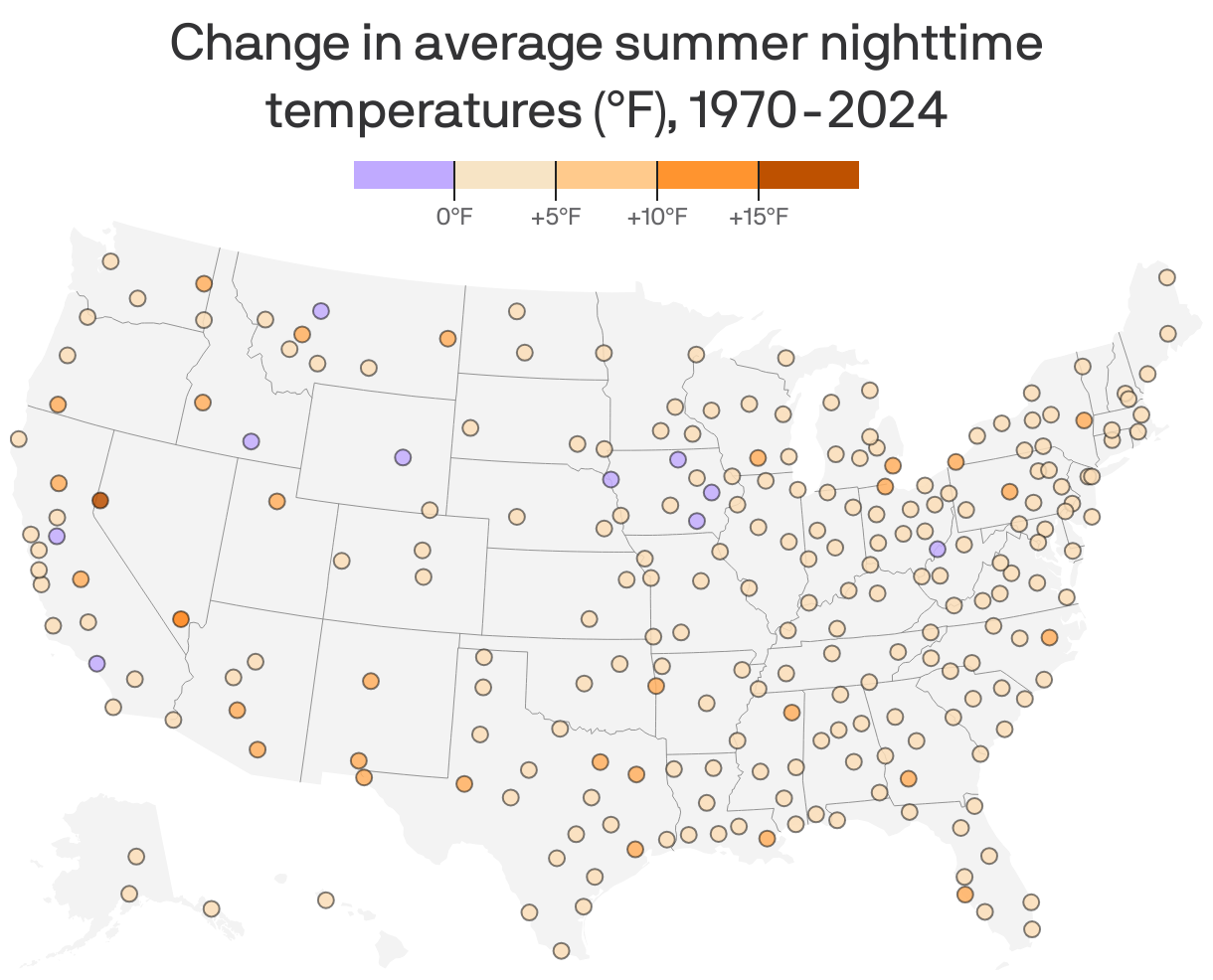
Summer evenings are getting warmer across much of the U.S. — especially in Nevada and other parts of the Southwest — "with a strong climate change fingerprint," Axios' Alex Fitzpatrick writes from a new analysis.
- Average summer nighttime temperatures increased between 1970 and 2024 in 96% of 241 locations analyzed in a new report from Climate Central, a research and communications group.
Zoom in: Reno, Nev. (+17.7°F), Las Vegas (+10°F), El Paso, Texas (+8.9°F), and Salt Lake City (+8.2°F) saw the biggest increases.
8. 👨🍳 1 fun thing: Oscars of food

Axios AM