Your disaster insurance payout could depend on balloons

Add Axios as your preferred source to
see more of our stories on Google.
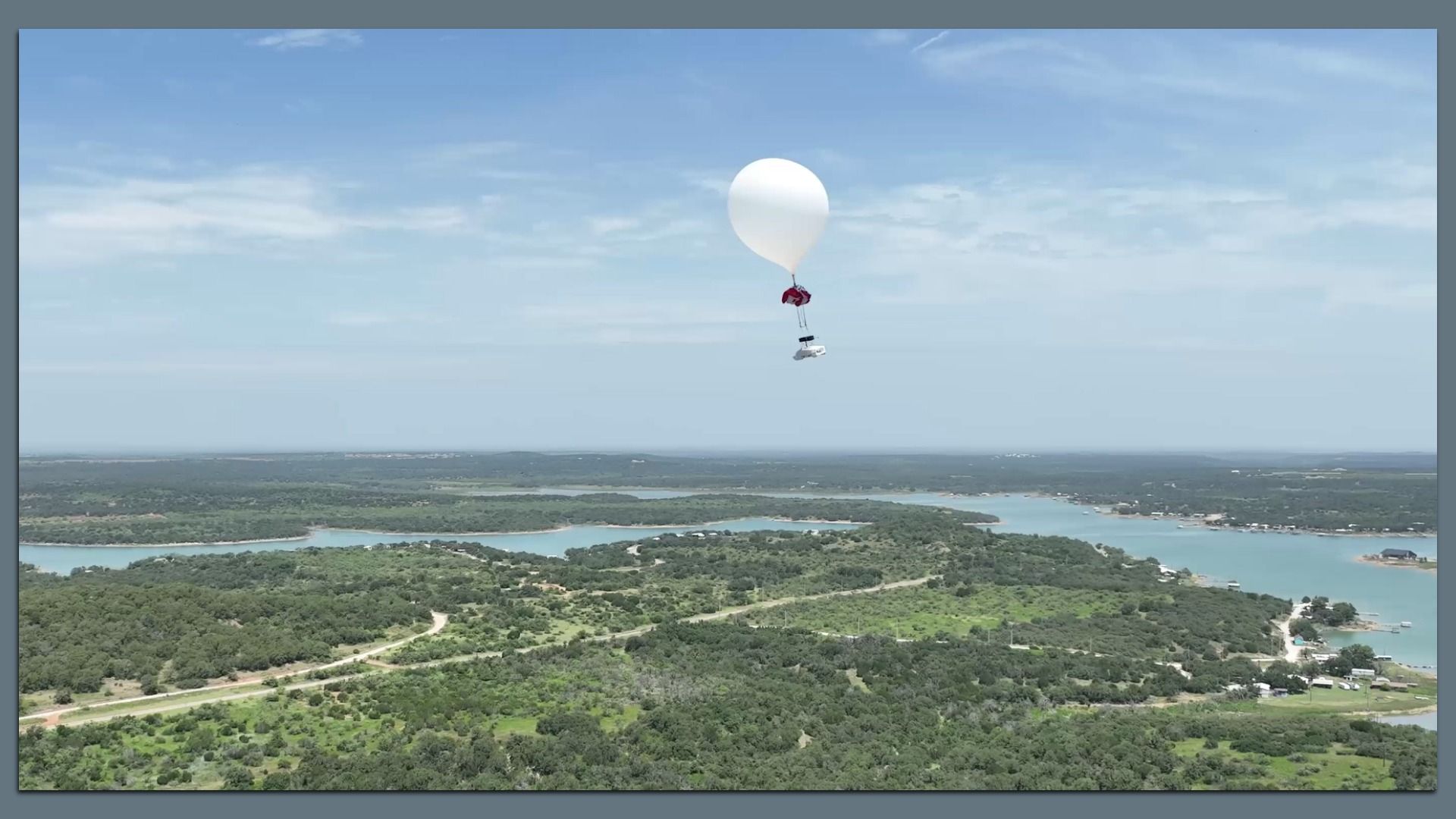
Near Space Labs' Swift robot ascends to the stratosphere using a weather balloon. Photo: Near Space Labs
A startup called Near Space Labs is turning stratospheric balloons into flying robots that use AI to speed up insurance claims after disasters.
Why it matters: Hurricane season in the U.S. is here and many are bracing for the complicated aftermath of collecting insurance for property loss as well as the physical impact of potential disasters.
How it works: Near Space builds and deploys autonomous devices with proprietary cameras and sensors that capture all kinds of ultra-precise data from disaster areas.
- The devices, known as Swift robots, travel in the stratosphere — higher than airplanes — at a vantage point that makes it easy to map large areas more cost-effectively than planes or drones.
- The balloons can launch from afar without entering unsafe areas.
- Near Space says insurers use the data collected by the robots to price risk accurately, allowing communities to stay insurable and get paid faster.
Between the lines: The climate crisis has spurred an insurance crisis with soaring premiums and carriers retreating from high-risk states like California and Florida.
- Homeowners lose access to coverage or face claim denials based on outdated or low-res imagery. Near Space data can show clear images of new roofs or other upgrades owners have made to prepare for disasters.
By the numbers: Near Space was founded in Brooklyn in 2017 and has raised over $40 million in funding, including a $20 million Series B last month.
- It would take more than 800,000 drones to capture what one Swift robot can capture, Near Space co-founder and CEO Rema Matevosyan told Axios.
- Matevosyan says Swift robots can be mounted on balloons in roughly 10 minutes. The rest of the process is autonomous.
- Near Space provides coverage of 80% of the continental United States population.
Context: Several startups are using AI and advanced imaging to streamline the labyrinthine insurance industry.
- ZestyAI, an AI-powered property and climate risk analytics company that launched in 2021, works with California's FAIR Plan, the insurer of last resort.
- Arturo uses aerial and satellite imagery combined with AI to help insurers reduce costs.
- While not directly involved in the insurance industry, Sceye uses stratospheric balloons to track extreme weather and climate disasters such as wildfires.
What's next: The company is working on genAI agents designed to allow insurers to query Near Space Labs' imagery.
- For example, you could potentially ask an agent to detect all of the tarps put up on roofs after a hurricane — a simple and quick way to help large insurers understand exposure to a disaster.
Yes, but: Better data helps with pricing and claims, but it doesn't stop insurers from pulling out of high-risk markets entirely.
- If climate risk becomes truly uninsurable, even perfect imagery won't keep homes covered.
- High-res images of homes also pose privacy risks. Near Space assured Axios that its technology cannot see through walls or inside buildings, following the same privacy standards used by other aerial photography companies for decades.
- "Near Space protects its imagery with comprehensive data governance frameworks and carefully selects partners who adhere to documented privacy and security protocols," the company said in an email to Axios.
What they're saying: Matevosyan says her goal is to use tech to provide equity and access, especially in remote, underserved communities, often missed by satellite or aerial surveillance.
- "There's no climate resilience without financial resilience," Matevosyan says. "Financial resilience is insurance in the face of catastrophes."
- "Frequent data helps us understand the planet and helps us understand this ever-evolving risk. We can actually apply methods that we know work and help everybody sort of adjust to this new reality, which is that our environment is going to continue changing."
