Axios AM

May 14, 2026

👋 Happy Thursday! Smart Brevity™ count: 1,473 words ... 5½ mins. Thanks to Noah Bressner for orchestrating. Edited by Andrew Pantazi and Bill Kole.
1 big thing: Trump's killer quote
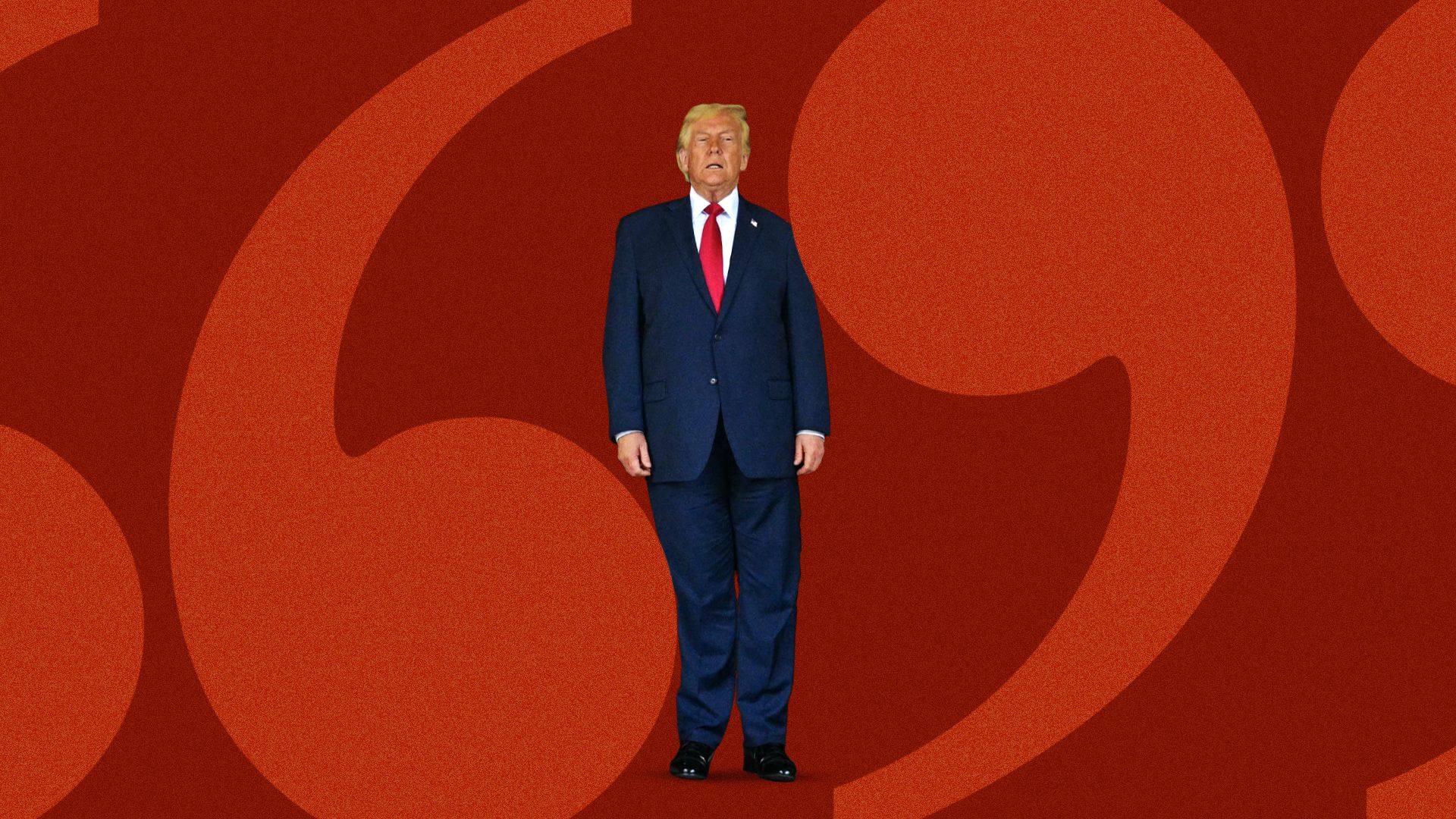
President Trump's remark this week that "I don't think about Americans' financial situation" when negotiating with Iran may have captured his fundamental wartime bind: how to pressure Tehran without spooking markets and sending oil prices soaring.
- Why it matters: Trump has no clear way to square his desire to end the war on his terms with the need to rein in inflation and keep the stock market humming in an election year, Axios' Dave Lawler and Barak Ravid write.
🔎 Zoom in: What Trump appeared to mean Tuesday is that he won't let domestic economic concerns deter him from any steps he feels are necessary to stop Iran from obtaining a nuclear weapon.
- That nuance is certain to be lost in Democrats' campaign ads.
- "The president could have chosen different words, but this is what he thinks," a Trump adviser told Axios.
- The problem, a second Trump adviser acknowledged, is that Iran "has more time, and they're counting on our political calendar to benefit them."
Friction point: Iranian officials have made clear they believe time is on their side and that Trump is sensitive to rising oil prices and market volatility.
- Recent economic data showing a gas-driven inflation spike — and poll numbers suggesting voters blame the president and his fellow Republicans — don't help Trump's case that he can ride this out as long as it takes.
- Republican pollsters and consultants acknowledge that gas price increases driven by the war will make it harder to sell their midterm message on issues like tax cuts. (Today's national average is $4.53/gallon.)
- But the second adviser insisted Trump is "serious about a non-nuclear Iran," political considerations be damned.
👀 Behind the scenes: U.S. officials don't expect Trump to take any dramatic steps during his trip to China but think he could make his next move immediately afterward.
- They say one option is resuming "Project Freedom" with the Navy attempting to break the logjam in the Strait of Hormuz.
- Another is launching a bombing campaign on Iranian infrastructure, as Trump has repeatedly threatened.
Israeli officials say they'll be on high alert this weekend in case Trump decides to resume the war. Any such operation would be coordinated with the Israeli military, the officials say.
2. 🇺🇸 🇨🇳 Xi warns Trump about Taiwan

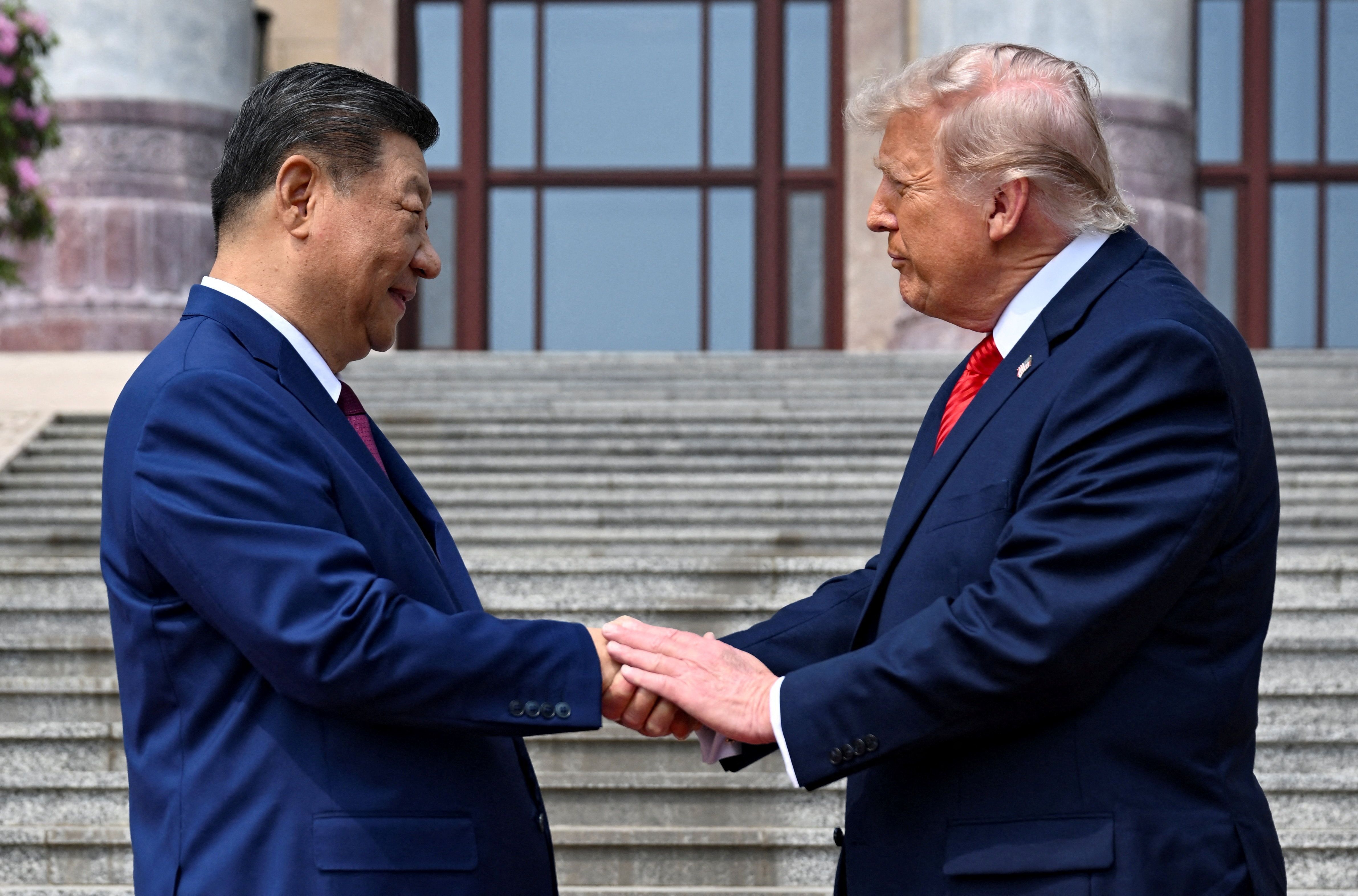
As a two-day summit began in Beijing today, China's Xi Jinping warned President Trump that Washington's handling of Taiwan could lead to "conflicts."
- His tone was a sharp contrast to Trump, who praised his Chinese counterpart and declared: "It's an honor to be your friend."
The pair talked trade and other issues for two hours behind closed doors at the Great Hall of the People. According to a Chinese readout, Xi told Trump that "the Taiwan question is the most important issue in China-U.S. relations." (AP)
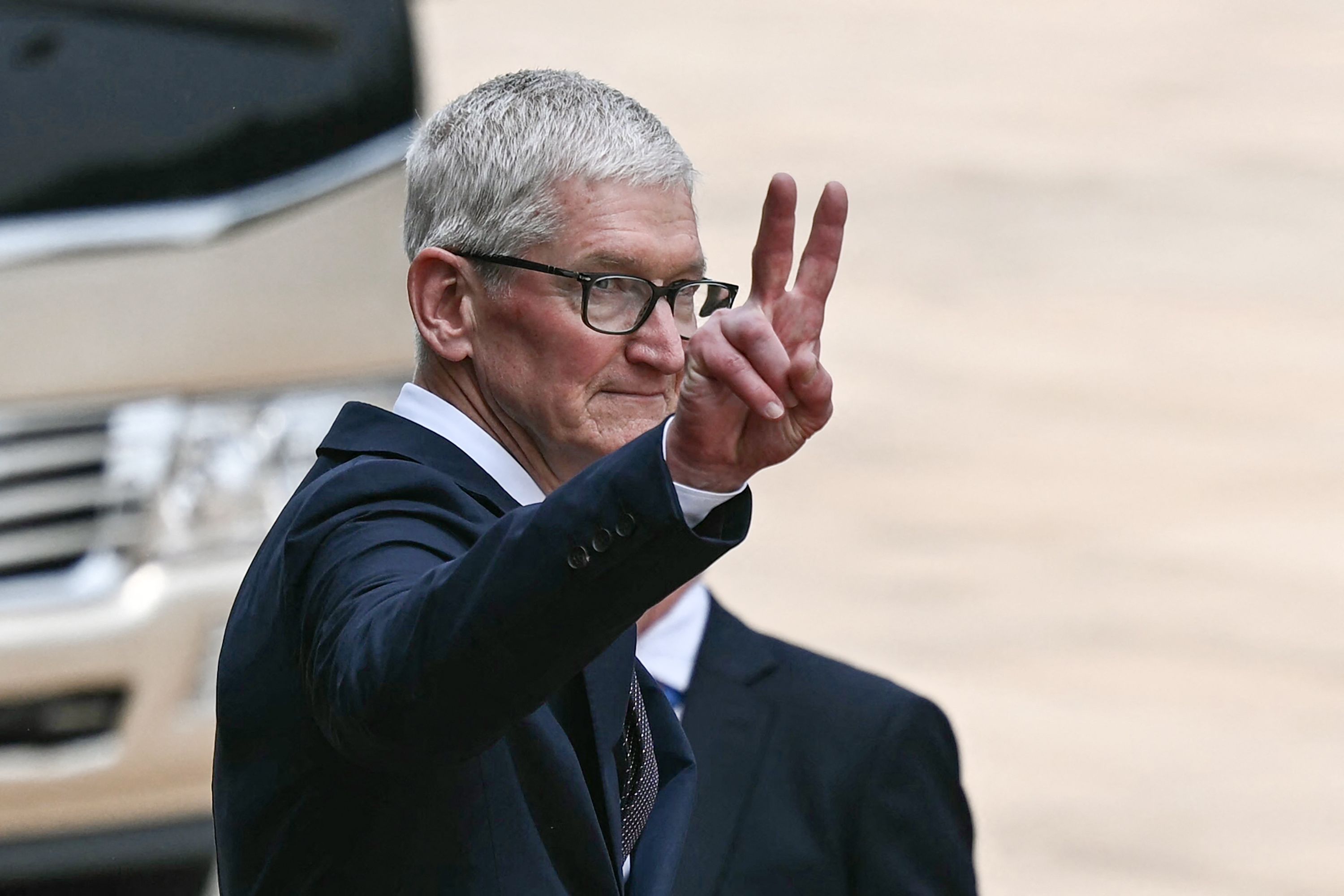
Apple CEO Tim Cook, part of a big delegation of U.S. business leaders joining the summit, flashed a peace sign when pool reporters shouted questions as he left the welcome ceremony.
- Nvidia CEO Jensen Huang said: "Meetings went well … Mr. Xi and President Trump were incredible."
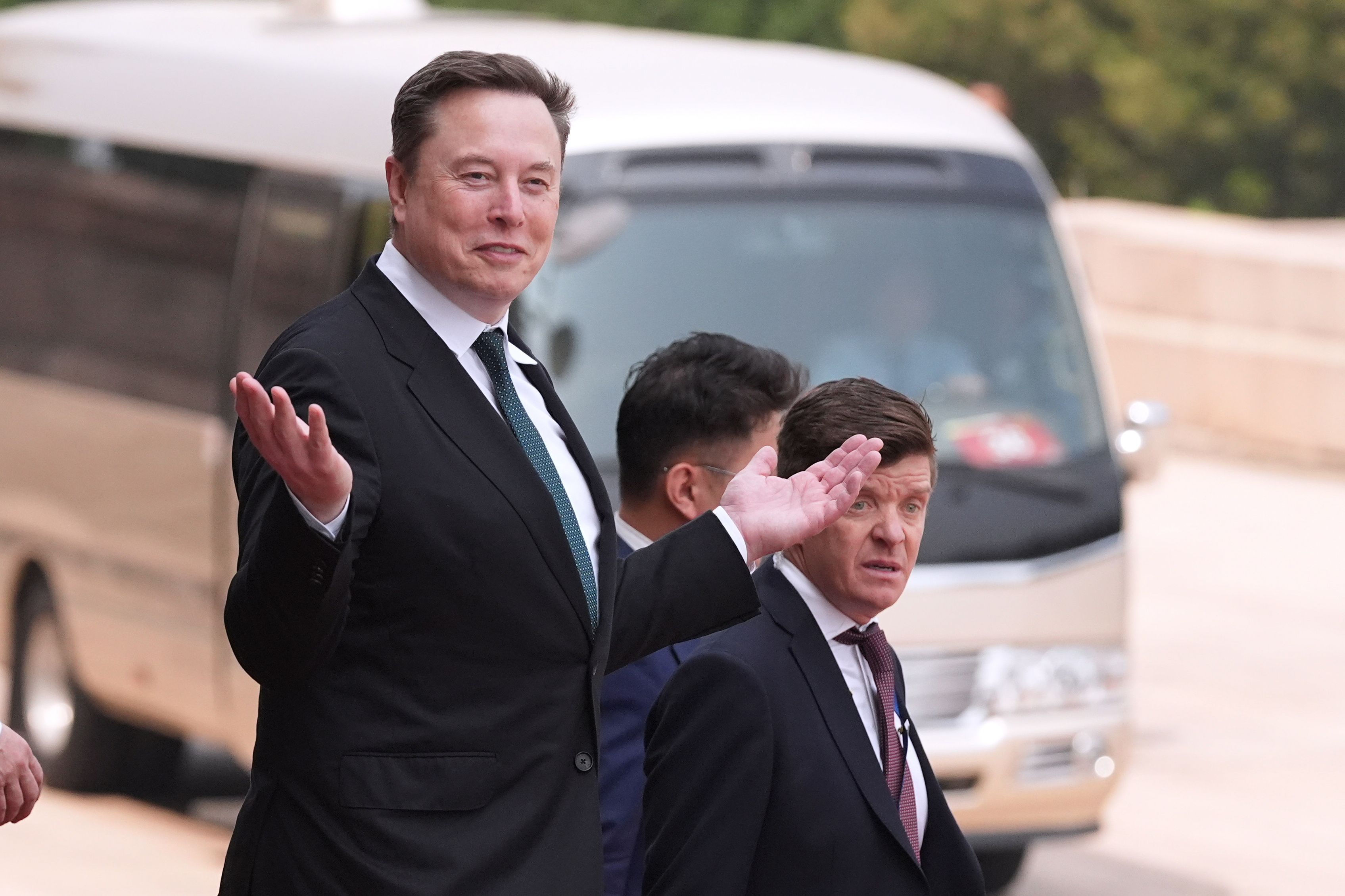
Musk, who stood behind Trump officials along with 13 other CEOs, said he wants to accomplish "many good things" in China.
3. 🌊 Elon's stock tsunami
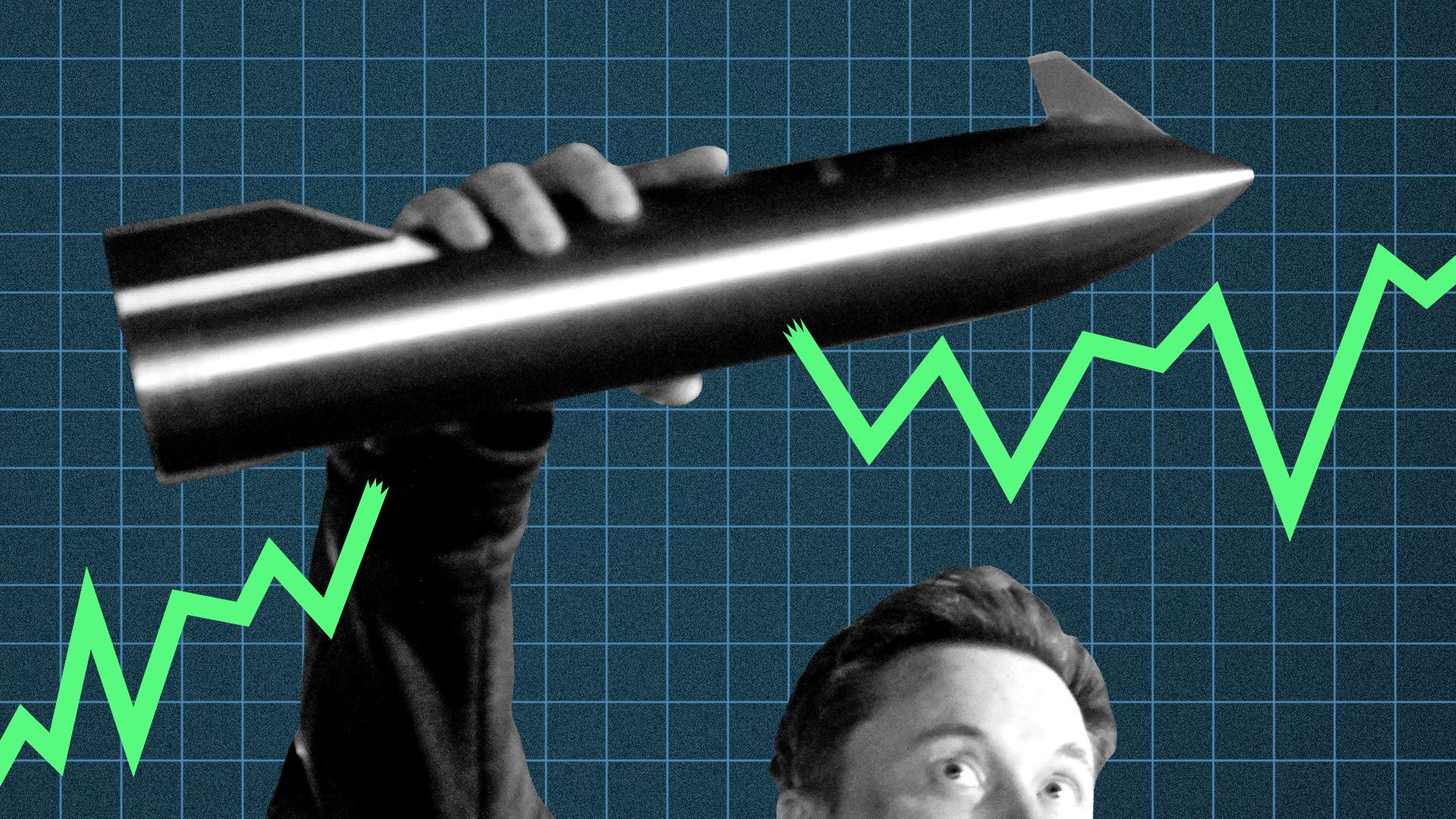
Elon Musk's trillion-dollar-plus SpaceX isn't a public company yet. But its size and ambitions are already upending the stock market and sparking questions over the power and influence wielded by such behemoths, Axios' Emily Peck writes.
- Why it matters: The SpaceX IPO, expected next month, would usher in a new AI era for public markets, potentially valuing the company at up to $2 trillion.
🖼️ The big picture: OpenAI and Anthropic are also expected to go public this year — possibly adding $5 trillion in value to the markets, estimates venture capitalist and MIT research fellow Paul Kedrosky.
- The IPOs will trigger an enormous wave of demand from investors who will pull money out of other assets to buy.
The intrigue: The S&P 500 is considering changing its rules to fast-track SpaceX's inclusion in the benchmark index.
- That would guarantee lots of buyers for the stock: Index funds, which make up an increasingly large share of the market, would be effectively forced to invest.
Nasdaq has already changed its rules to fast-track SpaceX onto the Nasdaq 100, which features the biggest tech companies.
- Critics say the changes are unfair and distort the market. The S&P proposal "is particularly egregious," Wall Street Journal markets columnist James Mackintosh writes under the headline, "Stock Indexes Are Contorting Themselves to Include SpaceX and OpenAI."
4. 💰 Fed's new era
Fed watcher Neil Irwin, who co-writes Axios Macro, writes:
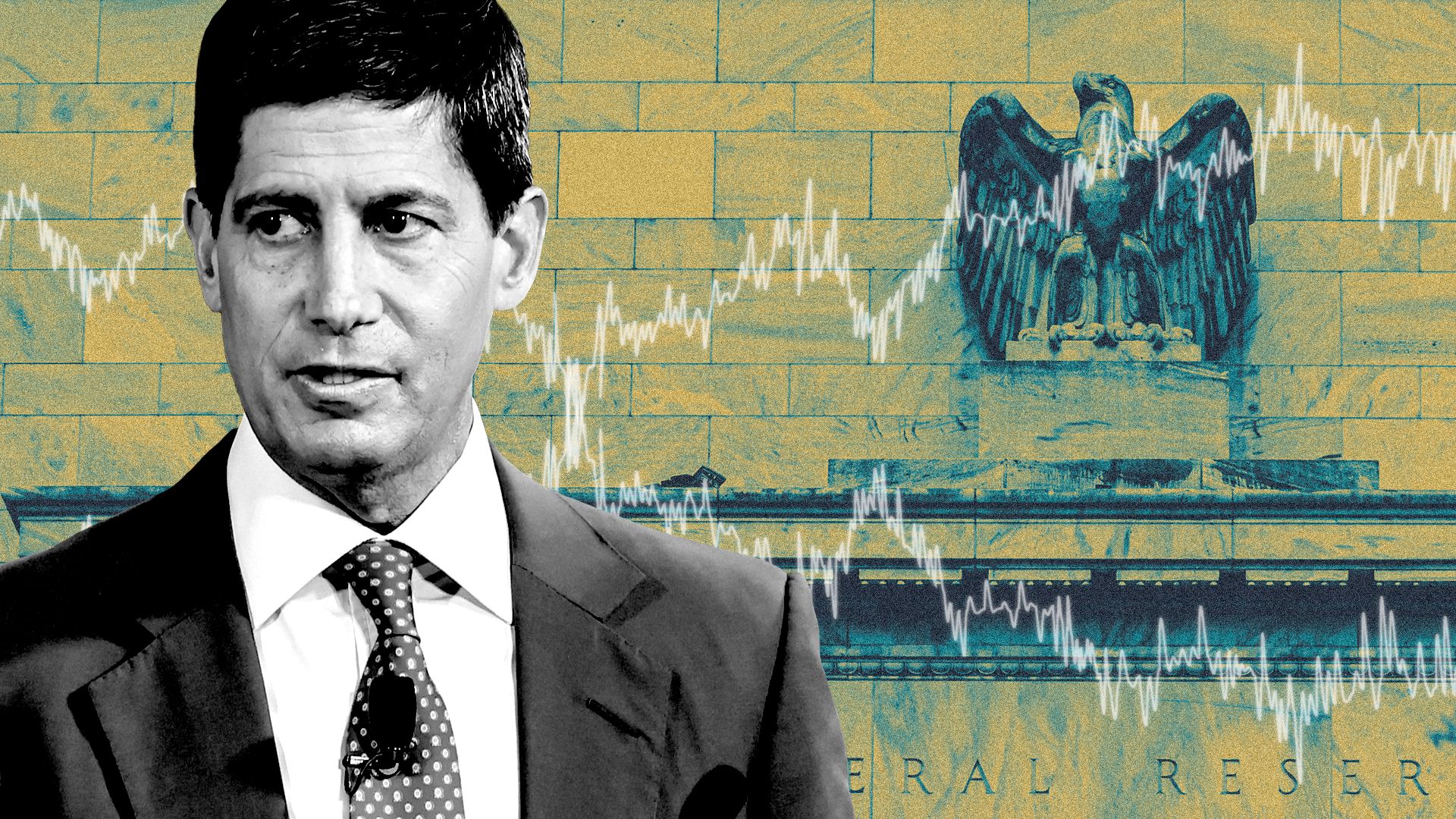
The Senate confirmed Kevin Warsh, 54–45, as the 17th leader of the Fed — making him America's economist-in-chief at a moment of resurgent inflation, public discontent with the economy and unprecedented attacks on the Fed's independence.
- Warsh takes the helm of the central bank after Jay Powell's term ends tomorrow.
The big picture: Warsh has promised sweeping changes at an institution that he argues has grown too unwieldy and too willing to intervene in the economy.
- He inherits buoyant financial markets and an AI-driven growth surge — but also the five straight years of elevated inflation that has spiked again due to the Iran war.
🔭 Zoom out: The debate over interest rates will occur against a backdrop of historically unique threats to the Fed's ability to act without regard to political influence.
- A Supreme Court case over whether Trump can fire Biden-appointed governor Lisa Cook is pending.
- Powell is remaining on the Fed Board of Governors, contrary to modern precedent, saying he sees an ongoing threat from the Trump administration to reopen a criminal investigation into the Fed's building renovations.
5. 🎤 Axios summit: Dr. Oz vs. insurance headaches
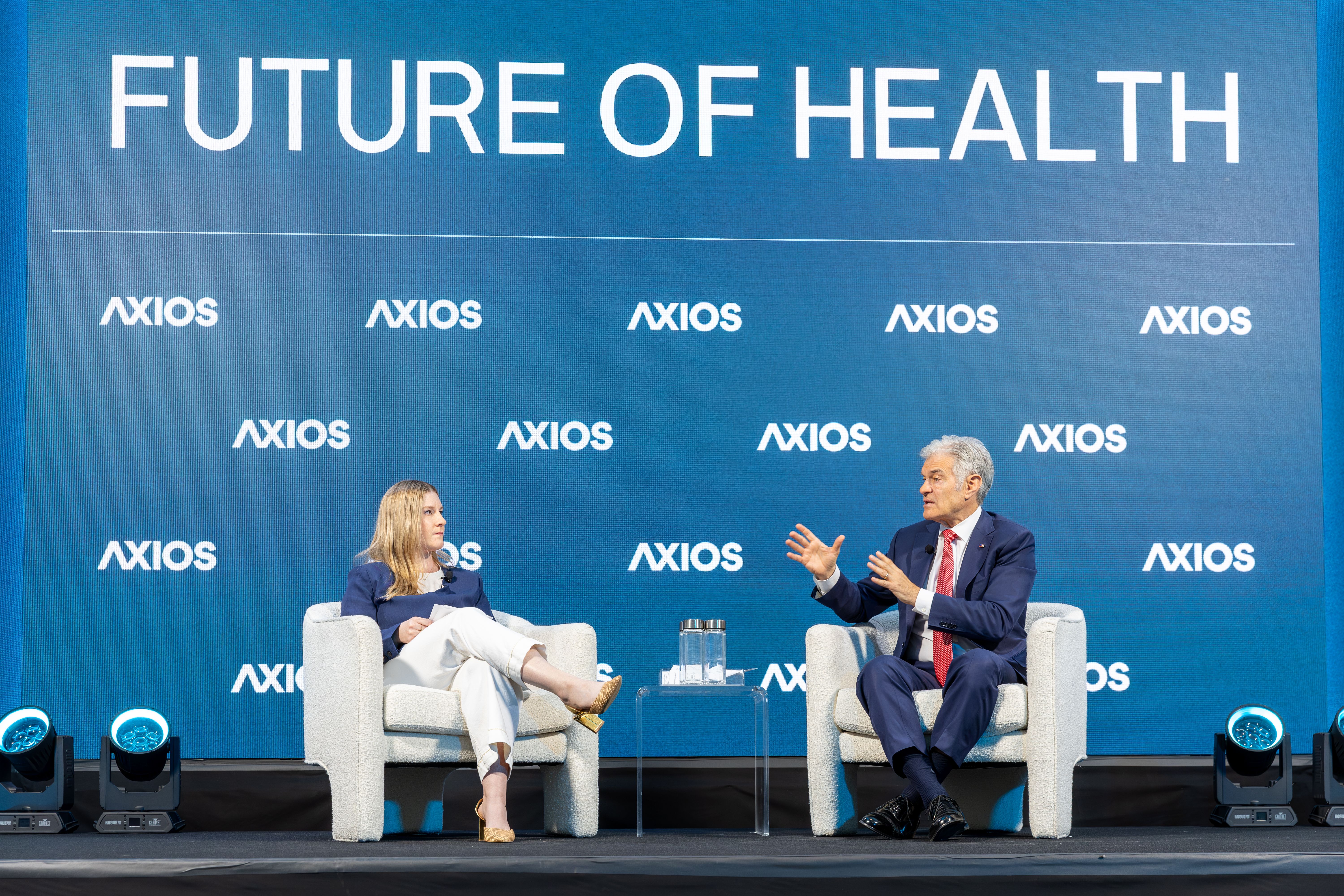
Dr. Mehmet Oz, administrator of the Centers for Medicare and Medicaid Services, told Axios' Caitlin Owens at our Future of Health Summit yesterday that the Trump administration is recruiting more than two dozen health systems to streamline approvals for medical procedures.
- Why it matters: So-called "prior authorizations" — insurance approvals doctors must obtain before treating patients — are one of the most hated features of the U.S. health system for patients and physicians alike.
6. 🗳️ Dem redistricting reprieve
Republicans are slowing a feared redistricting blitz across the Deep South, giving several longtime Black lawmakers a temporary reprieve, Axios' Justin Green writes.
- Why it matters: Democrats had been grappling with the imminent collapse of Black political representation in the South after the Supreme Court weakened the Voting Rights Act in late April.
In Louisiana, Republicans opted to eliminate one Black-majority district instead of both.
- In Mississippi, Gov. Tate Reeves canceled a special session scheduled for later this month. Reeves said Republicans will redraw the congressional districts ahead of the 2027 statewide elections.
- In Georgia, Gov. Brian Kemp said yesterday he was calling for a special session on maps — but for the 2028 cycle instead of 2026.
7. ⚡ Exclusive: New CEO for Penta

Jim O'Leary, an AI-forward adviser to C-suites, is leaving Weber Shandwick to become CEO of Penta Group, one of D.C.'s top public-affairs and strategy firms.
- Why it matters: The PR agency landscape is undergoing a rapid reset with private equity deals pouring money into the space.
Penta co-founder and current CEO Matt McDonald will stay on the firm's board and work closely with O'Leary as he steps into the role this summer.
- O'Leary, who is Weber Shandwick's North America CEO and global president, tells Axios: "I've been advising CEOs and others across the C-suite for decades now. … If you sat down with a clean sheet of paper and you designed the modern corporate advisory firm of the future from scratch, it would look a lot like Penta."
Alumni of President George W. Bush's administration — Matt McDonald, Tony Fratto and Stuart Siciliano — founded Hamilton Place Strategies in 2009. In 2022, the firm became Penta, with offices on both coasts and in Europe and Asia.
8. 🤖 1 for the road: Pope sets AI collision course

Pope Leo XIV is expected to sign his first encyclical — an agenda-setting papal pronouncement — as soon as tomorrow, positioning AI as the defining moral and labor challenge of a new industrial revolution, Axios' Russell Contreras writes.
- Why it matters: The document, reportedly titled Magnifica Humanitas ("Magnificent Humanity"), would be the Catholic Church's clearest attempt yet to place human dignity, labor rights and ethics at the center of the AI race.
The document will focus specifically on AI's impact on "people and working conditions," framing it as Leo XIV's effort to modernize Catholic social teaching for the AI era, the French newspaper Le Monde reports.
- Other reports suggest Magnifica Humanitas will argue technology must remain subordinate to the human person — not the reverse — and that AI systems should protect workers, creativity and moral agency.
📬 Thanks for reading! Please invite your friends to join AM.
Sign up for Axios AM